- Company Articles
- Products and Technology
- Product knowledge
- Turning Angle Code 3030 Load Capacity: How Much Weight Can It Support?

Turning Angle Code 3030 Load Capacity: How Much Weight Can It Support?
Related Product
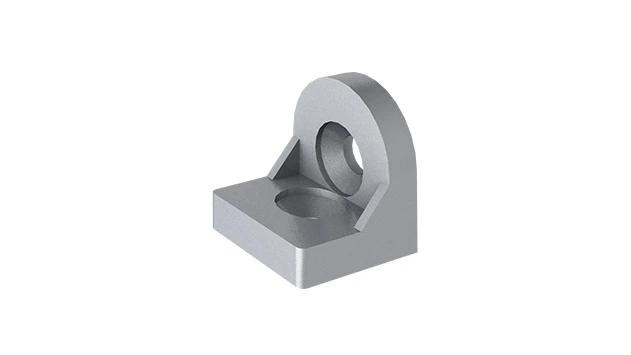
Turning Angle Code 3030
The turning angle aluminum profile connector provides a 90 degree hidden corner connection. 3030 it is means this size is used for 30 series aluminum profile.The corner code comes with set screws that allow for quick, easy connections.
Walk into any bustling workshop, a busy factory floor, or even a garage converted into a small-scale production hub, and you'll notice something crucial holding everything together: aluminum profiles and their unsung companions, the accessories. Among these, the 3030 aluminum profile stands out as a workhorse, forming the skeleton of workbenches, material racks, and assembly lines. But what makes these profiles truly functional? It's the little components like the Turning Angle Code 3030. These connectors might seem trivial, but they're the glue that keeps your setup stable—especially when heavy tools, parts, or products are involved.
Let me paint you a picture. Last month, I visited a local electronics manufacturer, run by a friend named Raj. He'd just invested in a new material rack B (you know, the 3-row, 3-floor kind) to organize his inventory of circuit boards and components. Eager to maximize space, he loaded each shelf with boxes weighing around 400 lbs. Three days later, he called me in a panic: the middle shelf was bowing, and some boxes had started to slide. After checking the setup, the issue was clear: he'd used a generic angle code instead of the specific Turning Angle Code 3030 recommended for his 3030 aluminum profiles. "I thought all angle codes were the same," he admitted. Spoiler: They're not.
That's why today, we're diving deep into the world of Turning Angle Code 3030 load capacity. We'll break down what these codes are, how much weight they can really handle, the factors that influence their strength, and why getting this right isn't just about avoiding sagging shelves—it's about safety, efficiency, and protecting your investment. Whether you're building a lean pipe workbench, setting up a material rack, or designing a custom assembly line, this guide will help you avoid Raj's mistake and ensure your setup stands the test of time.
First Things First: What Even Is a Turning Angle Code 3030?
Before we talk about load capacity, let's make sure we're all on the same page about what a Turning Angle Code 3030 actually is. In simple terms, it's a specialized connector designed to join 3030 aluminum profiles at (you guessed it) a 90-degree angle. Think of it as the hinge that lets you build square or rectangular structures—like the corners of a workbench or the joints of a material rack.
These angle codes are typically made from aluminum alloys (common grades include 6063-T5 or 6061-T6, known for their strength and corrosion resistance). They're shaped like small L-brackets with pre-drilled holes that align with the T-slots on 3030 aluminum profiles. When paired with aluminum profile accessories like T-slot nuts and bolts, they create a tight, secure connection that's both rigid and adjustable—key for modular setups that might need reconfiguring later.
But why "turning"? Unlike fixed angle brackets, many Turning Angle Code 3030 models have slotted holes or a slightly flexible design, allowing for minor adjustments during installation. This flexibility is a lifesaver when you're aligning profiles that aren't perfectly straight (let's be real—no workshop is 100% level). It ensures the weight is distributed evenly across the joint, which, as we'll see, directly impacts load capacity.
The Big Question: What Is "Load Capacity," Anyway?
When we talk about Turning Angle Code 3030 load capacity, we're referring to the maximum weight the connector can support without bending, breaking, or failing. But here's the catch: it's not a one-size-fits-all number. There are two types of load to consider:
- Static Load: This is the weight applied to the angle code when everything is stationary. Think of a workbench holding tools, or a material rack storing boxes that rarely move. Static load capacity is usually higher because the weight is constant and evenly distributed over time.
- Dynamic Load: This is the weight when the setup is in motion—like a turnover trolley being pushed across the floor, or a shelf that's frequently loaded and unloaded. Dynamic loads are harder on angle codes because they add stress from movement, vibrations, or sudden impacts (like dropping a heavy tool on the workbench).
Manufacturers test load capacity by gradually adding weight to a sample angle code until it deforms (usually by 0.2% of its length) or fails. The number they quote is often the "safe working load," which is typically 50-70% of the "ultimate failure load" (the point where it actually breaks). This safety margin is crucial—you don't want to push the code to its absolute limit!

What Determines How Much Weight a Turning Angle Code 3030 Can Support?
Load capacity isn't random. It depends on a mix of design, materials, and even how you install the angle code. Let's break down the key factors:
1. Material Quality and Thickness
Not all aluminum is created equal. The alloy and thickness of the Turning Angle Code 3030 play a huge role. For example, 6061-T6 aluminum is stronger than 6063-T5 (though 6063 is more corrosion-resistant), so a code made from 6061 will handle more weight. Thickness matters too: a 2.0mm thick code will support far more than a 1.0mm one. Think of it like comparing a credit card to a metal ruler—thicker = sturdier.
2. Design and Engineering
Look closely at a quality Turning Angle Code 3030, and you'll notice little details that boost strength: reinforcement ribs along the inside of the L-shape, rounded edges to reduce stress points, and precisely placed holes that align with the 3030 aluminum profile's T-slots. Cheaper, generic angle codes often skip these features—they might have sharp corners that crack under pressure or holes that don't quite line up, forcing you to overtighten bolts and weakening the connection.
3. Installation: It's All in the Bolts
Even the strongest angle code will fail if installed poorly. Here's what matters:
- Bolt Torque: Overtightening bolts can strip the threads on the 3030 aluminum profile or crack the angle code. Undertightening means the joint will loosen over time, reducing load capacity.
- Alignment: If the angle code isn't flush against the profile, the weight won't distribute evenly. One edge will bear more stress, leading to bending.
- Accessories Matter: Using cheap, low-quality T-slot nuts or bolts (instead of proper aluminum profile accessories) can cause the connection to slip. Always pair your Turning Angle Code 3030 with hardware rated for the same load.
4. Environment: Corrosion and Temperature
Workshops with high humidity, exposure to chemicals, or extreme temperatures (like a garage in summer) can weaken angle codes over time. Aluminum resists corrosion, but if the code is scratched or the protective finish is damaged, rust (or in aluminum's case, oxidation) can eat away at the material, reducing its strength. Similarly, repeated temperature swings cause metal to expand and contract, loosening bolts and adding stress.
| Angle Code Thickness (mm) | Material Alloy | Static Load Capacity (lbs) | Dynamic Load Capacity (lbs) | Best For |
|---|---|---|---|---|
| 2.0 | 6061-T6 | 850 | 550 | Heavy-duty material racks (e.g., Material Rack B with 3 rows/floors) |
| 1.5 | 6063-T5 | 650 | 400 | Lean pipe workbenches with power tools and heavy equipment |
| 1.2 | 6063-T5 | 500 | 300 | Light assembly workbenches, mobile turnover trolleys |
| 1.0 | 6063-T5 | 350 | 200 | Small parts storage, lightweight shelving, hobbyist workbenches |

Real-World Scenarios: How Much Weight Do You Actually Need?
Let's get practical. How do these numbers translate to everyday workshop setups? Let's look at common applications:
1. Lean Pipe Workbenches
A typical lean pipe workbench in an electronics or light manufacturing shop might hold tools (drills, soldering irons), a laptop, and batches of parts. If you're using a 3030 aluminum profile frame with 1.5mm Turning Angle Code 3030, you're looking at a static load capacity of around 650 lbs. That's more than enough for most setups—even if you pile on a 200-lb tool chest, a 100-lb batch of parts, and still have room to spare.
2. Material Rack B (3-Row, 3-Floor)
Raj's mistake was using a 1.2mm angle code on his material rack B, which he loaded with 400 lbs per shelf. From the table above, a 1.2mm code maxes out at 500 lbs static load—but that's per angle code. Most racks use 4 angle codes per shelf (one at each corner). So 4 x 500 lbs = 2000 lbs total per shelf, right? Not exactly. The weight isn't just on the angle codes; it's also on the profiles themselves. A 3030 profile with a 1.5mm wall can support about 800 lbs per linear foot. So if your shelf is 4 feet long, that's 3200 lbs—but the angle codes (the weakest link) would still cap it at 2000 lbs. Raj's shelves were 3 feet long, so 3 x 800 = 2400 lbs profile capacity, but with 1.2mm angle codes (4 x 500 = 2000 lbs), he was safe… until he loaded 400 lbs per shelf (3 shelves x 400 = 1200 lbs total). Wait, why did it sag then? Because he only used 2 angle codes per shelf corner instead of 4, cutting the capacity in half. Oops.
3. Turnover Trolleys
These mobile carts are all about dynamic load. If you're pushing a trolley with 300 lbs of parts across a bumpy floor, you need angle codes that can handle vibrations and sudden jolts. A 1.5mm Turning Angle Code 3030 (dynamic load 400 lbs) would work here—giving you a 100-lb buffer for safety.
Pro Tip: Always Overestimate
When in doubt, add a 20-30% buffer to the load capacity. If your setup needs to hold 400 lbs static, choose an angle code rated for at least 500-550 lbs. This accounts for unexpected weight (like that extra box you "temporarily" stack on the shelf) and wear and tear over time.
Common Mistakes That Kill Load Capacity (And How to Avoid Them)
Even if you buy the right Turning Angle Code 3030, these mistakes can turn a strong setup into a wobbly disaster:
1. Using the Wrong Angle Code for the Profile
3030 aluminum profiles have a specific width (30mm x 30mm). Using a Turning Angle Code designed for a smaller profile (like 2020) means the code won't fully contact the profile, leaving gaps that reduce stability. Always check the code's specs to ensure it matches your profile size.
2. Skimping on Quantity
It's tempting to save money by using fewer angle codes—like one per corner instead of two. But each code shares the load. The more codes you use, the more evenly the weight is distributed. For a 4-foot workbench shelf, use at least 2 angle codes per corner (8 total) to avoid sagging.
3. Ignoring Bolt Tightness
"Hand-tight" isn't a precise measurement. Invest in a torque wrench (they're affordable!) and follow the manufacturer's specs—usually 8-12 Nm for M5 bolts on aluminum profiles. Too loose, and the joint slips; too tight, and you strip the threads.
4. Forgetting About Maintenance
Angle codes need love too! Every few months, check bolts for tightness, inspect for cracks or corrosion, and clean off dirt or grime that could hide damage. A quick once-over can catch issues before they lead to failure.
Maximizing Your Turning Angle Code 3030's Load Capacity: 5 Practical Tips
Want to get the most out of your angle codes? Try these:
- Pair with Reinforcements: For extra-heavy loads, add gussets (small triangular brackets) or cross-braces between profiles. They reduce stress on the angle codes by distributing weight more evenly.
- Choose Coated Angle Codes for Harsh Environments: If your workshop is humid or exposed to chemicals, opt for anodized or powder-coated Turning Angle Code 3030. The extra layer protects against corrosion.
- Install Rubber Pads Under Heavy Loads: On workbenches or shelves, rubber pads reduce vibrations (helping with dynamic load) and prevent sliding, which can add stress to angle codes.
- Use Profile Accessories Designed for Load Distribution: T-slot nuts with larger washers spread the load across more of the profile, reducing pressure on the angle code's holes.
- Train Your Team: Make sure everyone knows the weight limits of workbenches and racks. Post a quick reference chart (like our table above!) near each setup to avoid overloading.
Wrapping Up: Why Turning Angle Code 3030 Load Capacity Matters
At the end of the day, the Turning Angle Code 3030 might be small, but its role is huge. It's the difference between a stable, productive workspace and a disaster waiting to happen. Raj learned that lesson the hard way—his sagging shelf cost him time, money, and a few broken circuit boards. But with the right knowledge, you can avoid that.
Remember: load capacity depends on thickness, material, installation, and environment. Always check the manufacturer's specs, add a safety buffer, and don't skimp on quality or quantity. Whether you're building a lean pipe workbench, a material rack, or a turnover trolley, the Turning Angle Code 3030 is your silent partner in keeping things stable. Treat it right, and it'll support you (and your workload) for years to come.
So, the next time you're setting up a new aluminum profile structure, take a second to appreciate the Turning Angle Code 3030. It might not be flashy, but it's the unsung hero that keeps your workshop running smoothly—one bolt, one profile, and one well-supported load at a time.