- Company Articles
- Products and Technology
- Product knowledge
- Turning Angle Code 3030 Specifications: Dimensions, Load Capacity & Tolerances

Turning Angle Code 3030 Specifications: Dimensions, Load Capacity & Tolerances
Related Product
Turning Angle Code 3030
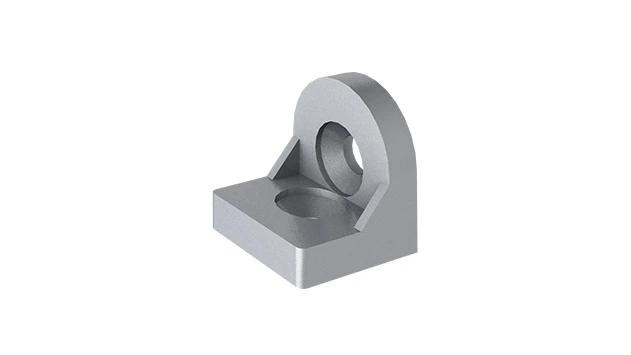
The turning angle aluminum profile connector provides a 90 degree hidden corner connection. 3030 it is means this size is used for 30 series aluminum profile.The corner code comes with set screws that allow for quick, easy connections.
Walk into any modern workshop, manufacturing plant, or even a DIY enthusiast's garage, and you'll likely spot structures built from sleek, modular aluminum profiles. These versatile frames form the backbone of workbenches, material racks, machine guards, and production lines—all critical components of efficient, adaptable workspaces. But what holds these profiles together? Behind the scenes, tiny but mighty connectors called turning angle codes do the heavy lifting. Today, we're zeroing in on one of the most widely used variants: the Turning Angle Code 3030 . Whether you're setting up a lean system, assembling a production line, or building a custom workbench, understanding this unassuming component's specs is key to creating stable, long-lasting structures.
What Is a Turning Angle Code 3030, Anyway?
Let's start with the basics. A Turning Angle Code 3030 is a specialized connector designed to join 3030 aluminum profiles at angles—most commonly 90 degrees, but often adjustable for other angles like 45 or 135 degrees, depending on the design. Think of it as the "hinge" that turns separate profile pieces into a rigid, functional structure. It's part of the broader family of aluminum profile accessories , which includes end caps, T-slot nuts, and brackets, all working together to make aluminum framing systems modular and customizable.
Why "3030"? That number refers to the profile's cross-section: 30mm by 30mm. So, the Turning Angle Code 3030 is specifically engineered to fit these 30x30mm profiles, ensuring a snug, secure connection. Unlike generic brackets, which might require drilling or modification, this angle code is precision-made to align with the T-slots and mounting holes of 3030 profiles, making assembly quick and tool-friendly.
Dimensions: The Building Blocks of a Perfect Fit
When it comes to connectors, size matters—*a lot*. A Turning Angle Code 3030 that's even 1mm off in one dimension can throw off an entire assembly, leading to wobbly structures, misaligned holes, or worse, failed connections under load. Let's break down the key dimensions you need to know, with a handy table for quick reference.
| Parameter | Typical Measurement (mm) | Tolerance (± mm) | Why It Matters |
|---|---|---|---|
| Overall Length | 45-50 | 0.2-0.3 | Determines how far the connector extends from the profile joint, affecting clearance for other components. |
| Width (Profile Contact Area) | 28-29 | 0.1-0.2 | Must fit tightly within the profile's T-slot or mounting face to prevent lateral movement. |
| Height (Thickness) | 8-12 | 0.1-0.2 | Affects structural rigidity; thicker = stronger, but may add unnecessary weight for light applications. |
| Mounting Hole Diameter | 5-6 | 0.05-0.1 | Must align with profile holes and accept standard bolts (e.g., M5 or M6) without play. |
| Thread Depth (if tapped) | 8-10 | 0.5 | Ensures bolts seat fully for maximum clamping force; shallow threads risk stripping under load. |
Let's zoom in on a few critical dimensions. The "width (profile contact area)" is especially important because it determines how much surface area the angle code has to grip the 3030 profile. A width of 28-29mm means it's slightly smaller than the profile's 30mm width, leaving just enough space for the profile's wall thickness and any T-slot nuts or washers. If this dimension is too large, the angle code won't fit into the profile's slot; too small, and it'll rattle loose.
Mounting hole diameter is another make-or-break spec. Most 3030 profiles use M5 or M6 bolts, so the angle code's holes must be precisely sized to match. A 5mm hole for an M5 bolt, for example, provides a snug fit that prevents the bolt from spinning while tightening—critical for creating a secure joint.

Load Capacity: How Much Weight Can It Really Handle?
Imagine building a workbench using 3030 profiles and Turning Angle Code 3030 connectors, only to have it collapse when you place a heavy tool on it. Not ideal, right? That's why understanding load capacity is non-negotiable. Load capacity refers to the maximum weight the angle code can support without deforming or failing, and it's influenced by three key factors: material, design, and installation.
Material Matters: Aluminum Alloy Strength
Most Turning Angle Code 3030s are made from aluminum alloy, typically 6063-T5. This alloy is prized for its balance of strength, ductility, and corrosion resistance—perfect for industrial environments. In its T5 temper (artificially aged), 6063 has a tensile strength of around 180-210 MPa, which translates to impressive load-bearing capabilities. For context, a single 3030 angle code made from 6063-T5 can often support 150-250 kg of static load when properly installed—more than enough for most workbench or material rack applications.
Some manufacturers offer steel angle codes for heavier loads, but aluminum remains the go-to for most users. Why? It's lighter (about 1/3 the weight of steel), resists rust, and is easier to machine to tight tolerances—all important for modular systems where weight and precision matter.
Design: Geometry for Strength
A well-designed angle code isn't just a flat piece of metal with holes. Look closely, and you'll notice features like ribbing, gussets, or thickened sections at stress points (e.g., where the two arms of the "L" meet). These design elements distribute load evenly, preventing bending or cracking. For example, a Turning Angle Code 3030 with a triangular gusset at the 90-degree bend will have far greater load capacity than a simple bent plate—sometimes by 50% or more.
Installation: The Human Factor
Even the strongest angle code will fail if installed poorly. Over-tightening bolts can strip threads or warp the connector; under-tightening leaves gaps, reducing load capacity. Most manufacturers recommend a torque of 8-10 Nm for M5 bolts and 12-15 Nm for M6 bolts when securing 3030 angle codes. Using the right bolt length is also key—too short, and it won't grip the T-slot nut; too long, and it'll protrude, causing clearance issues.
Pro tip: Always use two angle codes per joint for heavy loads. For example, if you're building a material rack with 3030 uprights and crossbeams, adding a second angle code opposite the first doubles the load capacity and reduces stress on individual components.
Real-World Load Examples
- Light-duty use (e.g., shelving for small parts): 50-100 kg per angle code. Ideal for storage racks in labs or offices.
- Medium-duty use (e.g., workbench tops): 100-200 kg per angle code. Suitable for assembly workbenches or tool storage.
- Heavy-duty use (e.g., material handling racks): 200-250 kg per angle code (with two angle codes per joint). Works for storing metal parts or equipment.

Tolerances: The Hidden Secret to a Wobble-Free Build
Tolerances are the small allowable variations in dimensions during manufacturing. For example, a tolerance of ±0.2mm on length means the angle code could be 0.2mm shorter or longer than the target measurement. You might think, "What's 0.2mm between friends?" But in precision engineering, those fractions of a millimeter make all the difference between a rock-solid structure and one that wobbles like a jelly.
Why Tight Tolerances Matter
When you join two 3030 profiles with a Turning Angle Code 3030, every component must align perfectly. If the angle code's mounting holes are off by even 0.3mm, the bolts might not thread into the T-slot nuts properly, leaving gaps. Over time, those gaps lead to vibration, loosening bolts, and eventually, structural failure. Tight tolerances (usually ±0.1-0.3mm for critical dimensions) ensure that every angle code fits every 3030 profile consistently—no guesswork, no modifications, just a secure connection.
Industry standards, like ISO 2768-m (medium) or DIN 863, often guide tolerance levels for aluminum profile accessories. These standards ensure that components from different suppliers are compatible, so you can mix and match angle codes, profiles, and bolts without issues.
How to Check Tolerances (Without a Micrometer)
You don't need fancy tools to spot poor tolerances. Here's a quick test: Take two Turning Angle Code 3030s and try to swap them on the same profile joint. If one fits snugly and the other is loose, the tolerances are inconsistent. Similarly, if bolts require excessive force to tighten (or spin freely), the hole diameters are likely out of spec. Reputable suppliers will provide tolerance data in their product specs—don't hesitate to ask for it!
Applications: Where Turning Angle Code 3030 Shines
Now that we've covered the specs, let's talk about where you'll actually use a Turning Angle Code 3030. Its versatility makes it a staple in industries ranging from automotive manufacturing to electronics assembly, and it's a favorite among lean system designers for its ability to create flexible, scalable structures.
Workbenches: The Heart of the Workshop
A sturdy workbench is the cornerstone of any productive workspace, and 3030 profiles with Turning Angle Code 3030 connectors are perfect for the job. Whether you need a simple single-deck workbench or one with shelves and tool rails, the angle codes ensure the frame stays rigid under the weight of tools, parts, and assembly tasks. Many manufacturers offer pre-designed workbench kits using these components, but the real beauty is customizing your own—add a pegboard, LED lights, or a vice, all secured with angle codes and T-slot accessories.
Material Racks: Organized Storage That Lasts
Material racks, like the "material rack b (3 row and 3 floor)" mentioned in our keyword list, rely on Turning Angle Code 3030s to support heavy loads of inventory. These racks need to withstand not just the weight of parts but also the bumps and vibrations of a busy warehouse. By using angle codes at each upright-crossbeam joint, the rack becomes a grid of interconnected strength, preventing swaying and ensuring stability even when fully loaded.
Lean System Setups: Efficiency Through Modularity
Lean manufacturing is all about eliminating waste and streamlining processes, and modular aluminum structures play a big role in that. Turning Angle Code 3030s make it easy to reconfigure production lines, flow racks, and assembly stations as needs change. For example, if a production assemble line needs to be extended, you can add more 3030 profiles and angle codes without rebuilding from scratch. This flexibility reduces downtime and keeps operations running smoothly—exactly what lean systems are designed to do.
Choosing the Right Supplier: Quality You Can Trust
Not all Turning Angle Code 3030s are created equal. A quick search online will reveal dozens of suppliers, but how do you know which one offers quality components? Here's what to look for when choosing an aluminum profile supplier :
- Material Certifications: Ask for certificates of analysis (COA) proving the angle codes are made from 6063-T5 aluminum alloy (or another specified grade). Reputable suppliers will have no problem providing this.
- Quality Control Processes: Inquire about manufacturing tolerances and testing procedures. Do they use CNC machining for precision? Do they inspect each batch for defects?
- Customer Support: A good supplier should offer technical help—whether you need advice on load capacity or help troubleshooting a tricky assembly. Avoid suppliers who can't answer basic questions about their products.
- Sample Availability: If you're ordering in bulk, request a sample first. Test the angle code with your 3030 profiles to check fit, finish, and tolerance. It's better to spend a few dollars on a sample than thousands on incompatible parts.
FAQs: Your Burning Questions Answered
Still have questions? You're not alone. Here are answers to some of the most common queries about Turning Angle Code 3030:
Q: Can I use a Turning Angle Code 3030 with non-3030 profiles?
A: It's not recommended. The angle code is designed specifically for 30x30mm profiles, so using it with smaller (e.g., 2020) or larger (e.g., 4040) profiles will result in poor fit and reduced load capacity. Stick to matching profile sizes for safety.
Q: How do I know if my angle code is under-tightened or over-tightened?
A: Under-tightened bolts will allow movement between the profile and angle code—you'll feel wobble when shaking the structure. Over-tightened bolts can strip threads or warp the angle code, weakening it. Use a torque wrench set to the manufacturer's recommended torque (usually 8-15 Nm for M5/M6 bolts) for perfect tension.
Q: Are there corrosion-resistant options for humid environments?
A: Yes! Most aluminum angle codes are naturally corrosion-resistant, but for extra protection (e.g., in food processing or marine environments), look for anodized finishes. Anodizing adds a hard, protective oxide layer that resists rust and wear better than raw aluminum.
Conclusion: The Unsung Hero of Modular Structures
At first glance, a Turning Angle Code 3030 might seem like just another small metal part. But as we've explored, it's the unsung hero that turns simple aluminum profiles into the backbone of workshops, production lines, and storage systems. From its precise dimensions and robust load capacity to its tight tolerances and versatile applications, this little connector plays a huge role in creating stable, flexible, and efficient workspaces.
Whether you're a seasoned manufacturer building a lean system or a hobbyist setting up a garage workshop, choosing the right Turning Angle Code 3030—from a reputable aluminum profile supplier—ensures your structures stand the test of time. So next time you assemble a workbench or material rack, take a moment to appreciate the angle code holding it all together. It may be small, but its impact? Anything but.