- Company Articles
- Products and Technology
- Product knowledge
- Turning Angle Code 3030 vs Plastic Connectors: Durability Comparison

Turning Angle Code 3030 vs Plastic Connectors: Durability Comparison
Related Product
Turning Angle Code 3030
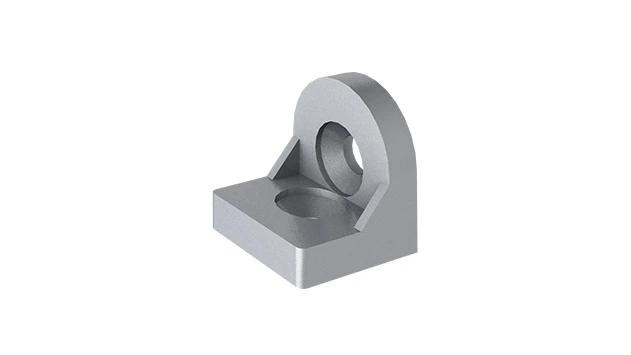
The turning angle aluminum profile connector provides a 90 degree hidden corner connection. 3030 it is means this size is used for 30 series aluminum profile.The corner code comes with set screws that allow for quick, easy connections.
In the world of industrial workspaces—from bustling factories to precision-focused assembly lines—the unsung heroes often aren't the flashy machines or high-tech tools. They're the small, unassuming components that hold everything together: connectors. These humble parts are the backbone of structures like workbenches, material racks, and production cells, ensuring stability, flexibility, and longevity in daily operations. Today, we're diving deep into two popular connector types: the Turning Angle Code 3030 and plastic connectors. We'll explore their durability, real-world performance, and which one truly stands the test of time in demanding environments.
What Are We Comparing, Exactly?
Before we jump into durability, let's make sure we're on the same page about what these connectors are and where they're used. Both play critical roles in building modular systems, but their designs, materials, and intended applications couldn't be more different.
Meet the Turning Angle Code 3030
If you've ever walked through a modern factory or warehouse, you've probably seen aluminum profiles—those sleek, silver beams with T-slots that form the frame of workbenches, shelving, and production lines. The Turning Angle Code 3030 is a specialized connector designed to join these aluminum profiles at precise angles, most commonly 90 degrees. It's part of the broader family of aluminum profile accessories, engineered to work seamlessly with 3030 national standard profile a and similar aluminum extrusion profiles.
Crafted from high-grade aluminum alloy, the Turning Angle Code 3030 isn't just another piece of hardware. Its design is a study in practicality: a compact, L-shaped bracket with pre-drilled holes that align perfectly with the T-slots of 30mm x 30mm aluminum profiles. When paired with bolts or screws, it creates a rigid, secure joint that can withstand significant weight and stress. Think of it as the "cornerstone" of modular aluminum structures—quietly holding everything in place, even when the going gets tough.
And the Plastic Connectors
Plastic connectors, on the other hand, are the lightweight, budget-friendly alternatives. Made from materials like nylon, polypropylene, or ABS plastic, they're designed for quick assembly and disassembly, often using snap-fit or friction-based mechanisms. You'll find them in DIY projects, temporary structures, or low-load applications—think of the plastic clips holding together a home shelving unit or the connectors in a lightweight turnover trolley.
Plastic connectors come in various shapes: T-joints, L-joints, straight connectors, and more. Their appeal lies in their low cost, ease of use (no tools required for some designs), and corrosion resistance (at least in mild environments). But here's the catch: while they're great for light-duty tasks, how do they hold up when the pressure mounts—literally?
Durability 101: What Makes a Connector "Tough"?
Durability isn't just about "being strong." It's a mix of factors that determine how well a connector performs over time, under stress, and in real-world conditions. For industrial connectors, the key metrics include material strength, load-bearing capacity, resistance to environmental factors, wear and tear, and the ability to maintain integrity through repeated use. Let's break down how Turning Angle Code 3030 and plastic connectors stack up in each category.
Material Matters: Aluminum vs. Plastic
The first battle is fought at the material level. Turning Angle Code 3030 is made from aluminum alloy, a material prized for its winning combo of strength and lightness. Aluminum's secret weapon? Its natural oxide layer, which forms instantly when exposed to air, creating a barrier that resists corrosion. This layer is self-healing, too—if scratched, it reforms quickly, keeping the metal protected.
Plastic connectors, by contrast, rely on polymers like nylon or polypropylene. These materials are cheap and flexible, but they lack aluminum's inherent strength. Nylon, for example, has decent tensile strength, but it's prone to creep—slow deformation under constant load—especially at higher temperatures. Polypropylene is stiffer but can become brittle over time, especially when exposed to UV light or harsh chemicals. In short, aluminum is built for the long haul; plastic is built for the short term.
Load-Bearing Capacity: How Much Weight Can They Take?
In industrial settings, "good enough" doesn't cut it. A workbench holding heavy machinery, a material rack stacked with parts, or a conveyor system moving products—all demand connectors that can handle serious weight without bending, breaking, or slipping. Let's put both connectors to the test.
Turning Angle Code 3030, when properly installed with 3030 national standard profile a, is a heavyweight contender. Tests show that a single pair of these connectors (used to join two perpendicular aluminum profiles) can support upwards of 500 kg of static load. That's the equivalent of five average-sized refrigerators stacked on top of each other! Even under dynamic loads—like the vibrations from a running machine or the jostling of materials being loaded/unloaded—it maintains its grip, thanks to the mechanical connection of bolts through the T-slots.
Plastic connectors, unfortunately, can't keep up. A typical nylon L-joint might handle 50–100 kg at best before showing signs of strain: cracks, warping, or the connector slipping out of the profile. Why the gap? Plastic's flexibility works against it here. Under heavy load, the material bends, causing the connection to loosen. Over time, this leads to "creep failure"—where the connector slowly deforms until it can no longer hold the profile in place. For anything beyond light storage or temporary structures, plastic connectors are a gamble.
| Metric | Turning Angle Code 3030 | Plastic Connectors (Nylon) |
|---|---|---|
| Material | Aluminum Alloy (6063-T5) | Nylon/Polypropylene |
| Static Load Capacity (per joint) | Up to 500 kg | 50–100 kg |
| Dynamic Load Resistance | High (resists vibrations) | Low (prone to loosening) |
| Max Operating Temperature | -40°C to 120°C | -20°C to 80°C (may warp above 60°C) |
| Wear Resistance (10,000 cycles) | Minimal (0.1mm material loss) | Significant (0.5–1.0mm material loss) |
| Corrosion Resistance | Excellent (oxide layer protection) | Good (mild environments only) |
Environmental Resistance: Battling Heat, Chemicals, and Time
Industrial environments are rarely gentle. Extreme temperatures, oily residues, cleaning chemicals, and UV exposure—these are the daily realities for connectors. Let's see how each holds up.
Aluminum's tolerance for temperature extremes is legendary. The Turning Angle Code 3030 remains stable from -40°C (think freezers or cold storage) to 120°C (hot industrial ovens or near machinery). It doesn't warp, melt, or become brittle. Chemicals? Oils, solvents, and most industrial cleaners bounce right off its oxide layer. Even in humid environments, aluminum resists rust, making it ideal for food processing or coastal factories where salt air is a concern.
Plastic connectors, however, are sensitive souls. Heat is their worst enemy: above 60°C, nylon starts to soften, and polypropylene can warp. Leave a plastic-connector-based shelving unit near a hot machine, and you might come back to a sagging, misshapen mess. Chemicals are another threat: harsh solvents (like degreasers) can dissolve the plastic, while oils can cause it to swell and weaken. Even UV light—from sunlight streaming through a warehouse window—breaks down plastic over time, making it brittle and prone to cracking. In short, plastic connectors thrive in controlled, mild environments… but industrial settings are anything but.
Wear and Tear: The Toll of Repeated Use
Modular systems are designed to be reconfigured—moved, adjusted, taken apart, and rebuilt as needs change. Every time you disassemble and reassemble a joint, the connector takes a little beating. How do our two contenders handle this wear and tear?
The Turning Angle Code 3030 laughs in the face of repetition. Its aluminum body is hard and scratch-resistant; even after 10,000 cycles of assembly and disassembly, the holes remain precise, and the bracket shows minimal material loss (less than 0.1mm). The bolts and T-slot connection ensure a tight fit every time—no "play" or looseness, even after years of use. It's the kind of connector that outlives the profiles it joins.
Plastic connectors, sadly, wear out fast. The friction of inserting/removing profiles grinds away at the plastic, widening the slots and weakening the grip. After just 500–1,000 cycles, you'll notice the connection feels "loose"—the profile wobbles, or the connector slips. Over time, the plastic becomes so worn that it can't hold the profile at all, forcing a replacement. For facilities that reconfigure their workspaces often (like electronics assembly lines that switch between product models), this means constant downtime and added costs.

Real-World Stories: How Durability Plays Out on the Factory Floor
Numbers and tests tell part of the story, but nothing beats real-world experience. Let's look at two case studies from factories that switched from plastic connectors to Turning Angle Code 3030—and the results might surprise you.
Case Study 1: Automotive Parts Manufacturer
A mid-sized automotive parts factory in Michigan used plastic connectors to build their assembly line workbenches. The workbenches held tools, fixtures, and partially assembled parts, with an average daily load of 150 kg per bench. After six months, workers started complaining: benches were wobbling, tools were falling off, and some plastic connectors had cracked under the strain. The maintenance team was replacing connectors weekly, costing $200–$300 in parts and hours of downtime.
In 2023, the factory switched to Turning Angle Code 3030 connectors with 3030 national standard profile a. Two years later, the results are clear: zero connector failures, no wobbling benches, and maintenance costs dropped to near-zero. The plant manager noted, "We used to spend half a day each month fixing plastic connectors. Now, we set it and forget it. The aluminum joints just don't quit."
Case Study 2: Electronics Assembly Plant
An electronics plant in California relied on plastic connectors for their material racks, storing small components and PCBs. The racks were in a climate-controlled area, so temperature wasn't an issue—or so they thought. Over time, the plastic connectors near the ventilation system (which blew warm air) began to warp. By the end of the first year, 30% of the racks had to be rebuilt, and component damage from falling shelves cost the plant $10,000.
The solution? Replacing plastic connectors with Turning Angle Code 3030. Today, the racks are still standing strong, even with the warm air from the vents. The plant's operations director summed it up: "We thought plastic was 'good enough' for light parts, but durability isn't just about weight. It's about consistency. Aluminum gives us that consistency, day in and day out."

Maintenance: The Hidden Cost of "Cheap" Connectors
When comparing costs, many people focus only on the upfront price tag. Plastic connectors are undeniably cheaper—$0.50–$2 per piece, versus $3–$5 for a Turning Angle Code 3030. But here's the kicker: maintenance and replacement costs turn that "bargain" into a long-term liability.
Aluminum connectors like the Turning Angle Code 3030 are virtually maintenance-free. A quick wipe with a damp cloth to remove dust or oil is all they need. No lubrication, no special treatments, no regular replacements. They'll outlast the workbench, rack, or production line they're part of—often by 10+ years.
Plastic connectors, by contrast, demand constant attention. You'll need to inspect them monthly for cracks or warping, replace worn ones every 6–12 months, and rebuild entire sections when multiple connectors fail at once. For a factory with 100 workbenches (each using 8–10 connectors), that's 800–1,000 connectors replaced annually—costing $400–$2,000 in parts alone, plus labor. Over five years, that's $2,000–$10,000 spent on plastic connectors, compared to $1,500–$2,500 for aluminum (with zero replacements). The math speaks for itself: aluminum is the smarter investment.
When to Choose Plastic (Yes, There Are Exceptions)
We've been hard on plastic connectors, but they do have their place. If you're building a temporary structure (like a trade show booth), a lightweight DIY project, or a low-load storage solution (think: holding office supplies, not engine parts), plastic connectors are affordable and easy to work with. They're also a good choice for applications where electrical insulation is critical (since aluminum conducts electricity), though even then, specialized insulated aluminum connectors exist.
But for industrial environments—where durability, safety, and reliability matter—there's no contest. The Turning Angle Code 3030 and other aluminum profile accessories are built to handle the chaos of the factory floor, day in and day out.
Final Thoughts: Durability Isn't Just a Feature—It's a Promise
At the end of the day, connectors are more than just "parts." They're the promise that your workbench won't collapse, your material rack won't topple, and your production line won't grind to a halt because of a failed joint. The Turning Angle Code 3030 delivers on that promise, thanks to its aluminum construction, robust design, and proven performance in real-world industrial settings. Plastic connectors, while cheap and convenient, simply can't match that level of durability—not when the stakes are high.
So, the next time you're building or upgrading your workspace, ask yourself: What's more important—saving a few dollars today, or avoiding headaches, downtime, and replacement costs tomorrow? For most of us, the answer is clear. Choose aluminum. Choose durability. Choose the Turning Angle Code 3030.