- Company Articles
- Products and Technology
- Product knowledge
- Turning Angle Code 3030 vs Traditional Connectors: Advantages in Modern Factories

Turning Angle Code 3030 vs Traditional Connectors: Advantages in Modern Factories
Related Product
Turning Angle Code 3030
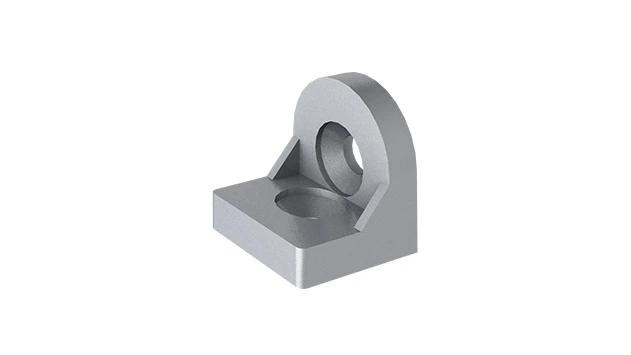
The turning angle aluminum profile connector provides a 90 degree hidden corner connection. 3030 it is means this size is used for 30 series aluminum profile.The corner code comes with set screws that allow for quick, easy connections.
In the fast-paced world of modern manufacturing, every second counts. Factories are no longer just about churning out products—they're about adaptability, efficiency, and creating environments where workers can thrive. Behind the scenes of every smooth-running production line, there's a network of small but critical components that hold everything together: connectors. Today, we're diving into a comparison that's quietly revolutionizing factory floors worldwide: Turning Angle Code 3030 connectors versus the traditional metal brackets and welded joints that have long been industry staples. It's a showdown between old reliability and new agility—and the winner might just reshape how you think about building and modifying workspaces.
The Old Guard: Traditional Connectors and Their Limits
Let's start with the familiar. For decades, factories relied on two main types of connectors: welded metal brackets and bolted joints. Picture a workbench in a 1990s assembly plant: thick steel legs welded to a frame, shelves bolted on with nuts and washers, and zero room for adjustment. If a new machine arrived that required a taller work surface, the solution was simple (but painful): cut the legs, re-weld them, grind down the rough edges, and repaint to prevent rust. If a team needed to add a shelf for larger tools? Drill new holes, buy longer bolts, and hope the alignment was perfect.
Traditional connectors had their merits, of course. They were sturdy—once welded, they rarely budged—and cheap upfront. But in an era where product lifecycles shrink from years to months, and factories switch between product lines weekly, their flaws have become impossible to ignore. Welding requires skilled labor and specialized equipment, turning a simple reconfiguration into a multi-day project. Bolted joints, while slightly more flexible, still demand precise measurements and often result in stripped threads or misaligned holes when adjusted repeatedly. Over time, these rigid systems create bottlenecks: wasted time, frustrated workers, and a factory floor that can't keep up with changing demands.
Meet the New Contender: Turning Angle Code 3030 Explained
Enter Turning Angle Code 3030 —a small but mighty connector designed for the way factories work today. At first glance, it looks unassuming: a compact, L-shaped piece of metal with pre-drilled holes and a clever locking mechanism. But its true power lies in how it pairs with 3030 aluminum profiles —lightweight, modular metal rails with T-slots that make customization a breeze. Together, they form a system where building a workbench, a flow rack, or even an entire production line feels less like construction and more like assembling a high-quality piece of furniture—no welding, no drilling, no headaches.
Here's how it works: The Turning Angle Code 3030 slides into the T-slots of 3030 aluminum profiles, and a simple hex key tightens a bolt to lock it in place. Want to adjust the height of a shelf? Loosen the bolt, slide the connector up or down, and retighten. Need to add a crossbar for extra support? Just attach another connector. It's intuitive enough that a new hire can learn the basics in 10 minutes, and sturdy enough to support heavy machinery, toolboxes, or stacks of materials. In short, it's a connector built for people —not just machines.

Why Turning Angle Code 3030 Outshines Traditional Connectors
To truly understand the difference, let's break down the advantages of Turning Angle Code 3030 in the areas that matter most to factory managers, workers, and bottom lines.
1. Installation Speed: From Days to Hours (or Even Minutes)
In a busy factory, downtime is the enemy. Traditional connectors turn even simple projects into all-day affairs. Welding a basic workbench frame might take a skilled technician 4-6 hours, not counting prep work or cleanup. Bolted joints are faster, but aligning holes and tightening nuts still adds up—especially when you're building something with multiple layers, like a flow rack .
Turning Angle Code 3030 flips the script. A team of two workers can assemble a full-size workbench with shelves, tool hooks, and a power strip cutout in under 90 minutes. No special tools, no waiting for welds to cool, no rework. How? The T-slots in 3030 aluminum profiles act as built-in guides, so connectors slide into place perfectly every time. It's like using Lego blocks for adults—except these blocks can support hundreds of pounds. For factories ramping up new product lines or reconfiguring for seasonal demand, this speed is a game-changer.
2. Flexibility: Adapt or Die (But Mostly Adapt)
Last month, your factory was assembling small circuit boards. This month, it's shifting to larger automotive parts. With traditional connectors, that means rebuilding workbenches from scratch. With Turning Angle Code 3030, it means loosening a few bolts. One factory in Ohio reported reconfiguring an entire assembly line—including workbenches, flow racks, and material carts—in a single weekend, just by adjusting their 3030 aluminum profiles and swapping out Turning Angle Code 3030 positions. The result? They met their new production deadline with zero downtime.
Traditional connectors are permanent by design. Welded joints can't be moved without cutting, and bolted joints lose strength after a few adjustments. Turning Angle Code 3030, though, is built for change. Its locking mechanism maintains grip even after dozens of repositionings, and since it's compatible with all standard 3030 aluminum profiles, you can mix and match components from old setups to build new ones. It's not just a connector—it's a promise that your factory floor will never be stuck in one layout again.
3. Durability: Tough Enough for the Factory Grind
Critics of modular systems often ask: "Is it strong enough?" Let's put it this way: Turning Angle Code 3030 is made from high-grade aluminum alloy with a reinforced corner design, capable of supporting up to 200 kg per joint under static load. In real-world testing, factories using these connectors report minimal wear even after years of daily use—no rust, no bent brackets, no loose connections. Compare that to traditional welded joints, which can develop stress cracks over time, or bolted brackets that corrode in humid environments.
The secret is in the materials. 3030 aluminum profiles are lightweight but rigid, resisting dents and warping, while Turning Angle Code 3030's surface is treated to withstand oils, coolants, and the occasional bump from a forklift. It's a system built to last, not just for one project, but for the long haul of factory life.
4. Cost-Effectiveness: Saving Money Where It Counts
Yes, Turning Angle Code 3030 and 3030 aluminum profiles cost more upfront than a bag of welds or basic brackets. But factor in labor, downtime, and reusability, and the math flips. A mid-sized factory in Texas calculated that switching to Turning Angle Code 3030 saved them $45,000 in the first year alone—mostly from reduced labor costs for reconfigurations and fewer wasted materials. Traditional setups require buying new brackets every time you modify a layout; with Turning Angle Code 3030, you reuse what you already have.
Welding also requires certified technicians, who earn premium wages. With Turning Angle Code 3030, any worker with a hex key can assemble or modify a setup, freeing up skilled labor for more critical tasks. Over time, those savings add up—and they're compounded by the fact that 3030 aluminum profiles and Turning Angle Code 3030 connectors hold their value, even when repurposed. It's an investment that pays for itself, often within the first project.

Real-World Impact: How Turning Angle Code 3030 Transforms Workspaces
Let's zoom in on two common factory setups to see the difference in action: workbenches and flow racks—two areas where Turning Angle Code 3030 truly shines.
Workbench Assembly: Customization Without Compromise
A workbench is more than a table—it's a worker's second home. Traditional welded workbenches force workers to adapt to fixed heights and limited storage. With Turning Angle Code 3030 and 3030 aluminum profiles, workbenches become personalized. Need a taller surface for standing work? Raise the legs. Want a shelf for tools at eye level? Add a crossbar with a few connectors. One factory in Michigan even added adjustable monitor arms and cable management slots to their workbenches using Turning Angle Code 3030, reducing worker strain and cutting down on time wasted searching for tools.
Traditional workbenches also suffer from weight issues—steel frames are heavy, making them hard to move. 3030 aluminum profiles are 30% lighter than steel, so even a fully loaded workbench can be shifted with a few workers (or a pallet jack). And since Turning Angle Code 3030 connects seamlessly with casters (another modular accessory), you can turn any workbench into a mobile station in minutes. For factories with shared workspaces, this flexibility is a game-changer.
Flow Racks: Smoother Material Handling, Faster Production
Flow racks are the backbone of material handling, ensuring parts move smoothly from storage to assembly. Traditional flow racks use fixed wooden or steel shelves, which are hard to adjust for different part sizes. With Turning Angle Code 3030, flow racks become dynamic. You can raise or lower shelves to fit taller boxes, add dividers for smaller parts, or even integrate roller tracks (another modular component) for gravity-fed material flow. One electronics manufacturer in California reported a 25% reduction in picking errors after switching to adjustable flow racks with Turning Angle Code 3030, simply because parts were easier to organize and access.
Turning Angle Code 3030 vs Traditional Connectors: The Numbers Speak
| Feature | Turning Angle Code 3030 + 3030 Aluminum Profiles | Traditional Connectors (Welded/Bolted) |
|---|---|---|
| Installation Time (Basic Workbench) | 90 minutes (2 workers) | 4–6 hours (skilled technician) |
| Reconfiguration Time | 15–30 minutes (1 worker) | 4–8 hours (multiple workers + tools) |
| Number of Adjustments Before Wear | 50+ repositionings | 2–3 adjustments (bolt fatigue/weld stress) |
| Weight Capacity (Per Joint) | Up to 200 kg (static load) | Welded: 300+ kg (permanent), Bolted: 150 kg (initial) |
| Long-Term Cost (5-Year Lifespan) | 30% lower (reusable, labor savings) | Higher (replacement parts, labor for reworks) |
| Worker Satisfaction | Higher (customizable, less frustration) | Lower (fixed setups, limited adaptability) |
Why Modern Factories Are Making the Switch
The manufacturing landscape is changing. Product cycles are shorter, customer demands are more varied, and factories need to be ready to pivot at a moment's notice. Traditional connectors belong to an era of mass production, where one product line ran for years. Today, that's no longer the case. Lean system principles—focused on reducing waste and increasing flexibility—are now the norm, and Turning Angle Code 3030 is a lean dream come true.
"We used to dread product line changes," says Mark, a production manager at a electronics plant in Oregon. "With welded workbenches, we'd spend weeks prepping, and there was always stress about meeting deadlines. Now, with Turning Angle Code 3030, we can adjust on the fly. Last month, we had a rush order for a new gadget, and we had the line ready in a day. The team was so proud—they felt like they could actually keep up with the pace."
It's not just about speed, though. It's about empowerment. When workers can adjust their own workbenches or suggest layout changes without waiting for a welding crew, they feel more invested in their jobs. Factories using Turning Angle Code 3030 report lower turnover and higher productivity—not because the connectors do the work, but because they remove the barriers that used to hold workers back.
Conclusion: The Future of Factory Flexibility
Traditional connectors served us well for decades, but they're relics of a slower, less demanding time. Turning Angle Code 3030 isn't just a better connector—it's a tool that lets factories be human-centered . It adapts to how workers move, how production lines change, and how businesses grow. It's about building spaces that work with people, not against them.
So, if you're still relying on welded brackets and bolted joints, ask yourself: Is your factory floor keeping up with the pace of modern manufacturing? Or is it stuck in a layout that no longer serves your team? Turning Angle Code 3030 and 3030 aluminum profiles aren't just components—they're a step toward a future where your factory is as agile, resilient, and innovative as the products you make. And in today's world, that's not just an advantage—it's a necessity.