- Company Articles
- Products and Technology
- Product knowledge
- Turning Angle Code 3030 vs Welded Connections: Time & Cost Savings

Turning Angle Code 3030 vs Welded Connections: Time & Cost Savings
Related Product
Turning Angle Code 3030
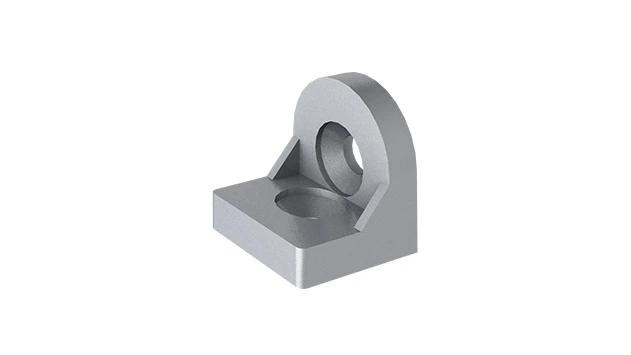
The turning angle aluminum profile connector provides a 90 degree hidden corner connection. 3030 it is means this size is used for 30 series aluminum profile.The corner code comes with set screws that allow for quick, easy connections.
In the fast-paced world of manufacturing, warehousing, and workshop management, every decision—big or small—ripples through your operations. Whether you're setting up a new production line, upgrading a workbench, or reconfiguring a material rack, the way you build and assemble these structures directly impacts two critical resources: time and money. For decades, welded connections have been the go-to method for building sturdy, fixed structures. But in an era where flexibility and lean system principles dominate, a new contender has emerged: the Turning Angle Code 3030. This small but mighty aluminum profile accessory is quietly revolutionizing how teams build, modify, and maintain everything from workbenches to complex material handling systems. Let's dive into how it stacks up against traditional welded connections, and why making the switch might be one of the smartest moves for your bottom line.
The Traditional Workhorse: Welded Connections
Welding has been the backbone of industrial construction for over a century, and for good reason. When done right, a welded joint is strong, durable, and can withstand heavy loads—qualities that make it ideal for everything from steel frames to custom machinery. But let's peel back the curtain on what welding actually entails in the context of day-to-day workshop setups.
How Welded Connections Work (and Why They're Falling Behind)
To build a welded structure—say, a basic workbench—you start with raw metal pipes or profiles. A skilled welder measures, cuts, and shapes the material, then uses high heat to melt and fuse the pieces together. After welding, the joint needs grinding to smooth rough edges, and often painting or coating to prevent rust. It's a labor-intensive process that demands precision, experience, and specialized equipment (think welders, grinders, and safety gear).
For decades, this was the only reliable way to build something sturdy. But in today's dynamic workplaces, where production lines shift, product specs change, and space constraints evolve, welded connections come with hidden costs—both in time and money. Let's break them down:
- Time-Consuming Assembly: Even a simple workbench can take a skilled welder 4–6 hours to complete. Complex structures, like multi-tiered material racks, can stretch into days. Every minute the welder spends on the job is time your team isn't using that structure to generate value.
- High Labor Costs: Skilled welders command premium hourly rates—often $30–$50 per hour, depending on location and expertise. For a single workbench, labor alone can hit $200–$300 before factoring in materials.
- No Room for Mistakes: Welding is permanent. A miscalculation in measurements or a misaligned joint means cutting the metal apart and starting over—wasting time, material, and money.
- Rigid and Unadaptable: Once welded, a structure is fixed. If you need to add a shelf, adjust the height of a workbench, or repurpose the rack for a new product, you'll likely need to cut the old welds, grind them down, and re-weld new components. It's not just time-consuming; it often renders the original structure weaker in the process.
- Maintenance Headaches: Over time, welded joints can corrode, especially in humid or industrial environments. Repairing a cracked weld means shutting down the area, grinding out the old weld, and re-welding—a process that disrupts workflow and adds unplanned costs.
In short, welded connections are like building with concrete: strong, but once set, impossible to rework without breaking everything apart. And in a world that demands agility, that rigidity is becoming a liability.
The Modern Alternative: Turning Angle Code 3030
Enter the Turning Angle Code 3030—a but powerful component in the world of aluminum profile systems. If welded connections are the "concrete" of workshop building, Turning Angle Code 3030 is the "Lego": modular, adaptable, and designed for quick, tool-free (or minimal-tool) assembly. But what exactly is it, and how does it work?
What Is Turning Angle Code 3030?
Turning Angle Code 3030 is a small, pre-fabricated bracket designed to connect 3030 aluminum profiles—the workhorses of lean system setups. 3030 aluminum profiles are lightweight, strong, and feature T-slots along their length, which act as built-in channels for attaching accessories. The angle code itself is a compact, L-shaped bracket with pre-drilled holes, designed to slide into these T-slots and secure two profiles at a 90-degree angle (or other angles, depending on the model).
But it's not just the bracket that makes this system shine—it's the ecosystem around it. When paired with other aluminum profile accessories, like 3030 aluminum profile end caps (to smooth sharp edges), screws, and T-nuts, the Turning Angle Code 3030 transforms aluminum profiles into a fully modular building system. No welding, no grinding, no special skills required—just a hex key or screwdriver, and you're ready to build.
How It Works: Simplicity by Design
Imagine building a workbench with 3030 aluminum profiles and Turning Angle Code 3030. Here's how easy it is:
- Cut Profiles to Length: Aluminum profiles come pre-cut to standard lengths, or you can cut them to your exact needs with a basic saw (no need for industrial cutting tools).
- Slide in the Angle Codes: insert the Turning Angle Code 3030 into the T-slot of one aluminum profile. Position it where you want the joint to be.
- Align and Secure: Place the second profile at the desired angle (usually 90 degrees), line up the holes in the angle code with the T-slot of the second profile, and tighten the screws with a hex key. Done.
- Finish with Accessories: Snap on 3030 aluminum profile end caps to cover the exposed ends of the profiles, adding a clean, professional look and preventing snags on clothing or materials.
That's it. No heat, no sparks, no waiting for joints to cool. An unskilled worker can assemble a basic workbench in under 2 hours—compared to 4–6 hours for welding. And the best part? If you need to adjust the height, add a shelf, or move the workbench later, you just loosen the screws, reposition the angle codes, and tighten again. It's modularity at its finest.

Time Savings: From Days to Hours (or Even Minutes)
Time is money, especially in a production environment where downtime can cost hundreds or thousands of dollars per hour. Let's compare how welded connections and Turning Angle Code 3030 stack up when it comes to the time invested in building, modifying, and repairing structures.
Assembly Time: A Night-and-Day Difference
Let's use a real-world example: building a basic workbench for an electronics assembly line. The workbench needs to be 120cm long, 60cm deep, and 80cm high, with a lower shelf for tools. Here's how the two methods compare:
Welded Connections: Your team orders steel pipes, hires a welder, and schedules the work. The welder arrives, measures and cuts the pipes (30 minutes), aligns them (20 minutes), welds the frame (1.5 hours), welds the shelf brackets (45 minutes), grinds the joints smooth (30 minutes), and paints the structure to prevent rust (1 hour). Total time: ~4.5 hours of skilled labor. And that's if everything goes perfectly—no misalignments, no rework.
Turning Angle Code 3030: You order 3030 aluminum profiles (pre-cut to length), Turning Angle Code 3030 brackets, screws, and 3030 aluminum profile end caps. A line operator—no welding experience needed—unboxes the parts, lays out the profiles, slides the angle codes into the T-slots, aligns the frame, tightens the screws (45 minutes), adds the shelf using additional angle codes (20 minutes), and snaps on the end caps (5 minutes). Total time: ~1 hour and 10 minutes. That's a 75% reduction in assembly time.
For larger projects—say, a 10-workbench production line—the savings compound. Welding would take 45+ hours (over 5–6 workdays), while Turning Angle Code 3030 could have the entire line up and running in under 12 hours (1–2 days). That's days of production time saved, just from how you build your workbenches.
Modification Time: Adapt in Minutes, Not Days
Now, let's say six months later, your team needs to add a second shelf to each workbench to accommodate new tools. With welded connections, this is a major project: you'd need to hire the welder again, who would cut steel brackets, grind off paint from the existing frame, weld the new brackets (risking warping the original structure), grind the new welds, and repaint. Each workbench would take 1–2 hours, totaling 10–20 hours for the line. During that time, the workbenches are out of commission, slowing down production.
With Turning Angle Code 3030? The line operator grabs a hex key, loosens the screws on the existing angle codes, slides new aluminum profiles into place for the second shelf, secures them with additional angle codes, and tightens everything up. Each workbench takes 15–20 minutes—total time for 10 workbenches: 2.5–3 hours. No production downtime, no welder fees, just a quick adjustment.
Repair Time: Fix It Now, Not Later
Even the sturdiest structures take wear and tear. A welded joint might crack after years of heavy use, or a shelf might sag from overloading. Repairing a welded joint means shutting down the area, grinding out the old weld, re-welding, and repainting—hours of downtime and hundreds of dollars in labor. With Turning Angle Code 3030, most issues are fixed in minutes: a loose joint? Tighten the screw. A bent profile? Swap it out with a new one using the same angle codes. No grinding, no welding, no downtime.

Cost Savings: Beyond the Initial Price Tag
Time savings alone make Turning Angle Code 3030 compelling, but the cost savings are equally impressive. Let's break down where the numbers add up—from labor to materials to long-term ROI.
Labor Costs: Pay Less, Get More
Skilled welders are expensive, and for good reason—their trade requires years of training. But with Turning Angle Code 3030, you don't need a welder. A line operator, maintenance tech, or even a new hire can assemble structures with minimal training. At $15–$20 per hour (vs. $30–$50 for a welder), labor costs for assembly drop by 50% or more.
Take our earlier 10-workbench example: Welding would cost $30/hour x 45 hours = $1,350 in labor. With Turning Angle Code 3030: $15/hour x 12 hours = $180. That's a $1,170 savings on labor alone for one project.
Material Costs: Less Waste, More Value
Aluminum profiles and Turning Angle Code 3030 brackets have a higher upfront material cost than raw steel pipes, but they more than make up for it in reduced waste. Welding often involves cutting steel to size, and any mistake means scrapping the material. With aluminum profiles, pre-cut lengths and modular brackets eliminate waste—you only use what you need. Plus, aluminum is lighter than steel, reducing shipping and handling costs.
Long-Term ROI: Adapt, Don't replace
The biggest cost savings come from adaptability. A welded workbench that's no longer needed becomes scrap metal. With Turning Angle Code 3030, that same workbench can be disassembled, and the aluminum profiles and brackets reused to build a new material rack, a cart, or a different-sized workbench. Over time, this "reuse and repurpose" cycle drastically reduces the need to buy new materials, cutting long-term costs by 30–50%.
Real-World Impact: A Lean System Success Story
To put this in perspective, let's look at a small manufacturing company that made the switch. ABC Electronics, a producer of consumer gadgets, was struggling with rigid, welded workbenches that couldn't keep up with their fast-changing production needs. When they launched a new product line, they needed to reconfigure 12 workbenches to accommodate larger components. With welded benches, their options were: hire welders to modify the existing benches ($2,500 and 3 days of downtime) or buy new ones ($6,000 and 2 weeks lead time).
Instead, they invested in 3030 aluminum profiles, Turning Angle Code 3030 brackets, and 3030 aluminum profile end caps. Their team disassembled the old welded benches (salvaging some parts for scrap), and assembled 12 new, modular workbenches in just 2 days. Total cost: $3,000 for materials, and zero downtime (they assembled the new benches during a weekend). Six months later, when they needed to adjust the height of 8 workbenches for a new team member, they did it in 4 hours with a hex key. No welders, no downtime, no extra cost.
ABC Electronics estimates that over 3 years, switching to Turning Angle Code 3030 saved them over $20,000 in labor, materials, and downtime. And because the structures are modular, they're better aligned with their lean system goals—eliminating waste, improving flexibility, and keeping production flowing even as needs change.
Side-by-Side Comparison: Welded vs. Turning Angle Code 3030
| Metric | Welded Connections | Turning Angle Code 3030 |
|---|---|---|
| Assembly Time (Basic Workbench) | 4–6 hours (skilled welder) | 1–1.5 hours (unskilled labor) |
| Modification Time (Add Shelf) | 1–2 hours per structure | 15–30 minutes per structure |
| Repair Time (Loose/Joint Failure) | 2–3 hours (grind, re-weld, paint) | 5–10 minutes (tighten screws or replace bracket) |
| Labor Cost (10-Workbench Line) | $1,350+ (welder @ $30/hour x 45 hours) | $180 (unskilled labor @ $15/hour x 12 hours) |
| Material Waste | High (scrap from cutting errors, rework) | Low (modular components, no rework) |
| Long-Term Adaptability | None (permanent; must replace to reconfigure) | High (easily disassembled, reused, or reconfigured) |
Conclusion: Build for the Future, Not Just Today
Welded connections have served us well for decades, but in a world that demands speed, flexibility, and lean system efficiency, they're no longer the best tool for the job. Turning Angle Code 3030—paired with 3030 aluminum profiles and aluminum profile accessories like end caps—offers a smarter way to build. It cuts assembly time by 75%, slashes labor costs, and lets you adapt structures in minutes instead of days. It's not just about saving time and money today; it's about building a workspace that can grow, change, and evolve with your business.
Whether you're setting up a new production line, upgrading your workbenches, or rethinking your material handling systems, the choice is clear: rigid, permanent welded connections belong in the past. Turning Angle Code 3030 is the future—modular, adaptable, and designed to keep your team productive, your costs low, and your business ready for whatever comes next.