- Company Articles
- Products and Technology
- Product knowledge
- Turning Angle Code 3030 Weight: Impact on Portable Production Equipment

Turning Angle Code 3030 Weight: Impact on Portable Production Equipment
Related Product
Turning Angle Code 3030
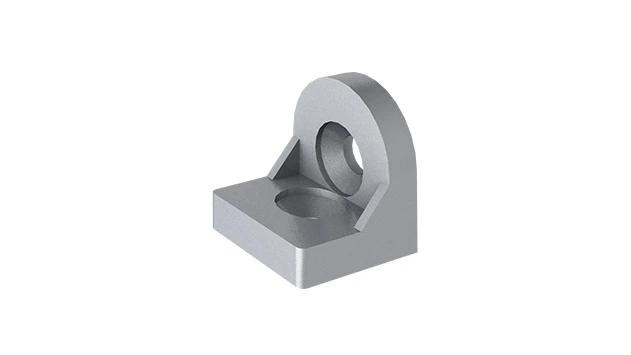
The turning angle aluminum profile connector provides a 90 degree hidden corner connection. 3030 it is means this size is used for 30 series aluminum profile.The corner code comes with set screws that allow for quick, easy connections.
Introduction: The Unsung Hero of Flexible Manufacturing
In the fast-paced world of modern manufacturing, where adaptability and efficiency reign supreme, portable production equipment has become the backbone of lean operations. From assembly lines that reconfigure overnight to workstations that shift with changing production needs, the ability to move, adjust, and repurpose equipment directly impacts a facility's bottom line. Yet, behind the scenes of these agile setups lies a network of small, often overlooked components that make this flexibility possible. One such component is the turning angle code 3030—a unassuming yet critical piece in the puzzle of aluminum profile systems. While its primary role is to connect aluminum profiles at precise angles, its weight plays a far bigger role than many realize. In this article, we'll dive into why the weight of the turning angle code 3030 matters, how it influences the performance of portable equipment like workbenches and turnover trolleys, and why manufacturers and facility managers should pay closer attention to this tiny but mighty part.
What Is a Turning Angle Code 3030, Anyway?
Before we unpack its weight impact, let's get clear on what a turning angle code 3030 actually is. If you've ever walked through a factory or warehouse, you've likely seen aluminum profile structures—think workbenches with metal frames, material racks with sleek shelves, or trolleys gliding across the floor. These structures are built using aluminum profiles: long, extruded bars with T-slots that allow for easy attachment of accessories. To connect these profiles at angles (like corners or joints), you need angle codes—and the turning angle code 3030 is designed specifically for 3030 aluminum profiles (profiles with a 30mm x 30mm cross-section).
Picture it as a small, L-shaped bracket, often made of aluminum alloy, with pre-drilled holes that align with the T-slots of 3030 profiles. When paired with bolts or screws, it locks two profiles together at a 90-degree angle, creating stable corners for frames, shelves, or work surfaces. Its design is simple, but its role is foundational: without reliable angle codes, aluminum profile structures would wobble, fail under load, or lack the precision needed for production work. And while there are angle codes for other profile sizes (like 2020 or 4040), the 3030 version is particularly popular for mid-sized equipment—think workbenches, small material racks, and lightweight turnover trolleys—where balance between strength and portability is key.

Why Weight Matters: The Portable Equipment Paradox
Portable production equipment lives in a paradox: it needs to be strong enough to support tools, materials, and workers, yet light enough to be moved by hand or with minimal effort. A workbench that's too heavy becomes a fixed fixture, defeating the purpose of flexibility; one that's too light risks instability when loaded with parts. This balance is where components like the turning angle code 3030 come into play. While a single angle code might weigh just a few hundred grams, multiply that by the dozens used in a single structure—say, a workbench with 8 corners or a trolley with 12 joints—and suddenly, those grams add up to kilograms. Over time, that extra weight impacts everything from operator fatigue to caster durability, and even the frequency with which equipment is actually moved (a critical factor in lean systems that rely on quick reconfiguration).
Consider this scenario: A manufacturing team needs to shift a workbench from one side of the floor to another to accommodate a rush order. If the bench is 10kg heavier than necessary due to heavier angle codes, the two workers assigned to move it will exert more energy, take longer, and may even risk injury. Multiply that by daily adjustments across multiple workstations, and the cumulative effect on productivity and worker well-being becomes significant. For turnover trolleys—equipment designed to transport materials between stations—excess weight reduces payload capacity (since the trolley itself is heavier) and increases wear on casters, leading to more frequent replacements. In short, the weight of the turning angle code 3030 isn't just a technical detail; it's a practical concern that ripples through daily operations.

Breaking Down the Weight of Turning Angle Code 3030
Material Matters: Aluminum Alloy vs. Steel
The first factor influencing the weight of a turning angle code 3030 is its material. Most angle codes are made from aluminum alloy—specifically, alloys like 6063 or 6061, which are prized for their strength-to-weight ratio and corrosion resistance. Aluminum is inherently lighter than steel: a solid steel angle code of the same size would weigh roughly three times as much as an aluminum one. For example, a standard aluminum turning angle code 3030 might weigh around 50-80 grams, while a steel equivalent could hit 150-240 grams. That's a massive difference when scaling up to a structure with 20 angle codes—aluminum would add 1-1.6kg, steel 3-4.8kg. For portable equipment, aluminum's lightness is a clear win, but manufacturers sometimes opt for steel in heavy-duty applications where maximum strength is needed (e.g., industrial racks holding thousands of kilograms). However, in portable setups, steel angle codes often tip the scales into "too heavy" territory, making aluminum the default choice.
Design: Hollow vs. Solid, Thickness, and Cutouts
Even among aluminum angle codes, design choices affect weight. Some turning angle code 3030 models are solid, while others are hollow or feature cutouts to reduce mass without sacrificing strength. A solid angle code might offer slightly more rigidity, but the hollow version—with strategically placed reinforcing ribs—can often match that strength at a fraction of the weight. For instance, a solid 3030 angle code could weigh 80 grams, while a hollow, ribbed design might drop to 55 grams. That 25-gram difference per code adds up quickly: on a workbench with 12 angle codes, that's 300 grams saved—enough to make the bench noticeably easier to move. Additionally, the thickness of the aluminum walls plays a role. Thicker walls (e.g., 2mm vs. 1.5mm) add weight but increase load-bearing capacity, so manufacturers must strike a balance based on the equipment's intended use. A lightweight turnover trolley might use thinner walls, while a workbench supporting heavy machinery would opt for thicker, heavier angles.
Manufacturing Processes: Extrusion vs. Machining
How an angle code is made also impacts its weight. Most aluminum angle codes are extruded: heated aluminum is forced through a die to create the basic L-shape, then cut to size and drilled for holes. Extrusion allows for consistent wall thickness and efficient material use, resulting in lighter parts. In contrast, some custom angle codes are machined from solid blocks of aluminum, which can leave excess material (and thus extra weight) if not optimized. For example, an extruded turning angle code 3030 might weigh 60 grams, while a machined version of the same design could weigh 75 grams due to thicker, unoptimized sections. While machining offers precision for unique angles or custom holes, it's often heavier than extrusion—another reason why most standard angle codes stick to the latter method.
Real-World Impact: Case Studies on Portable Equipment
Case Study 1: Workbench E (Single Deck-Without Caster)
Let's take a concrete example: Workbench E, a common single-deck aluminum profile workbench designed for assembly tasks. This bench uses 3030 aluminum profiles for its frame, with 8 turning angle code 3030s connecting the legs to the tabletop frame and the cross-braces. If we compare two versions of this bench—one using standard hollow aluminum angle codes (55g each) and another using heavier solid steel angle codes (180g each)—the weight difference is stark. The aluminum angle codes add 8 x 55g = 440g to the frame, while the steel ones add 8 x 180g = 1,440g. That's a 1kg difference just from the angle codes! When you factor in the rest of the frame (profiles, tabletop, etc.), the total weight of the aluminum-coded bench might be 45kg, while the steel-coded version hits 46kg. On paper, 1kg seems small, but in practice, moving a 46kg bench requires more effort than a 45kg one. Over time, this extra effort leads to slower reconfigurations, more worker fatigue, and even a reluctance to move the bench unless absolutely necessary—undermining the lean principle of "flow" and adaptability.
But what if the workbench later gets fitted with casters (as many do)? The heavier angle codes add to the total weight the casters must support, increasing rolling resistance and wear. A caster rated for 50kg might last 2 years under a 45kg load but only 1.5 years under 46kg, leading to more frequent replacements and downtime. For facilities with dozens of such workbenches, these small differences multiply into significant costs and inefficiencies.
Case Study 2: Turnover Trolley B (3 Row and 3 Floor)
Turnover trolleys are another area where angle code weight shines (or struggles). Trolley B, a 3-row, 3-floor material rack designed to transport parts between assembly stations, relies heavily on turning angle code 3030s to connect its vertical posts, horizontal shelves, and side rails. With 24 angle codes in total (one at each shelf corner), the weight of these codes directly impacts how much the trolley can carry and how easily it moves. Let's say the trolley's base weight (without angle codes) is 30kg. Using lightweight aluminum angle codes (60g each) adds 24 x 60g = 1.44kg, bringing total base weight to 31.44kg. If the trolley has a maximum payload of 100kg, that leaves 68.56kg for materials. Now, swap in heavier angle codes (90g each): total base weight jumps to 30kg + (24 x 90g) = 32.16kg, reducing payload capacity to 67.84kg. Over a day of 10 trips, that's a loss of 7.2kg in material transport—enough to delay production or require extra trips. For a facility running two shifts, that's 14.4kg of lost capacity daily, or over 3.5 tons per year. Suddenly, the weight of those 24 small angle codes is affecting the trolley's core purpose: moving materials efficiently.
Worse, heavier trolleys are harder to push, especially over uneven factory floors. An operator pushing a 32kg trolley loaded with 68kg of parts will exert more force than one pushing 31kg with the same load. Over weeks and months, this increased effort leads to higher fatigue, lower morale, and a higher risk of musculoskeletal injuries—costs no facility can afford.
Comparing Angle Codes: How 3030 Stacks Up
To put the turning angle code 3030's weight in perspective, let's compare it to other common angle codes used in aluminum profile systems. The table below breaks down key details for 2020, 3030, and 4040 angle codes—three of the most widely used sizes in manufacturing.
| Angle Code Type | Material | Approx. Weight (per unit) | Profile Compatibility | Typical Application | Portability Impact |
|---|---|---|---|---|---|
| Turning Angle Code 2020 | Aluminum Alloy (6063) | 30-40g | 20mm x 20mm profiles | Small shelves, light tool holders | Low (lightweight, minimal impact) |
| Turning Angle Code 3030 | Aluminum Alloy (6061/6063) | 50-80g | 30mm x 30mm profiles | Workbenches, turnover trolleys, mid-sized racks | Medium (critical balance of strength/weight) |
| Turning Angle Code 4040 | Aluminum Alloy (6061) | 100-150g | 40mm x 40mm profiles | Heavy-duty racks, industrial workstations | High (weight adds up quickly; less portable) |
The table highlights why the 3030 angle code is such a workhorse: it balances weight and strength for the mid-sized equipment that forms the backbone of portable production. The 2020 code is lighter but too small for most workbenches or trolleys, while the 4040 code is strong but heavy, making it better suited for fixed structures. For portable setups, the 3030's 50-80g range hits the sweet spot—light enough to keep equipment movable, strong enough to support daily use. However, as we've seen, even within that range, the specific weight (50g vs. 80g) matters, which is why manufacturers often offer "standard" and "lightweight" versions of the 3030 code to match different needs.
The Lean Connection: How Angle Code Weight Supports Lean Systems
Lean manufacturing is all about eliminating waste—whether it's time, materials, or effort. Portable equipment is a cornerstone of lean because it reduces the waste of "motion" (workers moving to materials) and "waiting" (delays from fixed setups). But for this to work, the equipment itself must align with lean principles, and that includes its weight. The turning angle code 3030, when optimized for lightness, directly supports key lean goals:
- Quick Changeovers: Lighter equipment reconfigures faster, reducing setup time between production runs. A workbench with lightweight angle codes can be moved and adjusted in minutes, not hours.
- 5S Compliance: The 5S methodology (Sort, Set in Order, Shine, Standardize, Sustain) relies on a clean, organized workspace. Lighter trolleys and racks are easier to clean around and reposition, making it simpler to maintain order.
- Employee Engagement: When equipment is easy to move, workers are more likely to take ownership of their space, adjusting it to fit their needs and improving overall satisfaction.
- Continuous Improvement: Lean thrives on experimentation—trying new layouts, testing new workflows. Lighter angle codes lower the barrier to experimentation, encouraging teams to iterate and find better ways to work.
In short, the weight of the turning angle code 3030 isn't just about physics; it's about philosophy. By choosing a lighter, optimized angle code, manufacturers aren't just saving grams—they're investing in a leaner, more adaptable operation.
Conclusion: Small Component, Big Impact
The turning angle code 3030 may be small, but its weight carries big consequences for portable production equipment. From workbenches that struggle to move to trolleys that can't carry their full load, the grams in this tiny component add up to real-world inefficiencies, costs, and even safety risks. As manufacturers continue to prioritize flexibility and lean principles, paying attention to the weight of angle codes—and choosing lightweight, aluminum-based designs—will become increasingly important. After all, in a world where every second and every kilogram counts, the difference between a 50g and 80g angle code isn't just a number; it's the difference between a smooth, adaptable workflow and one weighed down by unnecessary bulk.
So, the next time you're spec'ing out a workbench, trolley, or material rack, take a moment to look at the angle codes. Ask your supplier about weight options, material choices, and design optimizations. Your workers will thank you for the lighter load, your maintenance team for fewer caster replacements, and your bottom line for the improved efficiency. Sometimes, the smallest parts make the biggest difference.