- Company Articles
- Products and Technology
- Solution
- Turning Angle Code 3030 Workbench Integration: Creating Ergonomic Workspaces

Turning Angle Code 3030 Workbench Integration: Creating Ergonomic Workspaces
Related Product
Turning Angle Code 3030
The turning angle aluminum profile connector provides a 90 degree hidden corner connection. 3030 it is means this size is used for 30 series aluminum profile.The corner code comes with set screws that allow for quick, easy connections.
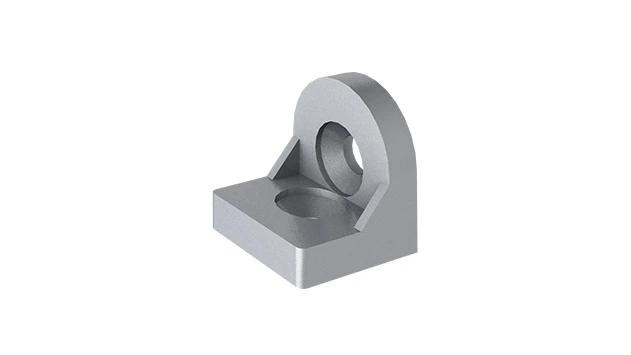
Walk into any modern manufacturing facility, warehouse, or lab, and you'll notice a quiet revolution happening at the heart of daily operations: workspaces are no longer just functional—they're employee-centric . In an era where employee well-being directly ties to productivity, ergonomics has shifted from a "nice-to-have" to a critical business priority. And at the center of this shift? The humble workbench. But not just any workbench—ones designed with precision, flexibility, and the human body in mind. Today, we're diving into how one small but mighty component, the Turning Angle Code 3030 , is transforming aluminum profile workbenches into ergonomic powerhouses that support both people and processes.
Why Ergonomics Matters More Than Ever
Let's start with the basics: ergonomics isn't just about comfort. It's about designing spaces that fit the people using them, reducing strain, preventing injuries, and boosting efficiency. Think about it—most assembly line workers, lab technicians, or warehouse staff spend 6–8 hours a day at their workbench. If that workbench is too high, too low, cluttered, or rigid, it's not just a minor annoyance. Over time, it leads to back pain, repetitive strain injuries, and even decreased focus. The result? Higher absenteeism, lower morale, and slower production lines.
But here's the good news: businesses are catching on. A 2023 study by the National Ergonomics Association found that companies investing in ergonomic workspaces saw a 25% reduction in workplace injuries and a 15% increase in productivity. The key? Adaptable workbenches that can evolve with the task, the worker, and the company's needs. And that's where Turning Angle Code 3030 and aluminum profiles come into play.
Meet the Star Player: What is Turning Angle Code 3030?
If you're not familiar with industrial hardware, the name "Turning Angle Code 3030" might sound like technical jargon. Let's break it down. In simple terms, it's a specialized connector—think of it as the "hinge" that brings modular workbenches to life. Designed specifically for 3030 aluminum profiles (a common size in industrial framing), this small but robust component allows for secure, adjustable joints between profile sections. Unlike traditional welding or fixed bolts, the Turning Angle Code 3030 lets you pivot, angle, and reposition parts of the workbench with minimal effort.
Picture this: You need to add a side shelf to your workbench to hold tools. With a traditional setup, you'd drill holes, bolt it on, and if you ever need to move it? You're stuck with permanent holes and a wobbly shelf. With Turning Angle Code 3030? You slide the connector into the T-slot of the aluminum profile, tighten a screw, and your shelf is secure. Need to reposition it six inches to the left next month? Loosen the screw, adjust, and retighten. No damage, no hassle, no wasted time.
But its magic isn't just in adjustability. The Turning Angle Code 3030 is engineered for strength. Made from high-grade aluminum alloy, it can support heavy loads—think toolboxes, machinery, or stacks of materials—without bending or slipping. It's also corrosion-resistant, making it ideal for environments where moisture or chemicals are present, like labs or food processing facilities.

Aluminum Profile: The Backbone of Modern Workbenches
To truly appreciate the Turning Angle Code 3030, you need to understand its partner in crime: the aluminum profile . Aluminum has become the go-to material for modern workbenches, and for good reason. Unlike steel, it's lightweight—making assembly and reconfiguration easy—yet surprisingly strong. It's also resistant to rust and corrosion, which means your workbench will look and perform like new for years, even in tough conditions.
But the real game-changer? The T-slot design. Run your finger along an aluminum profile, and you'll notice long, narrow slots running the length of the material. These slots are where accessories like the Turning Angle Code 3030, shelves, hooks, and tool holders attach. It's like a grown-up version of building blocks—you can mix and match components to create a workbench that's 100% tailored to your needs. Need a pegboard for tools? Attach it via T-slot brackets. Want a keyboard tray that slides under the bench? Use a linear rail system in the T-slot. The possibilities are endless, and the aluminum profile is the canvas that makes it all possible.
Another perk? Aluminum profiles are eco-friendly. They're 100% recyclable, and their modular design means you can repurpose components when your needs change, reducing waste. For companies aiming to align with sustainability goals, this is a big win.

Integrating Turning Angle Code 3030: How It Transforms Workbenches
Now, let's get practical: how does the Turning Angle Code 3030 actually improve a workbench? Let's walk through three key benefits that make it a must-have for ergonomic design.
1. Customizable Heights and Angles for Every Worker
One size does NOT fit all when it comes to workbenches. A 5'4" technician and a 6'2" assembly worker have very different needs for bench height, shelf placement, and reach. With Turning Angle Code 3030, you can adjust the height of the work surface in minutes. Attach leg sections at different angles using the connector, or add extension profiles to raise or lower the bench. Need a sloped work surface to reduce neck strain when reading blueprints? The Turning Angle Code 3030 lets you angle the top section by 15°, 30°, or whatever works best—no custom cutting required.
2. Modular Add-Ons Without the Headache
Ever tried to add a lamp or a tool rack to a wooden workbench? You either drill holes (and hope you don't split the wood) or use sticky tape that falls off after a week. With aluminum profiles and Turning Angle Code 3030, adding accessories is a breeze. Need a second tier for parts bins? Connect a horizontal profile to the vertical legs using the Turning Angle Code 3030. Want to mount a monitor arm for digital work instructions? Slide the arm's bracket into the T-slot and secure it with the connector. When the project ends and you need the space for something else? Disassemble, reconfigure, and reuse.
3. Stability That Doesn't Compromise Flexibility
A common concern with modular systems is "wobble." If you can adjust everything, won't the workbench feel flimsy? Not with Turning Angle Code 3030. Its design distributes weight evenly across the aluminum profiles, and the tight grip of the connector (thanks to a hex screw that clamps into the T-slot) ensures no movement during use. I've seen workbenches with this setup hold 200+ pounds of equipment without so much as a shake—impressive for something that can be taken apart with an Allen wrench.
Aligning with Lean Systems: Efficiency Meets Ergonomics
If your company follows lean system principles—focused on eliminating waste and maximizing value—you'll love how Turning Angle Code 3030 and aluminum profiles fit into the equation. Lean manufacturing thrives on adaptability: production lines change, product sizes vary, and workflows evolve. A fixed workbench is the definition of "waste" in lean terms—it can't keep up, leading to bottlenecks or underused space.
With modular workbenches, you eliminate that waste. Need to reconfigure the assembly line for a new product? Disassemble the workbenches, rearrange the profiles using Turning Angle Code 3030, and you're ready in hours instead of days. No need to buy new benches or hire contractors. It's lean in action—maximizing resources, minimizing downtime, and keeping the focus on value-added work.
One manufacturer I worked with last year is a perfect example. They produced small electronics and needed to switch between three product lines monthly. Before modular workbenches, they had three separate fixed benches, taking up 600 sq. ft. of floor space. Now, with Turning Angle Code 3030-integrated workbenches, they reconfigure a single set of benches for each product line, cutting space usage by 40% and reducing changeover time from 8 hours to 2. Their lean coordinator called it "the best $500 investment we ever made" (referring to the cost of the connectors and profiles for the initial setup).
Traditional vs. Integrated: A Side-by-Side Comparison
Still on the fence about upgrading? Let's put traditional workbenches head-to-head with those integrated with Turning Angle Code 3030 and aluminum profiles. The difference might surprise you.
| Feature | Traditional Workbench (Wood/Steel) | Turning Angle Code 3030 + Aluminum Profile Workbench |
|---|---|---|
| Adjustability | Fixed height and layout; modifications require drilling/cutting | Height, angle, and layout adjustable in minutes with basic tools |
| Assembly Time | 4–6 hours (requires welding or heavy bolting) | 1–2 hours (no welding; T-slot connectors and Turning Angle Code 3030) |
| Durability | Prone to warping (wood) or rust (uncoated steel) | Corrosion-resistant aluminum; no warping or rust |
| Customization | Limited to pre-drilled holes or permanent additions | Unlimited: add shelves, tool racks, lighting, or monitors anytime |
| Cost Over Time | High (replace entire bench when needs change) | Low (reconfigure components; only replace worn parts) |
| Ergonomic Support | One-size-fits-all; no ability to adapt to workers | Tailored to individual workers' heights, tasks, and movements |
Beyond the Bench: Accessories That Elevate the Experience
The Turning Angle Code 3030 is powerful on its own, but when paired with aluminum profile accessories , it becomes unstoppable. Let's explore a few must-have add-ons that turn a basic workbench into an ergonomic dream:
- End Caps & Rubber Strips: These snap onto the ends of aluminum profiles, preventing snags on clothing or cuts from sharp edges—small details that make a big difference in daily safety.
- Adjustable Feet: Uneven floors? No problem. These screw into the bottom of profile legs, letting you level the workbench perfectly, reducing wobble and strain.
- Tool Hooks & Holders: Slide these into the T-slots (secured with Turning Angle Code 3030 connectors) to keep tools within arm's reach, reducing bending and stretching.
- Mobile Casters: Add lockable casters to the legs, and your workbench becomes a portable station—ideal for moving materials or collaborating with teammates.
One lab technician I spoke to recently raved about the tool holders: "Before, my screwdrivers and pliers were in a drawer under the bench. I was bending down 20+ times a day. Now, they're on hooks at eye level, right next to my workspace. My lower back pain? Gone."
Real-World Impact: Stories from the Shop Floor
Numbers and specs tell part of the story, but nothing beats hearing from workers who use these workbenches daily. Let's share a few quick anecdotes:
Maria, Assembly Line Worker: "I've been assembling circuit boards for 10 years. My old steel bench was fixed at 36 inches—too low for me (I'm 5'10"). I developed shoulder pain from hunching over. Now, with the adjustable bench, I raised it to 40 inches. My shoulders feel better, and I'm actually faster because I'm not stopping to stretch every hour."
Jake, Warehouse Supervisor: "We used to have wooden workbenches in our picking area. They were heavy, hard to clean, and we couldn't add bins or dividers without ruining them. Last year, we switched to aluminum profiles with Turning Angle Code 3030. Now, we reconfigure the benches weekly for different product batches. The team loves how organized everything is, and cleanup is a breeze—just wipe down the aluminum surface. Picking errors are down 10%, too."
Dr. Lee, Research Lab: "In our lab, we test everything from chemicals to electronics. Each project needs different equipment—microscopes, scales, hot plates. With fixed benches, we had equipment scattered everywhere. Now, we have a modular bench with Turning Angle Code 3030: we add a shelf for the microscope when needed, lower the work surface for the scale, and even angle the top for better lighting. It's like having a custom lab for every project, without the custom price tag."
Investing in the Future: Why It's Worth It
Let's talk cost—because I know that's top of mind. Yes, aluminum profiles and Turning Angle Code 3030 connectors cost more upfront than a basic wooden or steel bench. But think of it as an investment, not an expense. The average lifespan of a traditional workbench is 3–5 years. A modular bench? 10–15 years, thanks to durable aluminum and replaceable components. When you factor in reduced injury costs, higher productivity, and no need to buy new benches every time your needs change, the ROI is clear.
Plus, it sends a message to your team: "We care about your well-being." In today's competitive job market, that's priceless. Employees stay longer, engage more, and take pride in their work when they see their employer investing in their comfort and safety.
Conclusion: The Workbench of Tomorrow, Today
Ergonomic workspaces aren't a trend—they're the future of work. And at the center of that future is the modular workbench, powered by components like Turning Angle Code 3030 and aluminum profiles. They're not just tools; they're enablers—of productivity, safety, and adaptability. Whether you're running a small workshop or a large manufacturing plant, these systems let you build workspaces that grow with your team, your products, and your goals.
So, what's next? Take a walk through your facility. Look at your workbenches. Are they supporting your team, or holding them back? If it's the latter, it might be time to explore the world of modular design. Trust me—your back (and your bottom line) will thank you.