- Company Articles
- Products and Technology
- Product knowledge
- Turning Angle Code 4040: Definition, Functions, and Technical Specifications

Turning Angle Code 4040: Definition, Functions, and Technical Specifications
Related Product
Turning Angle Code 4040
The turning angle aluminum profile connector provides a 90 degree hidden corner connection. 4040 it is means this size is used for 40 series aluminum profile.The corner code comes with set screws that allow for quick, easy connections.
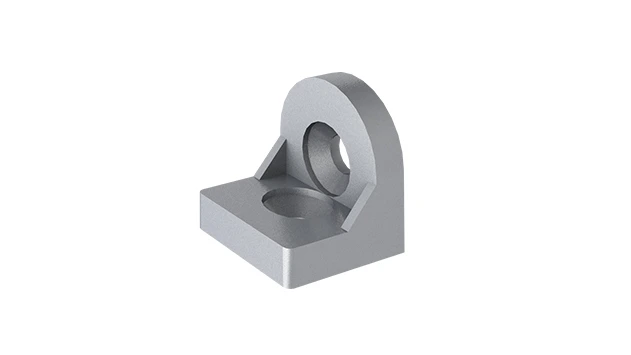
Walk into any well-oiled manufacturing facility, and you'll notice a rhythm—a seamless flow of materials, tools, and people moving in harmony. Behind that rhythm lies a hidden network of components working together, often unnoticed, to keep operations running smoothly. Today, we're shining a light on one such component: the Turning Angle Code 4040 . It might not have the flash of a high-tech conveyor or the size of a heavy-duty workbench, but in the world of lean systems and aluminum profile structures, this small but mighty hardware piece is the quiet architect of stability and flexibility.
Whether you're setting up a new assembly line, reconfiguring a workbench, or building a custom flow rack, the Turning Angle Code 4040 plays a critical role in bringing your vision to life. Let's dive into what it is, how it works, and why it's become a staple for manufacturers, workshops, and lean system suppliers worldwide.
What Is a Turning Angle Code 4040, Exactly?
At its core, a Turning Angle Code 4040 is a precision-engineered hardware component designed to connect two aluminum profiles at a 90-degree angle. Think of it as the "cornerstone" of structural frames—like the bracket that holds a bookshelf together, but built for the demands of industrial environments. If aluminum profiles are the "bones" of your workstation or material rack, the Turning Angle Code 4040 is the "joint" that keeps those bones aligned and strong.
The "4040" in its name isn't arbitrary. It refers to the size of the aluminum profiles it's designed to work with: 40mm x 40mm profiles, one of the most widely used sizes in industrial setups. These profiles, with their T-slot design, allow for endless customization—adding shelves, hooks, conveyors, or casters—but none of that matters if the connections between profiles are weak. That's where the Turning Angle Code 4040 steps in: it locks profiles together securely, ensuring your structure can handle the weight of tools, materials, and daily wear and tear.
The Big Roles of a "Small" Component: Key Functions of the Turning Angle Code 4040
You might be thinking, "It's just a metal bracket—how important can it be?" Let's put it this way: a house is only as strong as its nails and screws. Similarly, an aluminum profile structure is only as reliable as the components holding its profiles together. Here's how the Turning Angle Code 4040 earns its keep:
1. Creating Rock-Solid 90-Degree Connections
The primary job of the Turning Angle Code 4040 is to join two 4040 aluminum profiles at a right angle—think the corner of a workbench, the vertical leg and horizontal frame of a flow rack, or the side rails of a turnover trolley. Unlike generic brackets that might slip or loosen over time, this angle code is engineered to fit the T-slots of 4040 profiles perfectly. Its design ensures that when you tighten the screws (usually with a hex key), the code "grips" the profile from the inside, creating a connection that won't shift, even under vibration or heavy loads.
Imagine building a workbench where the legs wobble every time you set down a power tool. Not only is that frustrating, but it's also a safety hazard. The Turning Angle Code 4040 eliminates that risk by turning two separate profiles into a unified, rigid corner.
2. Boosting Structural Stability (Even for Heavy-Duty Tasks)
Manufacturing environments are tough. Workbenches hold heavy machinery, flow racks stack boxes of components, and material trolleys carry loads across factory floors. The Turning Angle Code 4040 isn't just about "connecting"—it's about reinforcing . Made from high-grade aluminum alloy (typically 6063-T5, known for its strength and corrosion resistance), it distributes weight evenly across the connected profiles, preventing stress points that could lead to bending or breakage.
For example, a material rack B (3 row and 3 floor) —a common setup for storing parts in lean systems—relies on multiple Turning Angle Code 4040s to hold its vertical and horizontal profiles together. Without these angle codes, the rack might sag under the weight of stacked materials, putting inventory (and workers) at risk. With them? It stands firm, even when fully loaded.
3. Enabling Lean Flexibility: Easy to Install, Adjust, and Reuse
Lean manufacturing is all about adaptability—responding quickly to changing production needs, reducing waste, and optimizing space. The Turning Angle Code 4040 aligns perfectly with this philosophy. Unlike welded connections (which are permanent and time-consuming to modify), angle codes are designed for tool-free or simple hex-key installation. This means you can:
- Assemble quickly : No waiting for welds to cool or hiring a specialist—your team can put together a frame in hours, not days.
- Reconfigure on the fly : Need to shorten a workbench or add a shelf to a flow rack? Simply loosen the screws, adjust the angle code, and retighten. No cutting or rewelding required.
- Reuse components : When a project ends or a design changes, the angle codes (and the profiles they connect) can be disassembled and repurposed for new setups, reducing material waste—a core lean principle.
This flexibility is why lean system suppliers often recommend Turning Angle Code 4040s for clients who need modular, future-proof structures.
4. Playing Well with Others: Compatibility with Aluminum Profile Accessories
In industrial setups, no component works alone. Your aluminum frame might need to attach to caster wheels for mobility, roller tracks for material flow, or aluminum profile accessories like end caps or rubber strips. The Turning Angle Code 4040 is designed to play nice with this ecosystem.
Its low-profile design means it won't interfere with T-slot accessories mounted on the same profile. For example, if you're building a mobile workbench (like Workbench E (single deck-without caster) later fitted with casters), the angle codes at the base won't block the holes needed to attach caster mounting plates. This compatibility ensures your structure can grow and adapt without redesigning from scratch.

Under the Hood: Technical Specifications That Matter
Not all angle codes are created equal. The Turning Angle Code 4040's performance depends on its design and materials. Let's break down the key specs you need to know when sourcing from a lean pipe supplier or aluminum profile specialist:
| Parameter | Typical Specification | Why It Matters |
|---|---|---|
| Material | Aluminum Alloy 6063-T5 | 6063-T5 offers a balance of strength (tensile strength ~180 MPa), lightweight, and corrosion resistance—ideal for industrial environments where durability is key. |
| Dimensions | 40mm (length) x 40mm (width) x 8-10mm (thickness) | Matches the 4040 profile size, ensuring a snug fit. Thickness varies by load rating—heavier-duty models may be 10mm thick. |
| Hole Size & Thread | M5 or M6 threaded holes (2-4 holes per code) | Threaded holes accept standard hex screws (often included with the angle code) to lock it into the profile's T-slot. |
| Load Capacity | Static: 500-800 kg per connection; Dynamic: 300-500 kg (varies by brand) | Static load is weight when stationary (e.g., a loaded shelf), dynamic is weight in motion (e.g., a moving trolley). Always check with your supplier for exact ratings. |
| Surface Treatment | Anodized (clear, silver, or black) | Anodizing adds a protective layer, preventing rust and wear. It also gives a clean, professional finish that resists scratches. |
| Compatibility | 4040 EU Standard Profiles, 4040 National Standard Profiles | Ensure the angle code fits your profile type—EU and national standard profiles may have slightly different slot dimensions. |
| Installation Tool | Hex Key (Allen Wrench) – Size 4 or 5mm | Simple tooling means anyone on your team can install or adjust it, no special equipment needed. |
| Temperature Resistance | -20°C to 80°C (-4°F to 176°F) | Withstands the temperature swings common in factories, warehouses, and outdoor storage areas. |
Pro tip: When ordering, ask your supplier for load test reports. A reputable aluminum profile supplier will have data proving their angle codes meet or exceed industry standards.

Where You'll Find It: Real-World Applications of the Turning Angle Code 4040
The Turning Angle Code 4040 is a chameleon—it adapts to almost any industrial setup. Here are just a few places you'll find it hard at work:
1. Workbenches: The Heart of Assembly Lines
Every assembly line needs a sturdy workbench, and the Turning Angle Code 4040 is the backbone of models like Aluminum Workbench A or Aluminum Workbench K . These workbenches often have a frame built from 4040 profiles, with angle codes at every corner to connect the vertical legs to the horizontal front/back rails. Add a plywood or aluminum honeycomb top, and you've got a stable surface for assembling electronics, packing products, or repairing tools.
What makes the angle code indispensable here? It ensures the workbench doesn't wobble when operators lean on it or use power tools. Even better, if you need to add a shelf halfway up for storing parts, you can attach additional 4040 profiles using—you guessed it—more Turning Angle Code 4040s.
2. Flow Racks: Keeping Materials Moving
In lean manufacturing, flow racks are all about "first in, first out" (FIFO) material handling—ensuring older stock gets used before newer stock, reducing waste. A typical flow rack (like Material Rack B (3 row and 3 floor) ) uses sloped roller tracks to let boxes or bins glide forward as items are removed. The frame of that rack? Built with 4040 profiles and Turning Angle Code 4040s.
The angle codes here must handle not just the weight of the rack itself, but also the dynamic load of materials sliding down the rollers. A poorly made angle code might flex under the stress, causing the rack to tilt or the roller tracks to misalign—disrupting the FIFO flow. The Turning Angle Code 4040's rigidity keeps the rack square and the rollers aligned, so materials move smoothly every time.
3. Turnover Trolleys: Mobile Storage That Lasts
Turnover trolleys (like Hand Trolley A or Hand Trolley B ) are the workhorses of warehouses, shuttling parts from storage to assembly lines. These trolleys need to be lightweight (for easy pushing) but strong enough to carry heavy loads—often up to 200-300 kg. Their frames, usually 4040 aluminum profiles, rely on Turning Angle Code 4040s to connect the base, sides, and handle.
Imagine pushing a trolley loaded with metal parts over a bumpy factory floor. The vibrations alone could loosen weak connections, but the angle code's tight grip on the profiles ensures the frame stays intact, even after years of use. Plus, if the trolley needs a repair (like replacing a caster), the angle codes make disassembly a breeze.
4. Custom Enclosures and Safety Guards
Beyond workbenches and racks, manufacturers often need custom enclosures—like machine guards, cleanroom dividers, or temporary storage cages. These structures use 4040 profiles and Turning Angle Code 4040s to create rigid frames, which are then fitted with panels, mesh, or acrylic sheets.
Safety guards, in particular, demand precision: a misaligned frame could leave gaps where workers might reach into moving machinery. The Turning Angle Code 4040's ability to hold profiles at exact 90-degree angles ensures the guard fits perfectly, keeping everyone safe.
Why Lean System Suppliers Swear By It
Ask any lean system supplier what components they recommend for custom setups, and the Turning Angle Code 4040 will likely top the list. Here's why it's a favorite:
- Cost-Effective : Compared to custom welding or expensive proprietary brackets, angle codes are affordable and reusable—lowering long-term costs.
- Consistent Quality : Reputable suppliers (like those listed in the keywords) produce angle codes to strict tolerances, ensuring every piece fits perfectly with 4040 profiles.
- Speed to Market : With angle codes, clients can assemble structures in days, not weeks—critical for meeting tight production deadlines.
- Sustainability : Aluminum is 100% recyclable, and the reusability of angle codes aligns with green manufacturing goals.
Common Mistakes to Avoid When Using Turning Angle Code 4040
Even the best components can fail if misused. Here are a few pitfalls to watch for:
1. Using the Wrong Size for Your Profile
"4040" is specific—don't assume a Turning Angle Code 3030 (for 30x30mm profiles) will work with 4040 profiles. A loose fit will lead to wobbly structures and failed connections.
2. Over-Tightening Screws
Yes, you need to tighten the screws firmly, but over-tightening can strip the threads in the angle code or profile, weakening the connection. Use a torque wrench if you're unsure—most suppliers recommend 2-3 Nm for M5 screws.
3. Ignoring Corrosion in Wet Environments
While aluminum is corrosion-resistant, saltwater or chemical exposure can still cause issues. If you're working in a damp environment, look for angle codes with a thicker anodized coating or consider stainless steel alternatives (though these are less common for 4040 profiles).
Final Thoughts: Small Part, Big Impact
The Turning Angle Code 4040 might not make headlines, but it's the kind of component that turns a "good" manufacturing setup into a "great" one. It's the reason your workbench stays steady, your flow rack moves materials smoothly, and your lean system can adapt to whatever the future throws at it.
So the next time you walk through a factory or workshop, take a closer look at those aluminum frames. Chances are, you'll spot the Turning Angle Code 4040 hard at work—quietly, reliably, and (indispensable). And when you're ready to build your own lean system, remember: the right angle code isn't just a part—it's an investment in efficiency, safety, and longevity.