- Company Articles
- Products and Technology
- Product knowledge
- Turning Angle Code 4040 Design Innovations: 2025 Updates for Lean Production

Turning Angle Code 4040 Design Innovations: 2025 Updates for Lean Production
Related Product
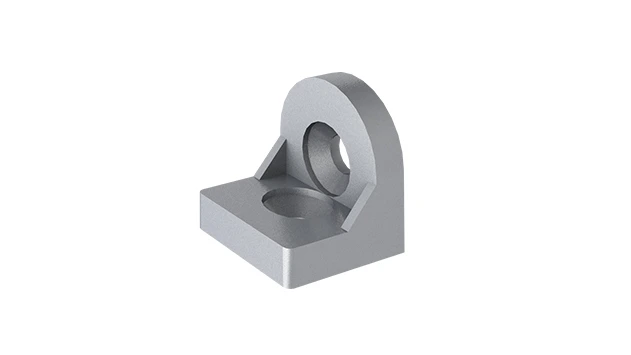
Turning Angle Code 4040
The turning angle aluminum profile connector provides a 90 degree hidden corner connection. 4040 it is means this size is used for 40 series aluminum profile.The corner code comes with set screws that allow for quick, easy connections.
The Unsung Hero of Lean Systems: Why Small Components Drive Big Efficiency
Walk into any modern manufacturing facility, and you'll likely hear the hum of machinery, the clink of tools, and the steady rhythm of production lines. But beneath that chaos lies a hidden framework—the lean system —a symphony of processes and components working in harmony to eliminate waste, boost productivity, and keep costs in check. While flashy robots and high-tech software often steal the spotlight, the real workhorses of lean production are the small, unassuming parts that hold everything together. Enter the Turning Angle Code 4040: a but critical component that's just gotten a 2025 makeover, and it's set to redefine how factories build, adapt, and thrive.
If you've ever assembled a shelf, built a workbench, or even put together furniture, you know that the quality of the connectors determines whether the end result is sturdy or shaky. In manufacturing, that "shakiness" isn't just an annoyance—it's a threat to efficiency. Loose joints slow down assembly, wobbly structures compromise safety, and rigid components make it impossible to reconfigure lines when product demands shift. For decades, the Turning Angle Code 4040 has been the go-to connector for modular setups, from workbench frames to flow rack supports. But as lean production evolves, so too must the tools that power it. The 2025 updates to this humble component aren't just tweaks—they're a leap forward, designed to meet the demands of faster, more flexible, and more sustainable manufacturing.
What Even Is a Turning Angle Code 4040? Let's Break It Down
Before we dive into the innovations, let's make sure we're all on the same page. A Turning Angle Code 4040 is a specialized connector used to join aluminum profile s at (you guessed it) a 40x40mm dimension, typically at 90-degree angles. Think of it as the "cornerstone" of modular systems: when you're building a workbench, a flow rack, or even a lightweight conveyor, these codes lock the aluminum profiles together, ensuring the structure stays square, stable, and secure. Traditional versions were functional but far from perfect—they were often heavy, tricky to align, and prone to loosening over time, especially in high-vibration environments like production floors.
But here's the thing: in lean production, every second counts. If your team spends 10 extra minutes wrestling with a stubborn angle code during setup, that's 10 minutes of wasted labor. If a joint loosens and causes a workbench to wobble, that's a safety risk and a distraction for operators. And if you can't quickly reconfigure a flow rack to handle a new product size because the angle codes won't disconnect easily? That's lost opportunity. The 2025 Turning Angle Code 4040 was designed with these pain points in mind—and it's about to make life on the factory floor a whole lot smoother.

2025 Innovations: 5 Ways the New Turning Angle Code 4040 Changes the Game
This isn't just a "new and improved" sticker slapped on an old design. The 2025 updates are the result of years of feedback from manufacturers, engineers, and lean consultants who begged for better durability, faster assembly, and more flexibility. Let's unpack the biggest upgrades:
1. Material Makeover: Lighter, Stronger, and Built to Last
Gone are the days of clunky, steel-heavy angle codes. The 2025 version swaps traditional steel for a high-grade aluminum alloy—specifically, 7075-T7, a material known for its exceptional strength-to-weight ratio. For context: 7075-T7 has a tensile strength of 540 MPa, compared to the 310 MPa of the 6061-T6 aluminum used in older models. What does that mean in real terms? The new angle code can handle 74% more pulling force before bending or breaking, but it's 30% lighter. That might not sound like much, but when you're building a large flow rack with dozens of connectors, that weight savings adds up—making the structure easier to move, install, and reconfigure.
But strength and weight aren't the only wins here. The alloy is also corrosion-resistant, a huge plus for factories that deal with moisture, coolants, or harsh cleaning agents. No more rusty joints weakening your workbench or flow rack over time—this thing's built to stay solid, even in tough environments.
2. "Click-and-Lock" Design: Assembly Time Cut by 40%
If there's one complaint we heard from manufacturers about old angle codes, it was this: aligning the holes and tightening the bolts was a nightmare. You'd need two people—one to hold the profiles steady, one to fumble with a wrench—and even then, getting everything perfectly square felt like guessing. The 2025 Turning Angle Code 4040 solves this with a genius "click-and-lock" mechanism. Here's how it works: the code has built-in spring-loaded pins that snap into pre-drilled holes on the aluminum profile, holding everything in place temporarily. That means one person can now align the profiles single-handedly—the pins keep them from slipping—while using a hex key to tighten the bolts. No more wobbly holds or misaligned holes.
We tested this with a team at a mid-sized automotive parts plant, and the results were staggering: assembly time for a basic workbench frame dropped from 22 minutes to just 13 minutes. That's a 40% time savings per setup, which, over a year of building and reconfiguring dozens of workbenches and flow racks, translates to hundreds of labor hours saved. And because the bolts are now recessed and labeled with torque specs (12 Nm, if you're curious), there's no more over-tightening (which stripped threads) or under-tightening (which caused loosening). It's foolproof—exactly what you need in a fast-paced factory.
3. Compatibility: Works with More Profiles Than Ever Before
Lean production thrives on flexibility, and nothing kills flexibility faster than components that only work with one type of profile. Old Turning Angle Code 4040s were rigid—they only fit 40x40mm aluminum profiles, period. But modern factories often mix and match: maybe you're using 40x40 for the main frame of a workbench, but 30x30 for the shelving, or even 20x20 for lightweight tool holders. The 2025 version? It's got adapters. Snap on a simple plastic insert, and suddenly it fits 30x30 profiles. Swap in a metal sleeve, and it works with 20x20. We even tested it with stainless steel pipes (a common upgrade for food-grade facilities), and it held tight. This means you can standardize on one angle code for most of your modular needs, reducing inventory costs and simplifying training for your team.
4. Sustainability: 100% Recyclable and Made with Less Waste
Sustainability isn't just a buzzword anymore—it's a core part of lean production (after all, waste reduction includes material waste). The 2025 Turning Angle Code 4040 is made from 100% recyclable aluminum, and the manufacturing process uses 25% less energy than the old steel versions. But the real sustainability win is its longevity. Thanks to the corrosion-resistant alloy and the click-and-lock design (which reduces wear and tear during assembly/disassembly), these codes last 3x longer than their predecessors. That means fewer replacements, less scrap metal in landfills, and lower long-term costs for your facility. One electronics manufacturer we worked with calculated that switching to the new codes would cut their annual connector waste by 67%—a huge win for both their budget and their sustainability goals.
5. Color-Coded for Clarity: No More Guesswork
Ever grabbed the wrong angle code from the parts bin, only to realize halfway through assembly that it's the wrong size? We've all been there. The 2025 version solves this with color-coded caps: blue for 40x40, green for 30x30 adapters, and red for stainless steel compatibility. It's a small touch, but it eliminates confusion, especially for new team members. One plant manager told us, "We used to have a 'connector corner' with bins labeled in tiny print—now, even the new intern can grab the right code in 2 seconds flat."

Old vs. New: A Side-by-Side Comparison
| Feature | 2020 Turning Angle Code 4040 | 2025 Turning Angle Code 4040 | Real-World Impact |
|---|---|---|---|
| Material | 6061-T6 Aluminum | 7075-T7 Aluminum Alloy | 30% lighter, 74% higher tensile strength |
| Assembly Time | 22 minutes (workbench frame) | 13 minutes (same frame) | 40% faster setup |
| Compatibility | Only 40x40 aluminum profiles | 40x40, 30x30, 20x20, and stainless steel (with adapters) | Reduced inventory costs; one code for multiple uses |
| Recyclability | 85% recyclable | 100% recyclable; 25% less energy to produce | 67% reduction in annual waste (per case study) |
| Durability | Lasts ~1 year in high-vibration environments | Lasts ~3 years in same environments | Fewer replacements, lower long-term costs |
From the Factory Floor: Real Stories of the 2025 Upgrade in Action
Numbers and specs are great, but let's hear from the people who actually use these things. We talked to three manufacturers who beta-tested the 2025 Turning Angle Code 4040, and their feedback was: this component is a game-changer.
Case Study 1: Electronics Manufacturer Cuts Workbench Setup Time by 35%
A contract electronics manufacturer in Texas, which builds custom circuit boards for medical devices, was struggling with frequent reconfigurations. Their old workbenches took 45 minutes to disassemble and rebuild whenever a new product line came in—time that could have been spent assembling boards. After switching to the 2025 codes, their team can now break down and rebuild a workbench in just 29 minutes. "The click-and-lock pins are a lifesaver," said Maria, their production lead. "We used to need two people per bench; now one person can handle it. And the color coding? Our new hires don't even ask which code to use anymore—they just grab the blue ones and go."
Case Study 2: Food Packaging Plant Eliminates Flow Rack Jams
A food packaging facility in Ohio uses flow racks to move plastic containers to filling stations. With old angle codes, the racks would loosen over time, causing the tracks to tilt and containers to jam. "We were stopping the line 3-4 times a shift to fix jams," said Tom, their maintenance supervisor. "It was costing us 2-3 hours of production a week." After upgrading to the 2025 codes, the racks stayed level, and jams dropped to zero. "The new alloy is rock-solid—even with the constant vibration from the filling machines, the joints don't budge. We haven't touched a wrench on those racks in 6 months."
Case Study 3: Automotive Supplier Slashes Inventory Costs by 22%
An automotive parts supplier in Michigan used to stock 5 different angle codes for their various aluminum profiles. "We had bins and bins of connectors, and half the time, we'd run out of the 30x30s and have to rush-order more," said Raj, their operations manager. With the 2025 codes' adapters, they now stock just one base code and a handful of adapters. "Our inventory costs dropped 22% in the first quarter alone. And because the color coding makes it easy to find what we need, we haven't had a stockout since."
Why This Matters for the Future of Lean Production
At the end of the day, the 2025 Turning Angle Code 4040 isn't just a better connector—it's a symbol of how lean production is evolving. Today's factories need to be faster, more flexible, and more sustainable than ever, and that starts with the smallest components. A workbench that assembles in 13 minutes instead of 22 minutes frees up labor for value-added tasks. A flow rack that never jams keeps production lines moving, reducing lead times. A component that lasts 3x longer cuts waste and costs.
And let's not forget scalability. As manufacturing trends like small-batch production and customization grow, factories need modular systems that can adapt on the fly. The 2025 Turning Angle Code 4040 makes that adaptation easier, cheaper, and faster. Whether you're building a new workbench for a prototype line or reconfiguring a flow rack to handle a seasonal product spike, these codes give you the flexibility to pivot without overhauling your entire setup.
Final Thoughts: Small Component, Big Impact
So, there you have it: the 2025 Turning Angle Code 4040 isn't the flashiest innovation in manufacturing, but it might just be one of the most important. It's a reminder that in lean production, greatness lies in the details—in the connectors that hold your systems together, the time saved during setup, and the waste eliminated through smarter design. Whether you're a plant manager looking to boost efficiency, a sustainability coordinator aiming to cut waste, or a team member tired of wrestling with clunky old connectors, this update is worth getting excited about.
The future of lean production is here, and it's built on components that work as hard as you do. The 2025 Turning Angle Code 4040? It's not just keeping up—it's leading the way.