- Company Articles
- Products and Technology
- Product knowledge
- Turning Angle Code 4040 for Battery Manufacturing: Anti-Static Features

Turning Angle Code 4040 for Battery Manufacturing: Anti-Static Features
Related Product
Turning Angle Code 4040
The turning angle aluminum profile connector provides a 90 degree hidden corner connection. 4040 it is means this size is used for 40 series aluminum profile.The corner code comes with set screws that allow for quick, easy connections.
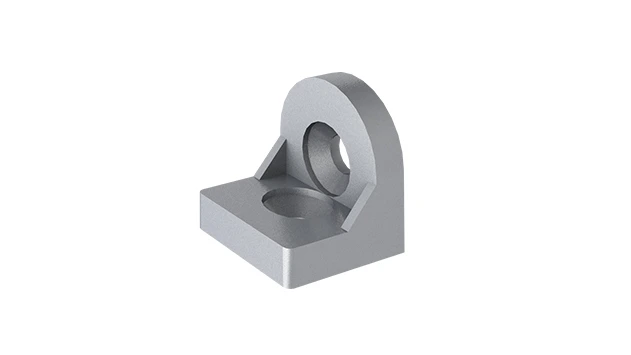
How a small component makes a big difference in protecting sensitive battery cells and ensuring production safety
Introduction: Why Anti-Static Matters in Battery Manufacturing
Walk into any modern battery manufacturing facility, and you'll notice a symphony of precision: robotic arms handling delicate cells, automated conveyors moving components, and workers in specialized gear monitoring every step. What you might not see, though, is one of the most invisible yet dangerous threats in this environment: static electricity. In an industry where even the tiniest spark can damage a lithium-ion cell or, worse, trigger a fire, controlling static isn't just a best practice—it's a matter of product quality, worker safety, and operational survival.
Batteries power our lives. From the smartphone in your pocket to the electric vehicle (EV) in your garage, and even the solar panels on rooftops storing energy for cloudy days, high-performance batteries are the backbone of the clean energy revolution. But manufacturing these powerhouses is a delicate dance. Each battery cell contains sensitive electronics and flammable electrolytes, making them vulnerable to electrostatic discharge (ESD). A single static shock—often too small for humans to feel—can puncture a cell's separator, cause internal short circuits, or degrade performance over time. In extreme cases, it can even lead to thermal runaway, where a cell overheats and ignites, risking catastrophic failure.
This is where components like the Turning Angle Code 4040 come into play. While it might sound like just another part in a long list of manufacturing hardware, this unassuming piece plays a critical role in building the anti-static workbenches, frames, and material racks that keep battery production lines safe and efficient. Paired with aluminum profiles, ESD workstations, and lean pipe workbenches, the Turning Angle Code 4040 isn't just a connector—it's a silent guardian against static damage.
The Problem with Static: Why Battery Manufacturers Can't Afford to Ignore It
To understand why the Turning Angle Code 4040 matters, let's first dive into the risks static electricity poses in battery manufacturing. Static charge builds up when two materials rub against each other—something as simple as a worker moving across a floor, a plastic container sliding on a shelf, or even air flowing over a conveyor belt. When that charge discharges, it can release energy in the form of a spark or a steady current, both of which are dangerous for batteries.
Consider a lithium-ion battery cell, which is essentially a sealed pouch or cylinder containing anode, cathode, and electrolyte. The separator between the anode and cathode is often thinner than a human hair—around 10-20 micrometers. A static discharge can create a tiny hole in this separator, allowing the anode and cathode to touch. Over time, this leads to self-discharge, reduced capacity, or, in the worst case, a short circuit that generates heat. With lithium-ion batteries, heat can trigger a chain reaction: the electrolyte vaporizes, pressure builds, and the cell can rupture or catch fire. For manufacturers, this means scrapped batches, production delays, and potential harm to workers.
Regulators and industry standards boards have taken notice. Organizations like the International Electrotechnical Commission (IEC) and the Electrostatic Discharge Association (ESDA) have strict guidelines for ESD protection in electronics manufacturing, including batteries. For example, IEC 61340-5-1 mandates that work surfaces, equipment, and personnel must be grounded to prevent static buildup. Failure to comply isn't just a regulatory issue; it's a reputational one. A battery recall due to ESD-related defects can cost a company millions in losses and erode customer trust.
So, how do manufacturers fight back? They design production environments that channel static charge safely away from sensitive components. This is where ESD workstations, lean pipe workbenches, and aluminum profile frames become essential. And at the heart of many of these setups? The Turning Angle Code 4040.

What Is Turning Angle Code 4040, Anyway?
Let's start with the basics: the Turning Angle Code 4040 is a type of angle bracket used to connect aluminum profiles in industrial setups. Aluminum profiles—those modular, T-slot extrusions you see in everything from factory workbenches to machine frames—are popular in manufacturing because they're lightweight, strong, and easy to assemble. But to build stable structures with them, you need reliable connectors. That's where angle codes come in.
Angle codes are L-shaped brackets that join two aluminum profiles at a 90-degree angle, providing rigidity and support. The "4040" in Turning Angle Code 4040 refers to its compatibility with 40mm x 40mm aluminum profiles—the workhorses of industrial framing. These profiles are widely used in battery manufacturing for building ESD workstations, material racks, and assembly line frames because they're durable, customizable, and, importantly, can be integrated with anti-static components.
But what makes the Turning Angle Code 4040 different from other angle brackets? It's all in the details. Unlike generic angle codes, which might be made of standard aluminum or steel, the Turning Angle Code 4040 is engineered with anti-static properties. Its design ensures that when it's bolted to an aluminum profile (which is conductive), it creates a continuous path for static charge to flow to ground. This prevents charge buildup on work surfaces, tool holders, or material racks—exactly the areas where battery cells are handled, inspected, and assembled.
Think of it like a lightning rod for static. Without proper grounding, static charge can linger on metal surfaces, waiting to discharge onto a passing battery cell. The Turning Angle Code 4040, by securely connecting aluminum profiles and maintaining conductivity between them, ensures that any static charge is quickly routed away through the frame and into the facility's grounding system. It's a small part, but in a complex ESD workstation, every connection matters. A single non-conductive bracket could break the grounding path, leaving sections of the workstation vulnerable to static buildup.

Anti-Static Features: How Turning Angle Code 4040 Protects Battery Cells
Now that we know what the Turning Angle Code 4040 is, let's break down its anti-static features. These aren't just marketing buzzwords—they're engineering choices that directly address the challenges of static control in battery manufacturing.
1. Conductive Material Composition
The Turning Angle Code 4040 is typically made from high-grade aluminum alloy with added conductive additives. Aluminum is already a good conductor of electricity, but the alloy blend here is optimized for consistent conductivity. This means that when the bracket is attached to an aluminum profile (which is also conductive), there's no break in the electrical path. Static charge doesn't "pool" at the connection point; it flows freely through the bracket and into the profile, then to ground. Compare this to a plastic or coated steel bracket, which might insulate the connection, trapping static charge and creating a hazard.
2. Precision Machining for Secure, Low-Resistance Connections
Even the most conductive material won't work if the connection is loose or corroded. The Turning Angle Code 4040 is precision-machined to ensure a tight fit with 40mm x 40mm aluminum profiles. Its holes are drilled to exact tolerances, allowing bolts to clamp the bracket firmly against the profile's T-slot. This tight connection minimizes electrical resistance, ensuring static charge doesn't encounter "roadblocks" as it travels to ground. Some models even include conductive gaskets or coatings to further reduce resistance, especially in environments where moisture or dust might compromise connections over time.
3. Compatibility with ESD Workstation Systems
The Turning Angle Code 4040 isn't a standalone solution—it's part of a larger ecosystem. ESD workstations in battery manufacturing often include anti-static work surfaces (like conductive laminate tops), grounding wrist straps for workers, and ionizers to neutralize airborne static. The Turning Angle Code 4040 integrates seamlessly with these systems by ensuring the workstation frame itself is grounded. For example, the aluminum profile frame, connected via Turning Angle Code 4040 brackets, can be bonded to the facility's grounding grid using a simple copper wire or grounding clamp. This creates a "" effect, where the entire workstation acts as a shield, protecting the battery cells inside from external static fields.
4. Durability in Harsh Manufacturing Environments
Battery manufacturing facilities aren't gentle places. They can be dusty, humid, or exposed to cleaning chemicals. The Turning Angle Code 4040 is built to withstand these conditions. Its aluminum alloy is often anodized or coated to resist corrosion, ensuring that even after years of use, the bracket remains conductive and secure. This durability is key because a corroded or weakened bracket could loosen over time, breaking the grounding path and exposing the workstation to static risks. For manufacturers, this means less downtime for maintenance and more reliable ESD protection over the long haul.
Turning Angle Code 4040 vs. Other Angle Brackets: A Technical Comparison
To truly appreciate the Turning Angle Code 4040, it helps to see how it stacks up against other angle brackets commonly used in manufacturing. Let's compare it to two alternatives: standard aluminum angle codes (non-anti-static) and steel corner brackets.
| Feature | Turning Angle Code 4040 | Standard Aluminum Angle Code (Non-ESD) | Steel Corner Bracket |
|---|---|---|---|
| Material | Conductive aluminum alloy with anti-static additives | Standard aluminum alloy (no additives) | Mild steel (may be coated) |
| Electrical Resistance | <10^6 ohms (low resistance, ideal for grounding) | 10^8-10^10 ohms (may insulate at connections) | <10^4 ohms (highly conductive, but heavy) |
| Weight (per unit) | ~50g (lightweight) | ~45g (similar weight) | ~120g (3x heavier) |
| Corrosion Resistance | High (anodized/coated) | Medium (may corrode in humid environments) | Low (prone to rust without coating) |
| Compatibility with 40mm Aluminum Profiles | Optimized (precision fit for T-slots) | Good (but no anti-static design) | Limited (often requires custom drilling) |
| Best For | ESD-sensitive environments (battery manufacturing, electronics assembly) | General industrial framing (non-ESD applications) | Heavy-load applications (machinery frames, storage racks) |
As the table shows, the Turning Angle Code 4040 strikes a balance between conductivity, weight, and compatibility—key factors for battery manufacturing. While steel brackets are conductive, their weight adds unnecessary bulk to workstations, making them harder to reconfigure (a must in lean manufacturing setups). Standard aluminum angle codes are lightweight but lack the anti-static properties needed to protect battery cells. The Turning Angle Code 4040, with its low resistance and ESD-optimized design, is uniquely suited for environments where static control is critical.
Real-World Impact: A Case Study in EV Battery Production
To put this all in perspective, let's look at a real-world example of how the Turning Angle Code 4040 improved ESD protection in an EV battery manufacturing plant. We'll call the company "GreenVolt," a mid-sized manufacturer producing battery packs for electric buses.
The Challenge: Rising Defects Due to Static Damage
GreenVolt was struggling with a 3% defect rate in its battery cell assembly line. During quality testing, many cells showed signs of internal short circuits, which engineers traced back to ESD damage. The company's existing workstations used standard aluminum angle codes and wooden workbenches, which weren't properly grounded. Workers were using grounding wrist straps, but static charge was still building up on the workstation frames, occasionally discharging onto cells as they were placed into battery packs.
The defects were costly: each failed battery pack cost GreenVolt $200 in materials and labor, and with production running at 1,000 packs per day, the annual loss was around $7.3 million. Worse, there was a near-miss when a defective cell overheated during testing, triggering a small fire in the lab.
The Solution: Upgrading to ESD Workstations with Turning Angle Code 4040
GreenVolt's engineering team decided to overhaul their assembly line workstations. They replaced the wooden tops with conductive ESD laminate surfaces and switched to aluminum profile frames using 40mm x 40mm profiles connected by Turning Angle Code 4040 brackets. Each workstation was bonded to the facility's grounding grid via the aluminum frame, creating a continuous grounding path from the work surface down to the floor.
The team also added ionizing fans to neutralize airborne static and installed anti-slip adjustable leveling feet on the workstations to ensure stability (and maintain grounding, even on uneven floors). The Turning Angle Code 4040 was critical here: its secure, conductive connections ensured that every part of the workstation frame was grounded, eliminating "hot spots" where static could build up.
The Results: A 90% Reduction in Defects
Within three months of the upgrade, GreenVolt's defect rate dropped from 3% to 0.3%—a 90% improvement. The number of ESD-related failures in testing fell to almost zero, and the near-miss fire incident became a thing of the past. Workers reported feeling more confident handling cells, knowing the workstations were actively protecting against static.
Financially, the upgrade paid for itself quickly. The annual savings from reduced defects totaled $6.6 million, and the company avoided potential regulatory fines and reputation damage. The Turning Angle Code 4040, though a small part of the overall investment, was singled out by engineers as a key component in the success: "Without those brackets, the frame grounding wouldn't have been reliable," said GreenVolt's production manager. "They made sure the entire workstation acted as a single grounded system, not just individual parts."
Technical Specifications: What to Look for When Choosing Turning Angle Code 4040
If you're a manufacturer looking to integrate Turning Angle Code 4040 into your battery production line, there are a few key specifications to keep in mind. Not all Turning Angle Code 4040 brackets are created equal, and choosing the right one depends on your specific needs.
Material Grade
Look for brackets made from 6061 or 6063 aluminum alloy, which are known for their conductivity and strength. These alloys are commonly used in industrial applications and are easy to machine, ensuring a precise fit with 40mm profiles.
Conductivity Rating
The bracket should have a surface resistance of less than 10^6 ohms (measured using a resistance meter). This ensures it can effectively conduct static charge to ground. Avoid brackets with resistance above 10^8 ohms, as they may not provide reliable ESD protection.
Dimensions and Fit
Check that the bracket is designed for 40mm x 40mm aluminum profiles. The hole spacing should match the T-slot pattern of your profiles (typically 20mm or 40mm centers) to ensure a secure bolted connection. Some brackets come with pre-threaded holes, which can speed up assembly.
Coating or Finish
Anodized or chromate conversion coatings are ideal, as they resist corrosion without compromising conductivity. Avoid powder-coated brackets, which can insulate the surface and reduce conductivity.
Load Capacity
Consider the weight the bracket will need to support. Most Turning Angle Code 4040 brackets can handle loads of 50-100 kg per connection, but if you're building heavy-duty material racks, look for reinforced models with thicker walls.
Beyond the Bracket: The Future of Anti-Static Solutions in Battery Manufacturing
As battery technology evolves—with higher energy densities, faster charging times, and new chemistries like solid-state batteries—the need for advanced ESD protection will only grow. Components like the Turning Angle Code 4040 are likely to become even more critical as battery cells become smaller and more sensitive to static.
One emerging trend is the integration of smart sensors into ESD workstations. Imagine a Turning Angle Code 4040 bracket with a built-in resistance sensor that monitors the grounding path in real time. If the connection loosens or resistance rises above a threshold, an alert is sent to the production management system, allowing for proactive maintenance before a defect occurs. This "smart ESD" approach could further reduce defects and improve safety.
Another trend is the use of lightweight, high-strength materials. Manufacturers are experimenting with carbon fiber-reinforced aluminum alloys for brackets, which offer the same conductivity as traditional aluminum but with 30% less weight. This could make workstations easier to reconfigure (a key benefit of lean manufacturing) while maintaining ESD performance.
Finally, sustainability is becoming a priority. Aluminum is already recyclable, but future brackets may use recycled aluminum or bio-based conductive additives, reducing their environmental footprint without sacrificing functionality. For battery manufacturers committed to green production, this aligns with their broader sustainability goals.
Conclusion: Small Component, Big Impact
In the high-stakes world of battery manufacturing, success hinges on the details. The Turning Angle Code 4040 might not be the most glamorous component in the production line, but its role in preventing static damage is irreplaceable. By creating a reliable grounding path in ESD workstations and aluminum profile frames, it protects sensitive battery cells, reduces defects, and keeps workers safe.
As the demand for batteries grows—driven by EVs, renewable energy storage, and portable electronics—manufacturers will face increasing pressure to improve efficiency and quality. Investing in components like the Turning Angle Code 4040 isn't just about meeting regulatory standards; it's about building a production line that can scale, adapt, and thrive in a competitive market.
So the next time you see a battery-powered device, take a moment to appreciate the invisible safeguards that went into making it. Behind that sleek smartphone or powerful EV battery is a network of components like the Turning Angle Code 4040—small, but mighty in their mission to keep the power flowing safely.