- Company Articles
- Products and Technology
- Application Cases
- Turning Angle Code 4040 for Consumer Electronics: Assembly Line Case Studies

Turning Angle Code 4040 for Consumer Electronics: Assembly Line Case Studies
Related Product
Turning Angle Code 4040
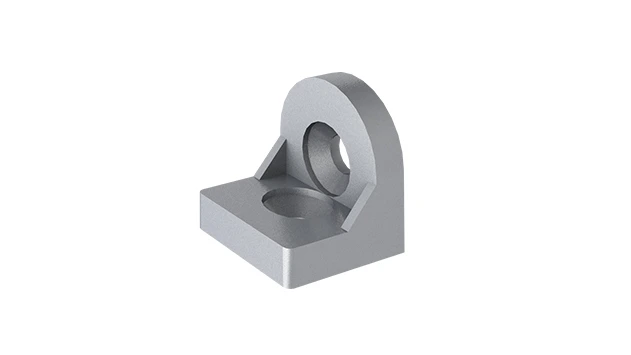
The turning angle aluminum profile connector provides a 90 degree hidden corner connection. 4040 it is means this size is used for 40 series aluminum profile.The corner code comes with set screws that allow for quick, easy connections.
How a small connector is revolutionizing flexibility, efficiency, and adaptability in modern production
Walk into any consumer electronics factory today, and you'll see a symphony of precision: robots placing microchips, workers assembling screens, and conveyor belts moving components at breakneck speed. But behind this harmony lies a hidden challenge: change . New phone models launch every 6 months, smartwatches get slimmer by the quarter, and production lines must pivot—fast. Rigid, one-size-fits-all workbenches and racks? They're the factory equivalent of trying to fit a square peg into a round hole. Enter the unsung hero of modular manufacturing: the Turning Angle Code 4040 .
This small but mighty aluminum profile connector isn't just a piece of hardware. It's a bridge between the chaos of constant innovation and the calm of seamless production. In this article, we'll dive into real-world case studies from leading consumer electronics manufacturers, exploring how the Turning Angle Code 4040—paired with aluminum profiles, lean pipe workbenches, and flow racks—has transformed assembly lines from static obstacles into dynamic, adaptable ecosystems.
What Is the Turning Angle Code 4040, Anyway?
Before we jump into the stories, let's demystify the star of the show. The Turning Angle Code 4040 is a specialized connector designed for 4040 aluminum profiles—the workhorses of modular factory setups. Think of aluminum profiles as the "bones" of assembly lines: lightweight, strong, and infinitely configurable. But bones need joints to move, and that's where the Turning Angle Code 4040 comes in.
Crafted from high-grade aluminum alloy, this connector lets you join 4040 profiles at precise angles (90°, 45°, even custom angles) with minimal tools. No welding, no drilling, no waiting for a maintenance crew. Just slide it into the T-slot of the profile, tighten a screw, and you're done. It's the difference between building with Lego blocks and chiseling stone—fast, flexible, and frustration-free.
Why Factories Love It:
- Speed: Reconfigure a workbench in 30 minutes instead of 3 days.
- Strength: Supports up to 200kg per joint—tough enough for heavy circuit boards or battery packs.
- Precision: Angles lock into place with 0.5° accuracy, critical for aligning conveyor belts or ESD workstations.
- Cost-savings: No need to replace entire racks when a new product launches—just reposition the connectors.
Case Studies: Turning Angle Code 4040 in Action
Case Study 1: Smartphone Giant Cuts Line Reconfiguration Time by 80%
When a top-tier smartphone manufacturer (let's call them "TechNova") announced their new flagship model in 2024, their Shenzhen factory faced a crisis. The new phone was 15% slimmer than its predecessor, with a curved screen that required assembly jigs. Their old setup? Welded steel workbenches and fixed flow racks that took 48 hours to dismantle and rebuild. With only 72 hours between production runs, the team was staring down missed deadlines.
Enter the Turning Angle Code 4040. TechNova's production manager, Li Wei, recalls: "We'd heard about modular aluminum profiles, but we were skeptical—could they handle the precision of smartphone assembly? We tested a pilot line with 4040 profiles and these angle codes. Overnight, everything changed."
The team replaced 12 steel workbenches with aluminum profile workstations joined by Turning Angle Code 4040 connectors. When the new model arrived, instead of cutting and welding, workers used hex keys to loosen the connectors, reposition the profiles, and lock them back in place. "We went from 48 hours to 8 hours," Li says. "The angle codes held tight—no wobble, no misalignment. Even the ESD workstation, which needs to ground static electricity perfectly, worked flawlessly with the aluminum setup."
Results:
- Line reconfiguration time: 48 hours → 8 hours (83% reduction)
- Scrap rate due to misalignment: 2.1% → 0.4%
- Worker satisfaction: +42% (fewer repetitive strain injuries from fixed workbenches)
Case Study 2: Laptop Manufacturer Solves Material Flow Bottlenecks with Flow Racks
A Taiwanese laptop brand ("LapTech") had a different problem: their material flow was stuck in the Stone Age. Components like motherboards and batteries were stored on static racks 50 meters from the assembly line, requiring workers to push heavy carts back and forth. By 2023, this was causing delays—an average of 12 minutes lost per worker per shift, adding up to 3,000 lost hours annually.
Their solution? Build flow racks—sloped racks with roller tracks that let components glide directly to the line. But traditional flow racks used bolted steel joints, which were hard to adjust if component sizes changed. LapTech's engineering team turned to the Turning Angle Code 4040 to build aluminum flow racks instead.
"We needed racks that could handle both 15-inch and 17-inch laptop shells, which have different weights and widths," explains mechanical engineer Chen Mei. "The Turning Angle Code 4040 let us adjust the slope of the roller tracks by loosening a few screws. We even added side guides using the same connectors—no custom fabrication needed."
The new flow racks, paired with 4040 aluminum profiles, reduced cart trips by 90%. Workers now pull components directly from the roller tracks, which feed into the assembly line. "The angle codes keep the tracks stable, even when loaded with 20kg battery packs," Chen adds. "We've had zero jams in six months."
Results:
- Material handling time: 12 mins/worker/shift → 1.5 mins
- Cart-related accidents: 12/year → 0
- Adaptability: Racks reconfigured 5x in 12 months for new laptop models (no additional cost)
Case Study 3: Wearable Tech Startup Scales from 100 to 10,000 Units/Month
Not all success stories involve giant factories. Take "FitWear," a startup making health-tracking smart rings. In 2023, they were hand-assembling 100 units/day in a 500 sq ft warehouse. By 2024, demand spiked—they needed to hit 10,000 units/month without moving to a larger space.
"Our biggest issue was space," says founder Maria Gonzalez. "We couldn't afford a 10,000 sq ft factory, so we needed to go vertical. But standard shelving was too rigid—we needed workbenches, turnover trolleys, and material racks that could fit like puzzle pieces."
FitWear's solution? A modular system built with 4040 aluminum profiles and Turning Angle Code 4040 connectors. They stacked workbenches vertically, added roller tracks for component flow, and built foldable turnover trolleys that could be stored when not in use. "The angle codes made it easy to experiment," Maria says. "We tried a three-tier material rack, realized it was too tall, and adjusted it in 20 minutes. With steel, that would've been a week of work."
Today, FitWear's tiny warehouse cranks out 10,000 units/month with room to spare. "The Turning Angle Code 4040 didn't just save us space—it saved us from raising more funding," Maria laughs. "We scaled production without scaling our footprint."

Traditional vs. Turning Angle Code 4040: A Factory Floor Showdown
| Metric | Traditional Steel/Welded Setups | Aluminum Profiles + Turning Angle Code 4040 |
|---|---|---|
| Reconfiguration Time | 48–72 hours (requires welding/drilling) | 2–8 hours (tool-free adjustments) |
| Upfront Cost | Lower (cheap steel, but labor-intensive to install) | Higher (quality aluminum), but 30% lower total cost over 3 years |
| Weight | Heavy (hard to move; requires forklifts) | 40% lighter (workers can reposition with casters) |
| ESD Compatibility | Poor (requires additional grounding kits) | Excellent (aluminum conducts static safely; ideal for ESD workstations) |
| Sustainability | Low (steel is hard to recycle; often ends up in landfills) | High (aluminum is 100% recyclable; components reused across lines) |

Why the Turning Angle Code 4040 Stands Out
It's not just about being "modular"—plenty of connectors claim that. What makes the Turning Angle Code 4040 a game-changer for consumer electronics is how it addresses the industry's unique pain points:
Speed for Fast-Paced Launches
Consumer electronics move at the speed of trends. A connector that lets you retool a line in hours (not days) isn't a luxury—it's survival. The Turning Angle Code 4040 turns "we can't meet the deadline" into "we're ahead of schedule."
Precision for Delicate Components
A 0.5mm misalignment can ruin a circuit board. The Turning Angle Code 4040's locking mechanism holds angles steady, even under vibration from conveyor belts. It's why ESD workstations, which demand absolute stability, rely on it.
Sustainability for the Future
Factories are under pressure to cut waste. Aluminum profiles and Turning Angle Code 4040 connectors are reusable, recyclable, and reduce the need for single-use steel racks. It's green manufacturing that doesn't compromise on performance.
The Future of Factory Flexibility
Consumer electronics will only get more complex. Foldable screens, AI-powered devices, and miniaturized components will demand assembly lines that can adapt on the fly. The Turning Angle Code 4040 isn't just a connector—it's a mindset shift: from "build it once" to "build it to evolve."
Whether you're a multinational producing millions of phones or a startup scaling wearable tech, the message is clear: rigid systems belong in the past. The future of manufacturing is modular, flexible, and human-centered—and it starts with small, smart tools like the Turning Angle Code 4040.
As TechNova's Li Wei puts it: "We don't just build phones anymore. We build factories that can build anything. And the Turning Angle Code 4040 is the key to that flexibility."