- Company Articles
- Products and Technology
- Solution
- Turning Angle Code 4040 for E-Commerce Warehouses: Picking Station Design

Turning Angle Code 4040 for E-Commerce Warehouses: Picking Station Design
Related Product
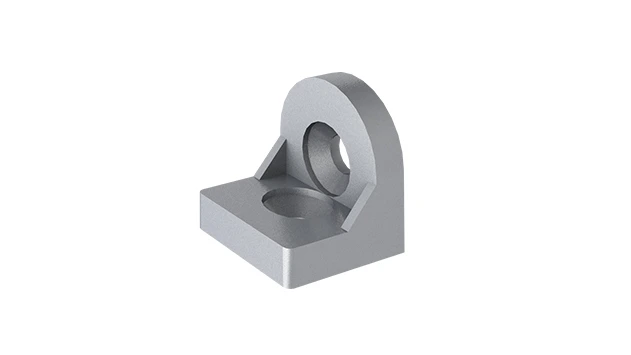
Turning Angle Code 4040
The turning angle aluminum profile connector provides a 90 degree hidden corner connection. 4040 it is means this size is used for 40 series aluminum profile.The corner code comes with set screws that allow for quick, easy connections.
In the world of e-commerce, where customers expect orders to arrive at their doorsteps faster than ever, warehouses aren't just storage spaces—they're bustling hubs of activity where efficiency can make or break a business. Every second counts when you're processing hundreds, even thousands, of orders a day. And if there's one area that can either slow things down to a crawl or supercharge your operations, it's the picking station. This is where your team spends most of their time: selecting items, sorting them, and preparing them for shipment. Get the design right, and you'll cut down on errors, reduce fatigue, and speed up order fulfillment. Get it wrong, and you're looking at missed deadlines, frustrated workers, and unhappy customers.
But here's the thing: designing a picking station isn't just about slapping together a table and some shelves. It needs to be flexible enough to adapt to changing product sizes, seasonal demand spikes, and new fulfillment strategies. It needs to be sturdy enough to handle daily wear and tear. And it needs to support your team's workflow, not work against it. That's where small but mighty components like the Turning Angle Code 4040 come into play. You might not have heard of it before, but this unassuming connector could be the key to building a picking station that grows with your business and keeps your operations running like a well-oiled machine.
Why Picking Stations Are the Heart of E-Commerce Warehouses
Let's start by understanding why picking stations matter so much. Think about a typical e-commerce order: a customer buys a mix of items—maybe a book, a phone charger, and a pair of socks. Somewhere in your warehouse, a worker needs to track down each of those items, collect them, and bring them to a central spot to be packed. That "central spot" is the picking station. It's where chaos meets organization, where individual items become a complete order.
According to industry data, picking and packing account for roughly 55% of all labor costs in a warehouse. That's more than half of your team's time spent in this one area. If your picking station is poorly designed—say, the shelves are too high, the workspace is cramped, or there's no easy way to move items from storage to packing—your team will waste precious seconds (or minutes) on every order. Multiply that by hundreds of orders a day, and you're looking at hours of lost productivity each week.
Worse, a bad design can lead to errors. When workers are straining to reach items, fumbling with disorganized tools, or constantly walking back and forth between storage and the station, mistakes happen. A wrong item in a box means a customer gets something they didn't order, which leads to returns, negative reviews, and lost trust. And in e-commerce, trust is everything.
So, what makes a good picking station? It needs to be ergonomic, so workers can stand or sit comfortably without straining their backs or wrists. It needs to be flexible, so you can rearrange shelves, add new tools, or adjust heights as your product mix changes. It needs to integrate seamlessly with the rest of your warehouse workflow—from storage racks to packing stations. And it needs to be built to last, even with the daily hustle of a busy warehouse.
Meet the Unsung Hero: Turning Angle Code 4040
If picking stations are the heart of your warehouse, then the Turning Angle Code 4040 is like the connective tissue that holds everything together. At first glance, it might look like just another metal bracket, but this small component plays a huge role in creating a picking station that's strong, adaptable, and built for efficiency. Let's break it down.
First, what is a Turning Angle Code 4040? In simple terms, it's a connector designed to join aluminum profiles—specifically, 4040 profiles. These profiles are the backbone of modern modular warehouse systems: think of them as sturdy, lightweight metal beams that come in a standard 40mm x 40mm size (hence "4040"). They're used to build everything from workbenches and shelves to racks and conveyor supports. The Turning Angle Code 4040 is what lets you connect these profiles at angles—most commonly 90 degrees, but sometimes other angles depending on the design—creating stable, rigid structures without the need for welding or complicated tools.
Made from durable materials like aluminum or steel, the Turning Angle Code 4040 is built to handle heavy loads. It typically features pre-drilled holes that align with the T-slots on 4040 aluminum profiles, allowing you to secure it with bolts or screws in minutes. Unlike traditional welding, which is permanent and requires skilled labor, this connector lets you assemble, disassemble, and reconfigure your structure as needed. That flexibility is a game-changer in e-commerce, where warehouse needs can shift overnight (hello, holiday shopping rushes!).
But the real magic of the Turning Angle Code 4040 isn't just in its functionality—it's in how it enables a whole new level of customization. Want to raise your workbench by 6 inches to reduce worker? Swap out the lower section of the profile and reattach with the angle code. Need to add a side shelf for barcode scanners? Just connect a new profile using the angle code. It's like building with industrial-strength Legos, but for warehouses.

Designing a Picking Station with Turning Angle Code 4040: Where Form Meets Function
Now that we know what the Turning Angle Code 4040 is, let's dive into how to use it to design a picking station that works for your team, not against them. We'll break this down into three key areas: ergonomics, flexibility, and integration with other warehouse components.
Ergonomics: Keeping Your Team Comfortable (and Productive)
Ergonomics is all about designing tools and workspaces that fit the people using them. When it comes to picking stations, this means reducing strain on the body—no more bending over too-low tables or reaching up to high shelves. The Turning Angle Code 4040 makes it easy to build an adjustable workbench that can be tailored to different workers' heights, ensuring everyone can pick items without hunching, stretching, or twisting.
Here's how it works: Start with a frame made from 4040 aluminum profiles. Use the Turning Angle Code 4040 to connect vertical and horizontal profiles, creating the legs and tabletop supports. Since the angle code attaches via T-slots, you can adjust the height of the tabletop by simply moving the brackets up or down the vertical profiles and re-tightening the bolts. No need to cut new materials or hire a welder—just a few minutes with a wrench, and you've got a workbench that's perfect for a 5'2" worker in the morning and a 6'1" worker in the afternoon.
But ergonomics isn't just about height. It's also about the layout of the workspace. With the Turning Angle Code 4040, you can add accessories like adjustable monitor arms (for scanners or order screens), tool hooks, or even cup holders—all mounted directly to the aluminum profile frame. This keeps everything the worker needs within arm's reach, reducing unnecessary movement and fatigue. Over time, this translates to fewer injuries, higher morale, and faster picking times.
Flexibility: Adapting to Your Changing Needs
E-commerce warehouses are anything but static. One month, you might be storing small electronics; the next, bulky holiday decorations. One quarter, you're processing 100 orders a day; the next, 1,000. A picking station that works for one scenario might be useless for the next. That's where the flexibility of the Turning Angle Code 4040 shines.
Let's say you start with a basic picking station: a tabletop, a lower shelf for bins, and a small overhead rack for packing materials. Then, your business grows, and you add a new line of larger products—think 2-foot-tall toys or bulky kitchen appliances. Suddenly, your lower shelf is too small, and the tabletop needs to be wider to accommodate these items. With a traditional wooden workbench, you'd have to buy a whole new table. But with a modular aluminum frame built using Turning Angle Code 4040? You can simply add longer profiles to the sides, connect them with the angle code, and attach a new tabletop section. Done. No waste, no extra cost, and minimal downtime.
Or consider seasonal changes. During the holidays, you might need extra space for temporary packing supplies. Using the Turning Angle Code 4040, you can quickly add a fold-down shelf that stays tucked away during slow months and flips up when needed. When the season ends, just detach it and store it until next year. This kind of adaptability ensures your warehouse never feels "stuck" with a design that no longer fits.
Integration: Connecting the Dots with Workbench, Roller Track, and Aluminum Profile
A picking station doesn't exist in a vacuum. It needs to play nice with the other tools and systems in your warehouse. The Turning Angle Code 4040 excels here, too, by integrating seamlessly with components like workbenches, roller tracks, and aluminum profiles to create a smooth, efficient workflow.
Let's start with the workbench itself. The tabletop is where the magic happens: workers place bins, scan items, and sort orders. Using 4040 aluminum profiles connected by Turning Angle Code 4040, you can build a sturdy frame that supports a variety of tabletops—from wood to laminate to anti-static surfaces (important for electronics). The angle code ensures the frame is rigid enough to handle heavy bins without wobbling, even during busy shifts.
Next, consider roller track. Roller tracks are those nifty conveyor-like systems with small wheels that let items glide from one spot to another with minimal effort. In a picking station, they're perfect for moving bins from the storage area to the packing area, or for sliding completed orders to a nearby packing station. The Turning Angle Code 4040 makes it easy to mount roller track directly to your workbench frame. Just attach a short aluminum profile to the side of the workbench using the angle code, then secure the roller track to that profile. Now, items can flow smoothly from storage to picking to packing without anyone having to lift heavy bins—saving time and reducing strain.
And let's not forget about aluminum profile accessories. From cable management clips (to keep messy wires off the table) to label holders (for quick order identification), there's a whole ecosystem of add-ons designed to work with 4040 profiles. The Turning Angle Code 4040 ensures these accessories stay securely attached, even with daily use. For example, you could mount a barcode scanner holder to the side of the workbench using the angle code, keeping the scanner within easy reach but out of the way of bins and items.
All of this integration supports a lean system approach—minimizing waste (time, motion, materials) and maximizing value. By connecting workbench, roller track, and aluminum profile with the Turning Angle Code 4040, you create a workflow where every step has a purpose, and nothing is superfluous. Workers spend less time walking, reaching, or searching, and more time picking and packing orders.

Real-World Impact: A Case Study
To put this all into perspective, let's look at a hypothetical (but realistic) example of a mid-sized e-commerce warehouse that upgraded its picking stations using Turning Angle Code 4040. We'll call them "EcoShop," a retailer that sells eco-friendly home goods (think reusable containers, bamboo utensils, and organic cotton linens).
Before the Upgrade: EcoShop's picking stations were basic wooden workbenches with fixed shelves. They were sturdy, but that was about it. The height was fixed at 34 inches, which was too low for taller workers and too high for shorter ones. The shelves were nailed into place, so when they added new, bulkier products (like 5-gallon glass jars), they couldn't adjust the shelf height—workers had to set the jars on the floor, bending down dozens of times a day. The workbenches also had no built-in roller track, so workers had to carry bins from the storage racks to the station by hand, wasting time and energy. Picking errors were at 3%, and workers reported frequent back pain.
The Upgrade: EcoShop decided to replace their wooden workbenches with modular systems built using 4040 aluminum profiles and Turning Angle Code 4040 connectors. They designed each station with adjustable height (from 30 to 40 inches), added side-mounted roller tracks to connect to nearby storage racks, and included detachable shelves for tools and scanners.
The Results: Within three months, the changes were clear. Picking errors dropped to 1.2%—a 60% improvement—because workers were more comfortable and had better access to tools. Back pain complaints decreased by 75%, and worker satisfaction scores went up. Most importantly, picking time per order dropped by 15 seconds. That might not sound like much, but with 500 orders a day, that's over two hours of saved labor each day. Over a year, that adds up to hundreds of thousands of dollars in saved costs.
And when EcoShop expanded into larger furniture items (think bamboo bookshelves), they didn't need new workbenches. They simply adjusted the height, added wider tabletops using the Turning Angle Code 4040, and kept right on going. As the warehouse manager put it: "We used to build our workflow around our workbenches. Now, we build our workbenches around our workflow."
The Bottom Line: Why Turning Angle Code 4040 is a Smart Investment
At this point, you might be thinking: "This all sounds great, but is it worth the upfront cost?" Let's be honest: modular aluminum systems with Turning Angle Code 4040 connectors do cost more than basic wooden workbenches. But when you factor in the long-term benefits, the investment pays for itself—often within a year.
First, there's durability. Aluminum profiles and steel angle codes are built to last decades, even with heavy daily use. Wooden workbenches, on the other hand, warp, crack, and need replacement every 3-5 years. Over time, the modular system is actually cheaper.
Then there's flexibility. As we've seen, the ability to reconfigure your picking stations as your business grows means you'll never have to scrap a perfectly good workbench just because your needs change. That reduces waste and saves money on replacements.
And let's not forget the human factor. Happy, healthy workers are more productive, stay with your company longer, and make fewer mistakes. The ergonomic benefits of a well-designed picking station can reduce turnover, lower workers' compensation claims, and boost morale—all of which have a direct impact on your bottom line.
Conclusion: Small Component, Big Difference
In the fast-paced world of e-commerce, success often comes down to the details. The Turning Angle Code 4040 might not be the most glamorous warehouse tool, but it's a perfect example of how a small, well-designed component can transform an entire operation. By enabling ergonomic, flexible, and integrated picking stations, it helps warehouses adapt to change, keep workers happy, and fulfill orders faster than ever.
So, if you're still using outdated, fixed workbenches in your warehouse, it might be time to take a closer look at modular systems. Invest in the right tools, design with your team's needs in mind, and watch as efficiency, accuracy, and morale all start to climb. After all, in e-commerce, the race to deliver faster and better never ends—and the Turning Angle Code 4040 is one tool that can help you stay ahead of the pack.