- Company Articles
- Products and Technology
- Product knowledge
- Turning Angle Code 4040 for Retail Warehouses: Inventory Management Racks

Turning Angle Code 4040 for Retail Warehouses: Inventory Management Racks
Related Product
Turning Angle Code 4040
The turning angle aluminum profile connector provides a 90 degree hidden corner connection. 4040 it is means this size is used for 40 series aluminum profile.The corner code comes with set screws that allow for quick, easy connections.
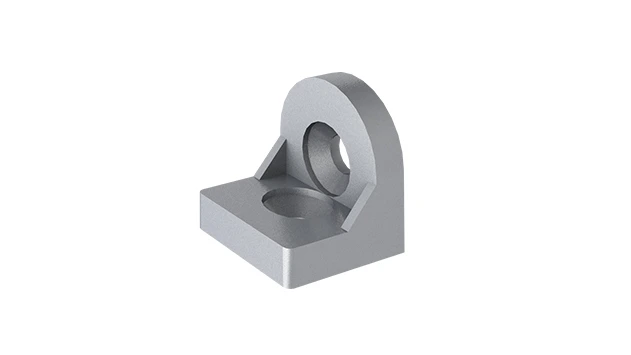
In the fast-paced world of retail, where customer demands shift overnight and seasonal trends come and go, the unsung hero of success often lies behind the scenes: the warehouse. A well-organized warehouse isn't just a storage space—it's the nerve center that keeps products flowing from shelves to shoppers, ensuring orders are fulfilled on time and customers walk away satisfied. But here's the thing: many retail warehouses are still stuck in the past, relying on clunky, one-size-fits-all racking systems that make inventory management feel like solving a puzzle with missing pieces. That's where modern solutions like the Turning Angle Code 4040 come into play, paired with versatile aluminum profiles to create inventory management racks that adapt, evolve, and grow with your business.
The Hidden Costs of Outdated Racking Systems
Let's start with a scenario we've all heard (or lived through): a retail warehouse using traditional steel racks. These racks are sturdy, sure, but they're also rigid. Once installed, they're hard to move, harder to reconfigure, and if your product lineup changes—say, you start stocking bulkier items or need to expand into seasonal storage—you're stuck. Employees waste time searching for misplaced inventory because the racks aren't optimized for your specific SKUs. Space is wasted too; those fixed shelves leave gaps that could be used for faster-moving products. And let's not forget safety: loose bolts, rusted joints, or overloaded shelves can turn a busy warehouse into a hazard zone.
The costs add up quickly. According to industry reports, disorganized warehouses can lead to a 20-30% loss in labor productivity alone. That's hours each day spent hunting for products instead of picking, packing, or restocking. Then there's the risk of overstocking or stockouts because inventory visibility is poor—both of which hit your bottom line hard. Outdated racks also limit scalability. If your business grows, you might end up renting extra warehouse space (at premium prices) instead of maximizing the square footage you already have.
The problem isn't just about "needing more space." It's about needing smarter space. And that's where modular, flexible racking systems step in—systems built with components like the Turning Angle Code 4040 and aluminum profiles that put you in control.
Meet the Game-Changer: Turning Angle Code 4040
If you're not familiar with the term, the Turning Angle Code 4040 might sound like something out of a tech manual, but it's actually a simple, brilliant innovation in industrial design. Think of it as a high-precision connector that links aluminum profiles together at (you guessed it) a 4040 angle—though in practical terms, it's designed to create strong, stable joints between aluminum profile pieces, allowing you to build custom structures with ease. Unlike traditional welding or bolted steel frames, which require tools, expertise, and time to assemble, the Turning Angle Code 4040 clicks into place (or tightens with a simple wrench) and holds firm, even under heavy loads.
What makes it special? For starters, precision. These angle codes are engineered to fit snugly with standard aluminum profiles, ensuring that every joint is secure and aligned. No more wobbly shelves or uneven surfaces. They're also versatile. Need a 90-degree corner for a vertical rack? The Turning Angle Code 4040 handles that. Want to add a diagonal brace for extra stability? It can do that too. And because they're made from durable materials (often aluminum or high-grade steel), they stand up to the daily wear and tear of a busy retail warehouse—scratches, bumps, and the occasional forklift nudge included.
Why Aluminum Profiles? The Perfect Partner for Turning Angle Code 4040
The Turning Angle Code 4040 is powerful on its own, but it truly shines when paired with aluminum profiles. Aluminum profiles are the building blocks here—long, slender beams with T-slots running along their length that let you attach connectors, shelves, hooks, or accessories wherever you need them. They're lightweight (about a third the weight of steel), which makes assembly and reconfiguration a one-person job, but don't let that fool you: aluminum is surprisingly strong. It's also resistant to corrosion, so even in humid warehouse environments (think: storage for perishables or coastal locations), you won't have to worry about rust weakening your racks over time.
Aluminum profiles come in standard sizes, but their real beauty is in their adaptability. Want a taller rack for bulky items? Use longer profiles. Need shallower shelves for small electronics? Cut the profiles to size (or order custom lengths). And because they're compatible with the Turning Angle Code 4040, you can mix and match components to create exactly what your warehouse needs—no more forcing square pegs into round holes with generic racks.

Building Blocks: From Workbenches to Material Racks
Let's get concrete. How do these components translate into real-world warehouse solutions? Let's take two common needs: a workbench for order processing and a material rack for inventory storage.
Workbench: The Hub of Order Fulfillment
A workbench isn't just a table—it's where your team checks orders, packs products, and prepares shipments. A poorly designed workbench can slow down this entire process. With aluminum profiles and the Turning Angle Code 4040, you can build a workbench that's tailored to your workflow. Need a flat surface for packing boxes? Attach a plywood or aluminum top using T-slot bolts. Want shelves underneath for tools, tape guns, or packing peanuts? Add horizontal aluminum profiles at waist height, secured with Turning Angle Code 4040 joints. Need to adjust the height for ergonomics (so taller team members don't hunch over)? No problem—simply loosen the angle codes, adjust the legs, and tighten them back up. It's that easy.
What's more, these workbenches are mobile if you add casters (another accessory that fits into the T-slots). Need to move the workbench closer to the receiving area during peak season? Just roll it over. During slower times, tuck it back to free up space. This flexibility turns a static piece of furniture into a dynamic tool that adapts to your daily needs.
Material Rack B (3 Row and 3 Floor): Organized Storage, Simplified
Now, let's talk about inventory storage—the core of any retail warehouse. Take the Material Rack B (3 row and 3 floor), a popular configuration built using aluminum profiles and Turning Angle Code 4040. As the name suggests, it has 3 rows (horizontal sections) and 3 floors (vertical levels), creating 9 distinct storage areas. But unlike a fixed steel rack, each row and floor can be adjusted to fit your products. Selling small cosmetics? Make the shelves shallow and close together. Stocking large toys for the holidays? Widen the gaps between rows. The Turning Angle Code 4040 makes it possible to reposition shelves in minutes, not days.
Imagine using this rack for seasonal inventory. In summer, you might store sunscreen, beach towels, and outdoor gear on the lower floors for easy access. Come winter, you swap those out for coats, scarves, and holiday decorations—no need to tear down the rack and rebuild it. Just adjust the shelves, tighten the angle codes, and you're done. This kind of flexibility means you can use the same rack year-round, maximizing your space and minimizing costs.

Benefits for Retail Warehouses: Why It's Worth the Switch
So, we've talked about what these components are and how they work. But what's in it for your retail business? Let's break down the benefits:
1. Flexibility That Grows With Your Business
Retail is all about change. One month, you're pushing back-to-school supplies; the next, it's Black Friday electronics. With traditional racks, you'd need separate storage for each season. With aluminum profiles and Turning Angle Code 4040, you can reconfigure your racks in a afternoon. Add shelves, remove them, adjust heights—whatever your inventory demands. This flexibility also helps with scaling. If you open a new store or expand your online sales, you can build additional racks using the same components, ensuring consistency across all your warehouses.
2. Durability That Saves Long-Term Costs
Aluminum profiles are built to last. Unlike wood, they don't warp or rot. Unlike steel, they don't rust (unless exposed to extreme conditions, which is rare in retail warehouses). The Turning Angle Code 4040 joints are designed to withstand repeated adjustments without weakening—so you can take apart and rebuild your racks dozens of times without compromising stability. Over time, this durability translates to lower replacement costs. You won't need to replace entire racks every few years; just swap out worn components (like a bent shelf or a damaged caster) and keep going.
3. Space Optimization: Get More From Every Square Foot
The T-slots in aluminum profiles let you use vertical space more efficiently. Traditional racks often have fixed shelf heights, leaving wasted space between them. With modular racks, you can set shelf heights to match your products exactly. For example, if you sell both small items (like phone cases) and medium-sized items (like tablets), you can have shorter shelves for the cases and taller ones for the tablets—no more gaps. This alone can increase storage capacity by 15-20%, according to warehouse design experts. That means you might avoid renting extra space, even as your inventory grows.
4. Ease of Assembly: No Expertise Required
You don't need a team of welders or engineers to build these racks. Most components (including the Turning Angle Code 4040) can be assembled with basic tools—a hex key, a rubber mallet, maybe a level. This saves on installation costs and means you can make adjustments on the fly. If a team lead notices a shelf is too low, they can grab a wrench and fix it during their shift, no need to wait for maintenance. This empowerment boosts morale too; employees feel more in control of their workspace, which leads to better productivity.
5. Safety First: Stable, Secure, and OSHA-Compliant
Safety should never be an afterthought. Aluminum profiles are lightweight, which reduces the risk of injury during assembly, but they're also strong enough to meet OSHA load requirements when properly configured. The Turning Angle Code 4040 joints lock into place securely, so shelves don't shift or wobble under heavy loads. Many aluminum profiles also come with rounded edges, reducing the risk of cuts or scrapes. And because the system is modular, you can add safety features like guardrails or anti-slip mats wherever needed—no custom fabrication required.
Traditional vs. Modern Racks: A Side-by-Side Comparison
| Feature | Traditional Steel Racks | Aluminum Profile Racks with Turning Angle Code 4040 |
|---|---|---|
| Assembly Time | 2-4 hours per rack (requires tools/welders) | 30-60 minutes per rack (basic tools only) |
| Flexibility | Fixed design; hard to reconfigure | Fully modular; adjust shelves/heights in minutes |
| Durability | Prone to rust; welded joints can weaken over time | Corrosion-resistant; joints remain strong after repeated adjustments |
| Space Efficiency | Wasted vertical space due to fixed shelf heights | Maximizes vertical space with customizable shelf heights |
| Cost Over Time | High replacement costs; may need new racks every 5-7 years | Low maintenance; replace components, not entire racks |
| Safety | Risk of rusted bolts or overloaded shelves | Stable joints, lightweight materials, and OSHA-compliant load capacities |
Installation Tips for Maximum Efficiency
Ready to make the switch? Here's how to get started with your first aluminum profile rack using the Turning Angle Code 4040:
1. Plan Your Layout First
Before you start assembling, map out your warehouse layout. Measure the space, note doorways, forklift paths, and high-traffic areas. Decide what you'll store on the rack (dimensions, weight, turnover rate) and sketch a rough design. This helps you order the right lengths of aluminum profiles and the correct number of Turning Angle Code 4040 joints. Many suppliers offer free design tools or templates to help with this step.
2. Gather Your Tools
You won't need much: a hex key set (most Turning Angle Code 4040 joints use M5 or M6 bolts), a rubber mallet (to tap profiles into place), a level (to ensure shelves are straight), and a tape measure. If you're cutting profiles to size, you'll need a hacksaw or a miter saw with a metal-cutting blade (or ask your supplier to cut them for you).
3. Start with the Frame
Build the vertical supports first. Attach the Turning Angle Code 4040 joints to the bottom of the aluminum profiles to create a base, then add horizontal crossbars at the top for stability. Use the level to make sure the frame is plumb (vertical) and square (all angles 90 degrees). Tighten the bolts just enough to hold the frame steady—you can fully tighten them once the shelves are in place.
4. Add Shelves and Accessories
Slide the horizontal shelf profiles into the T-slots of the vertical supports, using the Turning Angle Code 4040 to lock them in place at your desired height. If you're adding accessories like hooks or bins, use T-slot nuts to attach them directly to the profiles. Don't forget to test the weight capacity: place a few heavy boxes on the shelf and check for wobbling. If everything feels stable, fully tighten all bolts.
5. Label Everything
This might seem like a small step, but labeling shelves (by product category, SKU, or turnover rate) ensures everyone in the warehouse knows where to find and store items. Use magnetic labels or adhesive tags that can be easily updated as your inventory changes—another perk of a flexible system.
Maintenance: Keeping Your Racks in Top Shape
Modular racks are low-maintenance, but a little care goes a long way. Here's how to keep them working like new:
- Inspect monthly: Check for loose bolts, bent profiles, or damaged joints. Tighten any Turning Angle Code 4040 bolts that feel wobbly.
- Clean regularly: Wipe down profiles with a damp cloth to remove dust or debris. For greasy fingerprints (common in warehouses), use a mild detergent—avoid harsh chemicals that could damage the aluminum finish.
- replace worn parts: If a caster wheel starts sticking or a shelf becomes bent, replace the part immediately. Most suppliers sell replacement components individually, so you don't have to buy a whole new rack.
- Reconfigure carefully: When adjusting shelves, loosen bolts slowly to avoid stressing the aluminum profiles. And always follow the weight limits—even strong materials have their limits!
Future-Proofing Your Warehouse: Ready for What's Next
The retail industry isn't slowing down. E-commerce is booming, customer expectations for fast shipping are higher than ever, and sustainability is becoming a key differentiator. Your warehouse needs to keep up, and that means investing in systems that can adapt to these trends.
Take sustainability, for example. Aluminum is 100% recyclable, and modular racks reduce waste because you're reusing components instead of replacing entire systems. Plus, the lightweight nature of aluminum profiles reduces fuel costs if you ever need to relocate your warehouse.
Then there's automation. Many retail warehouses are adding robotics or conveyor systems to speed up order fulfillment. Modular racks play well with automation because they can be designed to fit around robotic pickers or conveyor belts. The Turning Angle Code 4040 makes it easy to add mounting brackets for sensors, barcode scanners, or LED lights that integrate with your warehouse management system (WMS).
Conclusion: It's Time to Upgrade
Your retail warehouse shouldn't be a bottleneck—it should be a competitive advantage. Outdated racking systems hold you back, but modular solutions built with Turning Angle Code 4040 and aluminum profiles put you in control. They're flexible enough to adapt to changing inventory, durable enough to last for years, and efficient enough to maximize your space and labor.
Whether you're running a small boutique warehouse or a large distribution center, the benefits are clear: less time wasted, more space used, and a team that can focus on what really matters—delivering great products to your customers. So why wait? Start small: build a single workbench or a Material Rack B (3 row and 3 floor) to test the system. Once you see how much smoother operations run, you'll wonder how you ever managed with those old steel racks.
The future of retail warehousing is modular, flexible, and smart. And it all starts with components like the Turning Angle Code 4040 that turn your warehouse from a storage space into a strategic asset.