- Company Articles
- Products and Technology
- Product knowledge
- Turning Angle Code 4040 Heat Resistance: Performance in High-Temp Environments

Turning Angle Code 4040 Heat Resistance: Performance in High-Temp Environments
Related Product
Turning Angle Code 4040
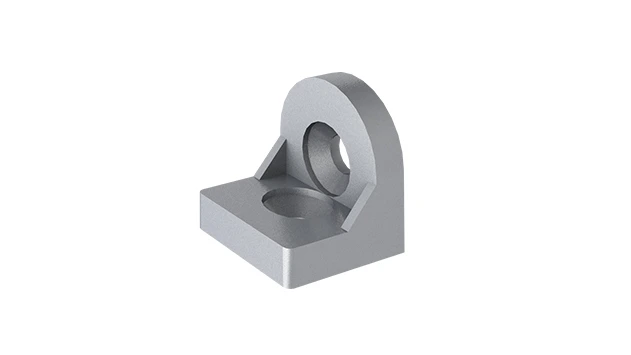
The turning angle aluminum profile connector provides a 90 degree hidden corner connection. 4040 it is means this size is used for 40 series aluminum profile.The corner code comes with set screws that allow for quick, easy connections.
Introduction: The Unsung Hero of High-Temp Workspaces
Walk into any busy manufacturing plant, and your eyes might be drawn to the big machines—the robotic arms assembling cars, the conveyor belts zipping products along, the ovens curing electronics. But if you look closer, you'll notice the smaller parts holding everything together: the brackets, the joints, the unassuming components that keep the entire operation from wobbling, warping, or falling apart. Among these quiet workhorses is the
Turning Angle Code 4040
—a small but critical piece in the puzzle of industrial infrastructure, especially in environments where heat is more than just a background factor.
In factories where temperatures climb—think automotive assembly lines with welding stations, electronics plants with soldering processes, or food packaging facilities with sterilization tunnels—materials don't just "work." They have to
endure
. A bracket that bends at 100°C, a joint that loosens when heated, or an angle code that warps under sustained warmth can throw off production schedules, compromise safety, or even damage expensive equipment. That's where the Turning Angle Code 4040 comes in. Designed with precision and built from robust materials, it's engineered to stand up to the heat so your operations don't have to slow down.
In this article, we'll dive into what makes the Turning Angle Code 4040 a standout in high-temperature environments. We'll explore its design, the science behind its heat resistance, real-world performance stories, and why choosing the right components—paired with a reliable
aluminum profile supplier
—matters more than you might think. Whether you're a plant manager troubleshooting a wobbly workbench or an engineer designing a new production line, understanding how this small part delivers big results in the heat could save you time, money, and headaches down the line.
What Exactly Is a Turning Angle Code 4040?
Let's start with the basics. The Turning Angle Code 4040 is a type of connector used primarily in modular industrial structures, most commonly with
aluminum profile
systems. If you've ever seen a workbench, a material rack, or a production line frame built from sleek, silver extruded aluminum bars, chances are it's held together by angle codes like this one. The "4040" refers to the size of the aluminum profile it's designed to fit—typically 40mm x 40mm, a standard dimension in industrial framing.
Unlike generic angle brackets, the Turning Angle Code 4040 is engineered for precision. Its L-shaped design wraps around the corners of two intersecting aluminum profiles, securing them at a 90-degree angle with screws or bolts that fit into the T-slots of the profile. What makes it "turning" is its ability to allow slight adjustments during installation—handy for aligning profiles perfectly, even when the frame is under stress. But its real claim to fame? When the heat turns up, it doesn't back down.
Think of it as the backbone of modular structures. Without a reliable angle code, even the sturdiest aluminum profile would struggle to maintain its shape. A flimsy connector might loosen over time, causing the frame to wobble; a low-quality one might crack under pressure. But the Turning Angle Code 4040? It's the kind of component that, when installed correctly, fades into the background—quietly doing its job so you can focus on what matters: keeping production moving.

The Heat Challenge: Why High Temperatures Test Industrial Components
Heat is a tricky adversary in manufacturing. It's not just about discomfort for workers (though that's a factor); it's about how temperature affects the very materials we build with. Metals expand when heated, plastics soften, and even strong alloys can lose tensile strength under sustained high temperatures. Let's break down why heat is such a big deal for components like the Turning Angle Code 4040.
Take, for example, an automotive paint shop. After vehicles are painted, they're sent through curing ovens where temperatures can reach 180°C (356°F) to dry and harden the finish. The racks holding these vehicles are often built with aluminum profiles and angle codes. If the angle codes warp in that heat, the racks might tilt, causing the car bodies to shift. That's not just a quality issue—it's a safety hazard.
Or consider electronics manufacturing. In surface mount technology (SMT) lines, circuit boards pass through reflow ovens where temperatures spike to 250°C (482°F) to melt solder paste. The workbenches and conveyor guides around these ovens are constantly exposed to residual heat, even if they're not inside the oven itself. A standard plastic bracket here would soften and deform; a low-grade steel angle code might rust from the humidity mixed with heat. The Turning Angle Code 4040, though? It's designed to handle these conditions without breaking a sweat.
The key issues heat introduces are:
- Thermal Expansion: Most materials expand when heated. If the Turning Angle Code 4040 and the aluminum profile it's connecting expand at different rates, stress builds up. Over time, this can loosen screws, bend the angle code, or even crack the profile.
- Loss of Strength: At high temperatures, some materials lose their "yield strength"—the point at which they start to deform permanently. A bracket that's strong at room temperature might become weak at 150°C, leading to structural failure.
- Corrosion: Heat often goes hand-in-hand with moisture (think steam in food processing or humidity in electronics plants). Combined, they corrosion, eating away at metal components and weakening their integrity.
For the Turning Angle Code 4040 to excel, it needs to address all three of these challenges. That starts with the material it's made from—and that material, more often than not, is aluminum. But not just any aluminum. Let's dive into the science behind its heat resistance.

The Material Behind the Heat Resistance: Why Aluminum Alloys Matter
Walk into a hardware store, and you'll find angle brackets made from steel, plastic, or cheap aluminum. But the Turning Angle Code 4040 isn't your average bracket. It's typically crafted from high-grade aluminum alloys—specifically, alloys like 6063 or 6061, which are prized in industrial settings for their strength, light weight, and yes, heat resistance.
Let's start with the basics: pure aluminum melts at around 660°C (1220°F), which is well above the temperatures most industrial environments reach (even the hottest reflow ovens top out at ~300°C). But pure aluminum is soft and prone to bending. Alloys like 6063 add elements like magnesium and silicon to boost strength without sacrificing thermal stability. 6063 aluminum, for example, has a melting point similar to pure aluminum but offers better tensile strength and hardness—critical for a component that needs to hold heavy loads while staying rigid.
What really sets these alloys apart, though, is their thermal conductivity and expansion properties. Aluminum conducts heat well, which might sound like a downside—why would you want a bracket that "spreads" heat? But in reality, this conductivity helps the Turning Angle Code 4040
dissipate
heat evenly, rather than letting it build up in one spot (which could cause localized warping). And while aluminum does expand when heated, its expansion coefficient is predictable—meaning engineers can account for it during design. When paired with the right
aluminum profile
(which has the same expansion rate), the Turning Angle Code 4040 moves with the profile, not against it, reducing stress.
To put this in perspective, let's compare the Turning Angle Code 4040 (made from 6063 aluminum) to two common alternatives: a standard steel angle bracket and a plastic composite bracket. The table below breaks down their key thermal properties:
| Property | Turning Angle Code 4040 (6063 Aluminum) | Standard Steel Angle Bracket (Mild Steel) | Plastic Composite Bracket (Nylon) |
|---|---|---|---|
| Max Continuous Operating Temp (°C) | 150°C | 300°C | 80°C |
| Thermal Expansion Coefficient (μm/m·°C) | 23.6 | 11.7 | 100–150 |
| Tensile Strength at 150°C (MPa) | 140–160 | 280–320 | 20–30 (softens, loses strength) |
| Weight (g per 100mm length) | 45–55 | 180–200 | 30–40 |
| Corrosion Resistance | High (natural oxide layer) | Low (prone to rust without coating) | High (resistant to moisture) |
At first glance, steel might seem better—it handles higher temps and has lower expansion. But steel is heavy (four times heavier than aluminum), which adds unnecessary weight to structures. It also rusts easily in humid, high-heat environments unless coated, adding maintenance costs. Plastic is light but fails miserably above 80°C, softening and losing strength. The Turning Angle Code 4040 strikes a balance: it's light enough to keep structures agile, resistant to corrosion, and tough enough to handle the heat in most industrial settings (150°C is more than enough for automotive, electronics, and food processing lines).
Real-World Performance: How It Stands Up in Hot Factories
Numbers on a spec sheet are one thing—but how does the Turning Angle Code 4040 perform when the heat is on and the pressure is high? Let's look at two real-world scenarios where this angle code proved its mettle.
Case Study 1: Automotive Assembly Line, Michigan
A major automotive manufacturer in Michigan was struggling with a recurring issue: the material racks holding car door panels near the welding stations kept warping. The racks, built with generic steel angle brackets, were exposed to constant radiant heat from welding torches (ambient temps around 120°F/49°C, with occasional spikes to 180°F/82°C from nearby ovens). Over time, the steel brackets would loosen, causing the racks to tilt. This forced workers to stop production to realign the racks—costing the plant an estimated 10 hours of downtime per month.
The solution? Switching to aluminum profile racks secured with
Turning Angle Code 4040
brackets. The plant replaced the steel brackets with 6063 aluminum angle codes and paired them with matching aluminum profiles. After six months of use, maintenance logs showed zero warping or loosening. The aluminum's heat dissipation kept the brackets from overheating, and the predictable expansion rate meant screws stayed tight. Downtime dropped to less than 1 hour per month—a 90% improvement.
Case Study 2: Electronics Reflow Oven Line, Singapore
A Singapore-based electronics manufacturer runs SMT lines where circuit boards pass through reflow ovens at 250°C. The conveyor guides that position the boards before they enter the oven are built with aluminum profiles. Originally, these guides used plastic composite angle brackets to save cost—but within weeks, the brackets would soften, causing the guides to shift. Misaligned boards would then jam in the oven, damaging both the boards and the equipment.
The fix was simple: replacing the plastic brackets with Turning Angle Code 4040. Even though the brackets weren't inside the oven, the residual heat from the conveyor (around 100°C) was enough to soften the plastic. The aluminum angle codes, however, handled the heat effortlessly. After three months of use, the guides stayed aligned, and jams dropped by 95%. The plant manager noted, "We thought the plastic would be 'good enough,' but the Turning Angle Code 4040 wasn't just better—it was a game-changer for reliability."
These stories highlight a key point: the Turning Angle Code 4040 isn't just "heat resistant" on paper. It's designed to solve real problems in real factories—where downtime is expensive, and reliability is non-negotiable. And it doesn't work alone. Pairing it with quality components like the
4040 aluminum profile end cap
(which protects the profile ends from heat and debris) ensures the entire structure stays strong, even when the mercury rises.
Installation & Maintenance: Tips for High-Temp Success
Even the best components fail if installed incorrectly. To get the most out of your Turning Angle Code 4040 in high-temperature environments, follow these best practices:
1. Use the Right Fasteners:
When securing the angle code to the aluminum profile, opt for heat-resistant screws—preferably stainless steel or coated steel. Avoid standard zinc-plated screws, which can corrode in humid, high-heat settings. Also, don't overtighten: aluminum is strong, but it can strip if screws are cranked too hard. Aim for a snug fit, not a "cranked" one.
2. Account for Thermal Expansion:
As we mentioned earlier, aluminum expands when heated. If you're building a long structure (like a 10-meter conveyor guide), leave small gaps (1–2mm) between sections. This gives the profile and angle code room to grow without buckling. Most aluminum profile suppliers provide expansion charts—use them!
3. Inspect Regularly (But Not Obsessively):
In high-heat areas, check the angle codes every 3–6 months for signs of wear: cracks, bent edges, or loose screws. If you notice any of these, replace the angle code immediately. Unlike plastic, aluminum doesn't "degrade" gradually—it either works or it doesn't. A quick inspection can catch issues before they escalate.
4. Pair with Compatible Components:
The Turning Angle Code 4040 is designed to work with 4040 aluminum profiles, but not all profiles are created equal. Choose a reputable
aluminum profile supplier
who uses high-grade alloys (like 6063) and precision extrusion. A poorly made profile with uneven walls or inconsistent dimensions can stress the angle code, even if the code itself is perfect.
Choosing the Right Supplier: Why Quality Starts at the Source
You could have the best design in the world, but if your Turning Angle Code 4040 comes from a supplier who cuts corners—using cheap aluminum alloys, skipping heat treatment, or ignoring quality control—you're setting yourself up for failure. So what should you look for in a supplier?
Material Certifications:
Reputable suppliers will provide material certificates (like mill test reports) proving their angle codes are made from 6063 or 6061 aluminum. Avoid suppliers who can't or won't share this info—if they're vague about the material, it's a red flag.
Quality Control Processes:
Ask about their manufacturing process. Do they use precision machining to ensure consistent dimensions? Do they test samples for heat resistance (e.g., exposing them to high temps for extended periods to check for warping)? A supplier who invests in QA is a supplier you can trust.
Industry Experience:
Suppliers who specialize in industrial components (not just "general hardware") understand the unique challenges of high-temperature environments. They'll be able to answer questions about thermal expansion, compatibility with other parts (like the 4040 aluminum profile end cap), and even help you troubleshoot if issues arise.
Conclusion: The Heat Is On—But So Is Your Angle Code
In the world of manufacturing, success often hinges on the details—the small components that don't make headlines but keep the wheels turning. The Turning Angle Code 4040 is one of those details. It's not flashy, but it's reliable. It doesn't demand attention, but it earns trust. And in high-temperature environments, where every degree matters, it's the kind of component that turns "maybe" into "definitely"—ensuring your production line stays up, your workers stay safe, and your bottom line stays strong.
So the next time you walk through your factory, take a second look at those aluminum frames. The next time you notice a workbench that's steady, a conveyor that's aligned, or a rack that's still standing after months of heat—chances are, there's a Turning Angle Code 4040 holding it all together. And that's the beauty of it: it works so well, you might not even notice it's there. But when the heat is on, you'll be glad it is.