- Company Articles
- Products and Technology
- Product knowledge
- Turning Angle Code 4040 in Automotive Electronics: Assembly Line Efficiency

Turning Angle Code 4040 in Automotive Electronics: Assembly Line Efficiency
Related Product
Turning Angle Code 4040
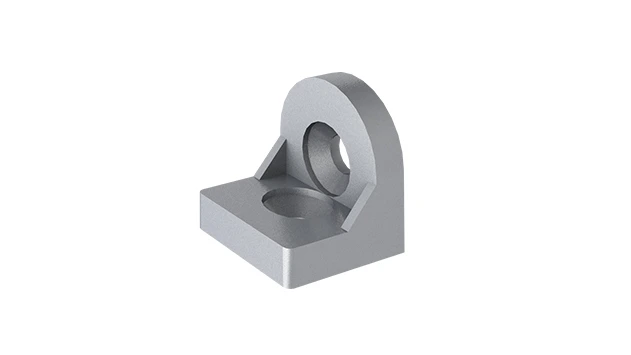
The turning angle aluminum profile connector provides a 90 degree hidden corner connection. 4040 it is means this size is used for 40 series aluminum profile.The corner code comes with set screws that allow for quick, easy connections.
In the fast-paced world of automotive electronics manufacturing, where precision meets productivity, the assembly line is the beating heart of operations. Every component, from intricate circuit boards to sensitive sensors, relies on a seamless flow—from production to packaging, and every step in between. Yet, for many facilities, the challenge isn't just about making parts; it's about making them efficiently . Rigid workstations, clunky material handling systems, and inflexible setups often become bottlenecks, slowing down production, increasing errors, and draining valuable time and resources. This is where innovations like the Turning Angle Code 4040 come into play—a small but mighty component that's quietly revolutionizing how assembly lines are built, adapted, and optimized. In this article, we'll explore how this unassuming aluminum profile accessory, paired with complementary tools like aluminum profiles, ESD workbenches, and roller tracks, is transforming automotive electronics manufacturing into a model of lean efficiency.
The Automotive Electronics Assembly Line: A Balancing Act of Precision and Speed
Automotive electronics aren't just "parts"—they're the brains behind modern vehicles. From advanced driver-assistance systems (ADAS) to infotainment units, these components demand meticulous handling. Even the smallest static charge can damage a circuit board, and a misaligned workstation can throw off the calibration of a sensor. At the same time, automakers face relentless pressure to scale production, adapt to new models, and reduce time-to-market. This dual demand—for precision and flexibility—has long been a pain point for assembly line managers.
Traditional assembly setups often rely on fixed steel workbenches and welded roller tracks. While sturdy, these systems are notoriously difficult to modify. When a new product line requires a taller workstation or a reconfigured material flow path, teams are forced to either invest in entirely new equipment or spend hours cutting, welding, and retrofitting—disrupting production and creating waste. Worse, many of these setups lack ESD (electrostatic discharge) protection, putting sensitive electronics at risk of damage. For a sector where a single faulty component can lead to costly recalls, these inefficiencies aren't just inconvenient—they're risky.
Enter the Turning Angle Code 4040: The Unsung Hero of Modular Assembly
What Is the Turning Angle Code 4040?
At first glance, the Turning Angle Code 4040 might seem like just another piece of hardware. But in reality, it's the linchpin of a modular assembly revolution. Designed specifically for aluminum profiles—another key component in modern manufacturing setups—this small, lightweight bracket enables quick, tool-free connections between aluminum profile sections at precise angles. Made from high-grade aluminum alloy, it's corrosion-resistant, durable, and engineered to handle the daily wear and tear of a busy assembly line. Its genius lies in its simplicity: instead of welding or bolting profiles together, technicians can slide the angle code into the T-slots of aluminum profiles, secure it with a hand-tightened screw, and have a stable, adjustable joint in seconds.
Why Aluminum Profiles? The Perfect Partner for Flexibility
To understand the Turning Angle Code 4040's impact, we first need to talk about aluminum profiles. Unlike heavy steel, aluminum profiles are lightweight yet surprisingly strong—ideal for building everything from workbenches to material racks. Their T-slot design (a long, continuous groove running along the length of the profile) allows for easy attachment of accessories like shelves, tool holders, and, of course, angle codes. In automotive electronics, where clean, ESD-safe environments are critical, aluminum's non-conductive properties (when paired with ESD coatings) make it a safer choice than steel. And because aluminum profiles come in standardized sizes—like the popular 4040 EU standard profile, which measures 40mm x 40mm—they're easy to source, replace, and reconfigure.
When combined with the Turning Angle Code 4040, aluminum profiles become a modular building block. Need a workstation that's 36 inches high today and 42 inches tomorrow? Simply loosen the angle code, adjust the profile, and retighten. Want to add a side shelf for tools? Slide a new profile into the angle code and secure it. This flexibility isn't just convenient—it's transformative.

Building Better Workstations: ESD Workbenches with a Twist
In automotive electronics, the workstation is where the magic happens. It's where technicians assemble circuit boards, test sensors, and inspect components for defects. For these tasks, an ESD workbench isn't just a nice-to-have—it's a necessity. ESD workbenches are designed to dissipate static electricity, preventing it from damaging sensitive electronics. But traditional ESD workbenches often suffer from the same rigidity as their non-ESD counterparts: fixed heights, limited storage, and little room for customization.
This is where the Turning Angle Code 4040 and aluminum profiles shine. By using these components, manufacturers can build ESD workbenches that are both safe and adaptable. For example, a basic ESD workbench frame can be constructed with 4040 aluminum profiles connected by Turning Angle Code 4040 brackets. The work surface—typically an ESD-safe laminate or aluminum honeycomb panel—can be attached to the frame using T-slot fasteners, allowing for quick height adjustments. Need to add a shelf for tools? Attach a short aluminum profile to the frame with the angle code. Want to integrate a monitor arm for digital work instructions? Slide it into the T-slot and secure it. Even casters can be added (using caster installation bases from the accessory lineup) to make the workstation mobile, so it can be moved to where it's needed most.
Consider a scenario where a production line switches from assembling infotainment systems to ADAS control units. The ADAS units require more tools and a larger workspace. With a traditional ESD workbench, this would mean ordering a new bench or spending hours modifying the old one. With a modular setup, technicians can adjust the height, add a second shelf, and reposition the bench in under an hour—minimizing downtime and keeping production on track.

Streamlining Material Flow with Roller Tracks and Angle Codes
Efficiency in automotive electronics assembly isn't just about workstations—it's about how materials move between them. Parts, subassemblies, and finished products need to flow smoothly from one station to the next, reducing manual handling and the risk of errors. Roller tracks are a staple here, but traditional steel roller tracks are heavy, hard to modify, and often incompatible with different profile systems. Enter aluminum roller tracks, paired with the Turning Angle Code 4040 and accessories like roller track placon mounts.
Aluminum roller tracks are lightweight, corrosion-resistant, and designed to integrate seamlessly with aluminum profiles. The Turning Angle Code 4040 plays a key role in mounting these tracks to workstations, racks, or overhead systems. For example, roller track placon mounts for aluminum profile flat—small brackets that connect roller tracks to the flat surfaces of aluminum profiles—can be secured using the angle code, ensuring a stable, vibration-free connection. This allows manufacturers to build custom material flow paths that adapt to changing production needs.
Imagine a line where circuit boards need to move from the soldering station to the testing station. With a modular roller track system, the track can be angled slightly downward to use gravity for flow, or equipped with motorized rollers for heavier loads. If the testing station is repositioned, the roller track can be disassembled, reconfigured with new angle codes, and reassembled in minutes. Even small adjustments—like adding a side guide (using plastic roller track guide rails in yellow or grey) to keep parts aligned—are easy with these components. The result? Faster material flow, fewer bottlenecks, and a production line that can adapt to new layouts without major overhauls.
Turning Angle Code 4040 and Lean Systems: A Match Made in Manufacturing Heaven
At its core, lean manufacturing is about eliminating waste—whether it's time, resources, or unnecessary steps. The Turning Angle Code 4040 and its accompanying components (aluminum profiles, ESD workbenches, roller tracks) are built for lean. Here's how:
- Eliminating Waste from Overproduction: Modular setups allow lines to scale up or down quickly, so manufacturers produce only what's needed, reducing excess inventory.
- Reducing Downtime: Quick reconfigurations mean less time spent on setup and changeovers, keeping lines running longer.
- Minimizing Defects: ESD-safe workbenches and stable roller tracks reduce the risk of damage to sensitive components, cutting down on defective parts.
- Optimizing Space: Adjustable workstations and roller tracks make better use of floor space, reducing clutter and improving workflow.
| Traditional Setup | Modular Setup (with Turning Angle Code 4040) |
|---|---|
| Fixed workbench heights; difficult to adjust | Tool-free height adjustments in minutes |
| Steel roller tracks; heavy and hard to reconfigure | Lightweight aluminum roller tracks; easy to disassemble and rebuild |
| ESD workbenches require full replacement for modifications | ESD workbenches can be upgraded with new shelves/tools via T-slots |
| Changeover time: 4-8 hours | Changeover time: 30-60 minutes |
| High cost of replacing rigid equipment | Lower long-term costs due to reusability of components |
Real-World Impact: A Case Study
To put this into perspective, consider a mid-sized automotive electronics manufacturer that recently switched to a modular setup using Turning Angle Code 4040, aluminum profiles, ESD workbenches, and roller tracks. Prior to the switch, the company struggled with long changeover times when shifting between product lines—often 6-8 hours, leading to missed deadlines. Their ESD workbenches were fixed-height, causing ergonomic issues for technicians of different heights, and their steel roller tracks frequently jammed, leading to damaged parts.
After implementing the modular system, the results were striking: Changeover time dropped to just 45 minutes, as technicians could quickly reconfigure workstations and roller tracks using the angle codes and T-slots. Ergonomic complaints decreased by 70% thanks to adjustable workbench heights. And the aluminum roller tracks, paired with plastic roller track guide rails, reduced jams by 90%, cutting down on defective parts and rework. Over six months, the company reported a 15% increase in productivity and a 20% reduction in material handling costs—all from a relatively small investment in modular components.
Beyond the Assembly Line: The Ripple Effects of Modularity
The benefits of the Turning Angle Code 4040 and modular systems extend beyond the assembly line itself. For one, they support sustainability—a key priority for modern manufacturers. Aluminum is 100% recyclable, and modular components can be reused or repurposed when production needs change, reducing waste. Additionally, the flexibility of these systems makes it easier for manufacturers to adapt to new technologies, like automation. For example, collaborative robots (cobots) can be mounted to aluminum profile frames using angle codes, allowing them to work alongside human technicians without requiring major infrastructure changes.
Training is another area where modular systems shine. New technicians can quickly learn to assemble, disassemble, and reconfigure workstations and roller tracks, as the process is intuitive and tool-free. This reduces training time and empowers employees to take ownership of their workspaces—leading to a more engaged and productive workforce.
Choosing the Right Components: A Buyer's Guide
If you're considering adopting a modular setup for your automotive electronics assembly line, here are key components to look for, based on the keyword list provided:
- Aluminum Profiles: Start with 4040 EU standard aluminum profiles for workbenches and frames; they're versatile and widely available.
- Turning Angle Code 4040: Ensure it's compatible with your profiles (look for EU standard compatibility) and made from high-grade aluminum.
- ESD Workbench Components: ESD-safe work surfaces, aluminum honeycomb panels, and ESD grounding kits.
- Roller Tracks: Aluminum roller tracks (like 38 aluminum roller track yellow or black ESD) with plastic or steel wheels, paired with roller track placon mounts for aluminum profiles.
- Accessories: Caster installation bases, caster wheels (for mobility), roller track guide rails (to keep parts aligned), and T-slot fasteners (for securing accessories).
When selecting a supplier, prioritize those that offer a full range of components—from profiles and angle codes to accessories—ensuring compatibility and consistent quality. Look for suppliers with experience in automotive electronics, as they'll understand your specific needs (like ESD protection and durability).
Conclusion: The Future of Assembly Line Efficiency
In the world of automotive electronics manufacturing, where precision and flexibility are paramount, the Turning Angle Code 4040 is more than just a bracket—it's a catalyst for change. Paired with aluminum profiles, ESD workbenches, and roller tracks, it's enabling manufacturers to build assembly lines that are efficient, adaptable, and lean. No longer bound by rigid, one-size-fits-all setups, teams can now respond quickly to new product designs, ergonomic needs, and production demands—all while reducing waste, cutting costs, and improving quality.
As automotive electronics continue to evolve—with more complex components and faster production cycles—the need for modular, flexible systems will only grow. The Turning Angle Code 4040, once an unsung hero, is quickly becoming a cornerstone of this evolution. So the next time you walk through an automotive electronics plant and marvel at how smoothly the line runs, take a closer look at the workbenches, the roller tracks, and the unassuming brackets holding it all together. Chances are, you'll find the Turning Angle Code 4040—quietly driving efficiency, one connection at a time.