- Company Articles
- Products and Technology
- Application Cases
- Turning Angle Code 4040 in Automotive Manufacturing: Flexible Line Applications

Turning Angle Code 4040 in Automotive Manufacturing: Flexible Line Applications
Related Product
Turning Angle Code 4040
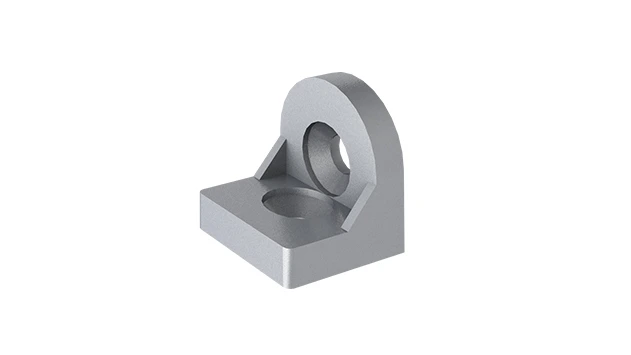
The turning angle aluminum profile connector provides a 90 degree hidden corner connection. 4040 it is means this size is used for 40 series aluminum profile.The corner code comes with set screws that allow for quick, easy connections.
Walk into any modern automotive plant today, and you'll feel the buzz of change. Electric vehicles roll off lines that once built gas-powered cars. New models with updated features launch every few months, not years. And behind the scenes, plant managers and production engineers are locked in a quiet battle: how to keep up with this pace without sacrificing efficiency, cost, or safety. The secret weapon? Often, it's not a multi-million-dollar robot or a fancy software system. Sometimes, it's a small, unassuming component called the Turning Angle Code 4040.
If you're in automotive manufacturing, you know the drill. Reconfiguring a production line to accommodate a new model used to mean weeks of downtime. Welders would cut through old steel frames, new parts would arrive delayed, and by the time the line was back up, the next change was already on the horizon. But in plants where Turning Angle Code 4040 is part of the workflow, that narrative is shifting. This tiny aluminum connector is redefining what "flexible manufacturing" looks like—one workbench, one flow rack, and one material trolley at a time.
What is Turning Angle Code 4040, Anyway?
Let's start with the basics. The Turning Angle Code 4040 is a specialized connector designed to join 4040 aluminum extrusion profiles—the backbone of modern lean system setups. Made from high-strength aluminum alloy (typically 6063-T5, known for its durability and corrosion resistance), it's shaped to fit snugly into the T-slots of 40mm x 40mm aluminum profiles. Think of it as a mechanical "middleman" that holds two or more profiles together at precise angles—90 degrees, 45 degrees, or even custom angles—without the need for welding, drilling, or permanent fasteners.
What makes it stand out? Unlike traditional steel brackets that require tools and time to install, the Turning Angle Code 4040 uses a simple hex key to tighten or loosen. Its design includes threaded holes that align with the T-slots in the aluminum profile, allowing for quick adjustments. And because it's made of aluminum, it's lightweight enough for one person to handle but strong enough to support heavy loads—up to 500kg per connection in some cases, depending on the setup. For automotive plants, where workbenches might hold heavy engine components or flow racks need to support stacks of parts, that strength-to-weight ratio is a game-changer.
But here's the real kicker: it's reusable. Take down a workbench on Monday, reconfigure the profiles with the same Turning Angle Code 4040 connectors on Tuesday, and have a new material rack up by Wednesday. In an industry where production lines are constantly evolving, that reusability alone cuts waste—both in materials and labor—by a staggering amount.
Why Automotive Manufacturing Needs Flexible Connections
To understand why Turning Angle Code 4040 matters, let's talk about the unique challenges of automotive production. Unlike, say, consumer electronics, where products are small and standardized, cars are large, complex, and require thousands of parts. And with the rise of electric vehicles (EVs), hybrid models, and even autonomous driving features, the variety of parts and assembly processes has exploded. A single plant might produce three different car models, each with unique battery packs, wiring harnesses, and interior layouts—all on the same line.
This variety demands flexibility. For example, a workbench used to assemble door panels for a compact car might need to be 30 inches high, but for an SUV with taller doors, that height needs to jump to 36 inches. A flow rack holding small plastic clips for a sedan might need 10 slots, but for a truck with larger components, it needs 6 wider slots. In the past, these changes meant ordering new workbenches or flow racks entirely—a costly and time-consuming process.
Enter lean system principles, which emphasize eliminating waste (muda) and continuous improvement (kaizen). Lean manufacturing in automotive isn't just about cutting costs; it's about creating systems that can adapt quickly. And that's where Turning Angle Code 4040 and aluminum profile systems shine. They're the physical embodiment of lean: modular, adaptable, and designed to reduce the "waste" of downtime and overproduction of fixed equipment.

Real-World Applications: How Turning Angle Code 4040 Powers Flexible Lines
Let's dive into specific use cases where Turning Angle Code 4040 is making a difference on the factory floor. These aren't hypothetical—they're scenarios plant managers and engineers face daily, and where this small connector is proving its worth.
1. Adaptive Workbenches for Assembly Lines
Assembly workbenches are the heartbeat of automotive production. Whether workers are installing dashboard components, attaching wiring, or inspecting parts, the workbench's height, layout, and accessories (like tool holders or ESD mats) directly impact efficiency. With Turning Angle Code 4040, these workbenches become "shape-shifters."
Consider a Tier 1 supplier that manufactures brake systems. Their assembly line workers range in height from 5'2" to 6'2", and ergonomics matter—strained backs lead to lost productivity and higher turnover. Using 4040 aluminum profiles connected by Turning Angle Code 4040, the plant can adjust each workbench's height in minutes. No more custom-ordering benches for each worker or forcing teams to adapt to one-size-fits-all setups. A quick twist of the hex key, and the bench rises or lowers to match the operator's ideal height.
And when the supplier wins a contract for a new brake model with different part sizes? They don't need new workbenches. They simply reconfigure the existing aluminum profiles, reusing the same Turning Angle Code 4040 connectors, and add new accessories like shelf brackets or LED task lights—all of which clip into the T-slots of the profiles. What once took a week of downtime now takes a single shift.
2. Flow Racks That Keep Up with Part Variability
Material flow is the lifeblood of automotive manufacturing. Parts need to move from warehouses to assembly lines smoothly, and flow racks are the arteries that carry them. But when part sizes change—say, from a small sensor to a larger battery module—the flow rack needs to change too. Traditional steel flow racks are fixed; modify them, and you might as well build new ones.
Not so with aluminum flow racks built using Turning Angle Code 4040. Take a plant producing EV batteries. Battery modules for a compact EV might be 12 inches wide, but for a pickup truck, they're 24 inches wide. With a traditional rack, the team would need to wait for a custom-built rack. With Turning Angle Code 4040, they can adjust the vertical dividers (made from 4040 aluminum profiles) by loosening the connectors, sliding them to the new width, and retightening. The entire process takes less than an hour, and the same rack is now ready for the larger modules.
Even better, these flow racks integrate seamlessly with roller track systems (another key component in material handling). The Turning Angle Code 4040 can secure roller track guides to the aluminum profiles, allowing parts to glide smoothly from rack to line. And if the roller track needs to be angled slightly to speed up or slow down part flow? Again, a quick adjustment with the hex key does the trick.
3. Lean System Integration: From Trolleys to Material Racks
Lean system isn't just a buzzword in automotive—it's a way of life. And Turning Angle Code 4040 is a linchpin in making lean principles actionable. Take turnover trolleys, for example. These carts move parts between stations, and their design needs to match the parts they carry. A trolley for delicate electronics (like infotainment systems) needs soft padding and secure dividers, while one for heavy suspension parts needs a rugged, open frame.
Using 4040 aluminum profiles and Turning Angle Code 4040, plants can build custom trolleys in-house. No more waiting for external vendors or paying premium prices for "one-off" designs. Engineers sketch the trolley layout, cut the profiles to length, and assemble them using the connectors. If a trolley gets damaged? Instead of replacing the entire cart, they swap out the bent profile and reuse the connectors. It's lean manufacturing in action: reducing lead times, cutting costs, and minimizing waste.
Material racks, too, benefit from this flexibility. A material rack B (3 row and 3 floor) setup, common in automotive parts storage, can be reconfigured to 2 rows and 4 floors if parts become taller. The Turning Angle Code 4040 holds the vertical and horizontal profiles together, and adjusting the shelf heights is as simple as moving the connectors up or down the T-slots. For plants struggling with space, this ability to "stack smarter" is invaluable.

The Numbers Speak: Comparing Traditional vs. Turning Angle Code 4040 Solutions
| Metric | Traditional Steel/Welded Systems | Turning Angle Code 4040 + Aluminum Profiles |
|---|---|---|
| Reconfiguration Time | 1–2 weeks (requires welding, cutting, new parts) | 4–8 hours (tools: hex key, no welding) |
| Cost per Reconfiguration | $5,000–$15,000 (new materials, labor) | $200–$500 (labor only, reusable parts) |
| Downtime During Changes | 3–5 days (line shutdown) | 0–1 day (often done during off-shifts) |
| Weight (per 10ft section) | 45–60 lbs (steel) | 15–20 lbs (aluminum) |
| Reusability | Low (welded parts cannot be reused) | High (connectors and profiles reused indefinitely) |
The table above tells a clear story: Turning Angle Code 4040 isn't just a "nice-to-have"—it's a cost-saving, efficiency-boosting necessity. For a mid-sized automotive plant with 10 production lines, switching to aluminum profiles and Turning Angle Code 4040 could save hundreds of thousands of dollars annually in downtime and reconfiguration costs alone.
Case Study: A Day in the Life of a Plant Using Turning Angle Code 4040
Let's step into the shoes of Maria, a production supervisor at an automotive component plant in Michigan. Last month, her team got a rush order: they needed to assemble 500 custom door handles for a new SUV model, and the deadline was tight. The problem? Their existing assembly workbenches were set up for smaller, standard door handles, and the new ones required a wider workspace and additional tool storage.
"Three years ago, this would've been a disaster," Maria recalls. "We would've had to order new workbenches, wait two weeks for delivery, and then lose a day of production to set them up. By then, we'd have missed the deadline."
But today, Maria's plant uses 4040 aluminum profiles and Turning Angle Code 4040. Here's how the day played out:
- 7:00 AM: Maria's team breaks down two unused material racks (built with aluminum profiles and Turning Angle Code 4040) to free up parts.
- 9:00 AM: Using the recycled profiles and connectors, they assemble two new workbenches. The Turning Angle Code 4040 allows them to set the width to 48 inches (up from the standard 36 inches) and add side shelves for tools—all with hex keys.
- 11:30 AM: The workbenches are tested with prototype door handles. A quick adjustment to the height (via the Turning Angle Code 4040) ensures ergonomic comfort for the tallest worker on the team.
- 1:00 PM: Production starts. By the end of the day, the team has assembled 150 door handles—on track to meet the deadline.
"We didn't just save time," Maria says. "We saved money. We reused 100% of the connectors and 80% of the profiles from the old racks. And because we could adjust the workbenches on the fly, the team didn't waste energy adapting to a new setup. It's like having a production line that bends instead of breaks."
Beyond the Connector: Why Aluminum Profiles Matter
Turning Angle Code 4040 is powerful, but it's only as good as the aluminum profiles it connects. Automotive plants rely on 4040 aluminum extrusion profiles for a reason: they're standardized, strong, and designed for modularity. Unlike custom steel fabrication, which varies from supplier to supplier, 4040 aluminum profiles have consistent T-slot sizes and dimensions, meaning any Turning Angle Code 4040 (from a reputable supplier) will fit—no guesswork, no mismatched parts.
Aluminum also offers corrosion resistance, a must in automotive plants where fluids (like lubricants or coolants) might spill. And because it's non-magnetic and non-sparking, it's safe for use in areas with sensitive electronics or flammable materials—critical for EV battery production lines.
Plus, aluminum extrusion profiles come with a universe of accessories that play nicely with Turning Angle Code 4040. Need to add a light to a workbench? Clip an LED strip into the T-slot. Want to secure a power tool? Use a bracket that attaches via the Turning Angle Code 4040. Even ESD workstation setups (essential for electronics assembly) can be integrated: ESD mats, wrist straps, and grounding clips all mount directly to the aluminum profiles, with the Turning Angle Code 4040 ensuring a secure, stable base.
Looking Ahead: The Future of Flexible Manufacturing
As automotive manufacturing continues to evolve—with more EVs, more customization, and more pressure to reduce carbon footprints—the demand for flexible systems will only grow. Turning Angle Code 4040 is poised to play a bigger role in this future, and here's why:
Sustainability: Reusing aluminum profiles and connectors reduces scrap metal and lowers the carbon footprint of production. Aluminum is also 100% recyclable, aligning with automakers' goals to become more eco-friendly.
Industry 4.0 Integration: Smart factories are here, and modular systems are key. Sensors that monitor part flow, cameras that check for defects, and IoT devices that track inventory can all be mounted to aluminum profiles using Turning Angle Code 4040. When the line reconfigures, the smart tools move with it—no need for new wiring or mounting hardware.
Global Supply Chains: With parts sourced from around the world, standardized components like Turning Angle Code 4040 and 4040 aluminum profiles reduce reliance on custom parts. A plant in Germany and a plant in Mexico can use the same connectors, simplifying training and maintenance.
Final Thoughts: Small Part, Big Impact
In the grand scheme of automotive manufacturing, the Turning Angle Code 4040 is easy to overlook. It's not as flashy as a robotic arm or as headline-grabbing as a new EV model. But for the engineers, supervisors, and line workers who keep the plants running, it's a quiet revolution. It turns rigid production lines into adaptable ecosystems. It turns downtime into uptime. And it turns the stress of constant change into the confidence of knowing you can handle whatever comes next.
So the next time you walk through an automotive plant, take a closer look at the workbenches, flow racks, and material trolleys. Chances are, you'll spot the 4040 aluminum profiles—and the small, mighty Turning Angle Code 4040 connectors holding them together. They may not be the stars of the show, but they're the unsung heroes making flexible manufacturing possible.