- Company Articles
- Products and Technology
- Application Cases
- Turning Angle Code 4040 in Custom Lean Solutions: 3C Assembly Success Stories

Turning Angle Code 4040 in Custom Lean Solutions: 3C Assembly Success Stories
Related Product
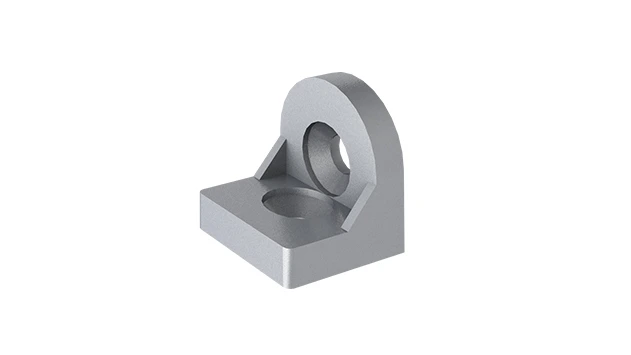
Turning Angle Code 4040
The turning angle aluminum profile connector provides a 90 degree hidden corner connection. 4040 it is means this size is used for 40 series aluminum profile.The corner code comes with set screws that allow for quick, easy connections.
Walk into any 3C (computers, communications, consumer electronics) assembly plant, and you'll feel the buzz of precision in motion. Tiny screws, delicate circuit boards, and sleek casings move from station to station, each step inching closer to becoming a smartphone, tablet, or laptop. But beneath that rhythm lies a hidden challenge: flexibility . In an industry where new models launch every few months and production lines must pivot overnight, rigidity is the enemy. That's where yet powerful components like the Turning Angle Code 4040 come into play—quietly revolutionizing how lean systems adapt, evolve, and thrive.
Let's start with a scenario many 3C production managers know too well. Maria, a plant supervisor at a mid-sized electronics manufacturer, was drowning in changeover delays. Every time her team switched from assembling Model X to Model Y, they spent hours reconfiguring workbenches, adjusting flow racks, and reinforcing joints that just couldn't keep up. "We were losing 4-5 hours per changeover," she recalls. "By the time we got the line running smoothly, the next model was already on the horizon." Sound familiar? For 3C manufacturers, downtime isn't just lost time—it's lost opportunities to meet tight market deadlines.
Then Maria's team discovered the Turning Angle Code 4040. A small, unassuming connector designed for aluminum profiles, it promised to turn rigid workbenches and flow racks into modular, adaptable systems. Skeptical at first ("How could a single part fix years of headaches?"), Maria decided to test it on one of her most problematic lines. The results? A 40% reduction in changeover time, fewer errors, and a team that suddenly had the bandwidth to focus on quality instead of wrestling with tools. "It wasn't just a part upgrade," she says. "It was a mindset shift—we stopped fighting our workspace and started designing it around our needs."
What Even Is the Turning Angle Code 4040?
Before we dive into success stories, let's demystify this unsung hero of lean systems. The Turning Angle Code 4040 is a specialized connector engineered for aluminum profiles—the backbone of modern industrial workspaces. If aluminum profiles are the "bones" of a workbench or flow rack, the Turning Angle Code 4040 is the "joint" that lets those bones move, flex, and reconfigure without breaking.
Traditional fixed joints (think welded steel or rigid plastic) lock aluminum profiles into permanent angles, making adjustments a nightmare. You'd need drills, saws, and sometimes even a whole new frame to tweak a workbench height or widen a flow rack. The Turning Angle Code 4040 changes that. Its clever design—typically made from high-strength aluminum alloy—slots into the T-slot of aluminum profiles, securing with a simple bolt or cam lever. Need to angle a workbench shelf at 45 degrees instead of 90? Loosen the lever, adjust, retighten. Done. No power tools, no downtime, no frustration.
But it's not just about adjustability. The Turning Angle Code 4040 is built to last. Its precision-machined edges ensure a tight fit, preventing wobbles even under the weight of heavy circuit boards or toolboxes. Most models can handle loads up to 50kg per joint, making them sturdy enough for daily 3C assembly grind. And since they're made from corrosion-resistant aluminum, they hold up in the dusty, sometimes humid environments of manufacturing plants—no rust, no degradation, just reliable performance shift after shift.
The Role of Turning Angle Code 4040 in Lean Systems
Lean manufacturing isn't just a buzzword—it's a philosophy centered on eliminating waste, streamlining flow, and empowering teams to improve continuously. At its core, lean asks: How can we do more with less? For 3C manufacturers, "less" means less downtime, less material waste, less frustration. And that's where the Turning Angle Code 4040 becomes a lean system's best friend.
Let's break down the waste it targets:
- Transport Waste: When flow racks are fixed at the wrong height, workers bend, stretch, or walk extra steps to grab parts. The Turning Angle Code 4040 lets you adjust rack heights to match worker ergonomics, cutting unnecessary movement.
- Inventory Waste: Rigid workbenches can't adapt to varying part sizes, leading to overstocking "just in case." Modular setups with adjustable angles mean you use space efficiently, storing only what you need.
- Downtime Waste: As Maria learned, changeover delays kill productivity. Quick-adjust joints slash reconfiguration time, keeping lines running.
But lean is also about continuous improvement . The Turning Angle Code 4040 turns "improvement" from a quarterly project into a daily habit. Want to test a new workflow? Rearrange the flow rack in 10 minutes. Notice workers straining to reach a conveyor? Tilt the workbench shelf up by 15 degrees. No need to wait for engineering approvals or budget sign-offs—your team has the power to optimize on the fly.

Success Story 1: Smartphone Assembly Line Overhaul
Let's zoom into a real-world example. TechNova, a smartphone manufacturer in Southeast Asia, was struggling with a critical bottleneck: its final assembly line. With 12 stations, each handling different components (cameras, batteries, screens), the line was designed for its flagship model—but when the company launched a smaller, budget-friendly phone, chaos ensued.
"The budget model's casing was 20% narrower, so our existing flow racks were too wide," explains Raj, TechNova's production engineer. "Parts kept sliding off, causing scratches and rework. We tried adding foam padding, but that just trapped dust. Then we'd have to stop the line to clean it—costing us 2-3 hours a day."
Raj's team considered building entirely new flow racks, but with six more models in the pipeline, that felt short-sighted. "We needed something that could grow with us," he says. After researching lean system suppliers, they landed on aluminum profiles paired with Turning Angle Code 4040 connectors.
The transformation was dramatic. Using the Turning Angle Code 4040, Raj's team narrowed the flow racks by 15cm in under an hour per rack. They also angled the roller tracks slightly downward (10 degrees) to guide parts gently into place, eliminating slides and scratches. "The best part? When we launched a larger phablet model three months later, we just widened the racks back up—no new equipment, no extra cost," Raj adds. "Changeover took 45 minutes instead of 4 days. Our production targets went from 'stretch goals' to 'daily wins.'"
The numbers tell the story: Rework due to damaged parts dropped by 65%, changeover time fell by 85%, and the line's output increased by 18% within the first month. "Our operators used to dread model changes," Raj says. "Now they joke that we should launch new phones more often—because they know the Turning Angle Code 4040 has their backs."

Success Story 2: Tablet Production's Flow Rack Revolution
Tablet assembly comes with its own unique challenges—larger screens, bulkier batteries, and the need for ultra-precise alignment. For Zenith Tablets, a U.S.-based manufacturer, the biggest headache was material flow. Their flow racks, loaded with tablet casings and motherboards, were arranged in straight lines, forcing workers to twist and turn to access parts. "We were seeing a lot of neck and shoulder strain," says Lina, Zenith's ergonomics specialist. "And strained workers are slower workers—plus, we were paying for more workers' comp claims than we wanted."
Lina's team initially considered ergonomic chairs and anti-fatigue mats, but those felt like band-aids. "The root problem was the flow racks themselves," she explains. "They were built for efficiency on paper, not for real human bodies." Enter the Turning Angle Code 4040. Working with a lean system supplier, Lina's team redesigned the flow racks into a "U-shape" around each workstation, using the connectors to angle shelves at 30 degrees toward the operator.
The impact was immediate. Workers no longer had to reach across their bodies—parts came to them, at eye level and arm's length. "One operator told me, 'It's like the rack is reading my mind,'" Lina laughs. "Within two weeks, we noticed fewer pauses, fewer mistakes, and more energy at the end of shifts."
But the benefits didn't stop at ergonomics. The U-shaped flow racks, made possible by the Turning Angle Code 4040's ability to create tight 90-degree bends, also reduced floor space usage by 22%. "We used to have 10 linear meters of racks per station; now we have 7.8 meters in a U-shape that's more efficient," Lina notes. That freed up space for a new testing station, allowing Zenith to bring quality checks in-house instead of outsourcing—saving $120,000 annually.
Why Aluminum Profiles and Turning Angle Code 4040 Are a Match Made in Lean Heaven
You might be wondering: Why aluminum profiles? Can't the Turning Angle Code 4040 work with steel or plastic? While it's technically possible, aluminum profiles are the ideal partner—and here's why.
Aluminum is lightweight yet strong, making it easy to maneuver during reconfigurations without sacrificing durability. Unlike steel, it doesn't rust, so it stays looking (and functioning) new for years. Its T-slot design—those grooves running along the length of the profile—is what makes the Turning Angle Code 4040 so effective. The slot acts as a built-in track, letting the connector slide into position and lock securely. No drilling holes, no welding—just a clean, repeatable connection.
Plus, aluminum profiles come in standardized sizes (like 40x40mm, 30x60mm), so the Turning Angle Code 4040 (designed for 40mm profiles) works seamlessly across brands and suppliers. This interoperability is a game-changer for manufacturers who might source profiles from multiple vendors but want consistent performance from their connectors.
| Traditional Fixed Joints | Turning Angle Code 4040 + Aluminum Profiles |
|---|---|
| Require tools (drills, saws) for adjustments | Tool-free adjustments with cam levers or bolts |
| Permanent angles; no adaptability | Adjustable angles (30°, 45°, 90°, etc.) on demand |
| High risk of damage during reconfiguration | Gentle adjustments; no damage to profiles |
| Heavy (steel) or weak (plastic) | Lightweight aluminum alloy; high load capacity |
| Corrosion-prone (steel) or brittle (plastic) | Corrosion-resistant; durable in industrial environments |
Beyond 3C: Where Else Does This Connector Shine?
While our focus is on 3C assembly, the Turning Angle Code 4040 is a versatile tool that's making waves in other industries too. Automotive parts manufacturers use it to build adjustable workbenches for assembling dashboards and door panels. Medical device plants rely on it for cleanroom-compatible flow racks that can be sanitized without rusting. Even e-commerce fulfillment centers are adopting it to build custom picking carts that adapt to varying package sizes.
But 3C remains its sweet spot, and for good reason. In an industry where product lifecycles are measured in months, not years, the ability to reconfigure production lines quickly isn't just a luxury—it's survival. As Maria, Raj, and Lina's stories show, the Turning Angle Code 4040 isn't just a connector. It's a catalyst for agility, a enabler of lean systems, and a silent partner in the race to build the next generation of electronics.
Choosing the Right Turning Angle Code 4040: What to Look For
Not all Turning Angle Code 4040 connectors are created equal. If you're considering integrating them into your lean system, here are a few key factors to keep in mind:
Material Quality: Opt for connectors made from 6061 or 6063 aluminum alloy—these are the gold standards for strength and corrosion resistance. Avoid cheap plastic imitations; they'll warp under heat or heavy loads.
Load Capacity: Check the manufacturer's specs for maximum load per joint. For 3C assembly, aim for at least 30-50kg per connector to handle tools, parts bins, and work-in-progress.
Ease of Adjustment: Look for connectors with quick-release levers or ergonomic bolts. The whole point is to save time—if adjusting it requires a special tool, you're missing the mark.
Compatibility: Ensure the connector fits your existing aluminum profiles. Most 4040 codes work with standard T-slot profiles, but double-check the slot width (usually 8mm or 10mm) to avoid mismatches.
Supplier Support: Go with a reputable lean system supplier who offers technical guidance. A good supplier will help you design your workbench or flow rack, recommend accessories (like gusset plates for extra stability), and even provide samples to test before you buy.
Final Thoughts: Small Part, Big Impact
In the high-stakes world of 3C assembly, where milliseconds matter and margins are tight, it's easy to overlook the small stuff. But as the Turning Angle Code 4040 proves, small parts can drive big change. It's not glamorous, it's not flashy, but it's the kind of innovation that turns "we can't" into "we can," and "good enough" into "excellent."
So the next time you pick up your smartphone or tablet, take a moment to appreciate the invisible heroes behind it—not just the engineers or the assembly line workers, but the tiny connectors that let those workers adapt, evolve, and build something great. The Turning Angle Code 4040 might not have a logo or a marketing campaign, but in the quiet, busy world of lean manufacturing, it's making its mark—one adjustable joint at a time.
As Maria puts it: "At the end of the day, our job is to build products that make people's lives easier. It's only fair that our tools do the same for us." And in that mission, the Turning Angle Code 4040 isn't just a tool—it's a partner.