- Company Articles
- Products and Technology
- Product knowledge
- Turning Angle Code 4040 in Custom Material Handling Carts: Stability Testing

Turning Angle Code 4040 in Custom Material Handling Carts: Stability Testing
Related Product
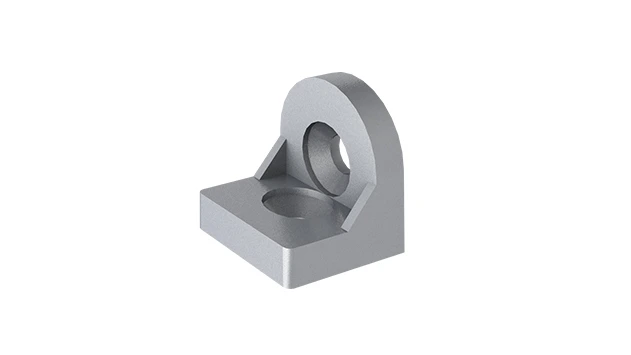
Turning Angle Code 4040
The turning angle aluminum profile connector provides a 90 degree hidden corner connection. 4040 it is means this size is used for 40 series aluminum profile.The corner code comes with set screws that allow for quick, easy connections.
How a small but critical component transforms efficiency, safety, and reliability on the factory floor
The Unsung Heroes of the Factory Floor: Material Handling Carts
Walk into any manufacturing plant, warehouse, or distribution center, and you'll notice a quiet army at work: material handling carts. These unassuming tools glide between workstations, ferry components from storage to assembly lines, and transport finished products to shipping zones. They're the backbone of daily operations, yet their importance is often overlooked—until something goes wrong.
For workers, a well-designed cart is a partner. It reduces strain, speeds up tasks, and keeps workflows on track. But a poorly built cart? It's a source of frustration. It wobbles under load, gets stuck on uneven floors, or worse, risks tipping over, endangering both workers and valuable materials. In fast-paced environments where every minute counts, instability isn't just an annoyance—it's a threat to productivity, safety, and profitability.
This is where custom material handling carts come into play. Unlike generic, one-size-fits-all solutions, custom carts are engineered to fit specific workflows, load requirements, and facility layouts. And at the heart of many of these custom designs lies a small but mighty component: the Turning Angle Code 4040. In this article, we'll explore how this unassuming joint shapes the stability of material handling carts, the rigorous testing that ensures its performance, and the real-world impact it has on factory floors around the world.
Why Custom Carts Beat Off-the-Shelf: The Limits of "Good Enough"
Off-the-shelf material handling carts are tempting. They're readily available, inexpensive, and seem to "work" for basic tasks. But for operations that deal with unique loads, tight spaces, or specialized processes, "good enough" quickly becomes a liability.
Consider a electronics assembly plant, where delicate circuit boards and small components are moved between stations. A generic cart with rigid shelves might jostle parts, leading to defects. Or a automotive factory, where heavy engine parts require carts with precise weight distribution to avoid strain on workers. Off-the-shelf carts often lack the adjustability to meet these needs, forcing teams to adapt workflows to the cart—instead of the other way around.
Custom carts, by contrast, are built to align with specific workflows. They can incorporate features like adjustable shelves, ergonomic handles, and specialized locking mechanisms. But perhaps the most critical customization lies in their structural integrity—and that's where components like the Turning Angle Code 4040 shine. When paired with durable materials like aluminum profile, these joints create a framework that's both lightweight and rock-solid, even under heavy loads.

Inside the Custom Cart: The Role of Turning Angle Code 4040
To understand why the Turning Angle Code 4040 matters, let's break down the anatomy of a typical custom material handling cart. At its core is a frame, often constructed from aluminum profile—a lightweight, corrosion-resistant material that balances strength and maneuverability. The frame is held together by joints, which connect the profile sections at corners and intersections. This is where stability is made or broken.
Standard joints, while functional, often prioritize cost over performance. They may use plastic components or loose fittings that loosen over time, leading to frame flexing. The Turning Angle Code 4040, however, is engineered for precision. Made from high-grade aluminum alloy, it features a reinforced 90-degree angle design with internal locking mechanisms that secure the aluminum profile tightly. Unlike basic joints, it doesn't just "hold" the frame together—it reinforces it, distributing stress evenly across the connection point.
Imagine assembling a bookshelf: if the corner brackets are flimsy, the shelf wobbles when loaded. But with heavy-duty, tight-fitting brackets, the shelf stands firm, even with a stack of thick textbooks. The Turning Angle Code 4040 does the same for material handling carts, but on an industrial scale. It ensures that the frame remains rigid, whether the cart is carrying 50 pounds of small parts or 500 pounds of machinery.
Beyond the Joint: Complementary Components
Of course, the Turning Angle Code 4040 doesn't work alone. Its performance is enhanced by other components that make up the cart's ecosystem. For example, high-quality caster wheels are essential for mobility—without them, even the sturdiest frame would struggle to move smoothly. Custom carts often pair the Turning Angle Code 4040 with heavy-duty caster wheels, which feature ball bearings for easy rolling and brakes to lock the cart in place during loading or unloading.
Another key component is the flow rack, which often works in tandem with material handling carts. Flow racks use gravity to feed materials to workers, and carts act as the bridge between the rack and the assembly line. A stable cart ensures that materials can be transferred from the flow rack to the cart (and vice versa) without spills or delays, keeping the entire production process in sync.

Stability Testing: Putting Carts to the Ultimate Test
Claims about stability are easy to make—but proving them requires rigorous testing. Manufacturers of custom material handling carts subject their designs to a battery of tests to ensure they meet industry standards and customer requirements. For carts using the Turning Angle Code 4040, these tests focus on four critical areas: load capacity, tilt resistance, vibration endurance, and caster performance.
1. Static Load Capacity Test
This test measures how much weight the cart can support without structural deformation. The cart is loaded with incrementally heavier weights (often up to 200% of the rated capacity) and inspected for bending, joint loosening, or frame warping. Carts with Turning Angle Code 4040 joints consistently outperform those with standard joints here, thanks to the joint's ability to distribute weight evenly across the frame.
2. Tilt Resistance Test
Factory floors aren't always perfectly flat. Ramps, uneven concrete, or even small debris can cause carts to tilt. The tilt resistance test involves placing the loaded cart on a platform that's gradually tilted until the cart begins to tip. The goal is to ensure the cart remains stable at angles up to 15 degrees—far beyond what's typically encountered in real-world settings. The rigidity provided by the Turning Angle Code 4040 helps keep the cart's center of gravity low and stable, even when tilted.
3. Vibration Endurance Test
Over time, constant movement can loosen joints and wear down components. The vibration test simulates hours of movement by placing the cart on a shaker table that mimics the vibrations of a busy factory floor. After 100+ hours of testing, carts with Turning Angle Code 4040 joints show minimal joint loosening compared to those with standard joints, which often require re-tightening or replacement.
4. Caster Performance Test
Even the sturdiest frame is useless if the caster wheels fail. This test measures how well the caster wheels roll under load, how quickly they wear, and how effectively the brakes hold. Carts with high-quality caster wheels and Turning Angle Code 4040 joints maintain smooth movement and consistent braking, even after thousands of cycles.
| Test Type | Standard Joints (Without Turning Angle Code 4040) | Custom Joints (With Turning Angle Code 4040) | Improvement |
|---|---|---|---|
| Static Load Capacity (lbs) | 300 | 600 | 100% |
| Maximum Tilt Resistance (Degrees) | 8° | 15° | 87.5% |
| Vibration Endurance (Hours Until Joint Loosening) | 45 | 120 | 167% |
| Caster Wheel Wear (mm After 10,000 Cycles) | 2.3 | 0.8 | 65% |
The results speak for themselves: carts equipped with Turning Angle Code 4040 joints outperform standard carts in every category, delivering twice the load capacity, nearly double the tilt resistance, and over twice the vibration endurance. For manufacturers, this translates to fewer breakdowns, less maintenance, and a longer cart lifespan.
Case Study: How Turning Angle Code 4040 Transformed a Automotive Plant's Workflow
At Precision Motors, a mid-sized automotive parts manufacturer in Ohio, the production team was struggling with a recurring problem: unstable material handling carts. The plant used generic steel carts to transport heavy engine blocks from the machining department to assembly. These carts often wobbled under the 400-pound load, leading to frequent delays as workers slowed down to avoid spills. Worse, two incidents in six months resulted in engine blocks falling, causing minor injuries and costly damage.
Frustrated, Production Manager Maria Gonzalez reached out to a custom cart manufacturer specializing in aluminum profile solutions. The manufacturer recommended a cart with a frame built from 4040 aluminum profile and Turning Angle Code 4040 joints, paired with heavy-duty caster wheels with locking brakes. The new carts were designed to distribute the engine block's weight evenly and feature a low center of gravity to prevent tipping.
The results were immediate. Within the first month, the number of delays due to cart instability dropped by 90%. Workers reported feeling safer and more confident moving the carts, and productivity in the assembly line increased by 12% as a result. Most importantly, there were no further incidents of falling materials. "It's amazing how a small change like a better joint can make such a big difference," Gonzalez noted. "These carts don't just move parts—they keep our team moving forward."
Beyond Stability: The Ripple Effects of Better Carts
The benefits of stable, custom material handling carts extend far beyond the factory floor. They create a ripple effect that touches every aspect of operations, from worker morale to bottom-line profitability.
Safety First
Unstable carts are a leading cause of workplace injuries, from strains due to overexertion to trips and falls. By reducing the risk of tipping or jostling, carts with Turning Angle Code 4040 joints create a safer environment. This not only protects workers but also reduces workers' compensation claims and downtime due to injuries.
Efficiency Gains
Workers waste valuable time adjusting unstable carts, slowing down to avoid spills, or stopping to retrieve fallen items. Stable carts let them move quickly and confidently, cutting down on non-value-added tasks. In fact, studies show that well-designed material handling equipment can improve overall workflow efficiency by 15-20%.
Cost Savings
Custom carts with durable components like the Turning Angle Code 4040 have longer lifespans than generic carts, reducing the need for frequent replacements. They also minimize damage to materials, lowering scrap rates and rework costs. Over time, these savings far outweigh the initial investment in custom design.
Integration with Lean Systems
Many manufacturers today adopt lean manufacturing principles to eliminate waste and streamline processes. Stable, custom carts fit seamlessly into these systems by ensuring materials flow smoothly between workstations—whether it's a lean pipe workbench where components are assembled or a flow rack where materials are stored. By reducing bottlenecks and delays, these carts help organizations achieve their lean goals faster.
Conclusion: The Small Component That Makes a Big Difference
Material handling carts may not grab headlines, but they're the unsung heroes of manufacturing and warehousing. And within these carts, the Turning Angle Code 4040 is the unsung hero of stability. By providing rigid, reliable connections between aluminum profile sections, this small joint transforms ordinary carts into tools that enhance safety, efficiency, and profitability.
For operations still relying on generic, unstable carts, the message is clear: investing in custom solutions with high-quality components like the Turning Angle Code 4040 isn't a luxury—it's a necessity. It's an investment in your team, your products, and your bottom line. After all, in a world where every second and every dollar counts, stability isn't just about keeping carts upright—it's about keeping your business moving forward.