- Company Articles
- Products and Technology
- Product knowledge
- Turning Angle Code 4040 in Material Rack B: Stability Optimization Tips

Turning Angle Code 4040 in Material Rack B: Stability Optimization Tips
Related Product
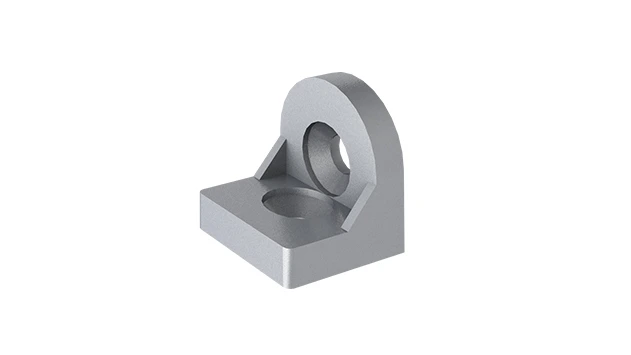
Turning Angle Code 4040
The turning angle aluminum profile connector provides a 90 degree hidden corner connection. 4040 it is means this size is used for 40 series aluminum profile.The corner code comes with set screws that allow for quick, easy connections.
Imagine walking into a bustling warehouse on a Monday morning. Pallets are being unloaded, workers are rushing to fill orders, and the air hums with the sound of efficiency. But in the corner, something's off: a Material Rack B (3 row and 3 floor) is leaning slightly, its top shelf sagging under the weight of boxes. A worker pauses, hesitates, then carefully places another carton on it—hoping for the best. We've all seen this scenario, and we know how it ends: with a crash, damaged inventory, or worse, a safety incident. Unstable material racks aren't just a nuisance; they're a silent drain on productivity, a risk to your team, and a threat to your bottom line. Today, we're diving into one unsung hero that can transform this chaos into calm: the Turning Angle Code 4040. Paired with quality aluminum profile and smart design choices, this small but mighty component is the key to unlocking rock-solid stability in your Material Rack B. Let's explore how.
The Hidden Cost of "Good Enough" Racks
Before we get into the technical details, let's talk about why stability matters—really matters. I recently spoke with Maria, a warehouse manager at a mid-sized electronics manufacturer, who shared a story that still makes her cringe. "We had a Material Rack B that we'd had for years," she told me. "It was always a little wobbly, but we figured, 'If it ain't broke, don't fix it.' Then, during our peak season last year, we loaded it with our heaviest components—circuit boards, metal housings, about 500 pounds total. That night, we heard a loud crash. The rack had collapsed. We lost $12,000 in inventory, and the cleanup took two days. Worse, one of my team members was nearby; he wasn't hurt, but he still gets nervous around racks now."
Maria's story isn't unique. According to the Occupational Safety and Health Administration (OSHA), over 25% of warehouse accidents involve unstable storage racks, leading to over 100,000 lost workdays annually. The costs add up: damaged goods, workers' compensation claims, downtime, and even regulatory fines. And the root cause? More often than not, it's the small, overlooked components—the ones that hold the rack together. Enter the Turning Angle Code 4040. This unassuming piece of hardware might not look like much, but it's the difference between a rack that "kind of works" and one that stands strong, even under pressure.
Meet Material Rack B: A Workhorse in Modern Warehouses
First, let's get to know the star of our story: Material Rack B (3 row and 3 floor). If you've spent any time in a warehouse, factory, or distribution center, you've probably seen its cousin. But Material Rack B isn't just any rack—it's a workhorse designed for versatility and density. With three rows and three floors, it maximizes vertical space, allowing you to store everything from small parts bins to large cartons without taking up extra floor space. It's the go-to choice for businesses that need to balance storage capacity with accessibility—think automotive shops storing tools, e-commerce warehouses managing SKUs, or electronics plants organizing components.
Standard Material Rack B dimensions typically range from 120cm in height to 150cm in width, with each shelf holding 150-200kg (depending on build quality). But here's the catch: those weight limits assume the rack is properly assembled and reinforced. When manufacturers cut corners on components—using cheap angle codes, flimsy aluminum profile, or skipping critical fasteners—those "150kg per shelf" promises quickly fall apart. And that's where the Turning Angle Code 4040 comes in. It's not just a part; it's the backbone that turns a generic rack into a reliable asset.

Why Do Material Racks Wobble? The Culprits Behind Instability
Before we fix the problem, let's diagnose it. Why does Material Rack B (or any rack, for that matter) become unstable? After interviewing engineers and warehouse pros, I've narrowed it down to three main culprits:
1. Weak Joints: The connections between vertical posts and horizontal shelves are the rack's Achilles' heel. Cheap angle codes—those small brackets that hold the shelves to the posts—bend or loosen over time, especially under repeated loading and unloading. "We used to use plastic angle codes on our racks," said Tom, a facilities manager at a food distribution company. "They worked for a month, then started cracking. The shelves would tilt, and boxes would slide off. Not great when you're storing perishables."
2. Mismatched Components: Mixing and matching parts from different suppliers is a common mistake. Using a 3030 aluminum profile with 2020 angle codes, for example, creates weak points where the components don't lock together snugly. It's like trying to fit a square peg in a round hole—eventually, the stress causes the joint to fail.
3. Overloading (or Poor Weight Distribution): Even the sturdiest rack will fail if you pile too much weight on one shelf. But here's the kicker: unstable joints make overloading worse. A rack with solid Turning Angle Code 4040 connections can handle occasional overloads (within reason), but one with weak joints? It's a disaster waiting to happen.

Turning Angle Code 4040: The Stability Secret You've Been Missing
Now, let's shine a spotlight on the Turning Angle Code 4040. What is it, exactly? At its core, it's a metal bracket designed to connect horizontal shelves to vertical posts in aluminum profile racks. But not all angle codes are created equal. The "4040" refers to its compatibility with 40x40mm aluminum profile—the workhorse of industrial framing. Unlike flimsy plastic or thin steel alternatives, the Turning Angle Code 4040 is typically made from die-cast aluminum or high-grade steel, engineered to distribute weight evenly and resist bending.
What makes it special? Let's break it down:
1. Precision Engineering: The Turning Angle Code 4040 is machined to fit 40x40mm aluminum profile like a glove. Its T-slot design locks into the profile's grooves, creating a connection that won't slip or twist. Think of it as a puzzle piece—no gaps, no play, just a tight, secure fit.
2. Load-Bearing Muscle: Most Turning Angle Code 4040 models can handle 300-500kg per joint, depending on material (steel vs. aluminum). That's more than enough for even the heaviest shelves in a Material Rack B. Compare that to a standard 2020 angle code, which tops out at around 150kg, and you'll see why this matters.
3. Versatility: It's not just for right angles. The "turning" in its name means it can pivot slightly, allowing you to adjust shelf angles by up to 15 degrees—handy for sloped shelves or custom configurations. Need a shelf that tilts to prevent items from sliding? The Turning Angle Code a4040 can do that without sacrificing stability.
| Feature | Turning Angle Code 4040 | 3030 Angle Code | 2020 Angle Code |
|---|---|---|---|
| Material | Die-cast aluminum/steel | Aluminum alloy | Plastic/light aluminum |
| Max Load per Joint | 300-500kg | 150-250kg | 50-150kg |
| Compatibility | 40x40mm aluminum profile | 30x30mm aluminum profile | 20x20mm aluminum profile |
| Installation Difficulty | Moderate (requires torque wrench) | Easy (hand-tightened) | Very easy (snap-fit) |
| Best For | Heavy-duty racks (Material Rack B, industrial shelving) | Medium-load racks (workbenches, light shelving) | Light-duty use (DIY projects, small parts storage) |
Installing Turning Angle Code 4040: Step-by-Step for Maximum Stability
Okay, so you're sold on the Turning Angle Code 4040—now what? Installing it properly is just as important as choosing the right component. I reached out to Jake, a senior technician at an aluminum profile supplier, to walk me through the process. "Most people rush this," he said. "They tighten the bolts until they're 'snug' and call it a day. But if you don't torque them correctly, or if you misalign the code, you're wasting your money." Here's his step-by-step guide:
1. Prep Your Aluminum Profile: Start by cleaning the 40x40mm aluminum profile where the angle code will attach. Dust, grease, or rust can create gaps, so wipe it down with a cloth and mild solvent. Check for dents or bent edges—if the profile is damaged, replace it first. A warped post will never hold a joint securely.
2. Align the Angle Code: Slide the Turning Angle Code 4040 into the T-slot of the vertical post. Make sure the mounting holes line up with the horizontal shelf's pre-drilled holes. Pro tip: Use a level to ensure the shelf is perfectly horizontal before tightening. Even a 1-degree tilt can cause weight to shift over time.
3. Torque the Bolts (Don't Guess!): Use a torque wrench to tighten the bolts to the manufacturer's specs—usually 8-10 Nm for aluminum codes, 12-15 Nm for steel. "Under-tightening leads to looseness; over-tightening strips the threads," Jake emphasized. "Invest in a $20 torque wrench—it's cheaper than replacing a collapsed rack."
4. Test for Play: After installing, give the shelf a gentle shake. If it moves more than 1-2mm, something's wrong. Check the bolts, re-align if needed, and retighten. A stable joint should feel solid, like it's part of the rack itself.
5. Repeat (and Inspect): Do this for every joint in your Material Rack B. Then, step back and inspect the entire rack. Are all shelves level? Are the vertical posts plumb? If not, adjust the angle codes until everything lines up. This extra 10 minutes during installation will save you hours of headaches later.
Beyond the Angle Code: Complementary Components for Unbeatable Stability
The Turning Angle Code 4040 is a rockstar, but even rockstars need a good supporting cast. To get the most out of your Material Rack B, pair it with these components:
1. High-Quality Aluminum Profile: You can't build a strong house on a weak foundation, and the same goes for racks. Opt for 40x40mm aluminum profile with a wall thickness of 1.5-2.0mm. Thinner profiles (1.0mm or less) flex under load, undoing the good work of your angle codes. Look for profiles with smooth T-slots and consistent dimensions—cheap imports often have uneven grooves that prevent angle codes from locking in.
2. Roller Track for Smooth Loading: Here's a secret: the way you load and unload a rack affects its stability. Slamming boxes onto a shelf creates shockwaves that loosen joints over time. Adding roller track (like 40 Steel Roller Track) to your Material Rack B shelves reduces this impact. The rollers let items glide into place gently, minimizing stress on the Turning Angle Code 4040 and aluminum profile. Plus, they make picking faster—your team will thank you.
3. Gussets for Extra Reinforcement: For extra-heavy loads (think 400kg+ per shelf), add aluminum gussets between the vertical posts and horizontal shelves. These triangular brackets act like trusses, distributing weight across multiple joints. They're especially useful in Material Rack B's bottom shelf, which bears the most weight.
Real-World Results: From Wobbly to Rock-Solid
Let's circle back to Maria, the warehouse manager I mentioned earlier. After her rack collapse, she upgraded to Material Rack B with Turning Angle Code 4040, 40x40mm aluminum profile, and roller track. "It's night and day," she told me last month. "We've had that rack for a year now, and it hasn't moved an inch. Even during our busy season, when we stack it to the brim, it's steady as a rock. And the roller track? Our pickers are 20% faster because they're not struggling to slide boxes. We've saved more than the cost of the upgrade in reduced damage and faster order fulfillment."
Another success story comes from Raj, who runs a small automotive parts shop. "I used to have to rearrange my Material Rack B every week because the shelves kept tilting," he said. "I'd tighten the bolts, but they'd loosen again. Then I switched to Turning Angle Code 4040 and steel bolts. Six months later, not a single loose joint. My mechanics can grab parts without worrying the shelf will tip. It's the little things, right?"
Maintenance: Keep Your Rack Stable for Years
Installing the Turning Angle Code 4040 is just the first step. To keep your Material Rack B stable for years, follow these maintenance tips:
1. Inspect Monthly: Walk through your warehouse and check each rack. Look for loose bolts, bent angle codes, or sagging shelves. Tighten any bolts that have loosened—vibration from forklifts or daily use can slowly undo even the best installations.
2. Re-Torque Quarterly: Over time, bolts can stretch slightly. Every 3-6 months, re-torque the Turning Angle Code 4040 bolts to the recommended specs. This is especially important in high-vibration environments (near machinery) or in cold storage, where temperature changes cause metal to expand and contract.
3. replace Worn Parts: If an angle code is cracked, bent, or stripped, replace it immediately. Don't wait for a failure—by then, it's too late. Most suppliers sell replacement Turning Angle Code 4040 units for $5-$10 each; a small price to pay for peace of mind.
4. Train Your Team: Teach your staff to load shelves evenly and avoid overloading. A 500kg shelf isn't meant to hold 700kg, even if the angle codes can handle it. Post weight limits clearly and enforce them—your rack (and your team) will thank you.
Conclusion: Stability as a Foundation for Growth
At the end of the day, a stable Material Rack B isn't just about avoiding crashes. It's about building a warehouse that works with your team, not against them. It's about confidence—knowing that when you load a shelf, it will stay put. It's about efficiency—spending less time fixing problems and more time growing your business. And it all starts with the right components: the Turning Angle Code 4040, quality aluminum profile, and a commitment to doing things right.
So, the next time you look at your Material Rack B, don't just see a storage solution. See an opportunity to invest in stability. Swap out those old, wobbly angle codes. Upgrade your aluminum profile. Add roller track to reduce stress. Your team, your inventory, and your bottom line will thank you. After all, in the world of warehousing, stability isn't a luxury—it's the foundation on which success is built.