- Company Articles
- Products and Technology
- Product knowledge
- Turning Angle Code 4040 in Packaging Machinery: Quick-Changeover Applications

Turning Angle Code 4040 in Packaging Machinery: Quick-Changeover Applications
Related Product
Turning Angle Code 4040
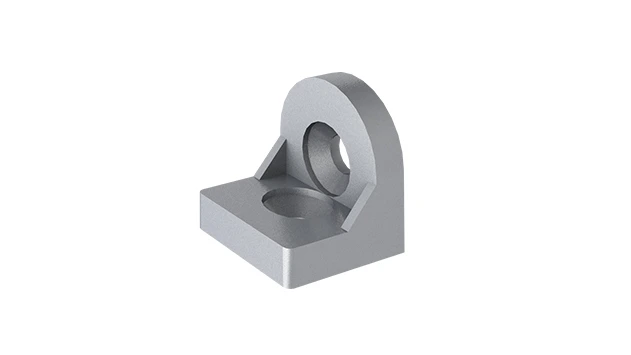
The turning angle aluminum profile connector provides a 90 degree hidden corner connection. 4040 it is means this size is used for 40 series aluminum profile.The corner code comes with set screws that allow for quick, easy connections.
In the fast-paced world of packaging machinery, where consumer demands shift overnight and production lines must adapt to new product sizes, shapes, and materials, one challenge stands out above all: minimizing downtime during changeovers. Whether it's switching from a 12-ounce soda bottle to a 20-ounce version, or transitioning from snack bags to cereal boxes, every minute a line sits idle eats into profits and delays deliveries. Traditional setups—reliant on welded steel frames, fixed workbenches, and custom-machined parts—often turn these necessary adjustments into multi-hour projects, leaving manufacturers scrambling to meet deadlines. But what if there was a component that could shrink changeover times from hours to minutes? Enter the Turning Angle Code 4040, a small but powerful piece of the modular manufacturing puzzle that's quietly revolutionizing how packaging lines adapt to change.
The Hidden Cost of Slow Changeovers in Packaging
To understand why quick changeover matters, let's start with the numbers. A typical packaging plant runs 24/7, with margins that hinge on maximizing uptime. If a line requires 2 hours to reconfigure for a new product and switches products 10 times a week, that's 20 hours of lost production monthly—enough time to fill thousands of additional packages. Worse, slow changeovers often lead to rushed work: operators cutting corners to get the line moving again, increasing the risk of errors, jams, or even equipment damage. For plant managers, the frustration is palpable: "We have the demand, we have the materials, but we're stuck waiting for the line to adjust."
Traditional solutions haven't helped much. Welded steel frames, once the industry standard, are durable but rigid—changing a workbench height or adjusting a roller track width means bringing in a welder, grinding down old joints, and re-welding new ones. Custom-machined parts, designed for specific products, gather dust in storage when product lines shift, wasting money and space. Even early modular systems, while better than welded steel, often relied on complicated fasteners or proprietary components that required special tools and training. What packaging machinery needed was a component that combined strength, simplicity, and speed—something that could turn "we need to reconfigure the line" from a day-long project into a task an operator could handle during a coffee break.
What Is Turning Angle Code 4040, Anyway?
At first glance, the Turning Angle Code 4040 might seem unassuming: a small, L-shaped bracket made of high-grade aluminum, with pre-drilled holes and a sleek, lightweight design. But its simplicity is its superpower. Designed to work with aluminum profiles—the modular backbone of modern manufacturing setups—the Turning Angle Code 4040 is a connector that secures two aluminum profiles at a 90-degree angle, but with a twist: it's adjustable. Unlike fixed brackets that lock profiles into place permanently, this angle code uses bolts and T-slot nuts to create a rigid connection that can be loosened, repositioned, and retightened in minutes. Think of it as the "Swiss Army knife" of structural connectors—strong enough to support heavy loads, but flexible enough to adapt when needs change.
Let's break down its design. The "4040" in its name refers to compatibility with 40x40mm aluminum profiles, the workhorses of modular systems. These profiles, with their T-slot grooves running along their length, allow accessories like brackets, shelves, and guides to be attached anywhere along the extrusion—no drilling or cutting required. The Turning Angle Code 4040 slots into these T-slots, using bolts to clamp onto the profiles. Its L-shape ensures a square, stable joint, critical for maintaining alignment in high-vibration packaging environments (think conveyor belts, filling machines, and labeling stations). And because it's made of aluminum, it's corrosion-resistant, lightweight (easy for operators to handle without heavy lifting equipment), and compatible with the aluminum profiles already common in most modern plants.

Aluminum Profiles: The Perfect Partner for Turning Angle Code 4040
To truly appreciate the Turning Angle Code 4040, we need to talk about its partner in crime: the aluminum profile. For decades, aluminum extrusion profiles have been replacing steel in manufacturing setups, and for good reason. Unlike steel, aluminum is lightweight—about 1/3 the weight—making it easier to reconfigure without cranes or forklifts. It's also naturally resistant to rust, a must in packaging plants where spills (of cleaning solutions, lubricants, or even product) are inevitable. But the real magic is in the T-slot design: those continuous grooves along the profile's length act like a built-in rail system, letting accessories like the Turning Angle Code 4040 slide into place and lock down securely. No more hunting for pre-drilled holes or welding new brackets—if you can turn a wrench, you can build or modify a structure.
In packaging machinery, aluminum profiles form the skeleton of everything from workbenches and material racks to conveyor frames and roller tracks. A typical line might use 40x40mm profiles for heavy-duty structures (like the base of a filling machine) and smaller 20x20mm profiles for lighter components (like guide rails for bottle alignment). The Turning Angle Code 4040, designed specifically for 40x40mm profiles, becomes the "glue" that holds these structures together—literally. When you need to adjust the height of a workbench, for example, you don't replace the entire bench; you loosen the Turning Angle Code 4040 bolts, slide the vertical profiles up or down, retighten, and you're done. It's modularity at its finest: build once, adjust infinitely.

From Rigid to Responsive: Workbenches Reimagined
Let's zoom in on a common pain point: workbenches. In packaging, operators rely on workbenches for tasks like inspecting labels, assembling cartons, or loading products into trays. But a workbench that's perfect for a 6-inch snack bag is often too low, too narrow, or missing critical tool holders when the line switches to a 12-inch box. Traditional workbenches, with fixed heights and welded shelves, force operators to either adapt (straining their backs to reach) or wait for maintenance to rebuild the bench. With the Turning Angle Code 4040 and aluminum profiles, that's no longer the case.
Consider a scenario: A packaging line that produces both small cosmetic tubes (3 inches long) and large lotion bottles (10 inches tall). The workbench used for inspecting the tubes needs to be at waist height, with a shallow shelf for tools. For the lotion bottles, the same operator needs the bench 6 inches higher (to avoid bending) and a deeper shelf to hold the larger containers. With a modular workbench built using 40x40mm aluminum profiles and Turning Angle Code 4040 brackets, the solution is simple. The bench's legs are made of vertical aluminum profiles, connected to the horizontal top frame via Turning Angle Code 4040s. To adjust the height, the operator loosens the bolts on the angle codes, slides the legs up or down to the desired position (marked with pre-measured notches), and retightens. The shelf? It's attached to the legs with T-slot nuts and bolts; sliding it up or down takes 2 minutes. No welding, no custom parts, no waiting.
But it's not just height. Tool holders, bins for waste, or even small conveyors (to feed products to the operator) can be added or removed by attaching them to the aluminum profiles via the Turning Angle Code 4040. Need a label printer mounted to the side for the lotion bottles? Slide a bracket into the T-slot, secure it with the angle code, and plug it in. Switching back to tubes? Remove the bracket in 30 seconds. For operators, this flexibility transforms their workday—no more making do with ill-fitting equipment, and no more downtime waiting for adjustments. For managers, it means happier, more productive teams and lines that adapt to product changes without missing a beat.
Roller Tracks: Keeping Products Moving, Even When Sizes Change
Another area where the Turning Angle Code 4040 shines is in roller tracks—the conveyor-like systems that move packages along the line, from filling to sealing to boxing. Roller tracks rely on precise alignment: if the track is too narrow, packages jam; too wide, and they tip over or slide off. Traditional roller tracks, built with fixed steel rails, require cutting and re-welding to adjust width—a process that can take hours. With aluminum profiles and Turning Angle Code 4040, roller tracks become adjustable on the fly.
Here's how it works: The roller track's frame is built using two parallel 40x40mm aluminum profiles, with roller track guide rails (like the plastic roller track guide rail yellow or grey from the accessories list) mounted to the top. The distance between these two profiles determines the track width. To connect the profiles and keep them parallel, manufacturers use the Turning Angle Code 4040 at intervals along the track's length, creating a rigid frame. When the product size changes—say, from a 4-inch-wide cereal box to a 6-inch-wide pasta box—the operator simply loosens the bolts on the Turning Angle Code 4040s, slides the profiles apart to the new width, and retightens. The roller track guide rails, which slot into the T-slots of the aluminum profiles, move with the frame, ensuring the rollers stay aligned. Total time? Less than 15 minutes, compared to 2+ hours for a traditional steel track.
But the benefits go beyond speed. Roller tracks built with aluminum profiles and Turning Angle Code 4040 are also lighter, making them easier to reposition if the entire line layout needs to change. They're also quieter: aluminum dampens vibration better than steel, reducing noise in the plant. And because the Turning Angle Code 4040 creates a square joint, the track stays level, preventing packages from skewing or jamming—a common issue with hastily adjusted steel tracks. For a packaging line that handles 10+ product sizes monthly, this translates to hours of saved downtime and fewer product losses due to jams.
Turning Angle Code 4040: A Cornerstone of Lean Systems
At its core, quick changeover is about more than just speed—it's about lean manufacturing. Lean systems aim to eliminate waste, and downtime is one of the biggest wastes of all. The Turning Angle Code 4040 aligns perfectly with lean principles by making flexibility affordable and accessible. In a lean plant, the goal is to "set in order" (one of the 5S pillars) so that tools, equipment, and workspaces are always optimized for the task at hand. With modular setups using the Turning Angle Code 4040, "setting in order" isn't a one-time project; it's an ongoing process that adapts as needs change.
Take, for example, a plant that adopted lean manufacturing and wanted to implement "standardized work"—consistent processes that reduce variation and errors. Standardized work relies on consistent workstation setups, but with multiple product lines, that consistency used to require duplicate workbenches, roller tracks, and racks (one for each product). With the Turning Angle Code 4040, a single set of modular structures can be reconfigured to match the standardized work instructions for each product. No more duplicate equipment cluttering the floor, and no more operators wasting time hunting for the "right" bench. It's lean in action: do more with less.
Another lean principle is "continuous improvement," and the Turning Angle Code 4040 makes experimentation easy. Suppose an operator suggests raising a roller track by 2 inches to reduce bending. With traditional steel, testing that idea would require approval, a maintenance ticket, and days of work. With aluminum profiles and the Turning Angle Code 4040, the operator can make the adjustment themselves in 10 minutes, test it for a shift, and revert if it doesn't help. This culture of experimentation leads to small, daily improvements that add up to big gains in efficiency—exactly what lean is all about.
| Aspect | Traditional Steel/Welded Setup | Turning Angle Code 4040 + Aluminum Profile Setup |
|---|---|---|
| Changeover Time | 2–4 hours (requires welding/grinding) | 10–30 minutes (hand tools only) |
| Labor Required | 2+ skilled workers (welder, fitter) | 1 operator (minimal training needed) |
| Flexibility | Fixed; reconfiguration requires rebuilding | Infinitely adjustable; same structure adapts to new products |
| Durability | High, but prone to rust in damp environments | High; aluminum resists corrosion; joints maintain rigidity after adjustments |
| Cost Over Time | High (custom parts, labor, downtime) | Low (reusable components, reduced labor/downtime) |
Real-World Results: A Snack Manufacturer's Success Story
To put this into perspective, let's look at a real-world example (with identifying details changed for privacy). A mid-sized snack manufacturer in the Midwest produces 20+ product lines, from small potato chip bags to large family-sized popcorn tins. Before adopting modular systems, their changeover process was notoriously slow: switching from a 1-ounce chip bag to a 5-ounce bag required reconfiguring three workbenches, adjusting two roller tracks, and replacing a product inspection station—tasks that took 3 hours and required a team of 4 workers. With 12 changeovers weekly, that's 36 hours of lost production.
In 2023, the plant invested in aluminum profiles and Turning Angle Code 4040 components. They replaced their welded steel workbenches with modular versions, rebuilt their roller tracks using adjustable aluminum frames, and standardized on 40x40mm profiles for key structures. The results were dramatic: The first changeover after installation took 45 minutes (down from 3 hours), and within a month, operators had refined the process to 25 minutes. By year-end, the plant had cut total changeover time by 75%, adding 28 extra production hours weekly—enough to boost output by 12% without adding shifts. Perhaps more importantly, employee satisfaction scores rose: operators no longer dreaded changeovers, and maintenance teams were freed up to focus on preventive care instead of rework.
The plant manager summed it up: "We used to see changeovers as a necessary evil. Now, with the Turning Angle Code 4040, they're just another part of the day—quick, easy, and something our team actually feels proud to execute efficiently."
Beyond Changeover: The Long-Term Value of Modularity
While quick changeover is the headline benefit, the Turning Angle Code 4040 delivers value long after the initial adjustment. For starters, aluminum profiles and modular components have a longer lifespan than traditional setups. Steel frames rust, welds weaken over time, and custom parts become obsolete when product lines end. Aluminum, by contrast, resists corrosion, and the Turning Angle Code 4040's bolted connections maintain their strength even after repeated adjustments. When a product line is discontinued, the modular structures can be disassembled and repurposed for new projects—no waste, no landfill-bound steel.
Another hidden benefit is scalability. As a packaging plant grows, adding new lines or expanding existing ones often requires major construction. With modular systems, growth is incremental. Need to add a new inspection station? Assemble it from existing aluminum profiles and Turning Angle Code 4040 brackets, then slide it into place. No need for architects, permits, or weeks of construction. It's manufacturing on demand, growing as your business grows.
Finally, there's the human factor. In an industry struggling with labor shortages, anything that makes jobs easier and more engaging helps retain workers. Operators who can adjust their own workspaces to fit their needs report higher job satisfaction and lower burnout. Maintenance teams, freed from tedious welding and rework, can focus on proactive tasks that prevent breakdowns. Even managers benefit from reduced stress—no more emergency meetings to address changeover delays, and more time to focus on strategic goals.
The Future of Packaging: Small Components, Big Impact
As consumer demands continue to fragment—with more SKUs, smaller batches, and faster turnarounds—the need for flexible packaging lines will only grow. The Turning Angle Code 4040, as it may seem, represents the future of manufacturing: modular, adaptable, and worker-centric. It's a reminder that innovation doesn't always come from flashy new machines; sometimes, it's the small, smart components that connect the dots, turning rigid systems into responsive, resilient ones.
For packaging manufacturers still relying on welded steel and fixed setups, the message is clear: the cost of inaction is higher than the investment in modularity. Every hour lost to changeover is an opportunity to outpace competitors, delight customers, and boost the bottom line. The Turning Angle Code 4040 and aluminum profiles aren't just tools—they're a mindset shift: from "this is how we've always done it" to "this is how we'll adapt tomorrow."
So the next time you walk through a packaging plant, take a closer look at the workbenches, roller tracks, and frames. Chances are, if the line is switching products with ease, there's a Turning Angle Code 4040 hard at work—quietly, reliably, and quickly turning change from a headache into a competitive advantage.