- Company Articles
- Products and Technology
- Product knowledge
- Turning Angle Code 4040 in Workbench E: Ergonomic Design Integration

Turning Angle Code 4040 in Workbench E: Ergonomic Design Integration
Related Product
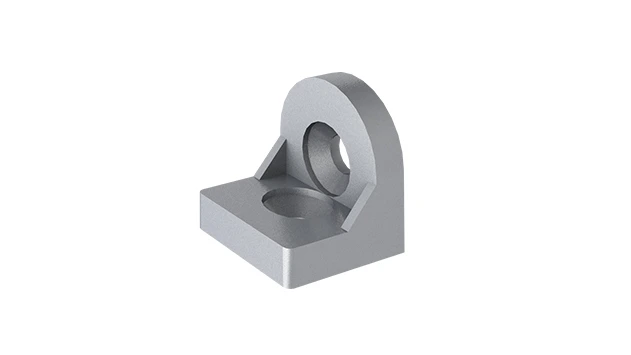
Turning Angle Code 4040
The turning angle aluminum profile connector provides a 90 degree hidden corner connection. 4040 it is means this size is used for 40 series aluminum profile.The corner code comes with set screws that allow for quick, easy connections.
Why Ergonomics Matters More Than You Think
Walk into any busy production floor, and you'll notice the hum of machinery, the rhythm of assembly lines, and workers focused on turning parts into products. What you might not immediately see is the silent hero of this ecosystem: the workbench. It's where hands meet tools, where precision turns into progress, and where the smallest details—like how a surface sits, how stable it feels, or how easy it is to reach for a wrench—can make or break a day's work. Ergonomics, often brushed off as "just about comfort," is actually the backbone of productivity, worker health, and long-term operational success. A poorly designed workbench isn't just uncomfortable; it's a silent productivity killer, leading to fatigue, errors, and even chronic injuries. On the flip side, a workbench built with ergonomics in mind becomes an extension of the worker, turning routine tasks into smooth, sustainable workflows. Today, we're diving into one such unsung hero of ergonomic workbench design: the Turning Angle Code 4040, and how it transforms a standard setup like Workbench E into a tool that works with people, not against them.
Meet Workbench E: The Workhorse of Production Assembly
Before we get to the star of the show—the Turning Angle Code 4040—let's talk about the stage it performs on: Workbench E. If you've spent time in manufacturing, logistics, or even small-scale assembly shops, you've probably seen a version of Workbench E. It's the reliable, no-nonsense workbench listed in catalogs as "single deck-without caster," and for good reason: it's built to stay put and get the job done. Designed with a focus on stability and versatility, Workbench E typically features a flat, sturdy surface (often made of plywood, metal, or anti-static materials for ESD-sensitive tasks) supported by a frame of aluminum profiles. Unlike its caster-equipped cousins, it's fixed in place, making it ideal for tasks that demand precision—think electronics assembly, quality inspection, or packing stations where movement would disrupt the workflow.
But what really sets Workbench E apart is its adaptability. While it lacks casters, its modular design means it can be customized with shelves, tool hooks, or bins to fit specific tasks. In production assembly lines, where needs shift with new product launches or updated processes, this flexibility isn't just convenient—it's essential. However, even the most adaptable workbench is only as good as the components holding it together. That's where the Turning Angle Code 4040 comes in. This small but mighty aluminum profile accessory is the glue (metaphorically speaking) that turns a basic frame into an ergonomic powerhouse.

Turning Angle Code 4040: Small Part, Big Impact
Let's be honest: when you think about "exciting" industrial components, angle codes probably don't top the list. But here's the thing: the most important innovations often hide in plain sight. The Turning Angle Code 4040 is one such innovation. At first glance, it's a simple L-shaped piece of aluminum alloy, roughly the size of a small book, with pre-drilled holes for bolts. But look closer, and you'll see why it's a game-changer for Workbench E and aluminum profile-based setups everywhere.
First, let's break down the basics. The "4040" in its name refers to compatibility with 4040 aluminum profiles—the workhorses of modular industrial framing. These profiles, with their T-slot design, allow for easy attachment of accessories, making them perfect for building everything from workbenches to material racks. The Turning Angle Code 4040 is designed to connect these profiles at precise angles (most commonly 90 degrees, though some variants offer adjustability), creating rigid, stable joints that form the skeleton of Workbench E. Made from high-grade aluminum extrusion profile, it's lightweight yet surprisingly strong—able to withstand the daily wear and tear of a busy production floor, from tool impacts to heavy loads. Its smooth, anodized finish resists corrosion and prevents snags on cables or clothing, adding an extra layer of safety.
But the real genius of the Turning Angle Code 4040 lies in its design details. Unlike cheap plastic connectors that warp over time or welded joints that are fixed and unforgiving, this angle code balances strength with flexibility. The pre-drilled holes align perfectly with the T-slots of 4040 profiles, allowing for secure fastening with standard bolts. Tighten them down, and the joint becomes rock-solid; loosen them, and you can (fine-tune) the angle or reposition the profile entirely. This adjustability is the secret sauce that makes Workbench E not just a static table, but a customizable workspace that grows with your team's needs.

How Turning Angle Code 4040 Transforms Workbench E's Ergonomics
Now, let's put it all together: Workbench E, with its single deck and fixed design, and the Turning Angle Code 4040, the unsung hero of its frame. How exactly does this small aluminum accessory turn a basic workbench into an ergonomic standout? Let's break it down into three key areas: stability, adjustability, and durability—all of which directly impact how workers interact with their workspace.
Stability: The Foundation of Comfort Imagine trying to assemble a tiny circuit board on a wobbly table. Every time you press down with a screwdriver, the surface shifts; your hand slips, and you risk damaging the component. Not only is this frustrating, but it also forces your muscles to tense up to compensate for the instability, leading to fatigue long before lunch. Workbench E, when built with Turning Angle Code 4040 joints, eliminates this problem. The angle code's tight, precise connection between 4040 profiles creates a frame that feels anchored to the floor. Even when loaded with heavy tools, parts bins, or equipment, the surface stays steady, so workers can focus on the task at hand, not on balancing their workspace. This stability isn't just about comfort—it's about precision. A stable workbench reduces errors, speeds up tasks, and turns "good enough" into "excellent."
Adjustability: One Workbench, Many Workers Ergonomics isn't one-size-fits-all. A workbench that's perfect for a 6-foot-tall worker might leave a 5-foot-4-inch colleague hunched over, straining their neck and back. Traditionally, fixed workbenches like Workbench E have struggled with this—once built, their height and layout are set in stone. But with Turning Angle Code 4040, that changes. Because the angle code allows for easy repositioning of the aluminum profiles, you can adjust Workbench E's height, width, or depth to fit individual workers. Need to raise the surface by 2 inches for Maria, who's taller? Loosen the bolts on the angle codes, slide the legs up, and retighten. Want to add a lower shelf for Juan, who prefers keeping frequently used tools within arm's reach? Attach additional profiles using the angle codes, and you're done. This level of customization ensures that every worker can set up their workspace to fit their body, reducing strain and turning "one-size-fits-all" into "one-bench-fits-all."
Durability: Keeping Ergonomics Alive Over Time A workbench that starts ergonomic but falls apart after six months is worse than no ergonomic design at all. Loose joints, wobbly surfaces, or rusted frames don't just look unprofessional—they revert the workspace to its uncomfortable, unproductive state. Here, the Turning Angle Code 4040's aluminum construction shines. Aluminum is naturally resistant to corrosion, so even in humid or dusty environments, the angle codes won't rust or degrade. Its strength means it can handle years of tightening, loosening, and repositioning without losing integrity. This durability ensures that Workbench E maintains its ergonomic benefits long-term, protecting your investment in worker health and productivity.
The Ripple Effects: Benefits Beyond the Workbench
The impact of integrating Turning Angle Code 4040 into Workbench E goes far beyond a stable, adjustable surface. It ripples out into every corner of your operation, from worker satisfaction to the bottom line. Let's take a closer look at these benefits:
Reduced Fatigue, Increased Focus When a workbench feels like an extension of your body, tasks flow more smoothly. No more straining to reach a tool, no more tensing up to steady a wobbly surface, no more hunching over a table that's too low. Workers stay fresher longer, maintain focus, and make fewer mistakes. A study by the Occupational Safety and Health Administration (OSHA) found that ergonomic workspaces reduce fatigue-related errors by up to 25%—a number that adds up quickly on a busy production line.
Lower Injury Rates, Happier Teams Chronic pain from poor ergonomics isn't just bad for workers—it's bad for business. Repetitive strain injuries (RSIs), back pain, and neck strain lead to missed days, high turnover, and increased workers' compensation claims. By prioritizing ergonomics with tools like the Turning Angle Code 4040, companies see a significant drop in these issues. Workers feel valued, knowing their employer cares about their well-being, leading to higher morale and retention. It's a win-win: healthier teams, lower costs, and a more positive workplace culture.
Lean System Alignment: Waste Reduction and Flexibility In today's fast-paced manufacturing world, lean system principles—eliminating waste, maximizing efficiency—are more critical than ever. Workbench E, enhanced by Turning Angle Code 4040, fits perfectly into this mindset. Its modular design means you can reconfigure the workbench instead of replacing it when tasks change, reducing waste. The durability of aluminum profiles and angle codes ensures long lifespans, minimizing the need for frequent replacements. And because it's adaptable, you can use the same workbench for multiple tasks—no more storing redundant equipment. It's lean, efficient, and ready to evolve with your business.
Turning Angle Code 4040 vs. The Alternatives: Why It Stands Out
To truly appreciate the Turning Angle Code 4040, it helps to see how it stacks up against other common workbench connectors. Let's compare it to three alternatives: plastic connectors, welded joints, and generic steel angle brackets.
| Feature | Plastic Connectors | Welded Joints | Generic Steel Brackets | Turning Angle Code 4040 |
|---|---|---|---|---|
| Stability | Poor; warp under load or heat | Excellent, but fixed | Good, but heavy and bulky | Excellent; rigid yet adjustable |
| Adjustability | Limited; degrade after repositioning | None; permanent | Minimal; hard to align with profiles | High; easy to reposition with bolts |
| Durability | Low; crack or wear in 6–12 months | High, but prone to rust if not treated | High, but heavy and corrosion-prone | Very high; aluminum resists corrosion, lasts 5+ years |
| Weight | Light | Heavy (due to welds) | Heavy | Lightweight (aluminum) |
| Ergonomic Impact | Poor; instability causes fatigue | Good, but no adjustability for workers | Fair; bulk may limit workspace layout | Excellent; stable, adjustable, and space-efficient |
As the table shows, the Turning Angle Code 4040 hits the sweet spot: it's stable enough for precision work, adjustable enough to fit diverse teams, durable enough to last, and lightweight enough to keep Workbench E from becoming a cumbersome beast. For Workbench E, which relies on its frame for both function and ergonomics, there's simply no better choice.
Real-World Impact: A Day in the Life with Workbench E
Let's step into the shoes of a worker to see the difference Turning Angle Code 4040 makes. Meet Raj, a 34-year-old electronics assembler at a mid-sized manufacturing plant. For years, Raj worked at an old, rickety workbench—welded steel frame, chipped Formica top, and legs that wobbled no matter how many times maintenance tightened the bolts. "By 10 a.m., my shoulders would ache from leaning over," he recalls. "The surface was so uneven, my soldering iron would slide if I wasn't holding it. And forget adjusting the height—if you were taller than 5'10", you either hunched or stood on a stool." By lunch, Raj was already fatigued; by the end of the day, his lower back throbbed, and he'd often make small mistakes, like misaligning a connector, that cost time to fix.
Six months ago, the plant upgraded to Workbench E, built with 4040 aluminum profiles and Turning Angle Code 4040 joints. "It's like night and day," Raj says. The first thing he noticed was the stability: "I can press down with my soldering iron, and the table doesn't budge. No more sliding tools, no more tense muscles. Then they adjusted the height to my elbow level—now I sit up straight, no more hunching. And last month, when we switched to assembling larger circuit boards, they added a side shelf using the same angle codes. It took 15 minutes, and now everything I need is within arm's reach." The result? Raj's error rate dropped by 20%, he no longer leaves work with back pain, and he even finds himself staying a few minutes late to help a colleague—something he never had the energy for before.
Raj's story isn't unique. Across industries, from automotive to aerospace, workers are reaping the benefits of workbenches built with intentionality—and the Turning Angle Code 4040 is at the heart of that transformation.
Conclusion: Small Parts, Big Change in Lean System Workspaces
In the world of lean systems and production assembly, it's easy to get caught up in big-ticket innovations: faster robots, smarter software, bigger facilities. But as we've explored, the smallest components often have the biggest impact. The Turning Angle Code 4040, a humble aluminum accessory, proves this point. By integrating it into Workbench E, manufacturers aren't just building a better table—they're building a better workplace. A workplace where stability reduces errors, adjustability fits every worker, and durability ensures long-term value. A workplace where ergonomics isn't an afterthought, but a core part of how things get done.
So the next time you walk past a workbench, take a closer look. The joints holding it together might not look like much, but they're the difference between a day of frustration and a day of flow. They're the difference between a worker counting the minutes until quitting time and one feeling proud of what they've built. And in the end, that's what it's all about: creating spaces where people and productivity thrive—one Turning Angle Code 4040 at a time.