- Company Articles
- Products and Technology
- Product knowledge
- Turning Angle Code 4040 Material Analysis: Aluminum Advantages in Lean Systems

Turning Angle Code 4040 Material Analysis: Aluminum Advantages in Lean Systems
Related Product
Turning Angle Code 4040
The turning angle aluminum profile connector provides a 90 degree hidden corner connection. 4040 it is means this size is used for 40 series aluminum profile.The corner code comes with set screws that allow for quick, easy connections.
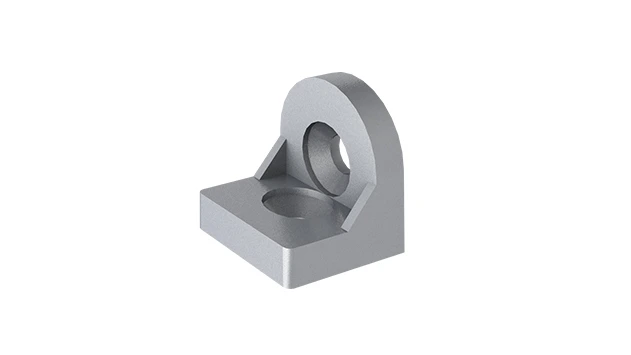
Walk into any modern manufacturing facility, and you'll notice a quiet revolution happening on the shop floor. It's not just the whir of machines or the hum of assembly lines—it's the flow of work. Parts glide smoothly from station to station, workbenches adapt to new tasks in minutes, and every square foot of space feels intentional. This is the promise of lean manufacturing: efficiency, flexibility, and waste reduction. But behind that promise lies a network of small, unassuming components that hold everything together. Today, we're shining a light on one such hero: the Turning Angle Code 4040. More specifically, we're diving into why aluminum has become the material of choice for this critical part, and how it elevates the performance of lean systems across industries.
What Even Is a Turning Angle Code 4040?
Before we get into materials, let's make sure we're all on the same page. Imagine building a sturdy, adjustable shelf in your garage. You've got metal poles (profiles) and connectors that hold them at 90-degree angles. Now, scale that up to a factory workbench, a flow rack, or a conveyor system—structures that need to support heavy loads, withstand daily wear, and reconfigure quickly when production needs change. That's where the Turning Angle Code 4040 comes in.
Simply put, it's a specialized connector designed to join aluminum profiles at precise angles (most commonly 90 degrees, but often adjustable for custom setups). Think of it as the "elbow joint" of lean systems: it locks profiles together securely while allowing for easy disassembly and reconfiguration. The "4040" refers to the size of the aluminum profile it's designed for—typically a 40mm x 40mm extrusion, a workhorse in industrial setups. Without reliable angle codes, even the strongest aluminum profiles would wobble, fail under stress, or become impossible to modify. In short, they're the glue that turns individual parts into a lean, mean, productivity machine.
Material Showdown: Why Aluminum Reigns Supreme for Turning Angle Code 4040
When it comes to manufacturing connectors like the Turning Angle Code 4040, material choice isn't just about cost—it's about performance. For decades, steel and plastic were the go-to options, but aluminum has steadily taken over, and for good reason. Let's break down why aluminum isn't just a "good" choice, but the smart choice for lean systems.
1. Lightweight, but Don't Let That Fool You—It's Strong
Aluminum is about one-third the weight of steel. That might not sound like a big deal until you're moving a workbench across the shop floor or reconfiguring a flow rack to accommodate a new product line. A lighter Turning Angle Code 4040 means the entire structure is easier to handle, reducing the risk of workplace injuries and cutting down on setup time. But here's the kicker: aluminum's strength-to-weight ratio is exceptional. Modern aluminum alloys, especially those used in industrial extrusion profiles, can handle significant loads without bending or warping. In fact, when paired with 4040 aluminum profiles, these angle codes often exceed the weight requirements of most assembly line tasks—from holding toolboxes to supporting bins of heavy components.
2. Corrosion Resistance: A Lifesaver in Harsh Environments
Manufacturing floors aren't always clean, dry spaces. Oils, coolants, cleaning agents, and even humidity can take a toll on metal components. Steel, for example, rusts when exposed to moisture, weakening the structure over time and requiring frequent replacements. Plastic might resist corrosion, but it lacks the rigidity needed for heavy-duty use. Aluminum, on the other hand, forms a natural oxide layer when exposed to air, acting as a built-in shield against rust and corrosion. This means your Turning Angle Code 4040 will last longer, even in messy environments like automotive or food processing plants. No more unexpected breakdowns or costly replacements—just reliable performance, day in and day out.
3. Malleability Meets Precision: Perfect for Complex Designs
Lean systems thrive on precision. A Turning Angle Code 4040 needs to fit snugly with 4040 aluminum profiles, with no gaps or play that could compromise stability. Aluminum's malleability—its ability to be shaped and formed—makes it ideal for creating intricate, tight-tolerance designs. Manufacturers can extrude, machine, and mold aluminum into the exact geometry needed for a secure connection, whether that's a threaded hole for bolts, a groove for a locking mechanism, or a tapered edge for easy assembly. This precision ensures that when you connect two profiles with an aluminum Turning Angle Code 4040, they stay connected—no wobbling, no slipping, just a rock-solid joint that keeps your workflow on track.
4. ESD-Friendly: Protecting Sensitive Electronics
In industries like electronics manufacturing, static electricity is a silent enemy. A single electrostatic discharge (ESD) can damage sensitive components, leading to costly defects and product failures. Many aluminum alloys can be treated to have ESD-safe properties, making them a natural fit for ESD workbenches and stations. When paired with ESD-friendly aluminum profiles, an ESD-treated Turning Angle Code 4040 helps create a grounded workspace that dissipates static, protecting everything from circuit boards to semiconductors. Plastic might offer some ESD benefits, but it can't match aluminum's structural integrity, making aluminum the clear choice for environments where both stability and static protection are non-negotiable.

Aluminum vs. the Competition: A Head-to-Head Comparison
To really understand aluminum's advantages, let's put it up against the other common materials used for turning angle codes: steel and plastic. The table below breaks down key factors that matter most in lean manufacturing settings.
| Factor | Aluminum (Turning Angle Code 4040) | Steel | Plastic |
|---|---|---|---|
| Weight (per unit length) | ~2.7 g/cm³ (Lightest) | ~7.8 g/cm³ (Heaviest) | ~1.0-1.5 g/cm³ (Light, but less rigid) |
| Tensile Strength | 100-500 MPa (Strong enough for most industrial loads) | 300-2000 MPa (Stronger, but overkill for many lean applications) | 20-80 MPa (Weakest; prone to flexing under heavy loads) |
| Corrosion Resistance | Excellent (Natural oxide layer; can be anodized for extra protection) | Poor (Rusts without coatings like zinc plating) | Good (Resists moisture, but can degrade in harsh chemicals) |
| Cost (Initial vs. Long-Term) | Higher initial cost, but lower long-term (durable, recyclable) | Lower initial cost, but higher long-term (needs replacement due to corrosion) | Lowest initial cost, but highest long-term (prone to wear, cracking, and UV damage) |
| Recyclability | 100% recyclable; retains 95% of original energy value | Recyclable, but energy-intensive | Often non-recyclable (especially mixed plastics); contributes to waste |
| Flexibility in Lean Systems | High (Lightweight, easy to reconfigure; compatible with aluminum profile accessories) | Low (Heavy, hard to move; limited compatibility with modular systems) | Medium (Light, but weak; limited load capacity restricts use) |
As the table shows, aluminum strikes a perfect balance between strength, weight, durability, and cost-effectiveness—making it the ideal material for Turning Angle Code 4040 and other lean system components. Steel might be stronger, but its weight and corrosion issues make it impractical for modern, flexible manufacturing. Plastic is cheap, but it can't handle the demands of heavy-duty use. Aluminum? It's the sweet spot that keeps lean systems running smoothly, adaptably, and efficiently.

Aluminum Turning Angle Code 4040 in Action: Real-World Applications
Talk is cheap—let's look at how aluminum Turning Angle Code 4040 transforms real lean systems. From workbenches to flow racks, these connectors are the unsung heroes that make modular, efficient setups possible.
1. Workbenches: The Heart of the Assembly Line
Every assembly line revolves around workbenches. They're where operators stand, tools are stored, and products take shape. A well-designed workbench needs to be sturdy, adjustable, and tailored to the task at hand. Enter the Aluminum Workbench A—a common setup in factories worldwide. Built with 4040 aluminum profiles and connected by Turning Angle Code 4040, this workbench is a study in flexibility. Need to add a shelf for tools? Screw in a new profile using the angle code. Want to lower the height for a shorter operator? Loosen the angle code bolts, adjust, and retighten. The aluminum angle codes ensure the bench stays stable even when loaded with equipment, while their lightweight design makes reconfiguration a one-person job. Compare that to a steel workbench, which would require a forklift to move and rust within a year in a humid environment—no contest.
Case Study: A mid-sized electronics manufacturer recently switched from steel workbenches to aluminum workbenches using Turning Angle Code 4040. They reported a 30% reduction in setup time when reconfiguring lines for new products and a 50% drop in workplace injuries related to moving heavy equipment. Plus, the ESD-safe aluminum surfaces reduced component defects by 15%—a game-changer for their bottom line.
2. Flow Racks: Keeping Materials Moving
Flow racks are the arteries of lean manufacturing, ensuring materials flow to the point of use exactly when needed. A typical Material Rack B (3 row and 3 floor) relies on roller tracks to let bins glide forward as items are picked, minimizing waste and reducing operator movement. The frame of these racks? Often built with 4040 aluminum profiles, connected by—you guessed it—Turning Angle Code 4040. Aluminum's lightweight nature makes the rack easy to install and reposition, while its corrosion resistance ensures the frame stays strong even when exposed to dust, moisture, or cleaning chemicals. The angle codes lock the profiles together, creating a rigid structure that supports heavy bins of parts without sagging. Plastic flow racks might be cheaper, but they can't handle the same load, leading to frequent jams and breakdowns. Aluminum flow racks with Turning Angle Code 4040? They keep materials moving, day in and day out.
3. Conveyors: Bridging the Gaps in Production
Conveyors are the highways of the factory, transporting parts between stations with minimal human intervention. Roller conveyors, in particular, depend on sturdy frames to keep rollers aligned and level. Aluminum extrusion profiles, connected by Turning Angle Code 4040, form the backbone of these conveyors. The angle codes ensure the frame is square and stable, preventing rollers from misaligning and jamming. Aluminum's light weight also reduces the load on conveyor motors, extending their lifespan and cutting energy costs. Steel conveyors might last longer in theory, but their weight makes them harder to install and modify—critical drawbacks in lean systems that need to adapt to changing production demands.
Sustainability: Aluminum's Green Advantage
Lean manufacturing isn't just about efficiency—it's about responsibility. Reducing waste, minimizing environmental impact, and building sustainable operations are top priorities for modern manufacturers. Here, aluminum shines brighter than ever. Aluminum is 100% recyclable, and recycling it uses just 5% of the energy required to produce new aluminum. That means when a Turning Angle Code 4040 reaches the end of its life (which, with aluminum's durability, could be decades), it can be melted down and turned into a new component with minimal environmental footprint. Steel is recyclable too, but the process is more energy-intensive. Plastic? Most industrial plastics end up in landfills, contributing to pollution. By choosing aluminum, manufacturers aren't just building better lean systems—they're building greener ones.
Beyond recyclability, aluminum's durability reduces waste in another way: fewer replacements. A steel angle code might rust and need to be replaced after 5 years; a plastic one might crack under stress after 2. An aluminum Turning Angle Code 4040? It could last 15 years or more with minimal maintenance. That means less material waste, fewer shipments, and a smaller carbon footprint overall. For companies aiming to meet sustainability goals or earn certifications like ISO 14001, aluminum isn't just a material choice—it's a statement of commitment to the planet.
The Future of Lean Systems: Aluminum's Role in Industry 4.0
As manufacturing evolves into Industry 4.0—with smart factories, IoT integration, and automated workflows—lean systems are becoming more connected and dynamic than ever. Aluminum, with its adaptability and compatibility with modular components, is poised to play a central role in this evolution. Imagine a smart workbench equipped with sensors that monitor tool usage, or a flow rack that automatically alerts operators when stock is low. These smart systems need a flexible, durable foundation, and aluminum profiles connected by Turning Angle Code 4040 provide just that. Aluminum's lightweight design makes it easy to integrate with motors and actuators for automated adjustments, while its precision ensures sensors and electronics stay securely mounted. As factories become more intelligent, aluminum will be right there, enabling the next generation of lean, connected manufacturing.
Conclusion: The Right Material for the Right System
At the end of the day, lean manufacturing is about making the most of every resource—time, space, and materials. The Turning Angle Code 4040 might seem like a small component, but its impact on efficiency, flexibility, and durability is enormous. And when it's made of aluminum, it becomes more than just a connector—it's a catalyst for better, smarter, and more sustainable manufacturing.
From its unbeatable strength-to-weight ratio to its corrosion resistance, precision, and sustainability, aluminum checks every box for lean systems. Whether you're building a simple workbench or a complex network of flow racks and conveyors, aluminum Turning Angle Code 4040 and aluminum profiles are the building blocks that turn lean principles into reality. So the next time you walk through a manufacturing facility and marvel at its efficiency, take a closer look—you might just spot the unsung hero holding it all together: a small, sturdy, aluminum angle code, quietly doing its part to keep the world of lean manufacturing moving forward.