- Company Articles
- Products and Technology
- Product knowledge
- Turning Angle Code 4040 Material Cost Analysis: Aluminum vs Steel

Turning Angle Code 4040 Material Cost Analysis: Aluminum vs Steel
Related Product
Turning Angle Code 4040
The turning angle aluminum profile connector provides a 90 degree hidden corner connection. 4040 it is means this size is used for 40 series aluminum profile.The corner code comes with set screws that allow for quick, easy connections.
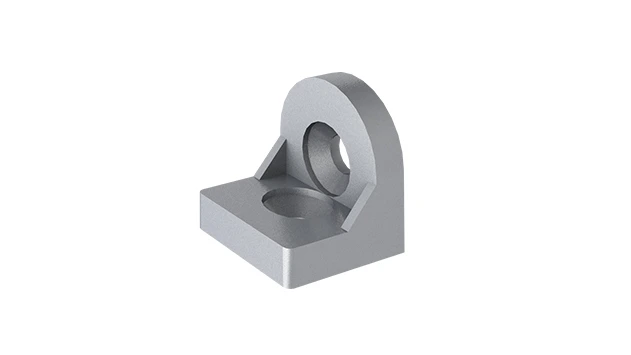
In the world of manufacturing and industrial setups, every component plays a quiet but critical role in keeping operations running smoothly. From the largest conveyor belts to the smallest connectors, each part contributes to the efficiency, durability, and cost-effectiveness of a lean system. Today, we're zooming in on a component that might not grab headlines but is indispensable in countless assembly lines, workbenches, and material racks: the turning angle code 4040 . This unassuming piece is the unsung hero of structural stability, often used to join aluminum profiles or lean pipes at precise angles, ensuring that workstations and material handling systems hold their shape under stress. But here's the question that keeps procurement managers and operations directors up at night: when it comes to choosing materials for turning angle code 4040, is aluminum or steel the better bet? Let's dive into a detailed cost analysis to find out.
What Exactly Is a Turning Angle Code 4040?
Before we compare materials, let's make sure we're all on the same page about what a turning angle code 4040 is and why it matters. In the realm of lean manufacturing, where precision and adaptability are key, components like the turning angle code 4040 act as the "glue" that holds structures together. Picture a typical lean system —maybe a workbench in a electronics factory, or a material rack in a warehouse. These systems are often built using modular aluminum profiles or steel tubes, and the turning angle code 4040 is the bracket that connects two profiles at a 90-degree angle (hence the "4040" designation, which refers to the profile size it's designed for, usually 40mm x 40mm). Without it, those profiles would wobble, tools would slip, and the entire system's integrity would be compromised.
But not all turning angle codes are created equal. The material used to make them—aluminum or steel—can drastically affect everything from how much they cost upfront to how long they last, how easy they are to install, and even how they perform in different environments. For businesses that rely on lean systems (and let's face it, that's most modern manufacturing and logistics operations), choosing the right material isn't just about picking the cheapest option; it's about balancing short-term expenses with long-term value. So, let's break down the costs—both direct and hidden—of aluminum vs. steel turning angle code 4040.
Aluminum Turning Angle Code 4040: Lightweight, Corrosion-Resistant, and Cost-Effective?
Aluminum has become a go-to material in lean manufacturing, and for good reason. Walk through any factory floor, and you'll likely see aluminum profiles everywhere—from workbenches to conveyor frames. So, what makes aluminum a popular choice for turning angle code 4040?
The Properties That Drive Aluminum's Appeal
First, aluminum is lightweight. Compared to steel, it's about one-third the density, which might not sound like a big deal for a single bracket, but when you're building an entire lean system with dozens (or hundreds) of turning angle codes, that weight adds up. Lighter components mean easier transportation (lower shipping costs), simpler installation (less labor required to lift and position), and even reduced strain on the profiles they're connecting. For example, if you're assembling a material rack that needs to hold heavy inventory, using lightweight aluminum brackets won't add unnecessary load to the vertical supports, which can extend the rack's lifespan.
Second, aluminum is naturally corrosion-resistant. Unlike steel, which rusts when exposed to moisture, aluminum forms a thin oxide layer on its surface that protects it from corrosion. This makes it ideal for environments where humidity is high—think food processing plants, pharmaceutical facilities, or even outdoor warehouses. You won't have to worry about the bracket developing rust spots that weaken its structure over time, or about costly maintenance like painting or galvanizing to protect it.
Third, aluminum offers a strong strength-to-weight ratio. While it's not as strong as steel in absolute terms, aluminum alloys (like the 6061 or 6063 grades commonly used in aluminum profile systems) are more than strong enough for most lean system applications. A well-designed aluminum turning angle code can easily support the weight of tools, materials, or even small machinery without bending or breaking. And because it's lighter, it puts less stress on the bolts and screws that hold it to the profiles, reducing the risk of fastener failure.
Cost Drivers for Aluminum Turning Angle Code 4040
Now, let's talk about the numbers: how much does aluminum turning angle code 4040 actually cost, and what factors influence that price?
Raw Material Costs: The biggest driver of aluminum's price is the cost of primary aluminum, which is derived from bauxite ore. Like all commodities, aluminum prices fluctuate based on global supply and demand, energy costs (since smelting aluminum is energy-intensive), and geopolitical factors. In recent years, prices have hovered between $2,000 and $3,000 per metric ton, though they spiked above $4,000 during supply chain disruptions in 2021. For a small component like a turning angle code 4040, which might weigh just 100-200 grams, the raw material cost is a fraction of the total price—but it still adds up when you're buying in bulk.
Fabrication Costs: Aluminum is relatively easy to work with, which keeps fabrication costs low. Most turning angle codes are made using extrusion (pushing molten aluminum through a die to create the desired shape) or CNC machining (cutting and drilling the bracket to specification). Extrusion is cost-effective for high-volume production, and aluminum's malleability means dies wear less quickly than they do with steel, reducing tooling expenses. Machining aluminum is also faster and requires less energy than machining steel, since aluminum is softer. For example, a CNC machine can drill holes in an aluminum bracket in half the time it would take to drill the same holes in steel, lowering labor and machine time costs.
Finishing Costs: While aluminum is naturally corrosion-resistant, many manufacturers still opt to finish it for aesthetic or functional reasons. Anodizing (an electrochemical process that thickens the oxide layer) is a common choice, as it adds color (silver, black, or even custom hues) and improves scratch resistance. Anodizing costs about $0.50 to $1.00 per square foot, which is cheaper than painting or galvanizing steel. Powder coating is another option, but it's typically more expensive than anodizing and is often reserved for brackets that need a specific color to match a company's branding or safety standards.
Putting this all together, a single aluminum turning angle code 4040 might cost anywhere from $2.50 to $5.00, depending on the supplier, order quantity, and finish. For a lean system that requires 100 brackets, that's $250 to $500 upfront—a manageable expense for most businesses.

Steel Turning Angle Code 4040: Strong, Durable, but at a Price?
Steel has been a staple in manufacturing for centuries, and for good reason: it's strong, durable, and widely available. For applications where raw strength is non-negotiable, steel turning angle code 4040 might seem like the obvious choice. But how does it stack up in terms of cost?
The Properties That Make Steel a Contender
Steel's biggest advantage is its strength. Carbon steel, the most common type used in brackets, has a tensile strength of around 400-500 MPa, compared to aluminum's 200-300 MPa. This means a steel turning angle code can support heavier loads without deforming. If you're building a material rack that needs to hold pallets of heavy machinery parts, or a workbench where operators use power tools that generate significant force, steel brackets might be necessary to ensure safety and stability.
Steel is also incredibly durable. It can withstand impacts, vibrations, and extreme temperatures better than aluminum. In high-wear environments—like automotive factories where parts are constantly being moved around—steel brackets are less likely to bend or crack over time. And because steel is denser, it dampens vibrations better than aluminum, which can be important for precision work (though modern aluminum alloys with reinforced designs are closing this gap).
Another perk? Steel is often cheaper than aluminum on a per-kilogram basis. Raw steel prices are typically around $800 to $1,200 per metric ton, which is significantly lower than aluminum's $2,000 to $3,000. But here's the catch: steel is denser, so a steel turning angle code 4040 will weigh more than an aluminum one. A steel bracket might weigh 300-400 grams—twice as much as an aluminum bracket—so even though steel is cheaper per kilogram, the total raw material cost per unit might be similar or even higher.
Cost Drivers for Steel Turning Angle Code 4040
Raw Material Costs: As mentioned, steel is cheaper per ton, but its higher density offsets that advantage. Let's do the math: if aluminum costs $2,500 per ton and steel costs $1,000 per ton, a 150-gram aluminum bracket uses $0.375 worth of raw material, while a 300-gram steel bracket uses $0.30 worth. In this case, steel has a slight edge. But if aluminum prices drop to $2,000 per ton, the aluminum bracket's raw material cost falls to $0.30, matching steel. And if steel prices rise (say, due to tariffs or iron ore shortages), the gap closes even more. So, raw material costs alone rarely make steel the clear winner.
Fabrication Costs: Steel is harder and more brittle than aluminum, which makes it more expensive to fabricate. Machining steel requires tougher cutting tools (like carbide drills), which wear out faster and need to be replaced more often. Drilling a hole in steel takes longer, and the machine has to work harder, increasing energy costs. Welding steel (if the bracket is welded instead of extruded) also requires more skill and time than welding aluminum, as steel has a higher melting point and is prone to warping if not heated evenly. All of these factors add up: fabrication costs for steel turning angle code 4040 are often 50-100% higher than for aluminum.
Finishing Costs: Unlike aluminum, steel needs to be finished to prevent corrosion. The most common method is galvanization (coating the steel with zinc), which costs about $1.50 to $3.00 per square foot—more than double the cost of anodizing aluminum. Painting is another option, but it's less durable than galvanization and needs to be reapplied every few years, adding long-term maintenance costs. Stainless steel, which is corrosion-resistant without finishing, is an alternative, but it's much more expensive than carbon steel (raw stainless steel prices are around $3,000 to $4,000 per ton), making it cost-prohibitive for most lean system applications.
When you factor in fabrication and finishing, a steel turning angle code 4040 might cost $4.00 to $7.00 per unit—significantly more than aluminum, even with steel's lower raw material costs. For that same order of 100 brackets, you're looking at $400 to $700 upfront—30-40% more than aluminum.

Direct Cost Comparison: Aluminum vs. Steel Turning Angle Code 4040
To make this clearer, let's put the numbers side by side in a table. The following estimates are based on average market prices for bulk orders (1,000 units) from a typical lean system supplier , with basic finishing (anodized aluminum, galvanized steel).
| Cost Component | Aluminum Turning Angle Code 4040 | Steel Turning Angle Code 4040 | Cost Difference (Steel vs. Aluminum) |
|---|---|---|---|
| Raw Material Cost (per unit) | $0.40 | $0.35 | -$0.05 (Steel is cheaper) |
| Fabrication Cost (per unit) | $1.20 | $2.10 | +$0.90 (Steel is more expensive) |
| Finishing Cost (per unit) | $0.60 | $1.80 | +$1.20 (Steel is more expensive) |
| Packaging & Shipping (per unit) | $0.30 | $0.55 | +$0.25 (Steel is more expensive) |
| Total Unit Cost | $2.50 | $4.80 | +$2.30 (Steel is 92% more expensive) |
| Total Cost for 1,000 Units | $2,500 | $4,800 | +$2,300 (Steel is 92% more expensive) |
As the table shows, steel's lower raw material cost is dwarfed by its higher fabrication, finishing, and shipping costs. For a bulk order of 1,000 brackets, aluminum is nearly half the price of steel. But direct costs are just part of the story—we also need to consider indirect costs that might not show up on the initial invoice.
Indirect Costs: The Hidden Expenses of Material Choice
When procurement teams evaluate material costs, they often focus on the upfront price tag. But indirect costs—like installation labor, maintenance, and replacement—can have a bigger impact on the total cost of ownership (TCO) over time. Let's break down how aluminum and steel stack up here.
Installation Labor Costs
Installing turning angle code 4040 involves attaching it to aluminum profiles or steel tubes using bolts, screws, or rivets. Because aluminum brackets are lighter, workers can handle them more easily, reducing installation time. For example, a team of two workers might install 50 aluminum brackets in an hour, compared to 30 steel brackets (since steel is heavier and more cumbersome to position). At an average labor rate of $30 per hour, installing 100 aluminum brackets would cost $60, while installing 100 steel brackets would cost $100—a $40 difference for just one workbench or rack.
Aluminum's lighter weight also reduces the risk of workplace injuries, which can lead to lower workers' compensation costs and fewer productivity disruptions. Steel brackets, if dropped, are more likely to cause damage to floors, equipment, or even workers' feet—adding another layer of indirect risk.
Maintenance Costs
Steel brackets, even when galvanized, are still prone to rust in humid or corrosive environments. Over time, rust can weaken the bracket, leading to loose connections or even structural failure. To prevent this, maintenance teams might need to repaint or re-galvanize steel brackets every 3-5 years, at a cost of $1-2 per bracket (not including labor). Aluminum brackets, on the other hand, rarely need maintenance—anodized aluminum can last 10-15 years without fading or corroding, even in harsh environments. For a system with 100 brackets, steel would cost $100-200 every 5 years in maintenance, while aluminum costs $0.
Lifespan and Replacement Costs
Aluminum and steel turning angle codes have similar lifespans in ideal conditions—around 15-20 years. But in real-world settings, steel's susceptibility to corrosion can shorten its life. In a food processing plant with daily washdowns, for example, a galvanized steel bracket might start rusting after 5 years and need replacement by year 10. An aluminum bracket in the same environment would last the full 20 years. If a steel bracket costs $4.80 and needs replacement twice as often as an aluminum bracket ($2.50), the long-term replacement cost for steel is $9.60 over 20 years, compared to $2.50 for aluminum—a $7.10 difference per bracket.
Energy Costs (For Mobile Systems)
In lean systems that are mobile—like turnover trolleys or portable workbenches—weight directly impacts energy usage. A trolley with steel brackets will be heavier, requiring more force to push or pull. Over time, this can increase fatigue for workers and even lead to higher energy costs if the trolley is motorized. Aluminum's lighter weight reduces this strain, improving productivity and lowering long-term energy expenses.
When to Choose Steel Over Aluminum (Yes, There Are Cases!)
At this point, aluminum might seem like the clear winner—and for most lean system applications, it is. But there are scenarios where steel still makes sense. Here are a few:
Extreme Loads: If your turning angle code 4040 needs to support more than 500 kg of weight (e.g., in heavy machinery assembly), steel's higher tensile strength might be necessary. While aluminum alloys like 7075 are strong, they're also more expensive than carbon steel and are rarely used in standard lean system components.
High-Temperature Environments: Aluminum starts to weaken at around 200°C (392°F), while steel can withstand temperatures up to 600°C (1,112°F). In foundries or heat treatment facilities, steel brackets are a safer choice.
Magnetic Requirements: Some industrial processes (like metal detection or electromagnetic clamping) require magnetic components. Aluminum is non-magnetic, so steel is the only option here.
In these cases, the higher cost of steel is justified by its performance benefits. But for the vast majority of lean systems—electronics manufacturing, warehousing, logistics, or general assembly—aluminum offers better value.
The Lean System Supplier Perspective: Why Most Recommend Aluminum
To get a real-world view, I spoke with a representative from a leading lean system supplier who has been in the industry for over 15 years. When asked about material preferences for turning angle code 4040, they had this to say: "90% of our customers choose aluminum. It's lighter, easier to install, and our clients love that they don't have to worry about rust. We still stock steel brackets for the 10% of cases where load or environment demands it, but aluminum is our go-to recommendation. The feedback we get is consistent: aluminum systems are cheaper to maintain, last longer, and make their workers' jobs easier."
They also noted that aluminum's modularity is a big selling point. Since aluminum profiles and brackets are lighter, customers can reconfigure their lean systems more easily as their needs change—adding a shelf here, moving a workbench there—without needing heavy equipment or extra labor. Steel systems, by contrast, are harder to modify, which locks customers into a fixed setup and reduces flexibility.
Conclusion: Aluminum is the Smart Choice for Most Lean Systems
When it comes to turning angle code 4040, the choice between aluminum and steel boils down to balancing upfront costs, long-term value, and performance needs. While steel has its place in extreme applications, aluminum offers a better overall package for most lean system users: lower total cost of ownership, easier installation, less maintenance, and greater flexibility. Whether you're building a workbench, a material rack, or an entire production line, aluminum turning angle code 4040 will help you keep costs down while ensuring your system is strong, durable, and adaptable.
So, the next time you're sourcing components for your lean system, remember: the cheapest upfront price isn't always the best deal. Look at the bigger picture—installation labor, maintenance, replacement costs—and you'll likely find that aluminum is the smarter investment. After all, lean manufacturing is about eliminating waste, and what's more wasteful than overspending on heavy, high-maintenance brackets that don't deliver long-term value?