- Company Articles
- Products and Technology
- Product knowledge
- Turning Angle Code 4040 Sizing Chart: Matching with 4040 Aluminum Profiles

Turning Angle Code 4040 Sizing Chart: Matching with 4040 Aluminum Profiles
Related Product
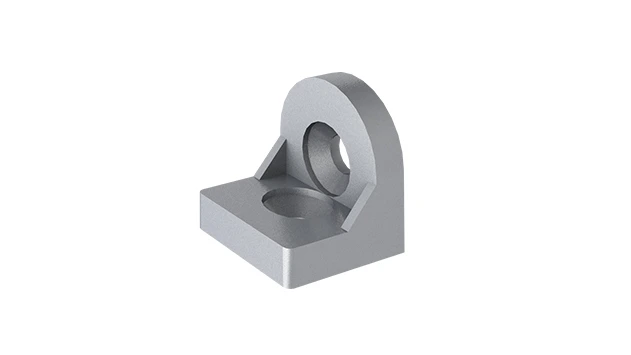
Turning Angle Code 4040
The turning angle aluminum profile connector provides a 90 degree hidden corner connection. 4040 it is means this size is used for 40 series aluminum profile.The corner code comes with set screws that allow for quick, easy connections.
Let's set the scene: You're in your workshop, coffee in hand, ready to build that custom workbench you've been planning for weeks. You've got the 4040 aluminum profiles laid out, the drill charged, and a pile of shiny aluminum profile accessories next to you. But as you reach for the turning angle codes, a sinking feeling hits—you're not sure if these little metal pieces will actually fit your 4040 profiles. Sound familiar? If you've ever second-guessed whether your angle codes are the right size, you're not alone. Sizing might seem like a small detail, but get it wrong, and you'll end up with wobbly structures, misaligned holes, and a whole lot of frustration. Today, we're breaking down the turning angle code 4040 sizing chart, why it matters, and how to make sure it plays nice with your 4040 EU standard aluminum profile.
What Even Is a Turning Angle Code 4040, Anyway?
Before we dive into sizing, let's make sure we're all on the same page. A turning angle code 4040 is basically the unsung hero of aluminum profile assemblies. Think of it as the glue that holds your 4040 profiles together at corners—whether you're building a workbench, a material rack, or a conveyor frame. Unlike generic brackets, these angle codes are specifically designed to fit the T-slots and dimensions of 4040 profiles, ensuring a tight, secure connection that can handle real-world wear and tear.
But here's the thing: Not all angle codes are created equal. Some are made for light-duty projects, like a small shelving unit in your garage. Others are built tough, with thicker steel or reinforced edges, for heavy-duty applications—think automotive assembly lines or warehouse storage racks. And that's where sizing comes in. The right size ensures the angle code not only fits into the profile's T-slots but also distributes weight evenly, so your structure doesn't twist or collapse under pressure.
Why Sizing Charts Are Your New Best Friend
Let me tell you about Jake. Jake runs a small electronics repair shop and decided to build a custom workstation using 4040 EU standard aluminum profiles. He ordered a set of angle codes online, assuming "4040" was a one-size-fits-all label. When the parts arrived, he spent two hours trying to bolt them onto his profiles—only to realize the holes in the angle codes were 1mm too small for his bolts. By the time he returned them and got the right size, his workstation build was delayed, and he'd wasted precious time (and money) on returns. Jake's mistake? Skipping the sizing chart.
Sizing charts aren't just lists of numbers—they're roadmaps to a frustration-free build. They tell you everything you need to know: how thick the angle code is, the diameter of its mounting holes, how much weight it can support, and (most importantly) whether it's compatible with your 4040 profile. Ignore them, and you're rolling the dice on fit, safety, and efficiency.

Decoding the Turning Angle Code 4040 Sizing Chart
Now, let's get into the good stuff: the sizing chart itself. Below is a breakdown of the most common turning angle code 4040 variants, their specs, and how they pair with 4040 EU standard aluminum profiles. Keep in mind that brands might tweak measurements slightly, but these are the industry standards you'll encounter 90% of the time.
| Angle Code Variant | Material | Thickness (mm) | Hole Diameter (mm) | Profile Compatibility | Max Load Capacity (kg) | Finish |
|---|---|---|---|---|---|---|
| Standard Turning Angle Code 4040 | Aluminum Alloy (6063) | 2.5 | 6.5 | 4040 EU Standard (40x40mm) | 150 | Anodized Silver |
| Heavy-Duty Turning Angle Code 4040 | Steel (Galvanized) | 4.0 | 8.0 | 4040 EU Standard (40x40mm) | 300 | Zinc-Plated |
| ESD-Safe Turning Angle Code 4040 | Aluminum Alloy (6063) | 3.0 | 6.5 | 4040 EU Standard (40x40mm) | 200 | Black Anodized (ESD-Coated) |
| Lightweight Turning Angle Code 4040 | Aluminum Alloy (5052) | 2.0 | 5.0 | 4040 EU Standard (40x40mm) | 100 | Clear Anodized |
Let's break down what each column means, so you're not just staring at numbers:
- Angle Code Variant: The "flavor" of angle code—standard, heavy-duty, etc. Choose based on your project's weight and environment (e.g., ESD-safe for electronics to prevent static damage).
- Material: Aluminum is lightweight and corrosion-resistant (great for indoor use), while steel is stronger but heavier (ideal for outdoor or high-load setups).
- Thickness: Thicker = stronger. A 4.0mm steel angle code can handle twice the load of a 2.0mm aluminum one, but it adds bulk.
- Hole Diameter: This must match your bolts! Most 4040 profiles use M5 or M6 bolts, so a 6.5mm hole (for M6) is standard.
- Profile Compatibility: All these variants are designed for 4040 EU standard profiles (40mm x 40mm). Avoid "universal" angle codes—they rarely fit EU profiles perfectly.
- Max Load Capacity: The maximum weight the angle code can support without bending. Always err on the side of caution here—if your project will hold 180kg, go for the 300kg heavy-duty variant, not the 150kg standard.
- Finish: Anodized aluminum resists scratches and corrosion; zinc-plated steel adds rust protection. ESD-safe finishes are black and conductive, critical for sensitive electronics.

4040 EU Standard Aluminum Profile: The Perfect Partner
You can't talk about turning angle code 4040 without talking about its soulmate: the 4040 EU standard aluminum profile. These profiles are the workhorses of workshops, factories, and DIY projects for a reason. They measure 40mm x 40mm (hence "4040"), with T-slots running along their length to accommodate bolts, brackets, and (you guessed it) angle codes. Unlike cheaper "national standard" profiles, EU standard 4040s have consistent slot spacing, wall thickness, and tolerances—meaning your angle codes will fit like a glove, every time.
What makes them so compatible with turning angle code 4040? Their T-slot design. The slots are spaced 20mm apart (center-to-center), which lines up perfectly with the hole spacing in standard angle codes. No guessing, no drilling new holes—just slide, bolt, and done. Plus, their uniform wall thickness (usually 1.5–2mm) ensures the angle code's mounting bolts bite into the profile securely, preventing wobble or stripping.
Aluminum Profile Accessories That Play Nice with Turning Angle Code 4040
Your angle code doesn't work alone—it's part of a team of aluminum profile accessories that turn your 4040 profiles into functional structures. Here are the ones you'll want to pair with your turning angle code 4040:
Aluminum Pipe Clamps
Aluminum pipe clamps are like the sidekicks of angle codes. They secure crossbars or vertical supports to your 4040 frame, and they use the same T-slot mounting as your angle code. Look for clamps with a 6.5mm bolt hole to match your standard angle code—this way, you can use the same bolts for both, simplifying your build.
Gusset Plates
For extra stability (think: workbenches that hold heavy tools or material racks stacked with parts), add gusset plates. These triangular metal plates bolt onto the inside corner of your angle code and profile, distributing weight even further. They're a must if your project will see a lot of vibration or movement.
End Caps
Small but mighty, end caps snap onto the ends of your 4040 profiles to cover sharp edges (safety first!) and keep dust out of the T-slots. They won't affect your angle code fit, but they'll make your finished project look polished and professional.
How to Measure for the Right Fit (Because "Eyeballing It" Doesn't Count)
Even with a sizing chart, it's smart to double-check measurements before buying. Here's how to do it like a pro:
- Measure your 4040 profile's T-slot width: Use a caliper to measure the opening of the T-slot (not the overall profile width). It should be 8mm for EU standard 4040s. If it's 7mm or 9mm, you might have a non-EU profile, and your angle code may not fit.
- Check the angle code's hole spacing: Lay the angle code flat and measure the distance between the centers of two adjacent holes. For 4040 EU profiles, this should be 20mm (matching the T-slot spacing). If it's off by more than 0.5mm, it won't align with the slots.
- Test the bolt fit: Grab a bolt that matches your angle code's hole diameter (e.g., M6 for 6.5mm holes) and try threading it through the angle code and into a scrap 4040 profile. It should turn smoothly without stripping or binding.
Common Sizing Mistakes (and How to Avoid Them)
Even with the best intentions, it's easy to slip up. Here are the three mistakes I see most often—and how to steer clear:
Mistake #1: Assuming "4040" Means "One Size Fits All"
Not all 4040 profiles are EU standard. Some brands sell "4040" profiles with slightly narrower T-slots or thicker walls, which can throw off your angle code fit. Always check if your profile is labeled "EU standard" before buying angle codes.
Mistake #2: Underestimating Load Capacity
It's tempting to save money by choosing a lighter-duty angle code, but skimping on load capacity is risky. If your workbench will hold a 200kg tool chest, a 150kg angle code will bend over time, weakening the entire structure. When in doubt, upgrade.
Mistake #3: Ignoring Material Thickness
A 2.5mm thick angle code might look sturdy, but if you're using thin-wall 4040 profiles (1mm wall thickness), the bolts could pull through the profile before the angle code fails. Pair thin profiles with thicker angle codes to distribute weight, or opt for heavy-duty profiles (2mm walls) if you're set on a standard angle code.
Real-World Applications: Where Turning Angle Code 4040 Shines
Still not sure if you need a turning angle code 4040? Let's look at real projects where they're indispensable:
Workbenches
A workshop workbench needs to be rock-solid. Turning angle code 4040s connect the legs to the tabletop frame, ensuring no wobble when you're hammering, sawing, or assembling parts. Pair them with heavy-duty angle codes and aluminum pipe clamps, and you've got a bench that'll last decades.
Material Racks
Factories use 4040 profiles to build material racks for storing parts. Turning angle code 4040s hold the horizontal shelves to the vertical posts, supporting boxes of components without sagging. ESD-safe variants are a must here if you're storing sensitive electronics.
Conveyor Frames
Conveyors vibrate, move, and carry heavy loads—so their frames need to be tough. Turning angle code 4040s (paired with heavy-duty steel variants) withstand the constant motion, keeping the conveyor aligned and preventing jams.
FAQ: Your Burning Questions, Answered
Q: Can I use a turning angle code 4040 with non-EU 4040 profiles?
A: Maybe, but proceed with caution. Non-EU profiles often have different T-slot spacing or width, which can throw off hole alignment. If you must use them, measure the T-slot spacing and angle code hole spacing first to ensure they match.
Q: Steel vs. aluminum angle codes—which should I choose?
A: Aluminum is lighter and corrosion-resistant (great for indoor use or light loads). Steel is stronger and better for heavy loads or outdoor setups, but it's heavier and can rust if not zinc-plated.
Q: How many angle codes do I need for a basic workbench?
A: A standard 1200mm x 600mm workbench has 4 legs, 4 corner angle codes (connecting legs to the top frame), and 4–8 additional angle codes for cross-bracing. That's 8–12 total, depending on how sturdy you want it.
Q: My angle code is slightly loose—can I shim it with washers?
A: Shimming is a temporary fix, but not ideal. Looseness usually means the angle code is the wrong size or the profile is bent. replace with the correct size instead of shimming—safety first!
Wrapping It Up: Build Smarter, Not Harder
At the end of the day, turning angle code 4040 sizing isn't just about numbers—it's about building with confidence. With the right size, you'll save time, avoid headaches, and create structures that are safe, sturdy, and built to last. So next time you're staring at that pile of 4040 profiles and angle codes, remember: the sizing chart is your guide. Use it, and you'll be well on your way to a project that makes Jake (and everyone else who skipped the chart) jealous.
Now go forth, measure twice, bolt once, and build something awesome.