- Company Articles
- Products and Technology
- Product knowledge
- Turning Angle Code 4040 vs 3030: Which Aluminum Profile Connector to Choose?

Turning Angle Code 4040 vs 3030: Which Aluminum Profile Connector to Choose?
Related Product
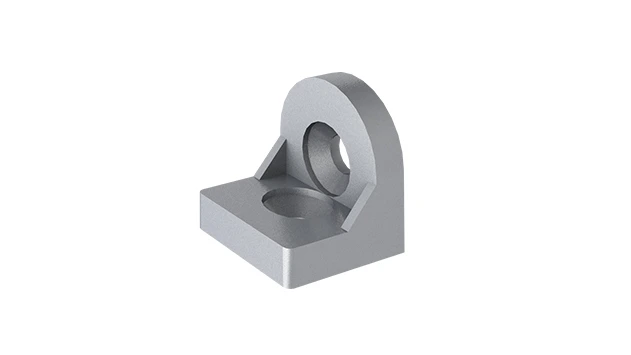
Turning Angle Code 4040
The turning angle aluminum profile connector provides a 90 degree hidden corner connection. 4040 it is means this size is used for 40 series aluminum profile.The corner code comes with set screws that allow for quick, easy connections.
Let's start with a scenario we've all lived (or at least imagined, but shhh—no "Imagine..." here). Picture walking into a bustling workshop: shelves stacked with tools, a conveyor humming in the corner, and a team piecing together a sleek aluminum workbench. The foreman pauses, holding two small metal brackets: one labeled "Turning Angle Code 4040" and another "Turning Angle Code 3030." "Which one do we use for the new assembly line rack?" he asks. If you've ever felt that split-second panic when choosing parts for a build, you're in the right place. Today, we're demystifying these two workhorses of aluminum profile accessories, so you'll never second-guess your connector choice again.
First Things First: What Even Are Turning Angle Codes?
Before we dive into the 4040 vs. 3030 debate, let's make sure we're all on the same page. Turning angle codes are the unsung heroes of modular construction—those L-shaped brackets that lock aluminum extrusion profiles together at 90-degree angles. Think of them as the glue (but way stronger) that turns individual aluminum profiles into sturdy workbenches, material racks, or even entire production lines. Without the right angle code, your carefully designed setup might wobble, sag, or worse—fail entirely.
Aluminum extrusion profiles themselves are the backbone here. Made by forcing molten aluminum through a die, they come in standardized sizes (like 2020, 3030, 4040) with T-slots running along their length—those handy grooves that let you attach accessories, shelves, or, you guessed it, turning angle codes. And since aluminum profiles are lightweight, corrosion-resistant, and infinitely customizable, they're everywhere: factories, labs, garages, even trendy co-working spaces. But their real power lies in how you connect them—and that's where turning angle codes step in.
Decoding the Numbers: 4040 vs. 3030 Explained
You've probably noticed the numbers in the names: 4040 and 3030. No, they're not random—they're clues to the profiles these angle codes are designed for. In the world of aluminum extrusion, "4040" refers to a profile that's 40mm wide and 40mm tall (a square cross-section), while "3030" is 30mm x 30mm. So, a Turning Angle Code 4040 is specifically engineered to connect 4040 aluminum profiles, and the 3030 version pairs with 3030 profiles. Simple enough, right? But there's more to it than just matching numbers.
Let's break down the specs. Both angle codes are typically made from aluminum alloy (often 6063 T5, a go-to for its strength and machinability) with an anodized finish to resist rust and wear. But their dimensions, load capacities, and even installation quirks set them apart. To visualize this, let's put them side by side:
| Feature | Turning Angle Code 4040 | Turning Angle Code 3030 |
|---|---|---|
| Designed for Profile Size | 40mm x 40mm aluminum profiles | 30mm x 30mm aluminum profiles |
| Leg Length (approx.) | 40-50mm per leg | 30-35mm per leg |
| Material Thickness | 2.5-3mm | 1.8-2.2mm |
| Typical Static Load Capacity | Up to 500kg (per bracket, when properly installed) | Up to 300kg (per bracket, when properly installed) |
| Compatible T-Slot Spacing | 40mm (matches 4040 profile slots) | 30mm (matches 3030 profile slots) |
| Common Applications | Heavy-duty racks, conveyor frames, industrial workbenches | Light-duty shelving, small workbenches, prototype setups |

The Nitty-Gritty: Key Differences That Matter
1. Size = Strength (Most of the Time)
Let's start with the obvious: the Turning Angle Code 4040 is bigger. With longer legs (40-50mm vs. 30-35mm for 3030) and thicker material (2.5-3mm vs. 1.8-2.2mm), it's built to handle more weight. Think of it like comparing a 2x4 vs. a 2x3 board—both are useful, but the 2x4 won't bow as easily under pressure. This translates to higher load capacity: 4040 brackets can often support 500kg or more per connection (when installed with quality screws and properly aligned profiles), while 3030 tops out around 300kg. That extra heft matters if you're building something that holds heavy tools, machinery, or bulk materials—like a material rack in a metal shop or a conveyor frame moving car parts.
But size isn't just about strength; it's about stability, too. The 4040's longer legs distribute weight across more of the profile's surface area, reducing "point load" stress. Imagine standing on one foot vs. two—more contact means less wobble. For dynamic setups, like a conveyor that vibrates as it runs, that stability is non-negotiable. A 3030 bracket might loosen over time under constant movement, while the 4040 stays locked in place.
2. Compatibility: It's All in the T-Slots
Here's a rookie mistake: grabbing a 4040 angle code and trying to bolt it to a 3030 profile. Spoiler: It won't work. Aluminum profiles have T-slots—those recessed grooves that let you slide in bolts or accessories—and their spacing is tied to the profile size. A 4040 profile has T-slots spaced 40mm apart, while a 3030's slots are 30mm apart. The holes on the turning angle code are pre-drilled to match these spacings, so a 4040 bracket's holes will be too far apart for a 3030 profile, leaving screws hanging loose (or worse, stripping threads). It's like trying to plug a square peg into a round hole—close, but no cigar.
This compatibility rule cuts both ways: a 3030 angle code on a 4040 profile will sit too small, with gaps that weaken the connection. So, the first rule of thumb? Match the angle code to your profile size. If you're using 3030 aluminum extrusion profiles, stick with the 3030 turning angle code. For 4040 profiles, reach for the 4040 bracket. No exceptions—unless you want a wobbly mess (and trust us, you don't).
3. Applications: When to Choose Which
Let's get practical. When should you reach for the 4040, and when is the 3030 the better pick? Let's break it down by use case.
Go with 3030 if... You're building something lightweight or temporary. Think small workbenches for a home garage, a shelf for storing hand tools, or a prototype fixture for a school project. 3030 profiles are cheaper and easier to maneuver, and their angle codes are quicker to install—great for weekend builds or setups that might need reconfiguring later. For example, a local maker space I visited last month used 3030 angle codes to build modular tables that they rearrange weekly for workshops. The 3030 brackets held up fine under laptops, drills, and the occasional spilled coffee—no sagging, no drama.
Opt for 4040 if... You need industrial-grade strength. We're talking heavy-duty assembly lines, conveyor systems that move metal parts, or material racks holding 50kg boxes. A manufacturing plant near my hometown uses 4040 angle codes on their main assembly workbench, where workers bolt down power tools and clamp large components all day. After three years of daily use, those brackets still look brand-new—no rust, no looseness, just solid reliability. The 4040's thickness also makes it ideal for outdoor setups or humid environments, where corrosion resistance (thanks to that anodized finish) is a must.
4. Installation: Speed vs. Security
Installing turning angle codes isn't rocket science, but there are differences in how they go together. Let's start with tools: 3030 brackets usually use smaller screws (M5 or M6), so you'll need a 4mm or 5mm Allen key. 4040 brackets, with their thicker material, often require M6 or M8 screws and a 5mm or 6mm key. That might sound trivial, but when you're installing 50 brackets for a rack, that extra millimetre in tool size can make your hand tired faster—so keep a comfortable grip handy.
Time-wise, 3030 is the speed demon. Its smaller size means fewer screws (usually 2-3 per bracket) and faster alignment. I helped a friend build a 3030-based parts shelf last weekend: 12 brackets, start to finish, in under an hour. The 4040? Plan for a bit more time. Most 4040 brackets need 4 screws (two per leg) to maximize strength, and aligning those longer legs with the T-slots takes a steady hand. But here's the tradeoff: that extra time pays off in security. A properly installed 4040 bracket feels "permanent"—like it's part of the profile itself—while a 3030 bracket, though sturdy, has a bit more give (which is fine for light use).
5. Cost: Budget-Friendly vs. Investment-Grade
Let's talk money. Unsurprisingly, the beefier 4040 angle code costs more—usually 30-50% more than the 3030, depending on the supplier. For a small project with 10 brackets, that might add up to $20-$30 extra. For a large build with 100 brackets? That's $200-$300 more. But here's the thing: skimping on brackets to save money can cost you later. A bent 3030 bracket on a heavy rack might mean replacing the whole setup, which is way pricier than springing for 4040s upfront.
So, when is the 3030 worth the savings? For temporary builds, low-weight applications, or projects where you're already using 3030 profiles (since mixing sizes would require buying new profiles, too). For example, a pop-up market vendor I know uses 3030 brackets for their display shelves—they set up and tear down weekly, and the lightweight parts are easy to transport. The 3030s are perfect here: affordable, durable enough for the job, and not overkill.

Making the Call: A Simple Decision Guide
Still on the fence? Ask yourself these four questions:
- What's the max weight my build will hold? If it's over 300kg, go 4040. Under that, 3030 works.
- Is my setup static or dynamic? Static (sitting still, like a shelf) can use 3030. Dynamic (moving/vibrating, like a conveyor) needs 4040.
- What profile size am I using? 4040 profiles = 4040 brackets. 3030 profiles = 3030 brackets. No mix-and-match!
- Is this temporary or permanent? Temporary/portable? 3030. Permanent/industrial? 4040.
Let's test this with an example. Say you're building a workbench for your garage to hold a drill press (25kg) and a few toolboxes (15kg total). Total weight: 40kg—well under 300kg. It's static (the drill press doesn't move), and you're using 3030 profiles to keep costs low. The verdict? 3030 turning angle code. Perfect.
Another example: A factory needs a material rack to hold 20 boxes of steel parts, each 30kg (total 600kg). It's a permanent setup, using 4040 profiles for strength. Verdict? 4040 angle codes—no question. The 500kg+ capacity ensures it won't buckle, even with daily loading and unloading.
Pro Tips for Installation Success
Whichever bracket you choose, these tips will make installation smoother:
- Prep your profiles first. Clean T-slots with a brush to remove debris—gunk in the slots can throw off alignment.
- Use the right screws. Always pair angle codes with (high-strength) bolts—cheap screws snap under load. For 3030, M5 x 16mm works; for 4040, go M6 x 20mm.
- Torque, don't over-tighten. Snug the screws until they're firm, but stop before you hear stripping. A torque wrench (set to 4-5 Nm for 3030, 6-7 Nm for 4040) takes the guesswork out.
- Check alignment. Use a square tool to ensure the profiles meet at a perfect 90-degree angle before tightening—crooked brackets weaken the whole structure.
Wrapping Up: It's About the Build, Not Just the Bracket
At the end of the day, choosing between the Turning Angle Code 4040 and 3030 isn't about picking a "better" bracket—it's about picking the right bracket for your build. The 3030 is the scrappy underdog: lightweight, affordable, and perfect for small-scale projects. The 4040 is the heavyweight champion: strong, stable, and built to handle the toughest industrial jobs. Both have their place, and knowing when to use each will save you time, money, and headaches down the line.
So, the next time you're standing in front of that bin of brackets, take a breath. Ask yourself: What's my profile size? How much weight am I lifting? Is this temporary or forever? The answer will be clear. And hey—if you still second-guess yourself, just remember: the best builds start with the right parts. And now, you're an expert at picking one of the most important parts of all.