- Company Articles
- Products and Technology
- Product knowledge
- Turning Angle Code 4040 vs Brass Connectors: Conductivity & Weight Differences

Turning Angle Code 4040 vs Brass Connectors: Conductivity & Weight Differences
Related Product
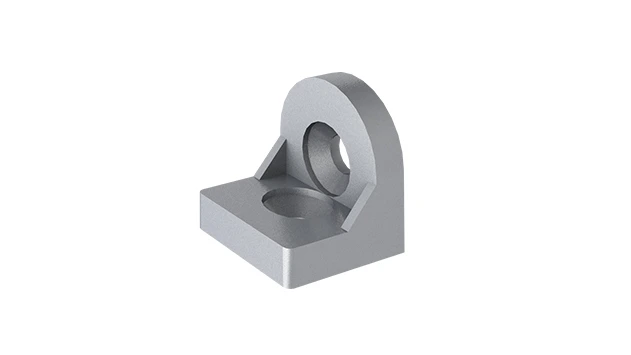
Turning Angle Code 4040
The turning angle aluminum profile connector provides a 90 degree hidden corner connection. 4040 it is means this size is used for 40 series aluminum profile.The corner code comes with set screws that allow for quick, easy connections.
Introduction: The Unsung Heroes of Industrial Setups
In the world of manufacturing, assembly lines, and workshop setups, it's easy to get dazzled by the big-ticket items—the workbench with a sleek aluminum top, the conveyor belts zipping products along, or the towering material racks holding stacks of inventory. But if you peek a little closer, you'll notice the quiet workhorses keeping everything together: connectors. These small, often overlooked components are the glue that turns individual parts into functional systems, whether it's a lean production line or a precision esd workstation . Today, we're zooming in on two heavyweights in the connector world: the turning angle code 4040 and brass connectors. We'll break down their differences in conductivity and weight, and why those differences matter in real-world applications.
If you've ever assembled a modular shelf or reconfigured a workshop layout, you know that choosing the right connector isn't just about "will it fit?" It's about "will it last?", "is it easy to work with?", and "does it play nice with the environment it's in?" For example, in a lean system where efficiency and adaptability are king, a connector that's lightweight and easy to adjust can save hours of setup time. In an ESD workstation, where static electricity could fry sensitive electronics, conductivity isn't just a nice-to-have—it's a safety requirement. So let's dive in, starting with what each of these connectors actually is.
What is Turning Angle Code 4040?
First up: the turning angle code 4040 . If you've shopped for aluminum profile accessories , you've probably come across this name. Think of it as the "cornerstone" (pun intended) of aluminum profile systems. These connectors are designed specifically to join 4040 aluminum profiles—the workhorses of industrial framing—at angles, typically 90 degrees, though some variations allow for adjustments. Made from high-grade aluminum alloy, they're part of a broader family of components that make modular setups possible, from simple workbenches to complex production lines.
What sets the turning angle code 4040 apart? For starters, it's all about precision. These connectors are machined to fit snugly into the T-slots of 4040 aluminum profiles, creating a tight, wobble-free joint without the need for welding or drilling. That means if you need to reconfigure your setup—say, adding an extra shelf to your workbench or adjusting the height of a material rack—you can loosen a few bolts, move the connector, and tighten it back up. No power tools, no permanent modifications, just flexibility. And because they're made of aluminum, they inherit all the perks of the material: lightweight, resistant to rust, and surprisingly strong for their size.
You'll find these little workhorses in just about any place that uses aluminum profiles. Think: assembly line workbenches where operators need to customize their workspace, lean system setups where every inch of space counts, or even ESD workstations where static control is critical. They're the kind of connector that quietly gets the job done, letting you focus on the bigger picture—like keeping production running smoothly.

What Are Brass Connectors?
Now, let's turn to brass connectors. Unlike the turning angle code 4040, which is laser-focused on aluminum profiles, brass connectors are more of a "generalist." Made from brass—a of copper and zinc—they've been around for decades, trusted in everything from plumbing to industrial machinery. Brass is prized for its durability: it's tough, resistant to corrosion (especially in damp environments), and has a natural ability to withstand wear and tear. If aluminum connectors are the "flexible friends" of the industrial world, brass connectors are the "reliable old-timers" that you can count on to hold steady for years.
Brass connectors come in all shapes and sizes: straight couplings, elbow joints, T-junctions, and more. They're often used in applications where strength and stability are non-negotiable. For example, in heavy-duty material racks that hold hundreds of pounds of inventory, or in machinery frames that vibrate constantly during operation. Unlike aluminum, brass is denser and heavier, which can be an advantage in setups where you don't want things shifting around. And because brass is a softer metal than steel, it's easier to machine, allowing for intricate designs that fit specific, non-standard components.
But brass isn't just about brute strength. It also has unique electrical properties (we'll get to conductivity later) and a natural resistance to sparking, which makes it a favorite in environments with flammable gases or liquids. You might find brass connectors in oil refineries, chemical plants, or even in some ESD setups—though, as we'll see, they're not always the first choice there. Bottom line: brass connectors are the steady, no-nonsense option for when "good enough" just isn't enough.

Conductivity: Why It Matters (And How They Compare)
Let's talk conductivity—the ability of a material to conduct electricity. You might be thinking, "Why does a connector need to conduct electricity?" Great question. In many industrial settings, especially those involving electronics, static electricity is a silent enemy. When you shuffle across a carpet and zap a doorknob, that's static discharge. Now imagine that zap happening near a circuit board or a sensitive microchip—it could fry the component, costing time and money. That's where ESD workstations come in: they're designed to channel static electricity away from sensitive equipment, and connectors play a role in that chain.
Aluminum, the material in turning angle code 4040 connectors, is a champion conductor. With a conductivity rating of about 377 Siemens per meter (S/m), it's not quite as good as copper (which tops 598 S/m), but it's way ahead of brass, which typically sits around 159 S/m. What does that mean in practice? If you're building an ESD workstation, using aluminum connectors like the turning angle code 4040 helps create a continuous path for static electricity to flow from the work surface down to the ground. No static buildup, no zaps, no damaged parts.
Brass, on the other hand, is a poorer conductor. Its lower conductivity means it doesn't dissipate static as effectively. That's not a dealbreaker in every situation—if you're using brass connectors in a material rack that holds plastic bins, static might not be an issue. But in an ESD workstation or a lean system where circuit boards are being assembled, brass could be a weak link. You might need to add extra grounding straps or use conductive coatings to compensate, which adds cost and complexity.
But wait—there's a flip side. Brass's lower conductivity can be an advantage in environments where you don't want electricity to flow. For example, in machinery where live wires are nearby, a brass connector is less likely to accidentally conduct current, reducing the risk of short circuits. It's all about context: conductivity isn't inherently "good" or "bad"—it's about whether it fits the job.
Weight: Light vs. Heavy—How It Shapes Your Setup
Now, let's tackle weight. If conductivity is about electricity, weight is about practicality: how easy is it to install the connector? How much does it add to the overall weight of your setup? And can your structure support it? Here, the difference between turning angle code 4040 and brass connectors is night and day.
Aluminum is famous for being lightweight, and the turning angle code 4040 is no exception. Aluminum has a density of about 2.7 grams per cubic centimeter (g/cm³), while brass clocks in at a whopping 8.5 g/cm³. To put that in perspective: a turning angle code 4040 connector might weigh around 50 grams, while a brass connector of the same size could weigh 150 grams or more—three times as heavy! That might not sound like much for a single connector, but multiply it by dozens (or hundreds) in a large setup, and the weight adds up fast.
Why does this matter? Let's say you're building a mobile workbench on caster wheels. Every extra gram from heavy connectors makes the bench harder to push, increasing operator fatigue and slowing down workflow. In a lean system, where efficiency is everything, that's a problem. On the flip side, if you're building a fixed structure—like a heavy-duty material rack that never moves—brass's weight can actually be a plus. The extra heft adds stability, reducing the risk of the rack tipping over when loaded with heavy items.
Installation is another area where weight plays a role. Imagine climbing a ladder to install connectors at the top of a tall material rack. A lightweight aluminum connector is easy to hold with one hand while you tighten the bolts with the other. A heavy brass connector? You might need a second person to help, or risk dropping it (and trust us, dropping a brass connector on your foot hurts way more than dropping an aluminum one). For small workshops or teams with limited staff, the lighter weight of turning angle code 4040 connectors can save time and reduce the risk of injuries.
Side-by-Side: The Key Differences in One Table
| Feature | Turning Angle Code 4040 | Brass Connectors |
|---|---|---|
| Material | Aluminum alloy | Cupro-zinc alloy (brass) |
| Conductivity (S/m) | ~377 (good conductor) | ~159 (moderate conductor) |
| Density (g/cm³) | 2.7 (lightweight) | 8.5 (heavy) |
| Primary Use Case | Aluminum profile systems (workbenches, lean systems, ESD workstations) | Heavy-duty, fixed setups (material racks, machinery frames, damp environments) |
| Installation | Tool-free (bolts into T-slots), easy to reconfigure | Often requires drilling/tapping, more permanent |
| Pros | Lightweight, corrosion-resistant, flexible, good conductivity for ESD | Durable, high stability, corrosion-resistant in damp environments, low conductivity for electrical safety |
| Cons | Less suitable for extremely heavy loads | Heavy, harder to reconfigure, poor conductivity for static control |
Practical Applications: When to Choose Which
Now that we've broken down the specs, let's get practical: when should you reach for a turning angle code 4040, and when is brass the better pick? Let's walk through a few real-world scenarios.
Scenario 1: Building a Modular Workbench for an Electronics Assembly Line
If you're setting up a workbench where operators assemble circuit boards, two things matter: static control (to protect the electronics) and flexibility (to adjust the layout as tasks change). Here, the turning angle code 4040 shines. Its aluminum construction conducts static electricity away from the workspace, making it ideal for an ESD workstation. Plus, if you need to add a shelf, mount a monitor arm, or adjust the height later, you can do it in minutes without drilling new holes. Brass connectors, with their lower conductivity and heavier weight, would be overkill here—you'd be adding unnecessary heft and risking static buildup.
Scenario 2: Constructing a Heavy-Duty Material Rack in a Warehouse
Now, picture a warehouse material rack that needs to hold pallets of metal parts, each weighing 50+ pounds. Stability is non-negotiable—you don't want the rack swaying or tipping. Here, brass connectors might be the better choice. Their weight adds stability, and brass's natural toughness can handle the constant stress of heavy loads. While aluminum connectors like the turning angle code 4040 are strong, they're not designed for the same level of heavy-duty use as brass. Save the aluminum for lighter loads and leave the brass for the heavy hitters.
Scenario 3: Setting Up a Lean System in a Small Workshop
Lean systems are all about minimizing waste—including time wasted on setup and reconfiguration. If you're running a small workshop with a tight team, you need components that are easy to handle and quick to install. The turning angle code 4040's lightweight design means one person can assemble a production line frame in an afternoon, and if you need to rearrange it next month, you can do it without calling in extra help. Brass connectors, with their heavier weight and more permanent installation, would slow you down—exactly what lean systems aim to avoid.
Installation & Maintenance: The Day-to-Day Reality
Let's talk about the nitty-gritty: installing and maintaining these connectors. For the turning angle code 4040, installation is a breeze. Most models come with pre-threaded holes and bolts that fit directly into the T-slots of 4040 aluminum profiles. No drilling, no tapping, just align the connector, insert the bolt, and tighten with a hex key. Even if you're new to aluminum profiles, you'll be a pro after installing your first few. And if you make a mistake? No problem—loosen the bolt, reposition, and try again. It's the kind of "forgiving" installation that makes DIY setups possible.
Maintenance is just as simple. Aluminum is naturally resistant to rust, so you won't have to worry about corrosion even in humid workshops. A quick wipe with a damp cloth to remove dust is usually all it takes to keep these connectors looking and working like new. The only thing to watch for is over-tightening the bolts—since aluminum is softer than brass, cranking down too hard can strip the threads. But as long as you stick to the recommended torque (usually printed on the connector or in the manual), you'll be fine.
Brass connectors, on the other hand, require a bit more elbow grease. Many brass connectors need to be drilled into the material they're joining, which means you'll need a drill, taps, and possibly a level to ensure everything lines up. Once installed, they're meant to stay put—reconfiguring a setup with brass connectors often means removing the old connectors and drilling new holes, which is time-consuming. On the plus side, maintenance is minimal: brass resists corrosion well, even in damp environments, and a little brass polish can make them shine like new if they tarnish.
Conclusion: It's All About the Job at Hand
At the end of the day, choosing between the turning angle code 4040 and brass connectors isn't about which is "better"—it's about which fits your needs. If you're building a modular, lightweight setup like a workbench or lean system , or if you need good conductivity for an esd workstation , the turning angle code 4040 is your go-to. Its aluminum construction, flexibility, and lightweight design make it a favorite for modern, adaptable workspaces.
But if you're working with heavy loads, fixed structures, or environments where stability and durability are non-negotiable, brass connectors won't let you down. They're the reliable, old-school option that's been trusted for decades, and for good reason.
So the next time you're planning a workshop setup or upgrading your production line, take a moment to think about the connectors. They might be small, but they have a big impact on how smoothly your operation runs. And whether you choose aluminum or brass, remember: the best connector is the one that works for you .