- Company Articles
- Products and Technology
- Product knowledge
- Turning Angle Code 4040 vs Magnetic Connectors: Holding Force Comparison

Turning Angle Code 4040 vs Magnetic Connectors: Holding Force Comparison
Related Product
Turning Angle Code 4040
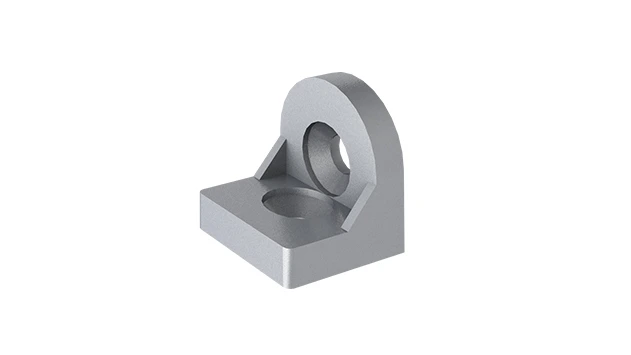
The turning angle aluminum profile connector provides a 90 degree hidden corner connection. 4040 it is means this size is used for 40 series aluminum profile.The corner code comes with set screws that allow for quick, easy connections.
Introduction: The Unsung Heroes of Modular Systems
Walk into any modern factory, workshop, or even a tech startup's prototyping lab, and you'll likely spot something common: sleek, versatile structures built from aluminum profiles, lean pipes, and a maze of connectors. These modular systems are the backbone of efficient manufacturing, allowing teams to build workbenches, material racks, conveyor tracks, and more—all tailored to their unique needs. But here's the thing: none of these structures work without reliable connectors. They're the quiet force holding everything together, ensuring that a workbench doesn't wobble under the weight of power tools, or a material rack doesn't collapse when loaded with heavy components.
Today, we're diving deep into two popular connector types that often go head-to-head in these setups: the Turning Angle Code 4040 and Magnetic Connectors. While they might sound like hardware, their holding force—the ability to keep components securely joined under stress—can make or break a system's performance. Whether you're a production manager looking to optimize your assembly line, a small business owner building a custom workbench, or a DIY enthusiast experimenting with modular setups, understanding how these connectors stack up in terms of holding force is crucial. Let's break them down, compare their strengths, and help you decide which one deserves a spot in your next project.
Turning Angle Code 4040: The Mechanical Workhorse
First up: the Turning Angle Code 4040. If you've ever worked with aluminum profiles, chances are you've encountered this little mechanical marvel. It's a staple in modular construction, known for its reliability and brute strength. But what exactly is it, and how does it deliver that impressive holding force?
What is a Turning Angle Code 4040?
At its core, the Turning Angle Code 4040 is a mechanical connector designed specifically for 4040 aluminum profiles—the workhorses of modular systems. These profiles, with their T-slot design, allow for endless customization, and the Turning Angle Code 4040 is the piece that locks two profiles together at (you guessed it) a 90-degree angle. Think of it as the "cornerstone" of a square or rectangular structure, like the frame of a workbench or the legs of a material rack.
Unlike some connectors that rely on adhesives or friction alone, the Turning Angle Code 4040 uses a simple but effective mechanical design: bolts, nuts, and a metal bracket shaped to fit snugly into the T-slots of 4040 aluminum profiles. It's a no-nonsense approach—no fancy technology, just good old-fashioned mechanical clamping force.
Design and Mechanics: How It Locks In Place
Let's get into the nitty-gritty of its design. A typical Turning Angle Code 4040 is made from durable materials like aluminum alloy or steel, chosen for their strength and resistance to wear. The connector itself has a "L" or "corner" shape, with holes that align with the T-slots of the aluminum profiles. To install it, you slide T-nuts into the slots of the profiles, position the angle code over the nuts, and tighten bolts through the code's holes into the nuts. As you tighten the bolts, the angle code is pulled down onto the profiles, creating a (clamping) force that locks everything together.
What makes this design so effective is its ability to distribute force evenly. The metal bracket spans the width of the profile, ensuring that the load isn't concentrated on a single point. This even distribution is key to its holding force—whether the stress is vertical (like the weight of a heavy tool on a workbench), horizontal (like pulling on a material rack), or torsional (twisting forces from uneven loading).
Factors Influencing Holding Force
The holding force of a Turning Angle Code 4040 isn't set in stone—it depends on a few key factors. Let's break them down:
Material Quality: Not all angle codes are created equal. A steel Turning Angle Code 4040 will generally offer higher holding force than an aluminum one, thanks to steel's higher tensile strength. However, aluminum is lighter and resistant to corrosion, making it a better choice for environments where weight or rust is a concern (like cleanrooms or outdoor setups).
Bolt Torque: This is critical. The tighter you torque the bolts, the more clamping force the angle code exerts on the aluminum profiles. But there's a sweet spot—over-tightening can strip the threads or warp the profile, while under-tightening leaves the connection loose. Most manufacturers recommend a specific torque range (e.g., 25-30 Nm for M8 bolts) to maximize holding force without damaging components.
Profile Condition: The aluminum profile's T-slots need to be clean and free of debris. A slot clogged with dirt or rust can prevent the T-nut from seating properly, reducing clamping force. Similarly, a bent or damaged profile won't make full contact with the angle code, weakening the connection.
Number of Bolts: Some Turning Angle Code 4040 models come with two bolts, others with four. More bolts mean more points of contact and higher overall holding force. For heavy-duty applications, opting for a four-bolt design is a smart move.
Real-World Holding Force: Numbers That Matter
Enough theory—let's talk real numbers. In lab tests, a well-installed steel Turning Angle Code 4040 with M8 bolts torqued to 25 Nm can typically handle a shear force (sideways stress) of 1,500-2,000 Newtons (N) and a tensile force (pulling apart) of 1,200-1,800 N. To put that in perspective, 2,000 N is roughly the weight of a small motorcycle—so imagine a workbench leg held by this connector supporting that kind of load without budging. For aluminum angle codes, the numbers drop slightly, usually around 1,000-1,500 N in shear and 800-1,200 N in tension, but that's still more than enough for most light to medium-duty applications.
These numbers aren't just academic. In a busy factory, a workbench using Turning Angle Code 4040 connectors might hold a 50kg toolbox, a soldering station, and a pile of components—all day, every day—without so much as a creak. That reliability is why many manufacturers stick with mechanical connectors like this for critical, high-load setups.

Magnetic Connectors: The Modern Magnetic Marvel
Now, let's shift gears to Magnetic Connectors—the newer, flashier kid on the block. As the name suggests, these connectors use magnets instead of bolts to hold aluminum profiles (or other metal components) together. They've gained popularity in recent years for their speed and ease of use, but do they measure up in terms of holding force?
What Are Magnetic Connectors?
Magnetic Connectors are exactly what they sound like: small, often rectangular or cylindrical devices embedded with powerful neodymium magnets (the strongest permanent magnets available). They're designed to snap onto metal surfaces—like the flanges of aluminum profiles or steel brackets—creating an instant connection without any tools, bolts, or drilling. Some models even come with a release mechanism, like a lever or a twist, to disengage the magnets when you need to reconfigure your setup.
Their claim to fame? Speed. No more fumbling with wrenches or aligning bolts in tight T-slots—just place the connector where you want it, and it sticks. This makes them a favorite for setups that need frequent reconfiguration, like prototyping labs or event displays where structures are built and torn down regularly.
Design and Mechanics: The Power of Magnetism
Magnetic Connectors rely on magnetic attraction between the neodymium magnets inside the connector and the metal surface of the profile. Neodymium magnets are prized for their high magnetic flux density, which means they can generate strong attraction even in small sizes. Most Magnetic Connectors have a steel or iron backing plate that concentrates the magnetic field, amplifying the holding force.
But here's a catch: aluminum is non-ferrous, meaning it's not magnetic. So how do Magnetic Connectors work with aluminum profiles? Simple—they require a ferrous (magnetic) surface to attach to. This is usually achieved by adding a steel strip or plate to the aluminum profile's T-slot, or by using profiles with a steel insert. Without that ferrous surface, the magnets won't stick, and the connector is useless. That's an important limitation to keep in mind.
Factors Influencing Holding Force
Like the Turning Angle Code 4040, a Magnetic Connector's holding force depends on several factors:
Magnet Grade: Neodymium magnets are graded by their strength, with higher grades (like N52) offering more holding force than lower grades (like N35). A Magnetic Connector with N52 magnets will outperform one with N35 magnets, all else being equal.
Contact Area: The more surface area the magnet has in contact with the ferrous surface, the stronger the attraction. A larger connector with multiple magnets will generally have higher holding force than a smaller, single-magnet model.
Distance Between Magnet and Surface: Even a tiny gap (like a layer of paint or rust) can drastically reduce magnetic force. The closer the magnet is to the ferrous surface, the stronger the hold. That's why Magnetic Connectors often have a flat, smooth contact surface—to minimize gaps.
Temperature: Neodymium magnets lose strength at high temperatures (above 80°C for standard grades). In hot environments, like near ovens or welding stations, this can reduce holding force. High-temperature magnet grades (like N52HT) are available but come at a premium.
Real-World Holding Force: How Do They Stack Up?
Magnetic Connectors are fast, but are they strong? Let's look at the numbers. A typical Magnetic Connector with N52 magnets and a 50mm x 50mm contact area can generate a holding force of 300-800 N in shear and 200-500 N in tension. That's significantly lower than the Turning Angle Code 4040—about 1/3 to 1/2 the force. For example, a 500 N shear force is roughly the weight of a 50kg object, which is enough for light loads like a small tool tray or a monitor mount on a workbench, but not enough for heavy machinery or stacked material racks.
There are "heavy-duty" Magnetic Connectors on the market, with larger magnets or multiple magnet arrays, that can hit 1,000-1,200 N in shear force. But even then, they still fall short of the Turning Angle Code 4040's mechanical clamping power. And remember—this is only when they're attached to a clean, flat ferrous surface. Add a layer of dust or a slightly curved profile, and that force drops even more.

Head-to-Head: Turning Angle Code 4040 vs Magnetic Connectors
Now that we understand how each connector works and what influences their holding force, let's put them side by side in a detailed comparison. The table below breaks down key factors, from holding force to real-world usability, to help you see which one fits your needs.
| Factor | Turning Angle Code 4040 | Magnetic Connectors |
|---|---|---|
| Holding Force (Shear) | 1,500-2,000 N (steel, 4-bolt design) | 300-1,200 N (N52 magnets, large contact area) |
| Holding Force (Tension) | 1,200-1,800 N | 200-800 N |
| Installation Time | Longer (requires tools, aligning bolts, torquing) | Faster (snap-on, no tools needed) |
| Reusability | High (can be disassembled and reused, bolts may wear over time) | Very High (no wear from installation/removal) |
| Compatibility | Works with 4040 aluminum profiles (and other T-slot profiles with adapters) | Requires ferrous surface (aluminum profiles need steel inserts/strips) |
| Cost | Lower upfront cost (inexpensive steel/ aluminum materials) | Higher upfront cost (neodymium magnets are pricey) |
| Maintenance | Occasional re-torquing of bolts; cleaning T-slots | Minimal (keep contact surface clean; no moving parts) |
| Environmental Resistance | Good (resistant to dust, moisture, temperature extremes if using stainless steel) | Fair (magnets can lose strength in high heat; moisture can cause rust on steel backing plates) |
| Best For | Heavy loads, static setups, high-stress environments (workbenches, material racks, production lines) | Light loads, frequent reconfiguration, temporary setups (prototyping labs, event displays, quick-change workstations) |
The Verdict on Holding Force
When it comes to raw holding force, the Turning Angle Code 4040 is the clear winner. Its mechanical clamping design, especially with steel construction and proper bolt torque, delivers significantly higher shear and tensile strength than even the strongest Magnetic Connectors. For applications where safety and stability are non-negotiable—like a workbench supporting heavy machinery or a material rack stacked with metal components—the Turning Angle Code 4040 is the safer bet.
But Magnetic Connectors have their own ace in the hole: speed and flexibility. If you're constantly reconfiguring your setup—say, a lab that builds different prototypes weekly—spending 10 minutes tightening bolts with a wrench every time you rearrange gets old fast. Magnetic Connectors let you snap components together and take them apart in seconds, making them ideal for dynamic environments where adaptability is key. Just keep in mind their lower holding force—they're not meant for heavy lifting.
Real-World Applications: When to Choose Which
To make this more concrete, let's look at two common scenarios where these connectors are put to the test: building a production workbench and creating a quick-change prototyping station.
Scenario 1: Production Workbench for Heavy Machinery
Imagine a manufacturing line where workers assemble large electronic components, using soldering irons, power drills, and testing equipment—all weighing 20-30kg each. The workbench needs to stay rock-solid; even a small wobble could ruin a delicate solder joint or cause a tool to slip. Here, the Turning Angle Code 4040 shines. Its high holding force ensures the bench's frame doesn't flex under the weight, and the mechanical connection won't weaken over time, even with daily use.
Pro tip: Pair the Turning Angle Code 4040 with a 4040 aluminum profile and a steel top plate for maximum stability. Add a few extra bolts to critical joints (like the corners where the legs meet the frame) to boost holding force even further.
Scenario 2: Quick-Change Prototyping Station
Now, picture a startup's R&D lab where engineers build and test new product prototypes every few days. One week, they need a small workbench for circuit testing; the next, a taller rack for housing sensors; the week after, a flat surface for assembling mockups. Here, Magnetic Connectors are a game-changer. Instead of disassembling and rebolting a mechanical frame each time, engineers can snap magnetic connectors onto steel-inset aluminum profiles, rearranging the setup in minutes. The holding force is more than enough for lightweight prototypes and tools, and the flexibility keeps the lab agile.
Pro tip: Opt for Magnetic Connectors with a release lever to make disassembly even easier. And keep a few extra ferrous strips on hand—they can be cut to size and inserted into aluminum profiles for instant magnetic compatibility.
Bonus Scenario: Material Racks in a Warehouse
Material racks, like the "Material Rack B (3 row and 3 floor)" often used in warehouses, need to handle heavy loads—think boxes of components, raw materials, or finished products weighing 50kg or more per shelf. For these, the Turning Angle Code 4040 is a no-brainer. Its mechanical clamping force ensures the rack's uprights and (crossbeams) stay locked together, even when shelves are fully loaded. Magnetic Connectors, with their lower holding force, would risk sagging or collapsing under the weight—definitely not worth the risk.
Choosing the Right Connector: A Practical Guide
So, how do you decide between the Turning Angle Code 4040 and Magnetic Connectors for your project? Start by asking yourself these four questions:
1. What's the maximum load my structure will need to support?
If you're dealing with heavy loads (over 50kg per joint), go with the Turning Angle Code 4040. Its mechanical holding force is unmatched for stability. For light loads (under 30kg), Magnetic Connectors are a viable option, especially if speed is important.
2. How often will I need to reconfigure the setup?
Static setups (like a permanent production line) benefit from the Turning Angle Code 4040's durability. Dynamic setups (like a lab or event space) that change weekly or monthly will save time with Magnetic Connectors.
3. What materials am I using?
If you're working with aluminum profiles without ferrous inserts, the Turning Angle Code 4040 is your only mechanical option. Magnetic Connectors require a ferrous surface, so you'll need to add steel strips or use pre-inset profiles, which adds cost and complexity.
4. What's my budget?
Turning Angle Code 4040s are cheaper upfront—you can pick up a steel model for $5-10 per unit. Magnetic Connectors, with their neodymium magnets, cost $15-30 each (and that's before adding ferrous strips). If you need a lot of connectors, the cost difference adds up fast.
Conclusion: It's All About Balance
At the end of the day, there's no "better" connector—only the right one for the job. The Turning Angle Code 4040 is the mechanical workhorse, delivering unbeatable holding force for heavy, static setups. It's reliable, affordable, and built to last in tough industrial environments. Magnetic Connectors, on the other hand, are the flexible innovators, perfect for light loads and frequent reconfigurations where speed and adaptability matter most.
The next time you're planning a modular project, take a moment to assess your needs: load, reconfiguration frequency, materials, and budget. If holding force is your top priority, reach for the Turning Angle Code 4040. If flexibility and speed are key, Magnetic Connectors might be the way to go. And who knows? Maybe you'll even mix and match—using Turning Angle Code 4040s for the heavy-duty frame and Magnetic Connectors for lightweight accessories like tool holders or cable management clips. After all, modular systems are all about customization, and the best setups often combine the strengths of both worlds.
So, whether you're building a workbench that will see years of production, a prototype station that changes with every new idea, or a material rack that holds the backbone of your business, choose wisely. Your connectors might be small, but their impact on your system's performance? That's huge.