- Company Articles
- Products and Technology
- Product knowledge
- Turning Angle Code 4040 vs Plastic Connectors: Durability in Heavy-Duty Use

Turning Angle Code 4040 vs Plastic Connectors: Durability in Heavy-Duty Use
Related Product
Turning Angle Code 4040
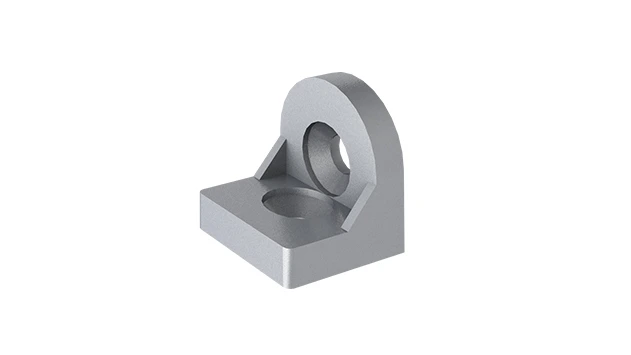
The turning angle aluminum profile connector provides a 90 degree hidden corner connection. 4040 it is means this size is used for 40 series aluminum profile.The corner code comes with set screws that allow for quick, easy connections.
Introduction: The Unsung Heroes of Manufacturing
Walk through any modern manufacturing plant, and your eyes are drawn to the big-ticket items: the whirring conveyor belts, the towering aluminum profile workbenches, the precisely organized flow racks. But behind these larger systems lies a component so small it's often overlooked—yet so critical it can make or break productivity: connectors. These unassuming pieces hold together everything from assembly line workstations to material transport trolleys, and when they fail, the ripple effects are costly: downtime, missed deadlines, and frustrated teams.
In the world of lean system setups, two connector types often compete for attention: the robust Turning Angle Code 4040 and the lightweight plastic connectors. Both promise to keep your equipment stable, but when the going gets tough—when heavy loads stack up, when shifts run around the clock, when the environment throws heat, grease, or constant vibration—only one truly delivers. This isn't just about choosing a part; it's about investing in reliability for the long haul. Let's dive into what makes these connectors different, and why durability matters most in heavy-duty scenarios.
What Are Turning Angle Code 4040 Connectors?
If you've ever assembled an aluminum profile structure—say, a workbench or a custom flow rack—you've likely encountered the Turning Angle Code 4040. These connectors are the workhorses of industrial setups, designed specifically to join 40mm x 40mm aluminum profiles, a staple in lean manufacturing. But what sets them apart?
First, material matters. Turning Angle Code 4040 connectors are typically machined from high-grade aluminum alloy or steel, chosen for their strength-to-weight ratio. Unlike flimsy plastic alternatives, they're engineered with precision: sharp, clean angles that lock into the T-slots of aluminum profiles, creating a tight, wobble-free connection. Many feature reinforced corners and thick walls, built to distribute weight evenly across the profile, rather than concentrating stress in one spot.
Think of them as the "nuts and bolts" of modular systems, but smarter. They often come with pre-threaded holes or built-in fasteners, making assembly quick (no need for glue or adhesives) and disassembly easy for reconfiguration—key for lean systems that need to adapt to changing production needs. And because they're metal, they play well with other heavy-duty components: caster wheels for mobile trolleys, heavy-duty shelving, even roller tracks for material flow.

What Are Plastic Connectors?
Plastic connectors, on the other hand, are the budget-friendly option. Molded from polymers like polypropylene or nylon, they're lightweight, corrosion-resistant, and often colorful—making them popular for lighter setups like retail displays or office shelving. In manufacturing, they're sometimes used for temporary structures or low-load applications, where cost is prioritized over long-term durability.
Their design is simple: snap-on or twist-lock mechanisms that fit into profile slots, requiring no tools for assembly. This makes them appealing for quick setups—ideal if you're testing a new workflow or need a temporary workbench. And since plastic doesn't conduct electricity, they're occasionally used in environments where static control is a concern (though ESD-rated plastic is a niche, pricier variant).
But here's the catch: plastic has limits. It flexes under heavy loads, degrades when exposed to high temperatures or chemicals, and wears down quickly with friction. In a quiet office, that might not matter. In a factory where a flow rack is loaded with 50-pound bins, or a workbench sees daily tool use, those limits become liabilities.

The Heavy-Duty Challenge: Why Durability Isn't Optional
Heavy-duty use isn't just about "heavy things." It's about consistency, stress, and time. A manufacturing environment subjects connectors to:
- Constant load: A flow rack might hold hundreds of pounds of raw materials, 24/7.
- Vibration: Nearby machinery or passing forklifts shake structures, loosening weak connections.
- Environmental stress: Heat from production processes, coolants, lubricants, or even humidity can degrade materials.
- Frequent handling: Workers adjusting shelves, moving trolleys, or reconfiguring workbenches put stress on connectors.
Head-to-Head: Durability Comparison
To see how Turning Angle Code 4040 and plastic connectors stack up in heavy-duty scenarios, let's break down the key metrics that matter most.
| Feature | Turning Angle Code 4040 | Plastic Connectors |
|---|---|---|
| Material | Aluminum alloy or steel (high tensile strength) | Polypropylene/nylon (low tensile strength, prone to creep) |
| Max Static Load (per connector) | Up to 500 lbs (varies by design, but consistently high) | Typically 50–150 lbs (may crack above 200 lbs) |
| Temperature Resistance | -40°F to 300°F (stable under extreme heat/cold) | 50°F to 150°F (softens in heat, becomes brittle in cold) |
| Wear & Tear | Minimal—metal resists friction; T-slot engagement stays tight | High—plastic deforms with friction; snap-fit connections loosen over time |
| Chemical Resistance | Resistant to oils, coolants, and most industrial chemicals | Degrades with solvents, oils, and strong cleaning agents |
| Maintenance Needs | Low—occasional tightening of fasteners (if used) | High—frequent inspections for cracks; replacement every 6–12 months in heavy use |
| Estimated Lifespan (Heavy-Duty Use) | 10+ years | 6–18 months |
| Initial Cost | Higher ($5–$15 per connector) | Lower ($1–$5 per connector) |
| Long-Term Cost (10 Years) | $5–$15 (one-time purchase) | $40–$100 (replaced 6–10 times) |
Real Example:
A mid-sized electronics manufacturer switched from plastic to Turning Angle Code 4040 connectors on their assembly line workbenches. Previously, they replaced plastic connectors every 8 months at a cost of $200 per workbench (10 connectors per bench, 20 benches total). After switching, they haven't replaced a single Turning Angle Code 4040 in 3 years. The upfront cost ($1,500 for 200 metal connectors) paid for itself in under 2 years, and they've saved over $3,000 in replacement parts alone—not counting the time saved on maintenance.
Real-World Applications: When to Choose Which
Does this mean plastic connectors are always a bad choice? Not necessarily. They have their place—in light-duty, low-stress environments. For example:
- Temporary displays: A trade show booth or in-store shelf that's set up for a week.
- Lightweight storage: A small parts bin rack in a climate-controlled office.
- Prototyping: Testing a new workbench design before committing to metal.
- Production workbenches: Where tools, parts, and workers put constant stress on the structure.
- Flow racks and material handling: Supporting heavy bins or boxes in high-traffic areas.
- Mobile trolleys: Especially those with caster wheels, where vibration and movement test connections.
- Industrial lean systems: Any setup that's part of daily production and can't afford downtime.
The Hidden Costs of Cutting Corners
It's tempting to choose plastic connectors to save money upfront. After all, $1 per connector sounds better than $10. But let's do the math for a typical scenario:
Imagine a factory with 50 flow racks, each using 12 connectors. Using plastic connectors at $2 each: initial cost = 50 racks x 12 connectors x $2 = $1,200. If they need replacement every 12 months, over 5 years, that's $6,000.
Now, Turning Angle Code 4040 at $10 each: initial cost = 50 x 12 x $10 = $6,000. If they last 10 years, over 5 years, that's $6,000 (no replacements needed).
But wait—there's more. Each replacement requires labor: a technician spends 2 hours per rack, at $30/hour. For 50 racks, that's 100 hours per year, or $3,000. Over 5 years, that's $15,000 in labor costs for plastic connectors. Suddenly, the "cheap" option costs $6,000 (parts) + $15,000 (labor) = $21,000 over 5 years—vs. $6,000 for metal connectors.
Then there's downtime. If replacing connectors takes a flow rack out of commission for a day, and that rack supports $1,000 of daily production, that's $50,000 in lost output over 5 years. The numbers don't lie: cutting corners on connectors costs far more in the long run.Conclusion: Invest in Durability, Invest in Productivity
Turning Angle Code 4040 and plastic connectors serve different purposes, but in heavy-duty manufacturing environments, the choice is clear. Plastic connectors work for light, temporary setups, but they lack the strength, resilience, and longevity needed to withstand the demands of daily production.
Turning Angle Code 4040 connectors, with their metal construction, precision engineering, and ability to handle constant stress, aren't just parts—they're investments. They reduce maintenance headaches, minimize downtime, and ensure that your lean system, workbench, or flow rack stays reliable for years.
So the next time you're setting up a manufacturing space, remember: the connectors holding it all together might be small, but their impact is huge. Choose durability, and you'll build a system that works as hard as your team does.