- Company Articles
- Products and Technology
- Product knowledge
- Turning Angle Code 4040 vs Riveted Connections: Assembly Speed Comparison

Turning Angle Code 4040 vs Riveted Connections: Assembly Speed Comparison
Related Product
Turning Angle Code 4040
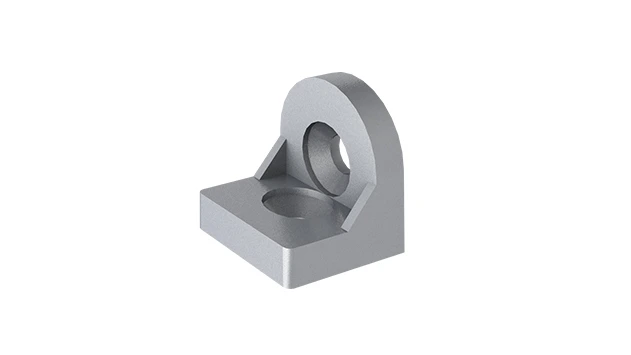
The turning angle aluminum profile connector provides a 90 degree hidden corner connection. 4040 it is means this size is used for 40 series aluminum profile.The corner code comes with set screws that allow for quick, easy connections.
In the fast-paced world of manufacturing, every second counts. Whether you're building a production line workbench, a material rack for inventory, or a custom conveyor system, the speed at which you can assemble components directly impacts your team's productivity, downtime, and ultimately, your bottom line. Two common methods for joining metal components—especially aluminum profiles, a staple in modern lean systems—are the Turning Angle Code 4040 and traditional riveted connections. But how do they stack up when it comes to assembly speed? Let's dive in, break down the details, and help you decide which is right for your next project.
First Things First: What Even Is a Turning Angle Code 4040?
If you've spent time around manufacturing floors or worked with aluminum extrusion profiles , you've probably seen those sleek, modular metal frames that seem to go together in minutes. Chances are, many of those frames use a component called the Turning Angle Code 4040. So, what is it exactly? Think of it as a specialized connector designed to simplify joining aluminum profiles at (you guessed it) a 40x40mm size—the most common width for medium-duty applications like workbenches, shelving, and lightweight machinery guards.
What makes the Turning Angle Code 4040 unique is its design. Unlike generic brackets that require drilling or welding, this little component is pre-engineered to snap (or "turn") into place. Most models feature a built-in cam mechanism or a threaded bolt that tightens when rotated, clamping the aluminum profile securely without needing extra tools beyond a hex key. It's like the "click-and-lock" of the industrial world, but built tough enough to handle the vibrations and weight of daily factory use.
And it's not just a one-trick pony. The Turning Angle Code 4040 works seamlessly with standard aluminum profile accessories —things like end caps, T-slot nuts, and panel mounts—so you can build complex structures without mixing and matching incompatible parts. This compatibility is a big reason it's become a favorite in lean manufacturing setups: when every component plays well together, assembly becomes less about troubleshooting and more about building.
Real-Life Example: The Small Workbench Test
A team at a electronics assembly plant once needed to build 10 small workbenches for a new production line. Using 40x40mm aluminum profiles and Turning Angle Code 4040 connectors, two workers assembled all 10 in under 3 hours. That's 18 minutes per workbench—including time to unpack parts, align the profiles, and double-check stability. Compare that to their previous method (we'll get to rivets soon), which took 45 minutes per bench… and you start to see why this connector is a game-changer.
Riveted Connections: The Old Reliable (But Slow) Standby
Now, let's talk about rivets. If the Turning Angle Code 4040 is the new kid on the block, riveted connections are the seasoned veteran. Rivets have been around for centuries—literally. Blacksmiths used them to build ships in the 19th century, and they're still used today in everything from aircraft wings to metal signage. The concept is simple: a rivet is a cylindrical metal pin with a head on one end. You drill a hole through the two parts you want to join, insert the rivet, then "buckle" the tail end with a hammer or rivet gun, creating a second head that locks the parts together.
Rivets are praised for their strength and permanence. Once installed, they don't loosen over time (no more retightening bolts!), and they're resistant to corrosion if you use stainless steel or aluminum variants. For applications where safety is critical—like structural supports or heavy machinery—rivets have long been the gold standard. But here's the catch: they're slow. Like, really slow compared to modern alternatives.
Let's break down the steps. First, you need to measure and mark where to drill holes—even a 1mm misalignment can ruin the joint. Then, you drill the holes (one per rivet), deburr the edges to avoid sharp metal, insert the rivet, and use a rivet gun to set it. If you're working with thick aluminum profiles, you might even need to pre-drill pilot holes to prevent the metal from warping. And if you make a mistake? Good luck. Rivets are permanent; removing them requires drilling them out, which can damage the profiles and add even more time to the process.

The Showdown: Assembly Speed Step-by-Step
Enough background—let's get to the main event: how long does each method actually take? To make this fair, we'll compare assembling a simple structure: a 120cm x 60cm x 80cm material rack (think 3 shelves, 4 vertical posts, basic stability). We'll time each step, from unboxing parts to final inspection, using a team of two workers with moderate experience (no expert riveters or speed-build champions here—just average folks following the instructions).
| Assembly Step | Turning Angle Code 4040 | Riveted Connections |
|---|---|---|
| 1. Unpacking & Sorting Parts | 5 minutes (parts are pre-bundled with matching codes) | 10 minutes (rivets, drill bits, and profiles need separate sorting) |
| 2. Measuring & Marking Holes | 0 minutes (profiles come pre-tapped; no drilling needed!) | 25 minutes (marking 16 holes per shelf, 4 shelves total = 64 holes) |
| 3. Drilling (if needed) | 0 minutes (Turning Angle Code 4040 uses existing T-slots in aluminum profiles) | 40 minutes (drilling 64 holes with a power drill; includes deburring edges) |
| 4. Aligning & Joining Profiles | 15 minutes (click-and-turn connectors; no clamping needed mid-assembly) | 30 minutes (holding parts steady while drilling/riveting; often requires a second person to stabilize) |
| 5. Fastening (Setting Connectors/Rivets) | 10 minutes (12 Turning Angle Code 4040 connectors total; 30 seconds each with a hex key) | 45 minutes (24 rivets total; 1-2 minutes per rivet, including loading the gun and checking for tightness) |
| 6. Adjustments & Corrections | 5 minutes (loosen a hex key, realign, retighten—no damage to parts) | 20 minutes (if a rivet is misaligned, drill it out and redo; 2-3 mistakes per build are common) |
| Total Assembly Time | 45 minutes | 170 minutes (2 hours 50 minutes) |
That's a massive difference: 45 minutes vs. nearly 3 hours. To put it in perspective, with the Turning Angle Code 4040, that same team could build 3-4 racks in the time it takes to build 1 with rivets. And remember, this is for a simple rack—imagine scaling up to a production line with 20+ workbenches or a conveyor system with dozens of joints. The time savings add up fast, which is why lean system managers swear by modular connectors like the Turning Angle Code 4040.

Why Speed Matters (Beyond Just "Getting It Done Fast")
You might be thinking, "Sure, faster is better, but isn't quality more important?" Here's the thing: the Turning Angle Code 4040 doesn't sacrifice strength for speed. Most models can handle up to 500kg of static weight per joint, which is more than enough for typical factory use (your average material rack holds 100-200kg per shelf). And because the connection is mechanical (friction and clamping force), it's resistant to the vibrations that can loosen bolts over time. So you're not trading durability for speed—you're getting both.
But speed matters for another reason: agility. In today's manufacturing world, production lines change constantly. A customer might order a new product next month, requiring you to reconfigure your workbenches or add a new section to your conveyor. With riveted connections, that means (drilling out rivets, buying new profiles, re-riveting), which can take days. With the Turning Angle Code 4040? Loosen a few hex keys, rearrange the profiles, and you're back up and running in an hour. That's the beauty of lean systems —the ability to adapt quickly without losing momentum.
Case Study: A Small Electronics Plant's Experience
A family-owned electronics manufacturer in Ohio recently switched from rivets to Turning Angle Code 4040 for their assembly line workbenches. Before the switch, building a new workbench took their team 2.5 hours (rivets, drilling, cleanup). After switching, the same team built the same bench in 40 minutes. Over six months, they built 12 new workbenches—saving over 22 hours of labor. That's 22 hours their team could spend on actually assembling products, not building the tools to assemble products. Plus, when they needed to adjust the height of 3 workbenches for a new batch of taller operators, they did it in 20 minutes total (no new parts, no drilling)—something that would have taken a full day with rivets.
When Might Rivets Still Be the Better Choice?
We've sung the praises of the Turning Angle Code 4040, but that doesn't mean rivets are obsolete. There are still scenarios where they make sense. For example, if you're building something that will never need to be moved or modified—like a heavy-duty machine base that will stay bolted to the floor for 10+ years—rivets offer unmatched permanence. They're also better for outdoor applications where corrosion resistance is critical (stainless steel rivets hold up better than aluminum connectors in saltwater or high-moisture environments).
Rivets also shine in low-volume, high-strength projects. If you're building one custom toolbox or a single prototype machine, the time to set up rivets might be worth it for the extra peace of mind. But for most factory floor applications—where you're building multiples of the same structure or need to adapt quickly—rivets start to feel like a relic of the past.
The Verdict: Turning Angle Code 4040 Wins for Speed (and Then Some)
At the end of the day, assembly speed isn't just about finishing faster—it's about empowering your team to be more efficient, adaptable, and creative. The Turning Angle Code 4040, paired with aluminum profiles and compatible accessories, does exactly that. It cuts assembly time by 70% or more, eliminates the frustration of permanent mistakes, and lets you reconfigure structures on the fly—all while maintaining the strength needed for daily use.
Rivets, while reliable, are simply too slow and rigid for the demands of modern manufacturing. They belong in the toolbox for specific, niche projects, not as your go-to for everyday assembly. So, the next time you're planning a project—whether it's a workbench, a material rack, or a custom conveyor—ask yourself: Do I need something that's built to last forever, or something that's built to help me work forever? For most of us, the answer is clear.
In the world of lean systems, where every minute counts, the Turning Angle Code 4040 isn't just a connector—it's a productivity hack. And in manufacturing, hacks that save time and money? Those are the ones that stick around.