- Company Articles
- Products and Technology
- Product knowledge
- Turning Angle Code 4040 vs Welded Joints: Flexibility in Custom Workbench E

Turning Angle Code 4040 vs Welded Joints: Flexibility in Custom Workbench E
Related Product
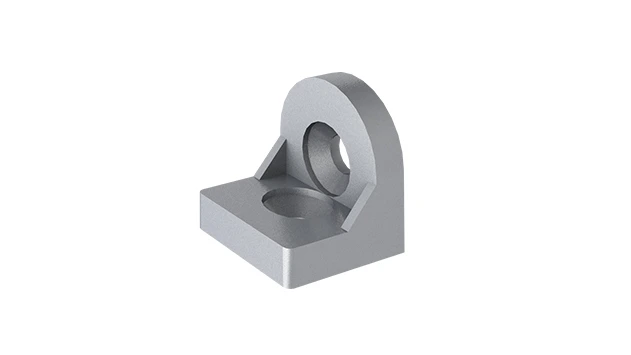
Turning Angle Code 4040
The turning angle aluminum profile connector provides a 90 degree hidden corner connection. 4040 it is means this size is used for 40 series aluminum profile.The corner code comes with set screws that allow for quick, easy connections.
Walk into any manufacturing facility, and you'll quickly notice the unsung heroes of production: workbenches. They're where circuit boards get assembled, tools get organized, and teams collaborate to meet tight deadlines. For businesses leaning into lean principles—streamlining processes, reducing waste, and adapting quickly—these workbenches aren't just pieces of furniture. They're the backbone of efficiency. And when it comes to building a workbench that can keep up with a changing production line, one question looms large: What holds it together?
Today, we're zooming in on a specific star of the lean workbench world: Workbench E (single deck-without caster) . It's a popular choice for its simplicity—no wheels to complicate stability, a flat, sturdy surface, and a frame built to handle daily wear. But what truly defines its utility isn't the deck or the legs; it's the joints that connect its aluminum profile frame. Here, two options dominate: traditional welded joints and the modern Turning Angle Code 4040 , a type of aluminum profile accessory designed for adaptability. In this article, we'll break down why flexibility matters, how these two joint types stack up, and why more manufacturers are swapping their welders for angle codes.
First, Let's Get to Know Workbench E
Before we dive into joints, let's paint a clear picture of Workbench E. Imagine a workbench that's all function, no frills: a single, solid deck (usually made of plywood or metal), supported by a frame of aluminum profile —lightweight, rust-resistant, and strong enough to hold tools, parts, and even heavy machinery. Unlike mobile workbenches with casters, this one stays put, making it ideal for tasks that demand stability, like precision assembly or quality control checks.
What makes Workbench E so appealing to small and mid-sized manufacturers? It's modular by design—at least in theory. The idea is that as your production needs change, your workbench can change with you. Need to add a shelf for extra tools? Extend the surface to fit a new machine? Rearrange the layout to free up floor space? A truly flexible Workbench E should handle all that. But here's the catch: if your frame is held together with welded joints, that "modular" promise quickly falls apart.
Welded Joints: The Old Reliable (But Rigid) Option
For decades, welded joints were the default for building sturdy structures. Picture a metalworker heating two aluminum profile pieces until they melt, fusing them into one solid unit. The result? A joint that's rock-solid, with minimal wobble and high load capacity. If you need a workbench that stays exactly as it is for years—no changes, no adjustments—welded joints deliver.
Let's say you run a small workshop that assembles the same product day in and day out. Your Workbench E holds a drill press, a few toolboxes, and that's it. Welded joints make sense here. They're cost-effective upfront (especially if you have a welder on staff), and they'll likely outlast the workbench itself under static conditions. But what if your product line expands? Or you need to reconfigure your factory floor to meet new safety standards? That's where welded joints hit a wall.
Take Maria, a production manager at a electronics plant in Ohio. A few years back, her team relied on welded Workbench E units for assembling smartphone chargers. When the company landed a contract for larger tablet chargers, the existing workbenches were suddenly too short. "We needed an extra 12 inches of surface space," Maria recalls. "Our welder quoted us $300 per bench to cut and weld on extensions. With 10 benches, that's $3,000—and we'd have to shut down production for two days while he worked. It just wasn't feasible."
That's the problem with welded joints: they're permanent. Once two pieces are fused, there's no easy way to take them apart, adjust their angle, or add new components. Modifications require cutting the old welds (which can weaken the metal), re-welding, and repainting—time-consuming, costly, and risky for the structural integrity of the bench.

Turning Angle Code 4040: The Flexible New Contender
Enter Turning Angle Code 4040 —a small but mighty aluminum profile accessory that's changing how workbenches are built. Think of it as a high-tech bracket, designed to connect two 40mm x 40mm aluminum profile pieces at a 90-degree angle (hence the "4040" in the name). Instead of heat and fusion, it uses bolts and the T-slot grooves in aluminum profiles to lock pieces together. Twist the bolts tight, and you get a joint that's nearly as strong as a weld. Loosen them, and you can reposition, add, or remove parts in minutes.
So, what makes this little angle code so revolutionary? Let's break it down. Aluminum profiles have long, narrow slots running along their length—T-slots—that let you slide in nuts, bolts, and accessories. The Turning Angle Code 4040 has holes that align with these slots; you insert a T-slot nut into the profile, thread a bolt through the angle code, and tighten it. No welding, no special tools (just a hex key or screwdriver), and no permanent commitment.
Jake, a small business owner who builds custom test benches for startups, swears by them. "I used to weld everything," he says. "But when a client would come back and say, 'We need to add a shelf here' or 'Can we lower the height by 6 inches?' I'd cringe. Now, with Turning Angle Code 4040, I build all my Workbench E units with these joints. Last month, a client needed to reconfigure their bench to fit a new testing machine. They called me, I walked them through loosening the bolts over the phone, and they had it done in 20 minutes. No downtime, no extra fees—just happy customers."

Flexibility Face-Off: A Side-by-Side Comparison
To really understand why Turning Angle Code 4040 is winning over manufacturers, let's put it head-to-head with welded joints in the areas that matter most for custom Workbench E. The table below breaks down key factors like adaptability, installation time, and long-term value:
Flexibility
Permanent; no adjustments possible without cutting/welding.
Fully adjustable: reposition, add, or remove components in minutes.
Installation Time
1-2 hours per joint (requires welding, grinding, and painting).
5-10 minutes per joint (just bolts and a hex key).
Load Capacity
High (up to 500 lbs per joint, depending on material thickness).
Nearly identical (450-500 lbs per joint with proper tightening).
Modification Ease
Difficult: requires cutting old welds, re-welding, and re-finishing.
Simple: loosen bolts, adjust, retighten. No special skills needed.
Maintenance
High: welds can crack or corrode; repairs require re-welding.
Low: tighten loose bolts occasionally; replace angle code if worn (10-minute fix).
Cost (Long-Term)
Higher: repeated welding/modifications add up over time.
Lower: one-time purchase; modifications cost just time and new bolts.
The table tells a clear story: when it comes to flexibility, Turning Angle Code 4040 outshines welded joints in nearly every category. But don't just take our word for it—let's look at how this plays out in real-world scenarios.
Real-World Wins: How Turning Angle Code 4040 Solves Common Headaches
Manufacturing isn't just about building products—it's about solving problems. Let's walk through three common challenges facilities face, and how Turning Angle Code 4040 makes them easier to tackle with Workbench E.
Scenario 1: The Growing Startup
A startup making IoT sensors starts with 5 Workbench E units. Six months later, they land a big order and need to double their production line. With welded benches, they'd have to buy new ones (costing $2,000+) or pay to modify existing ones. With Turning Angle Code 4040? They buy extra aluminum profile and angle codes ($300 total), extend their existing benches, and add two more units in a day. No production downtime, no huge expense.
Scenario 2: The Space Crunch
A factory floor manager realizes their Workbench E units are taking up too much space. They need to rearrange from a linear layout to a U-shape to improve workflow. Welded benches are heavy and fixed—moving them would require disassembly (destroying the welds) and rebuilding. With angle codes? Loosen the bolts, take the benches apart, move the pieces, and reassemble in the new layout. Done by lunch.
Scenario 3: The Custom Job
A client orders a one-off product that needs a specialized workbench: taller than standard, with a tilted deck for easy access. With welded joints, the shop would have to design, weld, and test a custom bench (risking errors and rework). With Turning Angle Code 4040? They adjust the height by adding/removing profile sections, tilt the deck using adjustable angle codes, and test it in minutes. If it's not right, tweak it on the spot.
These aren't hypothetical—they're everyday scenarios for manufacturers. And in each case, Turning Angle Code 4040 turns a stressful, costly problem into a quick, affordable fix.
Beyond the Joint: Aluminum Profile Accessories That Boost Flexibility
Turning Angle Code 4040 doesn't work alone. It's part of a ecosystem of aluminum profile accessories that turn Workbench E into a fully customizable system. Let's explore a few that pair perfectly with angle codes to take flexibility to the next level:
T-Slot Nuts and Bolts
These are the unsung heroes of the T-slot system. T-slot nuts slide into the grooves of aluminum profiles, letting you attach accessories anywhere along the length of the profile—no pre-drilled holes needed. Pair them with the Turning Angle Code 4040, and you can add a shelf at 12 inches, then move it to 18 inches later with zero hassle.
Gusset Plates
For workbenches that need extra stability (like those holding heavy machinery), gusset plates are a game-changer. These triangular metal plates bolt onto the inside of angle joints, reinforcing the connection between two profiles. With angle codes, you can add or remove them as needed—no welding required.
End Caps
Small but important: end caps snap into the ends of aluminum profiles, covering sharp edges and preventing dust/debris from getting into T-slots. When you reconfigure your Workbench E, you can pop them off, adjust the profile length, and snap them back on—no fuss.
The beauty of this system is how modular it is. Want a tool rail above your Workbench E? Add a vertical aluminum profile using a Turning Angle Code 4040, then slide in tool hooks using T-slot nuts. Need a bin for small parts? Bolt a bin holder to the side with angle codes. It's like building with adult Legos—endless combinations, zero permanence.
Maintenance and Longevity: Which Joint Lasts Longer?
Critics of Turning Angle Code 4040 sometimes argue, "But welds are stronger! They'll last forever!" It's true that a well-done weld can last decades—if the workbench never moves, never gets modified, and never faces corrosion. But in the real world, workbenches take a beating: vibrations from machinery, spills, temperature changes, and the occasional bump from a forklift.
Welded joints are prone to cracking over time, especially at stress points. When a weld cracks, you can't just "tighten it"—you have to grind it out, re-weld, and repaint. That's not just time-consuming; it weakens the metal around the joint, making future cracks more likely. And if the weld is in a hard-to-reach spot? You might as well replace the entire bench.
Turning Angle Code 4040 joints, on the other hand, handle wear and tear gracefully. Bolts might loosen over time (easily fixed with a quick tighten), but the angle code itself is made of durable aluminum or steel, resistant to rust and corrosion. If a joint does wear out (after years of use), you can replace the angle code in 10 minutes for $10-$15. No grinding, no welding, no downtime.
Mike, a maintenance technician at a automotive parts plant, puts it this way: "We switched to angle codes five years ago. In that time, I've tightened maybe 10 bolts and replaced 2 angle codes. With our old welded benches? I was re-welding joints every few months. The angle codes just require less babysitting—and that means I can focus on bigger problems."
Cost: The Upfront vs. Long-Term Debate
Let's talk numbers. At first glance, welded joints might seem cheaper. If you have a welder on staff, materials for welding (electrodes, gas) cost next to nothing, and labor is already accounted for. A Turning Angle Code 4040 costs $8-$15 per unit, plus bolts and T-slot nuts—maybe $20 per joint total. For a simple Workbench E with 4 joints, that's $80 in angle codes vs. $0 in welding materials (if you have a welder).
But here's the catch: modifications . Let's say you need to add a shelf to your welded Workbench E. A welder charges $50/hour, and the job takes 2 hours (cutting, welding, grinding, painting). That's $100. With angle codes? You buy a shelf bracket ($15), slide it into the T-slot, and bolt it on in 20 minutes. Total cost: $15. Do that twice a year, and you've saved $170 in a year—more than enough to cover the initial cost of the angle codes.
And what if you need to move or resize the bench? Welded benches are often too heavy to move intact, so you'd have to cut them apart (destroying the welds) and rebuild. That's $200+ in labor. With angle codes? Disassemble, move, and reassemble for $0 in labor (just your time).
Long-term, the math is clear: Turning Angle Code 4040 costs more upfront but saves money on modifications, repairs, and replacements. For businesses that plan to grow or adapt (and let's be real—most do), it's an investment that pays off.
Why Turning Angle Code 4040 is the Future of Workbench E
In a world where manufacturing moves faster than ever—where product lines change, customer demands shift, and space is always at a premium—flexibility isn't optional. Workbench E, with its single deck and sturdy aluminum profile frame, is a fantastic foundation. But without the right joints, it's just a static table.
Welded joints have their place: in heavy-duty, never-changing setups where permanence is king. But for the rest of us—small businesses, startups, and manufacturers who need to pivot—Turning Angle Code 4040 is a game-changer. It turns Workbench E from a "one-and-done" purchase into a long-term partner that grows with your business.
So the next time you're designing a workbench, ask yourself: Do I want a bench that's stuck in 2023, or one that can adapt to 2025, 2030, and beyond? If the answer is the latter, reach for the Turning Angle Code 4040. Your future self (and your wallet) will thank you.