- Company Articles
- Products and Technology
- Product knowledge
- Turning Angle Code 4040 Weight Capacity: Calculating for Medical Device Racks

Turning Angle Code 4040 Weight Capacity: Calculating for Medical Device Racks
Related Product
Turning Angle Code 4040
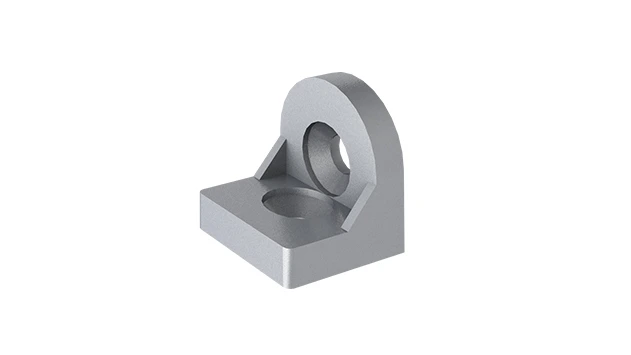
The turning angle aluminum profile connector provides a 90 degree hidden corner connection. 4040 it is means this size is used for 40 series aluminum profile.The corner code comes with set screws that allow for quick, easy connections.
Ensuring Safety and Precision in Healthcare Storage Solutions
Introduction: The Critical Role of Medical Device Racks in Healthcare
In the fast-paced world of healthcare, every detail matters—from the precision of surgical tools to the reliability of storage systems. Medical device racks, often overlooked, are the unsung backbone of efficient hospital operations. They hold everything from delicate diagnostic equipment and sterilized surgical instruments to heavy imaging machines and pharmaceutical supplies. But here's the thing: a rack is only as strong as its weakest component. And when it comes to stability, few components work harder than the Turning Angle Code 4040 .
Imagine a busy emergency department where nurses rush to retrieve a defibrillator, or an operating room where a surgeon needs quick access to sterile trays. If the rack holding these life-saving tools wobbles, bends, or—worst-case—collapses, the consequences could be catastrophic. That's why understanding the weight capacity of components like the Turning Angle Code 4040 isn't just an engineering detail; it's a matter of patient safety, regulatory compliance, and operational efficiency.
Today, we're diving deep into the world of medical device racks, focusing on the critical role of the Turning Angle Code 4040. We'll break down how it works, how to calculate its weight capacity, and why choosing the right components—from aluminum profiles to end caps—can make all the difference in a healthcare setting. Whether you're a facility manager, a procurement specialist, or simply curious about the science behind safe storage, this guide will demystify the numbers and help you build racks that stand the test of time (and weight).
Building Blocks of Modern Medical Racks: Why Aluminum Profiles Lead the Way
Gone are the days when medical racks were clunky, heavy, and one-size-fits-all. Today's healthcare facilities demand storage solutions that are lightweight, corrosion-resistant, easy to clean, and adaptable to changing needs. Enter aluminum profiles—the material of choice for modern medical racks. Unlike steel, which is prone to rust and adds unnecessary weight, aluminum offers a winning combination of strength, durability, and versatility.
Among aluminum profiles, the 4040 series reigns supreme in medical settings. Measuring 40mm by 40mm, these profiles are sturdy enough to support heavy loads yet slim enough to fit in tight spaces, like crowded hospital supply rooms or mobile carts. Their T-slot design allows for easy customization: you can attach shelves, hooks, or dividers without welding, making it simple to reconfigure racks as equipment needs change. And when paired with components like 4040 aluminum profile end caps , they eliminate sharp edges, reducing the risk of scratches on equipment or injuries to staff.
But even the best aluminum profile is only as effective as the components that hold it together. That's where angle codes come in. A Turning Angle Code 4040, for example, is a small but mighty piece that connects two 4040 profiles at a 90-degree angle. Think of it as the "cornerstone" of the rack—literally. Without a strong, reliable angle code, the entire structure could twist, bend, or collapse under load. In medical settings, where racks often hold equipment weighing 50kg or more, this isn't just a maintenance issue; it's a safety hazard.

Turning Angle Code 4040: What It Is and How It Works
Let's start with the basics: What exactly is a Turning Angle Code 4040? At its core, it's a bracket-like component designed to join two 4040 aluminum profiles at a right angle (90 degrees). But don't let its simple appearance fool you—its design is the result of careful engineering to balance strength, weight, and ease of installation.
Most Turning Angle Code 4040 components are made from high-grade aluminum alloy (typically 6063-T5, a material known for its excellent strength-to-weight ratio). This alloy resists corrosion, stands up to repeated cleaning with harsh disinfectants (a must in healthcare settings), and won't add unnecessary bulk to the rack. The angle code itself features pre-drilled holes that align with the T-slots in the 4040 profiles, allowing for secure attachment with bolts or screws. Some models even include built-in reinforcement ribs to distribute stress evenly across the connection point.
But why "turning"? Unlike fixed angle brackets, some Turning Angle Code 4040 designs allow for minor adjustments during installation. This is crucial in medical settings, where racks must often be perfectly level to prevent equipment from sliding or tipping. A slight twist or tilt in the angle code can mean the difference between a rack that's stable and one that's a liability.
To visualize its role: imagine a medical rack with four vertical 4040 profiles (the "legs") and horizontal profiles (the "shelves") connecting them. At each corner where a vertical and horizontal profile meet, you'd install a Turning Angle Code 4040. These codes act like "clamps," locking the profiles together and transferring the weight of the shelf (and its contents) down to the legs. Without them, the horizontal shelves would simply slide off the vertical supports—a disaster waiting to happen.

Calculating Weight Capacity: The Science Behind the Numbers
Now, the million-dollar question: How much weight can a Turning Angle Code 4040 actually support? The answer depends on several factors, including the material thickness of the angle code, the number of codes used per joint, the type of load (static vs. dynamic), and the quality of the installation. Let's break it down step by step.
Key Factors Influencing Weight Capacity
- Material Thickness: Thicker angle codes (e.g., 3mm vs. 2mm) can handle more weight. Most medical-grade Turning Angle Code 4040 components are 2.5–3mm thick to balance strength and weight.
- Number of Connection Points: A single angle code might support 50kg, but using two angle codes (one on each side of the joint) could double that capacity.
- Static vs. Dynamic Load: Static load is the weight of stationary equipment (e.g., a shelf holding a 30kg ultrasound machine). Dynamic load is the weight when the equipment is moving (e.g., sliding a 20kg instrument tray onto the shelf). Dynamic loads exert more stress, so capacity is lower here.
- Safety Factor: Engineers always include a "safety factor" (typically 2–3x the expected load) to account for wear, unexpected impacts, or manufacturing variations. For example, if a rack needs to hold 100kg, the angle code should be rated for at least 200kg.
To put this into practice, let's look at real-world scenarios. The table below shows estimated weight capacities for a standard 3mm-thick Turning Angle Code 4040 under different conditions. These numbers are based on industry standards and data from leading aluminum profile suppliers , but always consult your supplier for exact ratings for your specific component.
| Scenario | Number of Turning Angle Code 4040 per Joint | Static Load Capacity (kg) | Dynamic Load Capacity (kg) | Safety Factor (Recommended) |
|---|---|---|---|---|
| Light-Duty Shelf (e.g., meds, small tools) | 1 | 50–70 kg | 30–40 kg | 2x (100–140 kg) |
| Medium-Duty Shelf (e.g., sterilized trays, monitors) | 2 (opposite corners) | 120–150 kg | 80–100 kg | 2.5x (300–375 kg) |
| Heavy-Duty Shelf (e.g., imaging machines, large equipment) | 4 (full perimeter) | 250–300 kg | 150–200 kg | 3x (750–900 kg) |
It's important to note that these are per-joint capacities. For a full rack, you'd multiply by the number of joints. For example, a 4-shelf rack with 4 vertical legs has 16 joints (4 legs x 4 shelves). If each joint uses 2 angle codes (medium-duty), the total capacity would be 16 joints x 120kg = 1,920kg—more than enough for most medical settings. But remember: the weakest link in the chain determines the total capacity. If the aluminum profile itself can only support 200kg per shelf, the angle codes' higher rating won't matter.
Real-World Testing: Why Certification Matters
Numbers on paper are one thing, but real-world performance is another. That's why reputable aluminum profile suppliers subject their Turning Angle Code 4040 components to rigorous testing. These tests simulate years of use, extreme loads, and harsh cleaning conditions to ensure the components meet healthcare standards like ISO 13485 (medical device quality management) and FDA regulations.
One common test is the "static load test," where a sample angle code is mounted to 4040 profiles and loaded with increasing weight until it deforms. Engineers record the "yield point"—the load at which the angle code bends permanently. The rated capacity is then set well below this point to ensure safety. For example, if a code yields at 300kg, its rated static capacity might be 100kg (a 3x safety factor).
Another critical test is "corrosion resistance," especially in healthcare settings where racks are regularly cleaned with bleach or alcohol-based disinfectants. Aluminum naturally resists corrosion, but some suppliers add anodized coatings to enhance this property. A 1000-hour salt spray test (per ASTM B117) ensures the angle code won't rust or degrade, even in humid environments like operating rooms.
When choosing a supplier, always ask for test reports and certifications. A trustworthy aluminum profile supplier will happily provide data on load capacity, corrosion resistance, and material composition. Avoid generic, uncertified components—saving a few dollars now could cost lives later.
Maintenance Tips: Keeping Your Racks (and Angle Codes) in Top Shape
Even the strongest Turning Angle Code 4040 needs a little TLC to perform at its best. Here are simple maintenance steps to ensure your medical racks stay stable and safe for years:
- Regular Inspections: Check angle codes monthly for signs of looseness, bending, or corrosion. Tighten bolts if they're wobbly—vibration from foot traffic or equipment can loosen connections over time.
- Clean Gently: Use a soft cloth and mild detergent to clean angle codes. Avoid abrasive scrubbers or harsh chemicals (like acetone) that can damage the anodized finish.
- replace Worn Components: If an angle code is bent, cracked, or shows signs of corrosion, replace it immediately. Don't try to "fix" it with tape or makeshift solutions—this compromises safety.
- Reconfigure Carefully: When adding or removing shelves, always use the same number of angle codes as originally installed. Adding a heavy shelf without extra support is a recipe for disaster.
Remember: Preventive maintenance is cheaper than replacing a collapsed rack (and far less risky). Assign a staff member to conduct monthly checks—this simple habit can extend the life of your racks and keep patients and staff safe.
Conclusion: Precision, Safety, and the Power of the Right Components
At the end of the day, the Turning Angle Code 4040 is more than just a metal bracket—it's a guardian of safety in healthcare. It ensures that the tools and equipment medical professionals rely on are stored securely, accessible when needed, and protected from damage. By understanding its weight capacity, choosing high-quality components from a trusted aluminum profile supplier , and maintaining it properly, you're not just building a rack—you're building a foundation for better patient care.
So the next time you walk into a hospital supply room or operating suite, take a moment to look at the racks. Behind every stable shelf, every secure instrument tray, and every accessible medical device is a small but mighty component working tirelessly: the Turning Angle Code 4040. And in healthcare, where precision and reliability are non-negotiable, that's a component worth investing in.