- Company Articles
- Products and Technology
- Product knowledge
- Turnover Cart Design: Integrating Flat Swivel Castor Wheel with Brake for Safe Transport

Turnover Cart Design: Integrating Flat Swivel Castor Wheel with Brake for Safe Transport
Related Product
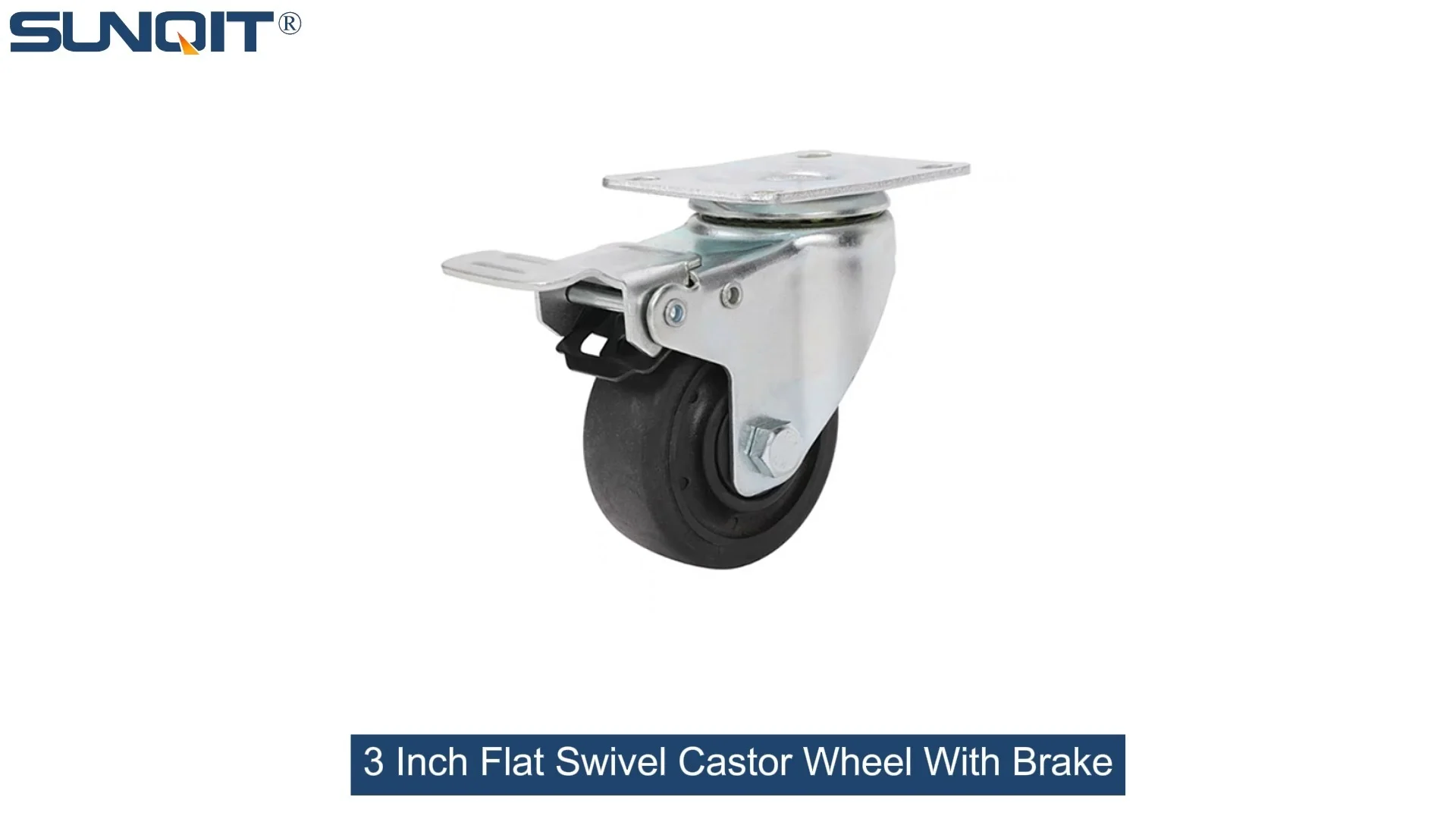
Flat Swivel Castor Wheel With Brake
Chair Casters Ball Bearing Wheels Rubber Base with brake design. Resistant to abrasion, impact and corrosion. Heavy payload can hold 70Kgs per pcs,which can make it works at a stable and smooth status.
Walk into any bustling manufacturing plant, warehouse, or distribution center, and you'll notice a quiet workhorse keeping operations moving: the turnover cart. These unassuming yet essential tools ferry everything from raw materials to finished products, bridging gaps between workstations, storage areas, and shipping docks. But what makes a turnover cart truly effective? It's not just about a sturdy frame or a spacious platform—it's about the details, especially the "feet" that keep it moving smoothly and safely. Today, we're diving into one of the most critical design elements of modern turnover carts: the integration of flat swivel castor wheels with brakes. We'll explore why this combination matters, how it enhances safety and efficiency, and why materials like aluminum profile are game-changers in creating carts that stand up to the demands of busy workplaces.
The Unsung Heroes: What Are Turnover Carts, Anyway?
Before we get into the nitty-gritty of castor wheels, let's take a step back. Turnover carts—often part of a broader "turnover trolley and rack" system—are designed for one primary purpose: to make moving goods easier. Unlike fixed shelving or heavy machinery, these carts are mobile, flexible, and adaptable to almost any environment. You'll find them in automotive factories transporting engine parts, in e-commerce warehouses moving packages to packing stations, and even in hospitals delivering supplies to patient rooms.
What sets a well-designed turnover cart apart? It needs to be lightweight enough for a single person to maneuver, strong enough to carry heavy loads without wobbling, and safe enough to prevent accidents in crowded spaces. And that's where the wheels come in. Think about it: a cart with poor wheels is more than just a hassle—it's a bottleneck. It might get stuck on uneven floors, tip over when turning, or roll away unexpectedly when you stop to load it. That's why choosing the right castors isn't an afterthought; it's the foundation of good cart design.
Caster Wheels: The "Feet" That Define Mobility
At the heart of any turnover cart's mobility is the caster wheel. These small but mighty components come in all shapes and sizes, each suited to specific tasks. Fixed casters, for example, only roll forward and backward—great for straight-line transport but useless if you need to navigate tight corners. Swivel casters, on the other hand, can rotate 360 degrees, making them ideal for maneuvering in cramped spaces like narrow warehouse aisles.
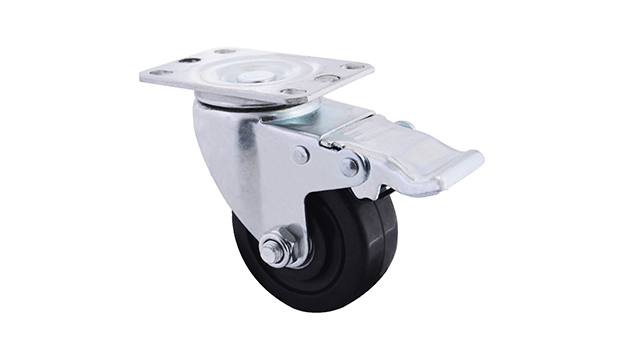
But not all swivel casters are created equal. Enter the flat swivel castor wheel —a design that prioritizes stability without sacrificing maneuverability. Unlike traditional rounded casters, flat swivel casters have a low-profile, flat mounting plate that distributes weight evenly across the wheel. This not only reduces stress on the cart's frame but also lowers the cart's center of gravity, making it less likely to tip over when loaded with unevenly distributed goods. And when you add a brake to that mix? You've got a caster that's not just mobile, but controlled .
Why "Flat Swivel Castor Wheel with Brake" Is a Game-Changer
Let's break down the three key parts of this star component: "flat," "swivel," and "with brake." Each plays a unique role in making the cart safer and more efficient.
1. Flat Design: Stability First
Imagine pushing a loaded cart over a slightly uneven floor. If the casters have a rounded or elevated mounting plate, the cart might rock back and forth, shifting the load and increasing the risk of items falling off. Flat swivel casters solve this by sitting closer to the ground, with a wide, stable base that keeps the cart steady even on rough surfaces. This is especially important for carts carrying fragile items or heavy machinery parts—you don't want a wobbly cart to ruin a day's work.
2. Swivel Function: Maneuverability in Tight Spaces
Warehouses and production lines are rarely wide-open spaces. More often, they're filled with workstations, shelves, and other equipment, leaving only narrow paths for carts. Swivel casters let the cart pivot on a dime, making it easy to navigate around corners, squeeze through doorways, or adjust position when loading. This flexibility cuts down on time wasted maneuvering—instead of backtracking to get around a pallet, you can swivel the cart and keep moving forward.
3. Brake Mechanism: Safety When You Need It Most
Here's the kicker: even the most maneuverable cart is dangerous if it can't stay still. Picture this: you're loading a cart with heavy boxes, and halfway through, the cart starts rolling backward because the floor has a slight incline. Not only could you drop the boxes, but you might also trip over the moving cart. That's where the brake comes in. A good flat swivel castor wheel with brake typically has a foot-operated lever that locks both the wheel and the swivel mechanism. Step on the brake, and the cart stays put—no more chasing runaway carts or struggling to keep it steady during loading and unloading.
Some brakes even have a "soft lock" feature, which lets you lock the wheel but keep the swivel free, or a "total lock" that freezes both wheel and swivel. This versatility means you can customize the cart's movement based on the task at hand—perfect for when you need to position the cart precisely next to a workstation.

Designing for Success: Key Factors in Integrating Flat Swivel Castor Wheels with Brake
Integrating these castors into a turnover cart isn't as simple as screwing them onto the frame. To get the best performance, designers need to consider several factors—from load capacity to floor type. Let's walk through the essentials.
Matching Load Capacity: Don't Overwork the Casters
Every caster has a maximum load rating, and it's critical to choose one that can handle not just the cart's own weight but also the heaviest load it will carry. A good rule of thumb? If the cart will typically carry 500 lbs, opt for casters rated for at least 600 lbs to leave a safety margin. Overloading casters can cause the wheels to wear out quickly, the brakes to fail, or even the mounting plate to bend—all recipes for disaster.
Mounting Matters: Plate vs. Stem
Flat swivel casters usually come with either a plate mount or a stem mount. Plate mounts are bolted directly to the cart's frame, offering more stability for heavy loads. Stem mounts, which have a metal stem that fits into a socket on the frame, are better for lightweight carts or when you need to save space. For most turnover carts, plate mounts are the way to go—they're stronger and less likely to loosen over time.
Floor Compatibility: Protecting Surfaces and Casters
The type of floor in your workspace matters too. If you're rolling over concrete, a hard rubber or polyurethane wheel will absorb shocks and reduce noise. For hardwood or tile floors, softer rubber wheels prevent scratches. Some casters even have tread patterns designed to grip slippery surfaces, like wet warehouse floors, reducing the risk of skidding.
Number of Casters: Balance Is Key
Most turnover carts use four casters: two fixed and two swivel with brakes. This setup gives you the best of both worlds: the fixed casters keep the cart moving straight when needed, while the swivel casters with brakes handle turns and stability. For larger carts or uneven loads, you might see six casters—four swivel and two fixed—to distribute weight more evenly.
| Caster Type | Best For | Maneuverability | Safety Feature |
|---|---|---|---|
| Fixed Caster Wheel | Straight-line transport, heavy loads | Low (only forward/backward) | None (no brake) |
| Swivel Caster Wheel (no brake) | Tight spaces, frequent turns | High (360° rotation) | None (risk of rolling) |
| Flat Swivel Castor Wheel with Brake | General use, uneven loads, safety-critical areas | High (360° rotation) | Brake locks wheel + swivel |

Aluminum Profile: The Secret to Lightweight, Durable Carts
Now that we've covered castors, let's talk about the cart's frame. A strong, lightweight frame is just as important as good wheels—and that's where aluminum profile shines. Aluminum profile is exactly what it sounds like: extruded aluminum bars with built-in slots (called T-slots) that make it easy to attach accessories like shelves, handles, or casters. It's become a favorite in industrial design for a few big reasons.
Lightweight Yet Strong: Easy to Push, Hard to Break
Aluminum is about a third the weight of steel, which means even a large turnover cart made with aluminum profile is light enough for one person to move. But don't let the weight fool you—aluminum profile is surprisingly strong. It can handle loads of up to 1,000 lbs or more, depending on the profile size and thickness. This combination of light weight and strength is perfect for turnover carts: you get the durability to carry heavy goods without the hassle of pushing a steel behemoth.
Corrosion-Resistant: Stands Up to Harsh Environments
Warehouses and factories can be tough on equipment. There might be moisture from cleaning, chemicals from manufacturing processes, or even outdoor exposure during loading/unloading. Aluminum naturally resists corrosion, so it won't rust or degrade over time like steel. That means your turnover cart will look and perform like new for years, even in less-than-ideal conditions.
Easy to Customize: Build the Cart You Need
One of the best things about aluminum profile is its flexibility. Thanks to those T-slots, you can add or remove shelves, adjust the height of the cart, or attach accessories like tool holders in minutes—no welding or drilling required. Need a cart with a lower shelf for bulky items? Just slide in a new crossbar. Want to add a handle for better grip? Bolt it onto the T-slot. This customization makes aluminum profile carts ideal for businesses that need to adapt quickly to changing workflows.
When you pair aluminum profile with flat swivel castor wheels with brake, you get a cart that's not just functional but future-proof. It's lightweight enough to maneuver, strong enough to carry heavy loads, and adaptable enough to grow with your business.
Fitting into the Lean System: How Turnover Carts Boost Efficiency
You might have heard of "lean system" principles—strategies focused on reducing waste, improving flow, and maximizing value. Well-designed turnover carts are a cornerstone of lean systems, and the integration of flat swivel castor wheels with brake and aluminum profile plays a big role in that.
Reducing Waste: Time, Energy, and Space
Lean systems hate waste, and a poorly designed cart wastes a lot of things. A heavy steel cart wastes energy (you have to push harder). A cart with stuck casters wastes time (you're constantly stopping to free it). A cart that can't be customized wastes space (it takes up room but doesn't fit your current needs). Aluminum profile carts with smooth-rolling, braked castors eliminate these wastes: they're easy to push, maneuver quickly, and adapt to whatever you need to carry. That means your team spends less time moving materials and more time on value-adding tasks.
Improving Flow: Keeping Materials Moving
In a lean system, materials should flow smoothly from one workstation to the next, like water in a stream. Turnover carts with good castors keep that flow going. For example, in an assembly line, a cart with flat swivel castors can glide from station to station, delivering parts exactly when they're needed. The brake ensures the cart stays put at each station, so workers don't have to hold it steady while loading or unloading. This "just-in-time" delivery reduces inventory buildup and keeps the line moving without interruptions.
Enhancing Safety: A Core Lean Value
Safety is non-negotiable in lean systems—after all, an accident can stop production in its tracks. Flat swivel castor wheels with brake make carts safer by preventing rollaways, reducing tipping, and improving control. Aluminum profile frames add another layer of safety: they're non-conductive (important in electronics manufacturing) and won't splinter or rust, so there's less risk of cuts or contamination.
Case in point: A small electronics manufacturer recently switched from steel carts to aluminum profile turnover carts with flat swivel castors and brakes. They reported a 30% reduction in time spent moving materials, a 50% drop in cart-related accidents, and happier workers who no longer dreaded pushing heavy, clunky carts around the shop floor. That's the power of good design in action.
Keeping It Rolling: Maintenance Tips for Long-Lasting Carts
Even the best turnover cart won't perform well if it's neglected. To keep your aluminum profile cart with flat swivel castor wheels with brake in top shape, a little maintenance goes a long way.
Lubricate the Casters Regularly
Swivel casters have bearings that need lubrication to stay smooth. Every few months, apply a few drops of machine oil to the swivel joint and wheel axle. This prevents squeaking, reduces wear, and ensures the brake operates smoothly.
Check the Brakes
Test the brakes weekly to make sure they lock securely. If a brake feels loose or doesn't hold, tighten the bolts or replace the brake pad. A faulty brake is a safety hazard—don't wait to fix it.
Inspect the Frame and Casters for Damage
Look for bent aluminum profile, loose bolts, or cracked caster wheels. Small issues can turn into big problems if ignored. For example, a cracked wheel might fail under load, causing the cart to tip. replace damaged parts right away to keep the cart safe and functional.
The Bottom Line: Design Matters for Safety and Efficiency
Turnover carts might seem simple, but their design—especially the integration of flat swivel castor wheels with brake and aluminum profile—has a huge impact on how well your workplace runs. These carts are more than just tools; they're partners in productivity, helping teams move materials faster, safer, and with less effort.
So the next time you see a turnover cart gliding through a warehouse, take a closer look. Chances are, it's equipped with flat swivel castors that make turning a breeze, a brake that keeps it steady, and an aluminum profile frame that's light yet tough. And behind that cart? A team that can focus on what really matters—doing great work—instead of struggling with clunky, unsafe equipment.
In the end, it's the little details—the wheels, the frame, the brake—that add up to big results. And in a world where every second and every safety measure counts, those details make all the difference.