- Company Articles
- Products and Technology
- Product knowledge
- Turnover Carts Built with 2040 EU Standard Aluminum Profile: Load Capacity Guide

Turnover Carts Built with 2040 EU Standard Aluminum Profile: Load Capacity Guide
Related Product
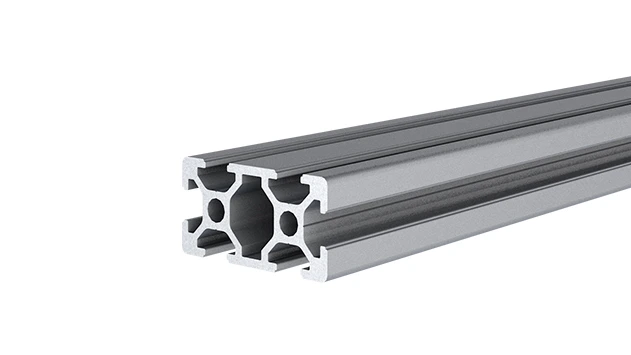
2040 EU Standard Aluminum Profile
2040 is a 2.00 x 4.00CM fractional 20 series square extrusion T-slot profile with four open T-slots, two side with 2.00cm face, the other side with 4.00cm face. The profile has align-a-grooves to assist in aligning connecting profiles.
Imagine walking onto a busy factory floor: workers bustling between stations, materials moving from one assembly line to the next, and everywhere you look, carts gliding smoothly under the weight of components, tools, and finished products. These aren't just any carts—they're the unsung heroes of efficient material handling, the backbone that keeps production flowing without a hitch. But what happens when one of these carts wobbles under a heavy load? Or worse, fails entirely? Downtime, delays, and even safety risks follow. That's why choosing the right turnover cart matters—and when it comes to durability, flexibility, and load capacity, few options compare to those built with 2040 EU standard aluminum profile .
In this guide, we're diving deep into the world of turnover carts constructed with 2040 EU standard aluminum profile. We'll explore what makes this material a game-changer, break down the factors that determine how much weight your cart can safely carry, and share practical insights to help you design, select, or maintain a cart that meets your team's needs. Whether you're in automotive manufacturing, electronics assembly, or warehousing, this isn't just about "picking a cart"—it's about investing in a tool that empowers your team to work smarter, safer, and more efficiently.
Meet the Star: 2040 EU Standard Aluminum Profile
Before we talk about load capacity, let's get to know the material that makes these carts stand out: 2040 EU standard aluminum profile . If you're new to aluminum profiles, think of them as modular building blocks—long, hollow tubes with a T-slot design that lets you attach accessories (like brackets, shelves, or casters) without welding or drilling. The "2040" in the name refers to its dimensions: 20mm in width and 40mm in height. Simple, right? But don't let the numbers fool you—this profile packs a punch.
What sets the EU standard apart? It's all about consistency and quality. EU-standard profiles are manufactured to strict tolerances, ensuring uniform wall thickness, precise T-slot dimensions, and reliable strength. Unlike generic aluminum tubes, 2040 EU standard profiles are made from high-grade aluminum alloys (often 6063-T5, known for its excellent strength-to-weight ratio and corrosion resistance). This means they're lightweight enough to move easily but tough enough to handle daily wear and tear in industrial environments.
Another standout feature? Versatility. Thanks to the T-slot design, you can customize your turnover cart with aluminum profile accessories like end caps, 90° connectors, or shelf brackets in minutes. Need to add a second shelf? Swap out a caster wheel? Adjust the height? It's as simple as sliding in a bolt and tightening a knob. This modularity makes 2040 aluminum profile carts ideal for dynamic workplaces where needs change—no need to buy a whole new cart when you can just reconfigure the one you have.
Load Capacity 101: More Than Just "How Much Can It Hold?"
When someone asks, "What's the load capacity of this cart?" they're usually thinking about a single number: "It can hold 500kg." But in reality, load capacity is a bit more nuanced. To keep your team safe and your operations running smoothly, you need to understand two key terms: static load capacity and dynamic load capacity .
Static load capacity is the maximum weight the cart can support when it's not moving —think of a cart parked in a corner holding a stack of boxes. Dynamic load capacity , on the other hand, is the weight it can safely carry while in motion—whether being pushed across the factory floor, rolled over uneven surfaces, or stopped suddenly. Dynamic capacity is almost always lower than static capacity because movement adds stress (like vibrations or sudden shifts in weight) that the cart must absorb.
But here's the golden rule: never max out the load capacity . Even if a cart is rated for 500kg dynamically, it's wise to leave a safety margin—usually 20-30%. Why? Because real-world conditions are messy. Maybe the floor has a small bump, or a worker pushes the cart faster than usual, or the load isn't evenly distributed. That safety margin ensures you're never flirting with failure. Think of it like a seatbelt: you hope you'll never need it, but you're glad it's there.

Key Factors That Shape Your Cart's Load Capacity
Now, let's get into the nitty-gritty: what determines how much weight your 2040 aluminum profile turnover cart can handle? It's a mix of design choices, material quality, and even the accessories you pick. Let's break down the biggest players.
1. 2040 Aluminum Profile Thickness: The Foundation of Strength
Not all 2040 profiles are created equal—wall thickness matters. Most 2040 EU standard profiles come in thicknesses ranging from 1.2mm to 2.0mm. At first glance, that 0.8mm difference might seem small, but it has a big impact on strength.
A 1.2mm profile is lightweight and great for lighter loads (think 100-200kg dynamic capacity). It's perfect for carts carrying small components, tools, or paperwork in offices or light assembly lines. But if you're moving heavy parts—like automotive components or metal fixtures—you'll want 1.5mm or 2.0mm thickness. A 2.0mm profile can easily handle 300-400kg dynamically, thanks to its stiffer walls that resist bending under pressure.
Pro tip: Thicker isn't always better if you don't need it. A 2.0mm profile is heavier, which can make the cart harder to push (even with good casters). Balance is key—match the thickness to your typical load, not just the maximum you might carry once a month.
2. Aluminum Profile Accessories: The "Glue" That Holds It All Together
You could have the thickest, strongest 2040 profile on the market, but if your aluminum profile accessories (like connectors or brackets) are flimsy, your cart's load capacity will plummet. Think of it this way: a chain is only as strong as its weakest link—and in a turnover cart, the links are the joints.
Let's take connectors, for example. A cheap plastic connector might work for a home DIY project, but in an industrial setting, it'll crack or warp under heavy loads. Instead, opt for metal connectors (like aluminum or steel) with secure fastening—think T-bolts that lock into the T-slot, or 90° angle brackets with multiple mounting points. These distribute weight evenly across the profile, reducing stress on any single point.
End caps are another unsung accessory. They might seem like just a "finishing touch," but they reinforce the ends of the profile, preventing it from crushing or deforming when weight is applied. Without end caps, the open ends of the profile can act like a weak spot, especially if the cart is overloaded or bumped.
3. Caster Wheels: The Unsung Heroes of Mobility (and Load Bearing)
If the 2040 profile is the cart's skeleton, the caster wheel is its feet—and feet need to be strong to support the body. Caster wheels are often the most overlooked factor in load capacity, but they're critical: each wheel bears a portion of the cart's total weight, and if one fails, the whole cart becomes unstable.
When shopping for casters, start with the individual wheel load rating . Casters are rated for how much weight each can support (e.g., 100kg per wheel). For a standard 4-wheel cart, the total caster capacity should be at least 1.5x the cart's dynamic load capacity (to account for uneven weight distribution). So if your cart needs to carry 300kg dynamically, each caster should be rated for at least 112.5kg (300kg x 1.5 ÷ 4 wheels). Better yet, round up—125kg per wheel gives extra peace of mind.
Wheel material matters too. Rubber wheels are great for smooth floors (like warehouse concrete) and absorb shocks, but they can wear down quickly on rough surfaces. Polyurethane wheels are more durable and work well on both smooth and slightly uneven floors, making them a popular choice for industrial carts. And if you need to move heavy loads quietly, consider nylon wheels—they're tough and roll smoothly, though they can be noisy on hard floors.
Swivel vs. rigid casters? Most turnover carts use two swivel casters (with brakes, ideally) and two rigid casters for stability. Swivel casters let you maneuver tight corners, while rigid casters keep the cart moving straight. Just remember: swivel casters put more stress on the mounting plate, so ensure they're securely attached to the 2040 profile with heavy-duty brackets.
4. Cart Design: Balance and Weight Distribution
Even with the best materials, a poorly designed cart will underperform. Here's where geometry comes into play. The key principles? Low center of gravity and even weight distribution .
A cart with a high center of gravity (tall shelves, top-heavy loads) is more likely to tip when turned or stopped suddenly. To avoid this, keep heavier items on lower shelves and limit the cart's height. A good rule of thumb: the total height of the cart (including load) shouldn't exceed 1.5x its width. For example, a cart 600mm wide should be no taller than 900mm (including whatever's on top).
Even weight distribution is just as important. If all the weight is concentrated on one side, the casters on that side will bear more stress, and the profile frame may bend. Use dividers or bins to keep loads centered, and avoid overloading one shelf. For example, a two-shelf cart with a 300kg capacity should have no more than 150kg per shelf (not 250kg on the bottom and 50kg on top).
Load Capacity Chart: Find Your Perfect Cart Configuration
To make it easier to visualize, here's a breakdown of common 2040 aluminum profile turnover cart configurations and their estimated dynamic load capacities. Remember, these are general guidelines—always check with your supplier for exact ratings based on their specific materials and accessories.
| Cart Configuration | 2040 Profile Thickness | Caster Type & Rating | Key Accessories | Estimated Dynamic Load Capacity | Best For |
|---|---|---|---|---|---|
| Basic Light-Duty Cart (1 shelf, 4 wheels) | 1.2mm | Swivel/rigid, 75kg per wheel | Plastic end caps, 90° aluminum connectors | 100-150kg | Small parts, tools, office supplies |
| Standard Medium-Duty Cart (2 shelves, 4 wheels) | 1.5mm | Swivel (with brake)/rigid, 100kg per wheel | Metal end caps, reinforced shelf brackets | 200-250kg | Electronics components, automotive small parts |
| Heavy-Duty Cart (2 shelves, 4 wheels + center brace) | 2.0mm | Swivel (with brake)/rigid, 150kg per wheel | Steel angle brackets, double-sided connectors | 300-400kg | Metal fixtures, engine parts, heavy tools |
| Extra-Wide Cart (3 shelves, 6 wheels) | 2.0mm | Swivel (2 with brake)/rigid (4), 125kg per wheel | Cross-bracing, reinforced corners | 400-500kg | Large panels, pallets, bulk materials |
Real-World Success: How 2040 Aluminum Profile Carts Transformed a Manufacturing Floor
Case Study: Precision Electronics Inc.
Precision Electronics Inc. (PEI), a mid-sized manufacturer of circuit boards, was struggling with material handling bottlenecks. Their old wooden carts were heavy, prone to splintering, and couldn't be customized—so workers were stuck with fixed shelves that didn't fit their varying component sizes. Worse, the carts often failed under loads of 150kg, leading to delays and occasional scrap (when components fell during spills).
After consulting with a turnover trolley and rack supplier, PEI switched to 2040 EU standard aluminum profile carts. They opted for 1.5mm profiles with two shelves, polyurethane caster wheels (100kg per wheel), and adjustable dividers (using aluminum profile accessories like T-slot brackets). The results? Within three months:
- Material handling time decreased by 30%—workers could now adjust shelves to fit components, reducing trips back and forth.
- Cart failures dropped to zero—even with 200kg loads (well within the 250kg dynamic capacity).
- Safety incidents (like strained backs from lifting heavy wooden carts) decreased by 40%—the lightweight aluminum made pushing easier.
"We didn't just buy carts—we bought a system that grows with us," said Maria Gonzalez, PEI's production manager. "Last month, we added a third shelf to two carts for a new product line, and it took 15 minutes per cart. With the old wooden ones, we would've had to build new carts from scratch."
Maintenance: Keeping Your Cart Rolling Strong for Years
A well-built 2040 aluminum profile cart can last 5-10 years with basic maintenance. Here's how to keep it in top shape:
1. Inspect Regularly
Check joints and connectors monthly for looseness. Tighten any bolts or knobs that have come undone—loose joints reduce stability and can lead to bending. Also, inspect the 2040 profile for dents or cracks, especially around the T-slots (where stress is highest). Small dents are usually harmless, but cracks mean it's time to replace that section.
2. Lubricate Caster Wheels
Caster wheels and swivel mechanisms need lubrication to roll smoothly. Use a dry lubricant (like silicone spray) every 3-6 months to prevent rust and reduce friction. Avoid oil-based lubricants—they attract dust and grime, which can gum up the wheels.
3. Clean the Profile
Aluminum is corrosion-resistant, but it's not immune to dirt and chemicals. Wipe down the profile with a damp cloth (mild soap if needed) to remove grease, dust, or spills. Pay extra attention to the T-slots—debris here can make it hard to attach accessories later.
4. replace Worn Parts Promptly
Caster wheels wear out over time—if you notice flat spots or uneven rolling, replace them. The same goes for accessories like brackets or end caps that crack or bend. Most suppliers carry replacement parts, so you won't need to buy a whole new cart.
Choosing the Right Supplier: What to Look For
Not all 2040 aluminum profile suppliers are created equal. To ensure you're getting a cart that meets your load capacity needs, ask these questions:
- Do you use genuine EU standard 2040 profiles? Ask for certification or material test reports to verify the profile's alloy and thickness.
- Can you customize the cart design? A good supplier will help you adjust shelf height, caster type, or load capacity based on your needs—not just sell you a "one-size-fits-all" model.
- What's your warranty on profiles and accessories? Look for at least a 1-year warranty on materials and workmanship.
- Do you provide load capacity testing data? Reputable suppliers will test their carts to ensure they meet rated capacities, not just guess based on materials.
Conclusion: Invest in Carts That Grow With Your Business
At the end of the day, a turnover cart built with 2040 EU standard aluminum profile is more than a tool—it's an investment in your team's efficiency, safety, and adaptability. By understanding how profile thickness, accessories, caster wheels, and design impact load capacity, you can choose a cart that not only meets today's needs but can be reconfigured for tomorrow's challenges.
Whether you're moving small components or heavy machinery, remember: the best cart is one that works with your team, not against them. And with 2040 aluminum profile's strength, flexibility, and durability, you're not just buying a cart—you're building a foundation for smoother, smarter production.
Ready to upgrade your material handling? Start with the right cart, and watch your team's productivity roll to new heights.