- Company Articles
- Products and Technology
- Product knowledge
- Two Way Aluminum Pipe Joint: Definition, Function, and Key Features Explained

Two Way Aluminum Pipe Joint: Definition, Function, and Key Features Explained
Related Product
Two Way Aluminum Pipe Joint
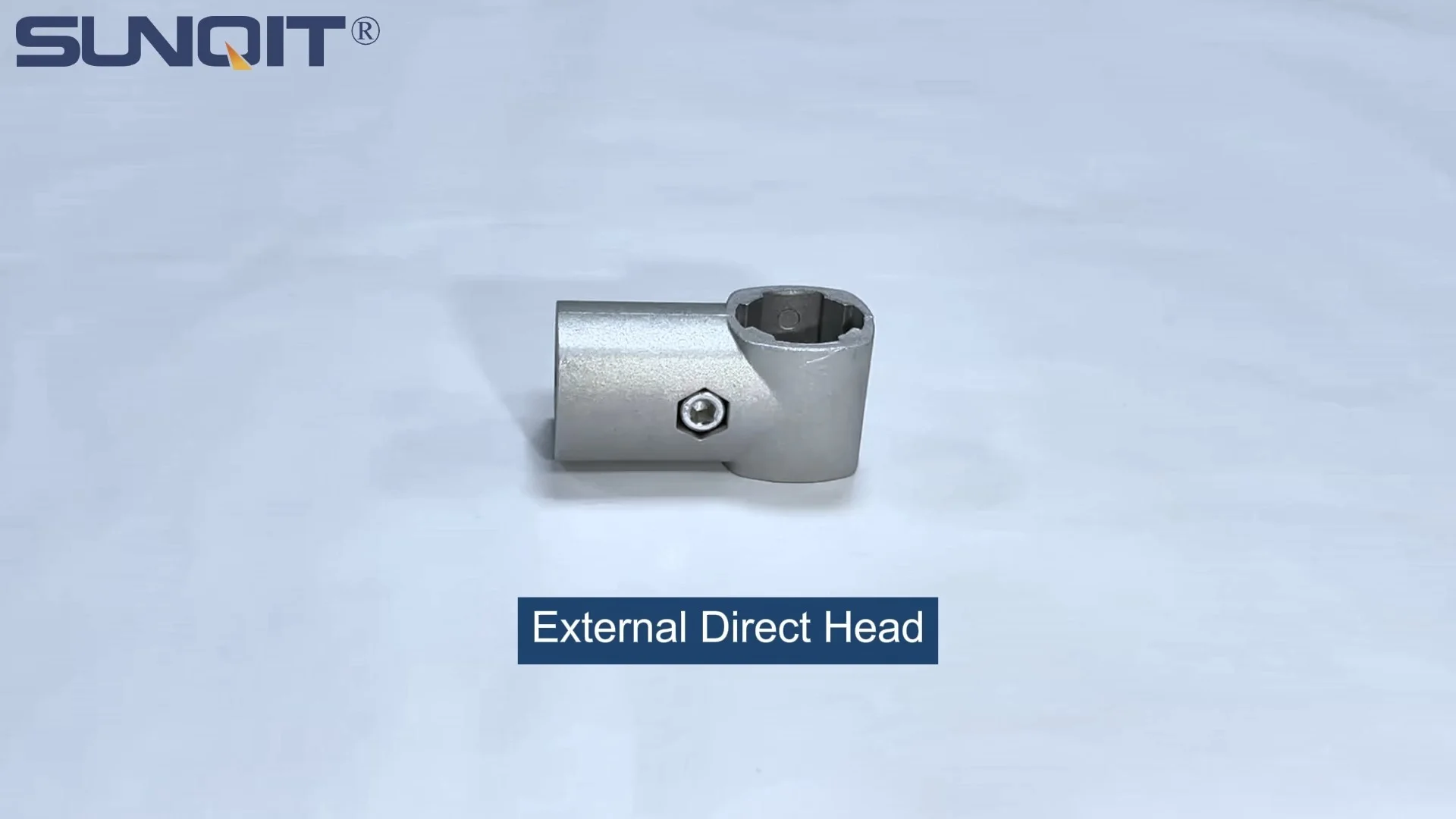
Aluminum 2 way pipe joint for 28mm aluminum pipe connection in 2 direction.
In the fast-paced world of manufacturing, warehousing, and industrial design, the difference between a smooth, efficient operation and a clunky, disorganized one often comes down to the smallest components. Think about it: a well-designed workspace adapts to changing needs, reduces waste, and keeps teams productive. At the heart of this adaptability lies modular systems—structures built from interchangeable parts that can be reconfigured, expanded, or repurposed with minimal effort. And if modular systems are the backbone of modern industrial setups, then connectors are the unsung heroes holding everything together. Today, we're shining a spotlight on one such critical connector: the two way aluminum pipe joint . Whether you're familiar with aluminum lean pipe setups or just starting to explore modular workbench solutions, understanding this joint will help you build stronger, more flexible systems that grow with your business.
Setting the Stage: Why Aluminum Matters in Modular Systems
Before diving into the specifics of the two way aluminum pipe joint, let's take a moment to appreciate why aluminum has become the material of choice for modular industrial systems. Unlike heavy steel, aluminum is lightweight, making it easy to handle during assembly and reconfiguration. It's also naturally resistant to corrosion, which means it holds up well in humid warehouses, cleanrooms, or even outdoor settings—no rust, no degradation, just long-lasting performance. Then there's its strength-to-weight ratio: aluminum might be light, but it's surprisingly sturdy, capable of supporting tools, materials, and equipment without bending or warping. Add to that its recyclability and sleek, professional appearance, and it's clear why aluminum profile systems have replaced rigid, one-size-fits-all structures in forward-thinking workplaces.
But aluminum profiles and pipes alone aren't enough. To create truly modular systems—think workbenches, material racks, flow racks, or assembly lines—you need connectors that can link these components securely while still allowing for adjustments. This is where joints come in. From simple T-joints to complex multi-angle connectors, joints determine how versatile, durable, and user-friendly a modular system can be. And among these, the two way aluminum pipe joint stands out for its simplicity, reliability, and wide range of applications.
What Is a Two Way Aluminum Pipe Joint? A Clear Definition
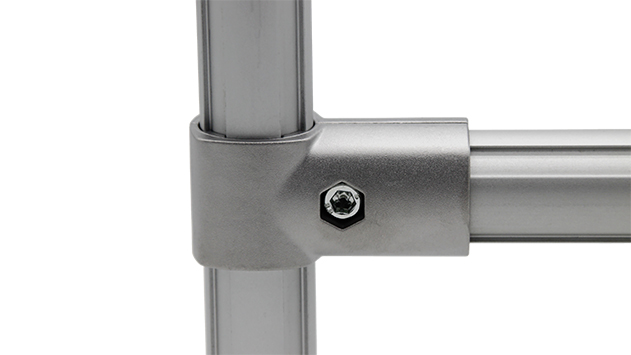
At its core, a two way aluminum pipe joint is a specialized connector designed to join two aluminum pipes (or profiles) together at a specific angle. Unlike multi-way joints that connect three or more pipes, this joint has exactly two connection points, making it ideal for straight-line assemblies or 90-degree corners—think of it as the "straight line" or "L-bend" expert of the modular world. Crafted from high-grade aluminum alloy (often the same material as the pipes it connects), these joints are precision-engineered to fit snugly onto standard aluminum pipes, ensuring a tight, wobble-free connection that can withstand daily wear and tear.
But don't let the "two way" label fool you into thinking it's limited. While some two way joints are fixed (permanently set at 90 degrees or 180 degrees), others are swivel or adjustable, allowing users to fine-tune angles as needed. This flexibility makes them suitable for everything from rigid workbench frames to dynamic material flow systems where angles might need tweaking over time. And because they're part of the broader family of aluminum pipe accessories , they're designed to work seamlessly with other components like end caps, clamps, and brackets, creating a cohesive system where every part complements the others.
The Core Functions: What Does a Two Way Aluminum Pipe Joint Actually Do?
To truly understand the value of the two way aluminum pipe joint, let's break down its key functions in modular systems. These aren't just "connectors"—they're problem-solvers, efficiency boosters, and adaptability enablers. Here's how they make a difference:
1. Creating Stable Connections Between Pipes
First and foremost, the two way joint's primary job is to hold two aluminum pipes together securely. Whether you're building a straight section of a conveyor rail or a right-angle corner for a workbench, the joint must withstand vertical loads (like the weight of tools on a shelf), horizontal forces (like materials sliding along a flow rack), and even vibrations from nearby machinery. A well-designed two way joint achieves this through a combination of tight tolerances (the fit between the joint and pipe is precise, leaving no gaps) and locking mechanisms—often set screws or bolts that cinch the joint onto the pipe, preventing slippage.
Imagine assembling a workbench: the legs (vertical pipes) need to connect to the frame (horizontal pipes) at perfect 90-degree angles to keep the surface level. A fixed two way joint ensures those angles stay consistent, so the bench doesn't wobble when you lean on it or place heavy equipment. Similarly, in a straight conveyor line, 180-degree two way joints link sections of roller track, creating a continuous path for materials without bumps or misalignments that could jam the flow.
2. Enabling Modularity and Reconfiguration
In traditional manufacturing setups, once a structure was built—say, a static shelving unit—it was nearly impossible to modify. If your needs changed (e.g., you needed taller shelves or a wider workbench), you'd have to disassemble the entire thing and start over, wasting time and materials. Modular systems solve this by using components that can be easily taken apart and reassembled, and two way aluminum pipe joints are central to this flexibility.
Unlike welded connections (which are permanent) or glued joints (which weaken over time), two way aluminum joints are designed for tool-free or tool-light assembly. Most use hex screws or quick-release levers that can be loosened with a simple Allen key, allowing you to detach pipes, adjust angles, or add new sections in minutes. This means a workbench built today can become a turnover trolley tomorrow, or a single-row material rack can expand into a multi-tier system as inventory grows. For small businesses and large factories alike, this adaptability translates to cost savings—no need to buy new equipment every time workflows change—and faster response to market demands.
3. Supporting Compatibility Across Systems
Industrial setups rarely use just one type of component. A typical workspace might have aluminum lean pipes for a workbench frame, aluminum profiles for a conveyor side rail, and even stainless steel accessories for ESD (electrostatic discharge) protection. The two way aluminum pipe joint is engineered to play well with others, thanks to standardized sizing and universal design. Most joints are compatible with common pipe diameters (e.g., 28mm, 30mm) and profile grooves (like T-slots), meaning you can mix and match components from different suppliers without worrying about fit issues.
For example, if you have a length of basic aluminum tube and want to attach an aluminum guide rail (used to guide materials along a roller track), a two way joint can bridge the gap, securing both the tube and the rail in place. This compatibility reduces complexity for operators and ensures that your modular system can evolve without being locked into a single brand or product line.
4. Reducing Installation Time and Labor Costs
Time is money in any industrial setting, and the longer it takes to assemble or modify a system, the more it eats into productivity. Two way aluminum pipe joints are designed with speed in mind. Their simple, intuitive design means even workers with minimal training can assemble structures correctly. There's no need for specialized tools (a basic Allen key set usually suffices), no complicated measurements, and no risk of over-tightening (which can damage pipes). This ease of use cuts down on installation time—what might take hours with traditional building methods can be done in minutes with modular joints—and reduces the need for skilled labor, freeing up your team to focus on more critical tasks.

Key Features: What Makes a Quality Two Way Aluminum Pipe Joint Stand Out?
Not all two way aluminum pipe joints are created equal. A cheap, poorly made joint can compromise the stability of your entire system, leading to wobbling structures, frequent repairs, or even safety hazards. So, what should you look for when choosing a two way joint? Here are the key features that define a high-quality product:
1. Precision-Machined Aluminum Alloy Construction
The material matters. Top-tier two way joints are made from high-strength aluminum alloy (often 6063-T5, a common grade in industrial profiles) that's been precision-machined to ensure consistent dimensions. This machining process creates smooth, burr-free surfaces that fit tightly against pipes, eliminating gaps that could cause looseness. Avoid joints made from low-grade aluminum or plastic—they may be cheaper upfront, but they'll bend, crack, or wear out quickly under regular use.
2. Secure Locking Mechanisms
A joint is only as good as its ability to stay locked. The best two way aluminum joints use stainless steel set screws or bolts with knurled heads (for better grip) that dig slightly into the aluminum pipe when tightened, creating a friction fit that resists slippage. Some advanced models even feature dual locking screws—one to secure the joint to the pipe, and another to lock the angle in place (for adjustable joints). This double security is especially important in high-vibration environments, like near heavy machinery, where loose joints could lead to accidents.
3. Corrosion and Wear Resistance
Aluminum's natural corrosion resistance is a plus, but many joints take it a step further with surface treatments. Anodizing (an electrochemical process that creates a protective oxide layer on the aluminum) is common, as it enhances corrosion resistance and adds a smooth, scratch-resistant finish. Some joints also have powder-coated surfaces for extra durability, especially in settings where they might come into contact with chemicals or abrasive materials. For ESD-sensitive environments (like electronics manufacturing), you might even find joints with conductive coatings to prevent static buildup.
4. Ergonomic Design for Easy Handling
Assembly shouldn't be a hassle, and thoughtful design can make a big difference. Look for joints with rounded edges (to prevent cuts or snags on clothing), lightweight construction (so they're easy to hold during installation), and clearly marked screw holes (so you don't waste time fumbling with alignment). Some manufacturers even color-code joints by angle (e.g., blue for 90 degrees, red for 180 degrees) to speed up sorting during large-scale assemblies—small touches that add up to big efficiency gains.
5. High Load-Bearing Capacity
Whether it's supporting a 50kg toolbox on a workbench or a pallet of parts on a material rack, the joint must handle weight without deforming. Quality two way aluminum joints are tested to withstand specific load limits—often 50kg, 100kg, or more, depending on size and design. Always check the manufacturer's specs to ensure the joint matches your application; overloading a joint can lead to structural failure, which is dangerous and costly to fix.

Two Way Aluminum Pipe Joint vs. Other Connectors: A Comparative Look
To better understand where the two way aluminum pipe joint fits in the modular toolkit, let's compare it to three common alternatives: the 90° aluminum profile connector (a fixed-angle multi-way joint), the three way aluminum pipe joint (which connects three pipes), and the plastic pipe joint (a budget-friendly option). The table below highlights key differences in material, load capacity, flexibility, and best uses.
| Feature | Two Way Aluminum Pipe Joint | 90° Aluminum Profile Connector | Three Way Aluminum Pipe Joint | Plastic Pipe Joint |
|---|---|---|---|---|
| Material | High-grade aluminum alloy (e.g., 6063-T5) | Aluminum alloy, often with steel screws | Aluminum alloy | ABS or polypropylene plastic |
| Connection Points | 2 (straight or 90° angle) | 2–4 (fixed 90° angles, for profiles) | 3 (e.g., T-joint or Y-joint) | 2–3 (varies by design) |
| Max Load Capacity | 50–150kg (depending on size) | 80–200kg (higher for profile systems) | 40–120kg (split across three pipes) | 10–30kg (low for heavy use) |
| Flexibility/Adjustability | Fixed or adjustable angles; easy to reconfigure | Fixed 90° angles; limited adjustability | Fixed angles (T, Y, etc.); some swivel options | Fixed angles; prone to loosening over time |
| Corrosion Resistance | Excellent (natural aluminum + anodizing) | Excellent | Excellent | Good (but UV-sensitive; can become brittle) |
| Best For | Straight lines, 90° corners, modular workbenches, conveyor rails | Rigid profile frames, machine guards, heavy-duty shelving | T-junctions, multi-tier racks, branching conveyor lines | Light-duty setups, temporary structures, low-budget projects |
| Cost | Moderate (mid-range for aluminum connectors) | Higher (due to profile compatibility) | Moderate to high (more material than two way) | Low (budget option) |
As the table shows, the two way aluminum pipe joint strikes a balance between simplicity, strength, and flexibility, making it the go-to choice for most modular assemblies. It lacks the multi-connection capability of three way joints but offers better adjustability than fixed profile connectors, and it outperforms plastic joints in durability and load capacity. For many industrial applications—especially those requiring frequent reconfiguration—the two way joint is the sweet spot between functionality and cost.
Real-World Applications: Where You'll Find Two Way Aluminum Pipe Joints in Action
To bring this all to life, let's explore how two way aluminum pipe joints are used across different industries. From automotive plants to small workshops, these joints are quietly powering efficient, adaptable workspaces.
1. Automotive Manufacturing: Building Assembly Lines That Keep Up with Change
Automotive factories are all about precision and speed. Assembly lines must handle heavy components (engines, chassis parts) while allowing workers to access every angle. Two way aluminum pipe joints are used to build modular workstations along these lines—think adjustable tool racks above the line, parts bins on rolling trolleys, and even ergonomic platforms that raise or lower to match worker heights. Because car models change frequently, these setups need to reconfigure quickly. A two way joint makes it easy to adjust the height of a tool rack when a new engine design requires different tools, or to extend a parts trolley to carry larger components.
2. Electronics Production: ESD-Safe Workbenches for Sensitive Components
Electronics manufacturing demands static-free environments to protect delicate microchips and circuit boards. Here, aluminum lean pipe systems (assembled with two way joints) are paired with ESD mats and conductive accessories to create safe workbenches. The joints themselves are often anodized to prevent static buildup, and their modularity allows for custom setups—e.g., adding a side rail for holding anti-static bins or a overhead shelf for ESD-safe tools. When production shifts to a new device, the workbench can be reconfigured in hours, not days, keeping projects on schedule.
3. Warehousing and Logistics: Flow Racks and Turnover Trolleys for Smooth Material Flow
In warehouses, moving materials quickly from receiving to shipping is critical. Flow racks—sloped racks with roller tracks that let boxes or totes glide forward as items are picked—rely on two way aluminum pipe joints to frame the structure and support the roller tracks. The joints ensure the tracks are perfectly aligned (no jams!) and that the rack can be adjusted for different tote sizes. Similarly, turnover trolleys (used to transport goods between departments) use two way joints for their frames, making them lightweight yet sturdy enough to carry heavy loads. When a trolley gets damaged, the joint allows for easy replacement of individual pipes instead of replacing the entire trolley.
4. Retail and E-Commerce: Custom Displays That Adapt to Seasons
Retail stores and e-commerce fulfillment centers need displays that change with seasons, promotions, or inventory. Two way aluminum pipe joints are ideal here because they let you build lightweight, eye-catching displays—shelves, hanging racks, even pop-up kiosks—that can be disassembled and stored when not in use. For example, a holiday-themed display built with aluminum pipes and two way joints can be taken apart in January and reassembled as a summer sale rack in June, saving storage space and reducing the need for new display furniture each season.
5. Medical Facilities: Clean, Sterile Workstations for Labs and Clinics
Hospitals and labs require workspaces that are easy to clean and resistant to chemicals. Aluminum's non-porous surface (paired with anodized two way joints) fits the bill—no cracks for bacteria to hide in, and compatible with harsh disinfectants. Modular workbenches in labs use two way joints to support equipment like microscopes and centrifuges, and can be quickly reconfigured when new instruments are added. Even mobile carts for medication or samples rely on these joints for stability and easy maneuverability.
Installation Tips: Getting the Most Out of Your Two Way Aluminum Pipe Joints
Installing two way aluminum pipe joints is straightforward, but a few best practices will ensure your structure is stable, safe, and long-lasting. Here's what to keep in mind:
1. Choose the Right Joint for the Job
Not all two way joints are the same. Fixed joints are best for straight lines or 90-degree corners that won't need adjustment; adjustable/swivel joints are better if angles might change. Check the pipe diameter too—most joints are designed for specific sizes (e.g., 28mm, 30mm). Using a joint that's too loose or too tight will compromise stability.
2. Prep the Pipes First
Before assembling, clean the ends of the aluminum pipes with a dry cloth to remove dust or debris—this ensures a tight fit with the joint. If the pipes have burrs (sharp edges from cutting), file them down to prevent damaging the joint or hurting yourself during installation.
3. Tighten Screws Evenly (But Don't Overdo It)
Most two way joints use two set screws per pipe connection. Tighten them alternately (a little on one, then a little on the other) to ensure even pressure—this prevents the pipe from bending or the joint from warping. Avoid over-tightening, though: aluminum is strong, but excessive force can strip the threads or crack the joint.
4. Check for Level and Square During Assembly
A wobbly structure is often the result of misaligned joints. Use a level to ensure horizontal pipes are flat and a square tool to check 90-degree angles. For larger setups (like a long material rack), measure diagonally from corner to corner—equal measurements mean the structure is square.
5. Test Load Capacity Before Full Use
Once assembled, do a quick load test: place gradually increasing weights on the structure to ensure the joints hold. If you notice any bending or creaking, double-check the screws and joint alignment before putting the system into full operation.
Maintenance: Keeping Your Joints (and System) in Top Shape
Like any industrial component, two way aluminum pipe joints need occasional care to stay functional. Here's how to maintain them:
1. Inspect Regularly for Loose Screws
Vibration from machinery or frequent use can loosen set screws over time. Do a monthly check with an Allen key, tightening any screws that feel loose. This simple step prevents wobbling and extends the life of the joint.
2. Clean to Prevent Buildup
Dust, oil, or chemical residues can accumulate on joints, especially in manufacturing settings. Wipe them down with a damp cloth (or a mild detergent for tough grime) every few months. Avoid abrasive cleaners, which can scratch the anodized finish.
3. replace Worn Parts Promptly
If a joint becomes bent, cracked, or the threads on the set screws strip, replace it immediately. Using damaged joints puts the entire structure at risk of collapse. Most suppliers sell replacement joints individually, so you don't need to replace the whole system.
4. Store Spare Joints for Emergencies
Keep a few extra two way joints in your tool room. This way, if a joint fails unexpectedly, you can swap it out quickly and minimize downtime.
Why Choose Aluminum Over Other Materials for Joints?
We've touched on this earlier, but it's worth emphasizing: aluminum is the superior choice for pipe joints in most industrial applications. Here's a quick recap of why it outperforms alternatives like steel, plastic, or wood:
- Weight vs. Strength: Aluminum is 1/3 the weight of steel but offers comparable strength for most modular setups. This makes assemblies easier to handle and reduces strain on workers during installation.
- Corrosion Resistance: Unlike steel (which rusts) or wood (which rots), aluminum resists moisture, chemicals, and UV rays, making it suitable for indoor and outdoor use.
- Recyclability: Aluminum is 100% recyclable, with no loss in quality. This aligns with sustainability goals for eco-conscious businesses.
- Aesthetic Appeal: Anodized aluminum has a clean, modern look that enhances workspace appearance—important for client-facing areas or brand-conscious facilities.
- Cost-Effectiveness: While aluminum joints may cost more upfront than plastic, their durability means they last longer, reducing replacement costs over time.
Conclusion: The Two Way Aluminum Pipe Joint—Small Component, Big Impact
In the world of industrial design and manufacturing, it's easy to overlook the "small parts." But as we've explored, the two way aluminum pipe joint is anything but insignificant. It's the connector that turns simple aluminum pipes into dynamic, adaptable systems—workbenches that evolve with workflows, flow racks that keep materials moving, and assembly lines that adjust to new products. Its blend of strength, flexibility, and ease of use makes it a cornerstone of lean manufacturing and modular design, helping businesses of all sizes stay competitive in a fast-changing world.
Whether you're building a single workbench for a startup workshop or outfitting an entire factory floor, choosing the right two way aluminum pipe joint matters. Look for quality materials, secure locking mechanisms, and compatibility with your existing aluminum lean pipe or profile system. And remember: the best joints are the ones you barely notice—they just work, day in and day out, keeping your operations running smoothly.
So the next time you walk through a well-organized warehouse or a sleek manufacturing line, take a closer look. Chances are, the stability, flexibility, and efficiency you see are thanks in no small part to the humble two way aluminum pipe joint—proof that great things really do come in small packages.