- Company Articles
- Products and Technology
- Product knowledge
- Two Way Aluminum Pipe Joint Sizing Guide: Choosing the Correct Diameter for Your Pipes

Two Way Aluminum Pipe Joint Sizing Guide: Choosing the Correct Diameter for Your Pipes
Related Product
Two Way Aluminum Pipe Joint
Aluminum 2 way pipe joint for 28mm aluminum pipe connection in 2 direction.
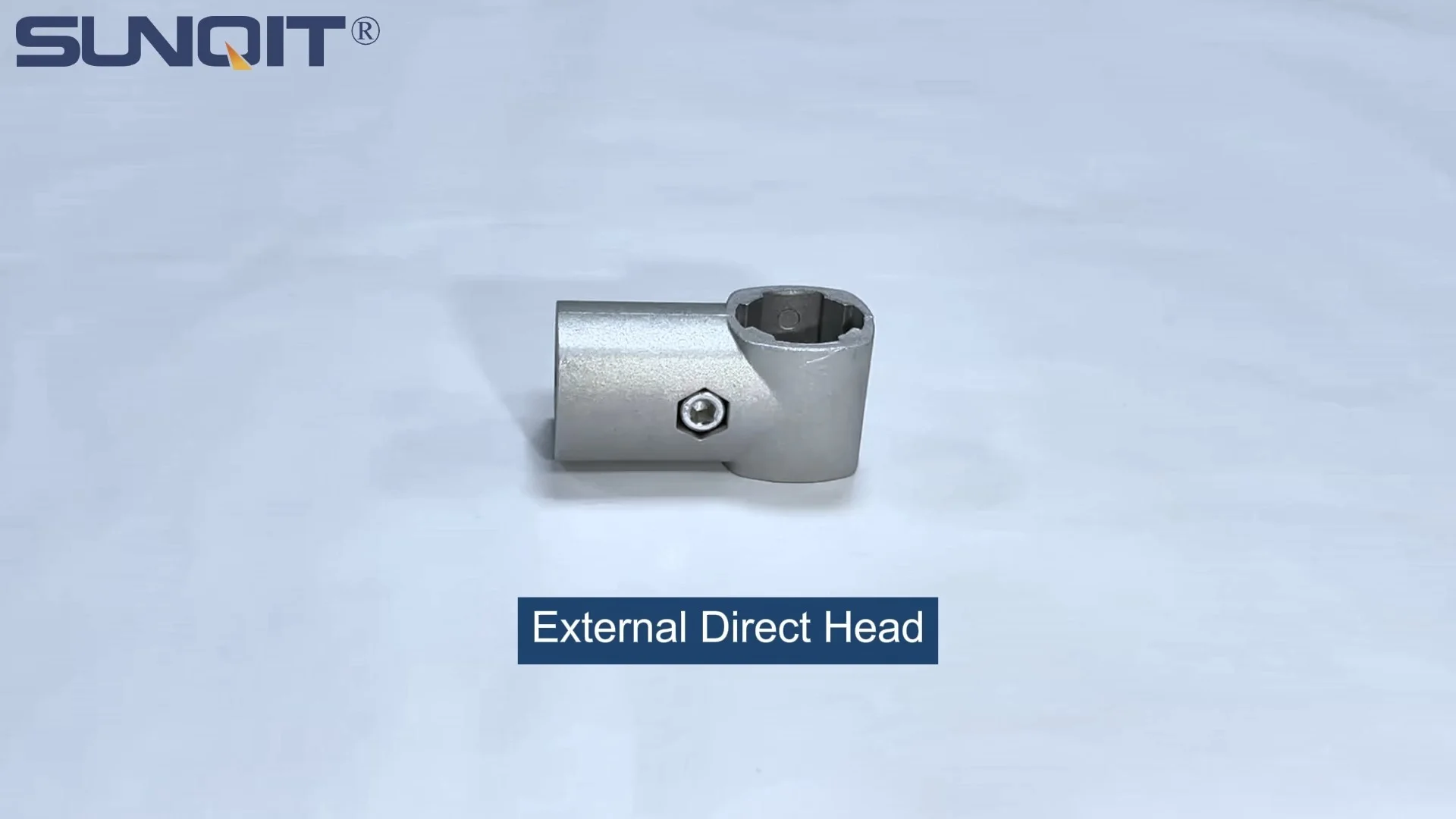
If you've ever stood in front of a jumble of aluminum pipes and joints, wondering how to piece them together into something sturdy and functional, you're not alone. Whether you're building a workbench for your garage, a flow rack for your warehouse, or a custom production line, the backbone of these structures often comes down to one critical component: the two way aluminum pipe joint. These unassuming connectors are the glue that holds everything together—but only if you choose the right diameter. Get it wrong, and you could end up with wobbly shelves, misaligned conveyors, or even safety hazards that grind your workflow to a halt. In this guide, we're going to walk through everything you need to know to size two way aluminum pipe joints correctly, from understanding pipe measurements to matching joints with your specific project needs. Let's dive in.
What Even Is a Two Way Aluminum Pipe Joint?
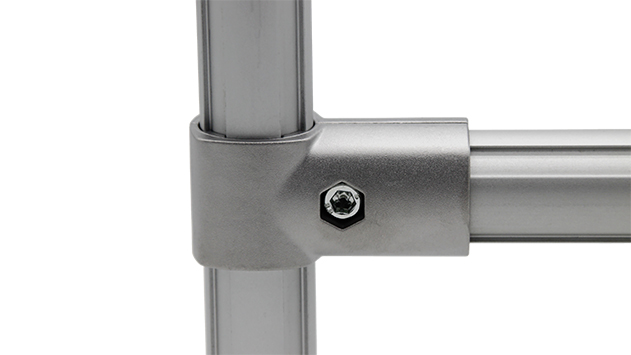
First things first: let's make sure we're all on the same page about what a two way aluminum pipe joint actually is. At its core, this little component is designed to connect two aluminum pipes at a fixed angle—most commonly 90 degrees, but sometimes 45 or 180 degrees, depending on the design. Think of it like a T-junction or an L-bracket, but specifically engineered for aluminum pipes. Unlike rigid metal brackets that require welding or drilling, these joints are typically friction-fit or secured with set screws, making them reusable and easy to adjust as your needs change.
What makes aluminum the go-to material here? Well, aluminum is lightweight but surprisingly strong, resistant to rust, and easy to work with—all traits that make it perfect for lean manufacturing setups, workbenches, and material handling systems. If you've heard the term aluminum lean pipe thrown around, that's exactly what we're talking about: aluminum pipes used in lean systems to create flexible, modular structures. And the two way joint? It's the unsung hero that lets you build those structures without committing to permanent welds.
But not all two way joints are created equal. Some are designed for thin-walled aluminum lean pipes, others for thicker aluminum profile (those grooved, industrial-grade beams you see in factories). Some have smooth exteriors for clean aesthetics, while others feature knurled edges for a tighter grip. The key difference, though, lies in their inner diameter—the part that actually slides over or clamps onto your pipe. That's the measurement we're going to focus on today.
Why Sizing Your Joints Matters (Spoiler: It's a Big Deal)
Let's say you skip the measuring and just grab the first two way joint you see that "sort of fits" your pipe. What's the worst that could happen? Well, I've seen it firsthand: a small manufacturing shop once built a flow rack using undersized joints. At first, it seemed fine—until they loaded it with heavy boxes. Within a week, the joints started slipping, the pipes bowed, and a whole shelf collapsed, sending parts crashing to the floor. Production stopped for hours, and they had to replace not just the joints, but the bent pipes too. All because of a few millimeters of miscalculation.
On the flip side, forcing a pipe into a joint that's too small is just as bad. Over-tightening the set screws can crack the joint or strip the threads, turning a $5 part into a useless hunk of metal. Even if it holds initially, the stress on the pipe's walls can weaken it over time, leading to unexpected failures. And let's not forget the frustration factor: spending hours trying to jam a pipe into a joint that's the wrong size is no one's idea of a productive day.
The bottom line? Sizing two way aluminum pipe joints correctly isn't just about "making things fit"—it's about safety, durability, and efficiency. A well-sized joint creates a snug, stable connection that can handle the weight of your materials, stand up to daily wear and tear, and keep your workflow moving smoothly. So let's treat this like the critical step it is.
Breaking Down Pipe Diameters: OD vs. ID (And Why It Confuses Everyone)
Here's where things get tricky: when someone says a pipe is "20mm," are they talking about the outside diameter (OD) or the inside diameter (ID)? Spoiler: it's almost always OD. In the world of aluminum pipes—especially aluminum lean pipe and industrial profiles—manufacturers list pipe sizes by their outer diameter. That's because the OD is what determines how the pipe fits into joints, brackets, and other aluminum pipe accessories like casters or roller tracks.
Let's clarify with an example. A "25mm aluminum lean pipe" has an outer diameter of 25mm. The inner diameter (ID) will be smaller, depending on the pipe's wall thickness. A thin-walled pipe might have an ID of 21mm, while a thicker, heavy-duty pipe could have an ID of 19mm. But when it comes to joints, the ID of the joint itself needs to match the OD of the pipe. So if your pipe is 25mm OD, you need a joint with an inner diameter (the hole where the pipe goes) of approximately 25mm. Makes sense, right?
But wait—there's a catch. Joints aren't always a perfect "slip fit." Some are designed with a slight interference fit, meaning the joint's ID is just a hair smaller than the pipe's OD. This creates friction that helps hold the joint in place, even before you tighten the set screws. Others have adjustable clamps that can accommodate a small range of diameters (e.g., 20-22mm). The key is to check the joint's specifications: most manufacturers will list the "compatible pipe OD" on the packaging or in their product descriptions. If they don't, it's time to grab your calipers and measure the joint's inner diameter yourself.

Key Factors That Determine the Right Diameter
Now that we're clear on OD vs. ID, let's talk about the factors that will influence which diameter joint you need. It's not just about matching numbers—it's about understanding your project's unique demands. Here are the big ones:
1. The Weight You Need to Support
How much weight will your structure hold? A small workbench for assembling electronics might only need to support 50kg, while a flow rack in a warehouse could see loads of 200kg or more. Heavier loads require thicker-walled pipes, which often means larger ODs. For example, a 30mm OD pipe with a 3mm wall thickness can typically support more weight than a 20mm OD pipe with a 1.5mm wall. And since the pipe's OD is larger, the joint needs to match that size. Don't skimp here—undersized pipes and joints are the number one cause of sagging shelves and collapsed structures.
2. The Type of Aluminum Pipe You're Using
Not all aluminum pipes are created equal. Aluminum lean pipe is usually lightweight, with thin walls, and designed for flexibility (think: adjustable workstations or temporary storage). Industrial aluminum profile , on the other hand, is thicker, stiffer, and often has T-slots along its length for attaching accessories. Lean pipes typically come in standard sizes like 20mm, 25mm, or 30mm OD, while profiles might be labeled by their cross-section dimensions (e.g., 20x20mm, 30x30mm, 40x40mm). The latter is a bit confusing because "30x30mm profile" refers to the width and height of the cross-section, not the OD of a round pipe—but the idea still holds: the profile's outer dimensions dictate the joint size.
3. Environmental Conditions
Will your structure be indoors, outdoors, or in a humid environment like a food processing plant? Aluminum is naturally corrosion-resistant, but if you're using painted or anodized pipes, that coating adds a tiny bit of thickness to the OD. For example, a 25mm OD pipe with a 0.1mm anodized layer effectively becomes 25.2mm OD. That might not sound like much, but it could mean the difference between a joint sliding on easily and getting stuck. In humid or wet environments, you might also opt for stainless steel joints (though we're focusing on aluminum here), but the sizing logic remains the same: account for any coatings or treatments on the pipe.
4. Compatibility with Existing Accessories
Chances are, your project isn't just pipes and joints—it's also casters, roller tracks, shelves, and other aluminum pipe accessories . These accessories are designed to fit specific pipe ODs. For example, a caster wheel bracket might only clamp onto 25mm or 30mm pipes. If you choose a 20mm pipe because it's cheaper, you might find yourself unable to attach the casters you need later. Always check the accessory specifications before finalizing your pipe and joint sizes. It's better to plan ahead than to realize halfway through the project that your parts don't play well together.

Common Two Way Joint Sizes and Their Uses (Plus a Handy Table)
To make this more concrete, let's look at some of the most common two way aluminum pipe joint sizes and what they're typically used for. This isn't an exhaustive list, but it covers the sizes you'll encounter in most DIY and small-to-medium industrial projects.
| Pipe OD (mm) | Joint ID (mm) | Typical Pipe Type | Common Uses | Max Load Capacity (kg per joint) | Popular Accessories |
|---|---|---|---|---|---|
| 20mm | 20-20.5mm | Thin-walled aluminum lean pipe | Light-duty workbenches, small shelving, display racks | 50-80kg | Plastic roller tracks, mini casters, small brackets |
| 25mm | 25-25.5mm | Standard aluminum lean pipe | Medium-duty workbenches, flow racks, assembly line components | 80-150kg | Aluminum guide rails, swivel casters, tool hooks |
| 30mm | 30-30.5mm | Heavy-duty aluminum lean pipe, basic aluminum profile | Heavy shelving, material handling trolleys, conveyor supports | 150-250kg | Steel roller tracks, heavy-duty casters, leveling feet |
| 40mm | 40-40.5mm | Industrial aluminum profile (e.g., 40x40mm) | Production line frames, large storage racks, machine guards | 250-400kg | Stainless steel roller balls, multi-angle brackets, electrical mounting plates |
A quick note on load capacity: these numbers are rough estimates. Actual capacity depends on factors like pipe wall thickness, joint material (aluminum vs. steel), and how the load is distributed (e.g., a static load vs. a moving load). When in doubt, err on the side of a larger diameter or check the manufacturer's specs for your specific pipes and joints.
How to Measure Pipes and Joints Like a Pro
Okay, so you've got a pipe, and you need to find its OD. Or you have a joint, and you need to see what pipe size it fits. Here's how to measure them accurately, even if you're not a seasoned engineer.
Tools You'll Need
The best tool for the job is a digital caliper. These handy devices cost around $20-$50 online and can measure in millimeters, inches, and fractions. If you don't have a caliper, a good-quality tape measure with millimeter markings will work in a pinch, but calipers are more precise. Avoid using a ruler—those tiny lines are hard to read, and a few millimeters of error can throw everything off.
Measuring Pipe OD
1. Clean the pipe end: Wipe off any dirt, grease, or rust so you get a clear measurement.
2. Find a straight section: Pipes can sometimes be slightly bent or dented near the ends, so measure a few centimeters from the edge.
3. Open the caliper jaws and place them around the pipe: Make sure the jaws are perpendicular to the pipe (not slanted), and gently close them until they touch the pipe's outer wall.
4. Read the measurement: On a digital caliper, the OD will show up on the screen. If using a tape measure, wrap it around the pipe to get the circumference, then divide by π (3.14) to get the OD (e.g., a circumference of 78.5mm ÷ 3.14 = 25mm OD).
5. Double-check: Measure at two or three different points around the pipe—pipes aren't always perfectly round. Take the average of your measurements to be safe.
Measuring Joint ID
Measuring the inner diameter of a joint is similar, but you'll use the caliper's "inside jaws" (the smaller, pointed jaws on the top of the tool).
1. insert the inside jaws into the joint's pipe hole: Make sure they're centered and not touching any screws or ridges inside the joint.
2. Open the jaws until they press against the inner walls: You want a snug fit, but don't force them—you could bend the jaws.
3. Read the measurement: Again, digital calipers will give you a precise number. If the joint has a threaded or stepped interior, measure the smooth section where the pipe will sit.
4. Account for adjustability: If the joint has a clamp (like a set screw that tightens against the pipe), the ID might expand slightly when the clamp is loosened. Check the manufacturer's specs for the "open" and "closed" ID range.
Mistakes to Avoid (Because We've All Made Them)
Even with the best intentions, it's easy to slip up when sizing two way aluminum pipe joints. Here are the most common mistakes I've seen (and made myself) over the years—and how to steer clear of them.
Mistake #1: Assuming "One Size Fits All"
Just because you used 25mm pipes for your last project doesn't mean they're the right fit for this one. Every project has different load requirements and accessory needs. Take the time to assess what you're building before grabbing the same joints you used before.
Mistake #2: Ignoring Wall Thickness
A 30mm OD pipe with a 1mm wall is not the same as a 30mm OD pipe with a 3mm wall. The thicker pipe is stronger, but it's also heavier. If you pair a heavy pipe with a joint rated for light loads, you're asking for trouble. Always check both the OD and the wall thickness when selecting pipes and joints.
Mistake #3: Mixing Metric and Imperial Sizes
This is a classic blunder, especially if you're sourcing parts from different countries. A "1-inch pipe" isn't exactly 25.4mm (it's usually 26.9mm OD in imperial sizing), which won't fit a 25mm metric joint. Always confirm the unit of measurement (mm vs. inches) before buying.
Mistake #4: Forcing a Fit
If a pipe won't slide into a joint without brute force, stop. You're either using the wrong size or the joint is damaged. Forcing it can crack the joint, deform the pipe, or strip the threads on the set screws. It's better to walk away and get the right size than to ruin your parts.
Where to Buy Quality Two Way Aluminum Pipe Joints
Now that you know how to size them, where do you actually buy good two way aluminum pipe joints? The answer depends on your project size and budget. For small DIY projects, online marketplaces like Amazon or eBay have plenty of affordable options, though you'll want to read reviews carefully—some generic joints are made from cheap aluminum that bends or cracks easily. For industrial-grade projects, stick with reputable suppliers that specialize in lean pipe joint and aluminum profile systems. Look for suppliers that list detailed specs (joint ID, material thickness, load ratings) and offer customer support if you have questions. Many also sell sample packs, so you can test a few joints with your pipes before buying in bulk.
Another pro tip: check if the supplier offers a range of aluminum pipe accessories that match their joints. Buying from the same brand ensures compatibility, which saves you the headache of mixing and matching parts that don't quite fit.
Wrapping Up: Your Project Deserves the Right Fit
Sizing two way aluminum pipe joints might seem like a small detail, but it's the kind of detail that makes or breaks a project. A well-sized joint turns a pile of pipes into a sturdy, functional structure that serves you for years. A poorly sized joint turns it into a frustrating, wobbly mess that costs time and money to fix. By understanding pipe OD, measuring carefully, and considering your project's unique needs, you can avoid the common pitfalls and build with confidence.
So grab your calipers, check your pipe sizes, and don't be afraid to ask questions if you're unsure. Your future self—whether you're assembling a workbench, organizing your warehouse, or building the next big thing—will thank you for taking the time to get it right.