- Company Articles
- Products and Technology
- Product knowledge
- Two Way Aluminum Pipe Joint vs. Plastic Joint: Which Offers Better Flexibility for Your Workshop?

Two Way Aluminum Pipe Joint vs. Plastic Joint: Which Offers Better Flexibility for Your Workshop?
Related Product
Two Way Aluminum Pipe Joint
Aluminum 2 way pipe joint for 28mm aluminum pipe connection in 2 direction.
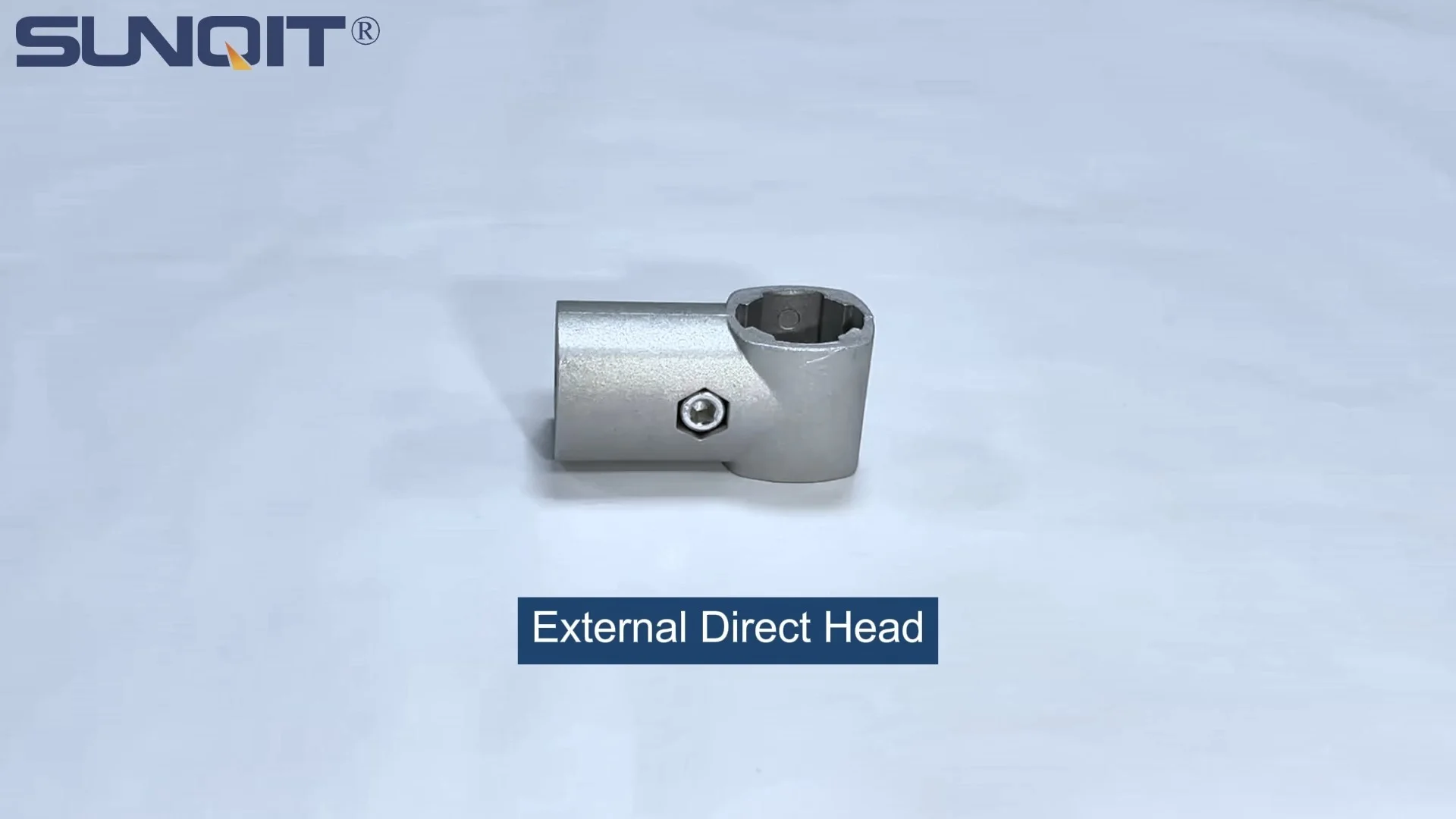
In the fast-paced world of manufacturing and workshop management, flexibility isn't just a buzzword—it's the backbone of efficiency. From sudden production line shifts to evolving storage needs, the ability to adapt quickly can make or break a team's productivity. At the heart of this adaptability lies a humble yet critical component: the joints that hold your modular systems together. Today, we're diving into a showdown that matters more than you might think: two-way aluminum pipe joints versus plastic joints. Which one truly delivers the flexibility your workshop needs to thrive? Let's unpack the details.
Understanding the Unsung Heroes: What Are Two-Way Joints, Anyway?
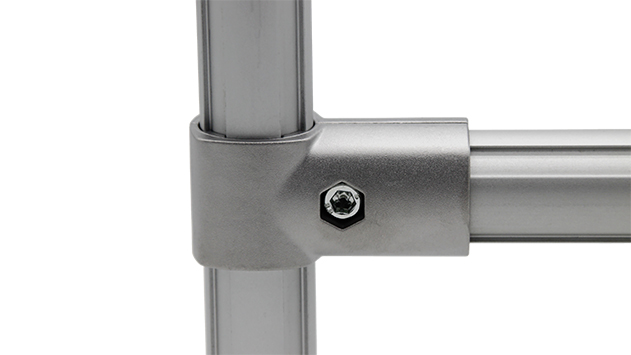
Before we pick sides, let's get clear on what we're talking about. Two-way joints are the quiet workhorses of modular workshop setups. Their job? To connect two pipes (think lean pipe , aluminum profiles, or even basic aluminum tubes) at angles—usually 90 degrees, but often adjustable—forming the skeleton of structures like workbenches, material racks, conveyor systems, and turnover trolleys. Without reliable joints, your carefully designed lean system would collapse into a pile of disconnected parts faster than you can say "production delay."
These joints are especially vital in lean manufacturing environments, where the goal is to minimize waste and maximize adaptability. A well-chosen joint doesn't just hold pipes together; it lets you reconfigure your workspace on the fly. Need to expand a workbench to fit a new machine? Swap out a short pipe for a longer one, tighten the joint, and you're done. Want to repurpose a material rack into a mobile trolley? Loosen the joints, add casters, and roll with it. In short, two-way joints are the "swivel" in your workshop's ability to pivot.
The Case for Aluminum: Why Two-Way Aluminum Pipe Joints Are a Workshop Staple
Aluminum has long been a favorite in industrial settings, and for good reason. Lightweight yet surprisingly strong, it brings a unique set of advantages to the table—advantages that shine even brighter when packed into a two-way joint. Let's break down why aluminum might be the flex partner your workshop needs.
1. Strength Meets Lightness: A Balance That Matters
Aluminum two-way joints hit the sweet spot between durability and portability. Unlike heavy steel joints (which can weigh down structures and make reconfiguration a two-person job), aluminum joints are light enough to handle solo adjustments but tough enough to support serious loads. This is a game-changer for workbench setups, where you might need to mount power tools, heavy machinery, or stacks of materials without worrying about the joint bending or warping.
Consider this: A typical aluminum two-way joint can comfortably support 50-70 kg of vertical load—more than enough for most workshop tools, parts bins, or even small conveyor components. And because aluminum is resistant to corrosion, you won't have to replace joints every few years due to rust, even in workshops with high humidity or occasional exposure to oils and coolants.
Real-World Example: The Busy Electronics Assembly Line
A mid-sized electronics manufacturer recently switched from plastic to aluminum two-way joints for their esd workbench setups. Their old plastic joints would crack under the weight of soldering stations and testing equipment, forcing monthly replacements. With aluminum joints, they've gone six months without a single failure—and when they needed to reposition workbenches to accommodate a new circuit board assembly process, the team could loosen, adjust, and retighten the joints in minutes, with no tools beyond a hex key.
2. Flexibility in Assembly: Adapt or Die (Productively)
Lean manufacturing thrives on change, and aluminum joints are built for it. Most aluminum two-way joints feature precision-machined threads and smooth, rounded edges that make them easy to twist, turn, and lock into place at various angles—not just 90 degrees, but 45, 60, or even 135 degrees if needed. This versatility means you're not stuck with rigid, one-size-fits-all structures. Want to build a material rack with sloped shelves for gravity-fed parts? Aluminum joints can angle the pipes just right. Need a workbench with a corner cutout to fit around a pillar? Adjust the joints, and you're golden.
What's more, aluminum joints play well with others. They're compatible with a wide range of materials, from standard lean pipe (coated steel) to aluminum lean pipe and even aluminum extrusion profiles. This compatibility lets you mix and match components, repurposing old pipes with new joints or upgrading parts of your system without overhauling everything—a huge win for budget-conscious workshops.
3. Resistance to the Elements: Workshops Are Tough; Joints Should Be Too
Workshops aren't always clean, climate-controlled spaces. Dust, moisture, heat from machinery, and occasional chemical spills are par for the course. Aluminum two-way joints laugh in the face of these challenges. Unlike plastic, which can degrade under UV light, warp in high temperatures, or become brittle when exposed to oils, aluminum holds its ground. It won't fade, crack, or lose structural integrity, even in environments where plastic joints would wither away.
Take a automotive repair shop, for example. Oil drips, brake fluid spills, and fluctuating temperatures (from space heaters in winter to open doors in summer) are daily realities. A plastic joint here might start to soften or crack within a year, but an aluminum joint? It'll keep connecting pipes and supporting tool racks for years, with nothing more than an occasional wipe-down to remove grime.
The Case for Plastic: When Might a Plastic Two-Way Joint Make Sense?
Aluminum sounds great, but plastic joints aren't obsolete. They have their own set of strengths, especially in specific scenarios where cost, weight, or simplicity are top priorities. Let's explore when plastic might still be the right choice.
1. Budget-Friendly Startups and Light-Duty Tasks
Let's cut to the chase: Plastic two-way joints are cheaper—often half the cost of aluminum counterparts. For new workshops or small businesses operating on tight margins, this can be a deciding factor. If your needs are light—think lightweight turnover trolley s for moving small parts, or static shelving for office supplies—plastic joints might be all you need. They're easy to source, simple to install, and disposable enough that replacing a cracked joint every now and then doesn't break the bank.
2. Ultra-Lightweight Structures: When Every Gram Counts
Plastic is lighter than aluminum—significantly so. A plastic two-way joint might weigh 30-40 grams, compared to 80-100 grams for aluminum. In applications where overall weight is critical (like temporary display racks, mobile carts for fragile items, or lightweight partitions), this difference adds up. A cart built with plastic joints could be 20-30% lighter than one with aluminum, making it easier to push around a busy warehouse floor.
3. Electrical Insulation: A Niche but Critical Advantage
Plastic is non-conductive, which can be a lifesaver in workshops where electrical safety is paramount. For example, in a conveyor system handling sensitive electronic components, plastic joints reduce the risk of static buildup or accidental short circuits. Similarly, in labs or cleanrooms where metal contact could interfere with equipment, plastic joints offer a safe, non-reactive alternative.

Head-to-Head: Aluminum vs. Plastic Two-Way Joints (The Data)
To make the choice clearer, let's stack aluminum and plastic two-way joints side by side. The table below compares key features that matter most for workshop flexibility, durability, and cost-effectiveness.
| Feature | Aluminum Two-Way Joint | Plastic Two-Way Joint |
|---|---|---|
| Material Composition | Aluminum alloy (typically 6061 or 6063, known for strength and corrosion resistance) | Thermoplastic (usually PP or ABS, with added fillers for rigidity) |
| Weight (per joint) | 80-100 grams | 30-40 grams |
| Max Load Capacity (vertical) | 50-70 kg | 15-30 kg |
| Flexibility in Angle Adjustment | Multi-angle (30°, 45°, 60°, 90°, 135°) with precise locking | Limited (mostly 90° fixed; some adjustable but prone to slippage) |
| Resistance to Heat/Oils/Chemicals | High (withstands up to 120°C; resistant to most industrial oils and solvents) | Low to moderate (softens above 60°C; degrades with prolonged oil exposure) |
| Cost (per joint) | $5-$8 USD | $2-$4 USD |
| Expected Lifespan (in workshop use) | 5-7 years | 1-2 years (with regular use) |
| Ease of Modification | High (can be reused 20+ times without thread wear) | Low (threads strip after 3-5 adjustments) |
Looking at the numbers, aluminum joints pull ahead in almost every category that impacts long-term flexibility and reliability. Yes, they cost more upfront, but their lifespan is 3-5 times longer, and their ability to adapt to changing angles, loads, and environments makes them a smarter investment for workshops that plan to grow or evolve.

When to Choose Which: A Quick Decision Guide
Still on the fence? Use this simple flowchart to narrow it down:
Choose Aluminum Two-Way Joints If…
- Your structure supports heavy loads (tools, machinery, or dense materials).
- You need to reconfigure layouts frequently (monthly or quarterly).
- Your workshop has harsh conditions (humidity, oils, high temperatures).
- You want to minimize long-term replacement costs.
- You're building permanent or semi-permanent setups (like workbench lines or fixed conveyor sections).
Choose Plastic Two-Way Joints If…
- Your loads are light (less than 15 kg per joint).
- You need ultra-lightweight structures (temporary carts, display racks).
- Budget is your only priority, and you're okay with annual replacements.
- Electrical insulation is critical (e.g., ESD-sensitive environments).
Final Thoughts: Flexibility Isn't Just About Movement—it's About Longevity
At the end of the day, the "better" joint depends on your workshop's unique needs. But if we had to bet on which one delivers true, lasting flexibility, aluminum two-way joints win hands down. They're the reliable partner that grows with your business, adapts to new challenges, and keeps your team productive—without the constant hassle of repairs or replacements.
Plastic joints have their place, but they're best suited for short-term, low-stakes projects. For the backbone of your lean system—your workbenches, material racks, conveyors, and lean pipe structures—investing in aluminum is investing in peace of mind. After all, in a workshop where every minute counts, the last thing you need is a joint that lets you down.
So, what's your move? Will you stick with plastic for now, or upgrade to aluminum and unlock a new level of flexibility? Whatever you choose, remember: The right joint isn't just a part—it's a promise that your workshop can handle whatever comes next.