- Company Articles
- Products and Technology
- Solution
- Two Way Aluminum Pipe Joints: A Cost-Effective Solution for Small to Medium Enterprises

Two Way Aluminum Pipe Joints: A Cost-Effective Solution for Small to Medium Enterprises
Related Product
Two Way Aluminum Pipe Joint
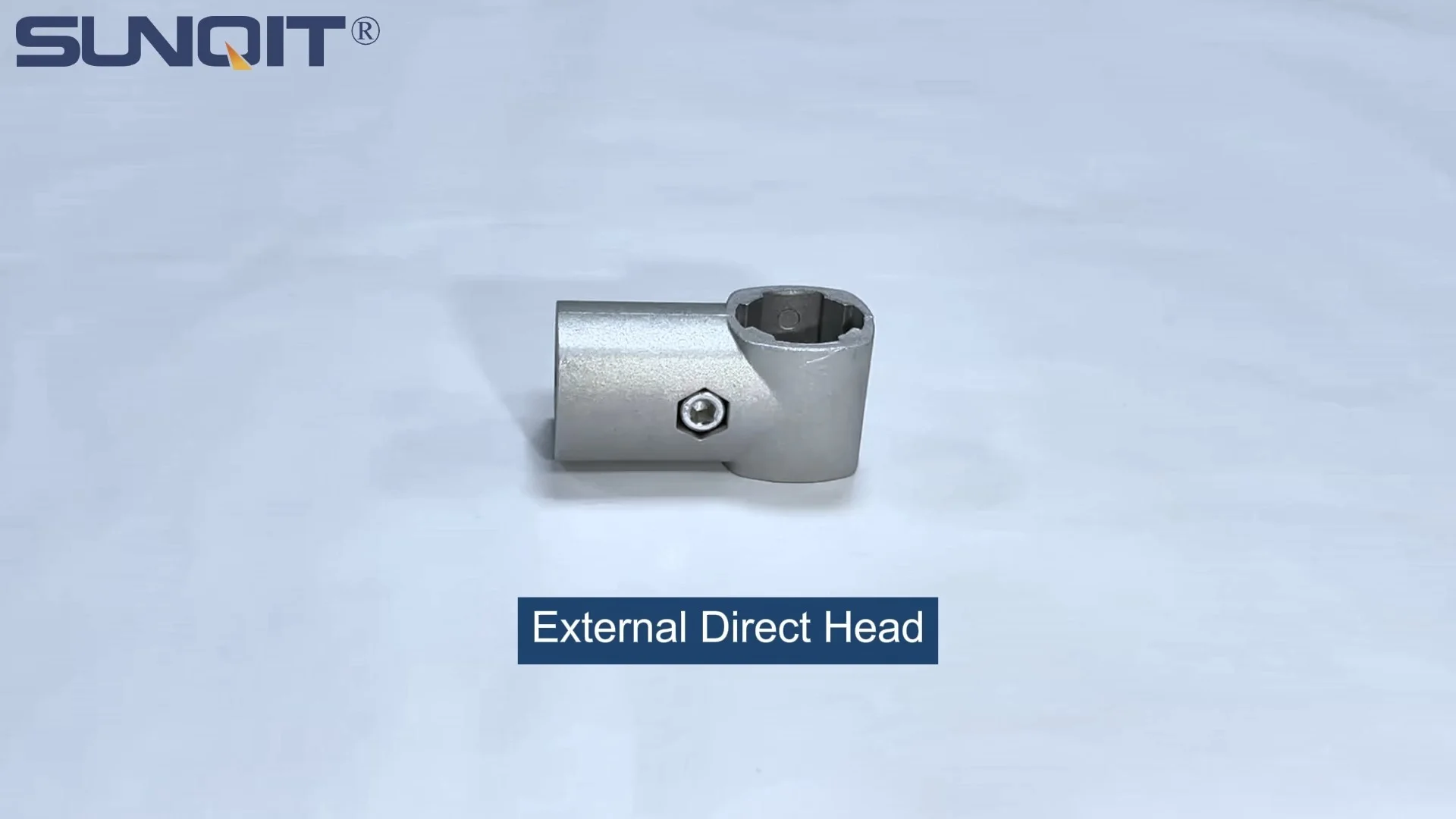
Aluminum 2 way pipe joint for 28mm aluminum pipe connection in 2 direction.
Running a small or medium-sized enterprise (SME) often feels like balancing on a tightrope. You've got to keep costs low, production efficient, and adapt quickly to market changes—all while competing with larger companies that have bigger budgets and more resources. When it comes to setting up or upgrading your workspace—whether it's a manufacturing floor, a warehouse, or a workshop—every decision counts. Invest too much in rigid, one-size-fits-all equipment, and you'll struggle to pivot when orders change. Cut corners with flimsy tools, and you'll end up spending more on repairs or replacements down the line. That's where two way aluminum pipe joints come in: a simple, versatile solution that's quietly revolutionizing how SMEs build, adapt, and grow their operations.
The SME Challenge: Flexibility vs. Affordability
Let's start with the basics. For most SMEs, the workspace is the heart of the business. It's where products are assembled, inventory is stored, and teams collaborate. But traditional workspace setups—think welded steel workbenches, fixed shelving, or custom-built flow racks—come with a hidden cost: inflexibility. A steel workbench bolted to the floor might handle heavy loads, but if your production line needs to shrink next quarter (or expand suddenly), that bench becomes dead weight. You either live with wasted space or pay to have it removed and replaced—money that could have gone into hiring new staff or upgrading machinery.
Then there's the issue of time. SMEs don't have the luxury of long setup phases. When a new order comes in, you need to rearrange your assembly line now , not next month. Welded structures or complex modular systems with proprietary parts? They require specialized labor, long lead times, and often a steep learning curve for your team. And let's not forget cost: high-grade steel or custom aluminum profiles can eat into your budget faster than a hungry intern at the snack bar. For a business operating on thin margins, that's a risk you can't always take.
So, what's the alternative? Enter two way aluminum pipe joints—a humble but powerful component that's changing the game for SMEs. These unassuming connectors, paired with lightweight aluminum profiles, let you build, modify, and repurpose everything from workbenches to flow racks in hours, not days. And best of all, they do it without breaking the bank.
What Are Two Way Aluminum Pipe Joints, Anyway?
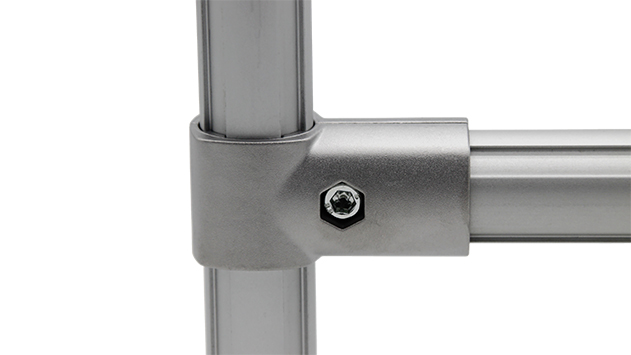
If you're not familiar with aluminum pipe systems, let's break it down. Aluminum profiles are lightweight, durable tubes (or "pipes") with a T-slot design—meaning they have grooves along their length that let you attach accessories like shelves, brackets, or, yes, joints. Two way aluminum pipe joints are the connectors that link these profiles together at (you guessed it) two points, forming stable, customizable structures. Unlike welded joints, which are permanent, these are mechanical: they clamp onto the profiles with screws or bolts, creating a strong hold that can still be disassembled and reconfigured later.
Think of them as the building blocks of a grown-up Erector Set—only sturdier, more practical, and designed for real-world use. They come in various designs: some pivot, some lock at fixed angles, others slide along the T-slot for precise positioning. And because they're made of aluminum, they're resistant to rust, lightweight enough for your team to handle without heavy equipment, and compatible with a wide range of aluminum profile accessories—from caster wheels to roller tracks.
But why "two way"? Because they connect two profiles at a time, making them ideal for simple, linear structures (like the legs of a workbench or the sides of a flow rack) or as part of more complex setups when combined with other joint types (three-way, four-way, etc.). For SMEs, this simplicity is a strength: you don't need a PhD in engineering to use them. A basic set of tools, a little common sense, and a few hours are all it takes to build something functional.
Why SMEs Are Falling in Love with Two Way Aluminum Pipe Joints
It's not just about being easy to use. Two way aluminum pipe joints solve three big problems for SMEs: cost, flexibility, and durability. Let's dive into each.
1. Cost-Effective: More Bang for Your Buck
Let's talk numbers. A traditional welded steel workbench might cost $500–$800, depending on size and customization. And that's before you factor in delivery, installation, or modifications if you need to adjust it later. If you outgrow it in six months? You're either stuck with it or paying to have it cut down (and losing money in the process). Two way aluminum pipe joints, on the other hand, let you build a similar workbench for a fraction of the cost. Aluminum profiles are cheaper than steel, and the joints themselves are affordable—often $5–$15 per piece. Even better, when you need to change the design, you don't throw away the old parts; you just take them apart and reuse the joints and profiles elsewhere.
Consider this: A small furniture manufacturer I spoke with recently was using old wooden workbenches that kept warping under heavy tools. They quoted a steel fabrication shop $2,000 for two custom workbenches. Instead, they bought aluminum profiles, two way joints, and a few accessories for $600 total. Their team built the workbenches in a day, and six months later, when they needed to add a shelf, they just bought a few extra profiles and joints for $50. No welding, no waiting, no wasted cash.
Case Study: A Bakery's Lean Makeover
Marta runs a small artisanal bakery with 12 employees. Her production area was cramped, with fixed steel shelving that left no room for a new dough mixer. She considered expanding the space (costly) or replacing the shelving (even costlier). Then a supplier introduced her to two way aluminum pipe joints. Using leftover aluminum profiles and $120 worth of joints, her team disassembled the old shelving and built a new, taller rack with adjustable shelves—freeing up floor space for the mixer. Total cost? $120 and a Saturday afternoon. "I could have never afforded custom steel shelving," she told me. "Now, if we add another mixer next year, we'll just reconfigure the rack again."
2. Flexibility: Adapt Like a Chameleon
If there's one thing SMEs need more than anything, it's flexibility. Markets shift, customer demands change, and new technologies emerge—your workspace should keep up. Two way aluminum pipe joints excel here because they're designed for iteration. Need to shorten a flow rack to make space for a new machine? Loosen the joints, remove a section of aluminum profile, and tighten them back up. Want to add casters to a workbench so it can roll between stations? Swap out the fixed feet for caster-equipped joints. No special tools, no contractors, no downtime.
This adaptability is a game-changer for lean systems—a methodology SMEs use to eliminate waste and boost efficiency. Lean manufacturing thrives on continuous improvement, and that means your workspace can't be static. A two way aluminum pipe joint system lets you implement 5S (Sort, Set in Order, Shine, Standardize, Sustain) principles without overcommitting. For example, you might start with a basic material rack, then add dividers or label holders as you refine your process. If a new step is added to the assembly line, you don't need to buy a whole new rack—just extend the existing one with a few more profiles and joints.
Compare that to traditional systems. A welded steel flow rack is built to last, but "last" doesn't mean "adapt." If you need to change its height, width, or orientation, you're looking at cutting, welding, and repainting—assuming it's even possible. With aluminum joints, change is part of the design.
3. Durability: Lightweight, but Tough as Nails
You might be thinking: "Aluminum? Isn't that flimsy compared to steel?" It's true—aluminum is lighter than steel, but that doesn't mean it's weak. Modern aluminum alloys (like the ones used in these profiles) are surprisingly strong, with a high strength-to-weight ratio. A well-built aluminum workbench using two way joints can easily support 200–300 pounds—more than enough for most SME applications, from electronics assembly to small-part manufacturing.
Aluminum also resists corrosion, which is a big plus if your workspace is humid (like a food processing plant) or exposed to chemicals (like a automotive repair shop). Unlike steel, it won't rust, so your equipment stays looking (and functioning) good for years. And because the joints are mechanical (not glued or welded), they don't weaken over time from vibration or temperature changes. Tighten them occasionally, and they'll keep holding strong.
4. Easy Assembly: No PhD Required
Let's be real: SMEs don't have teams of engineers on staff. Your maintenance guy might double as the IT support, and your production manager is probably also the shipping coordinator. The last thing you need is a workspace system that requires a training manual thicker than a phone book. Two way aluminum pipe joints? They're designed for your team—people who know their way around a wrench but aren't professional installers.
Most systems come with simple instructions: slide the joint onto the aluminum profile, align it where you want, tighten the screws with a hex key (included in many kits), and you're done. No welding, no drilling, no measuring with laser precision. Even a new hire can learn the ropes in an hour. That means you save on labor costs (no need to hire a contractor) and reduce downtime (your team can build or modify equipment during a slow shift or over the weekend).
I visited a small electronics assembly plant last year where the team built a custom testing station using two way aluminum pipe joints, aluminum profiles, and a few accessories. The project took three employees—none of whom had prior experience with modular systems—just four hours. "We followed the diagram, tightened some screws, and suddenly we had a station that fit our exact needs," the plant manager told me. "If we'd ordered a custom steel station, we'd still be waiting for it to ship."

Two Way Aluminum Pipe Joints in Action: Real-World Uses for SMEs
Still not sure how these joints could fit into your business? Let's look at some common applications where SMEs are using them to save time, money, and headaches.
Workbenches: The Backbone of Your Shop
Every workshop needs a good workbench, but "good" means different things to different businesses. A woodworker needs a sturdy surface for sawing; an electronics assembler needs a static-free (ESD-safe) bench with tool storage; a mechanic needs something that can handle heavy parts. Two way aluminum pipe joints let you build a workbench that checks all your boxes—without paying for features you don't need.
Start with a frame made of aluminum profiles and two way joints, then add a top (wood, laminate, ESD-safe material—whatever you need). Attach shelves, pegboards, or tool hooks using aluminum profile accessories. Add casters if you need mobility, or levelers if the floor is uneven. And if your needs change? Swap out the top, add a second tier, or reconfigure the shelves. A workbench built with two way joints isn't just furniture—it's a tool that grows with your business.
Flow Racks: Keep Materials Moving
In manufacturing and warehousing, flow racks (or gravity racks) keep materials moving from the loading end to the picking end, reducing the need for manual lifting and speeding up production. Traditional flow racks are often heavy, expensive, and hard to adjust. With two way aluminum pipe joints, you can build a lightweight, affordable flow rack that's tailored to your inventory.
Use aluminum profiles for the sides, two way joints to connect them, and roller tracks (another aluminum profile accessory) for the material flow. Adjust the angle of the rollers by changing the height of the joints, or add dividers to separate different parts. If you start stocking larger boxes, widen the rack by adding more profiles between the joints. It's that simple. And because aluminum is lightweight, you can even build mobile flow racks with casters, so you can move materials directly to the assembly line—cutting down on wasted steps.
Material Racks and Shelving: Organize Without Overspending
Inventory storage is a perennial headache for SMEs. Too much shelving, and you're wasting space; too little, and parts get lost or damaged. Two way aluminum pipe joints let you build material racks that fit your exact inventory—whether you're storing small components, tools, or finished products. Mix and match shelf heights, add bins or drawers, or even incorporate hooks for hanging items. And when your inventory changes (because it always does), you can adjust the shelves in minutes.
A small auto parts shop I worked with used to struggle with disorganized shelves that made it hard to find parts. They switched to an aluminum joint system, building racks with adjustable shelves and clear labeling. Now, employees can find parts in seconds, and when new parts are added, they just reposition the shelves. "We used to spend hours searching for missing parts," the owner said. "Now, that time goes into serving customers."
Lean System Stations: Building a More Efficient Workplace
As we mentioned earlier, lean systems rely on flexibility and continuous improvement. Two way aluminum pipe joints are the perfect partners for lean initiatives like kanban (visual scheduling) or cellular manufacturing. For example, you could build a kanban board frame using aluminum profiles and two way joints, then attach magnetic strips or card holders for task cards. If your team switches to a digital kanban system later? Repurpose the frame as a tool rack or a workstation divider.
Cellular manufacturing—where production is organized into small, self-contained "cells" instead of long assembly lines—also benefits from aluminum joint systems. Each cell can have its own custom workbench, material rack, and tool storage, all built to fit the cell's specific tasks. If production needs shift, you can rearrange the cells by moving the aluminum structures, rather than rebuilding them from scratch.

Two Way Aluminum Pipe Joints vs. the Competition: A Quick Comparison
Still on the fence? Let's compare two way aluminum pipe joints to other common workspace solutions to see how they stack up for SMEs.
| Feature | Two Way Aluminum Pipe Joints | Welded Steel Structures | Plastic Modular Systems | Traditional Wood Workbenches/Racks |
|---|---|---|---|---|
| Cost | Low to moderate; reusable parts reduce long-term costs | High; expensive materials and labor | Moderate; cheaper upfront but less durable | Low upfront; high replacement costs (warping, rotting) |
| Flexibility | High; easy to disassemble and reconfigure | Low; permanent, difficult to modify | Moderate; some adjustability but limited load capacity | Low; fixed design, hard to repair |
| Durability | High; rust-resistant, withstands heavy use | Very high; but prone to rust if not treated | Low to moderate; cracks under heavy loads | Low; susceptible to water, pests, and wear |
| Assembly Time | Fast (hours); no special tools needed | Slow (days); requires welding equipment and expertise | Fast (hours); but lightweight parts can be flimsy | Moderate (hours); requires basic carpentry skills |
| Weight | Lightweight; easy to move without heavy equipment | Heavy; requires machinery to move | Lightweight; but less stable for heavy loads | Heavy; hard to reposition |
As you can see, two way aluminum pipe joints strike a sweet spot between cost, flexibility, and durability—making them ideal for SMEs that need to do more with less.
Choosing the Right Two Way Aluminum Pipe Joints for Your Business
Not all two way aluminum pipe joints are created equal. To get the most out of your investment, keep these tips in mind:
- Match the joint to the profile size: Aluminum profiles come in different sizes (e.g., 20x20mm, 30x30mm, 40x40mm). Make sure the joints you buy are compatible with your profile's size and slot design.
- Consider load capacity: If you're building a workbench for heavy tools, opt for reinforced joints with higher weight ratings. For lighter applications (like a small parts rack), standard joints will do.
- Look for corrosion resistance: Most aluminum joints are naturally rust-resistant, but if your workspace is humid or exposed to chemicals, check for anodized or coated finishes for extra protection.
- Buy from a reputable supplier: Cheap, low-quality joints can bend or strip under pressure, undoing all your cost savings. Look for suppliers that offer warranties or have good reviews from other SMEs.
- Start small, then scale: You don't need to rebuild your entire shop at once. Start with one project—a workbench or a flow rack—and see how it goes. Once you're comfortable, expand to other areas.
Final Thoughts: Why Two Way Aluminum Pipe Joints Are a Smart Bet for SMEs
Running an SME is tough, but your workspace shouldn't be. Two way aluminum pipe joints offer a simple, affordable way to build the flexible, durable systems you need to compete. They let you adapt to changing demands, reduce waste, and keep costs under control—all while empowering your team to take ownership of their workspace.
Whether you're building a workbench, a flow rack, or a lean manufacturing cell, these joints prove that you don't need a big budget to have a world-class workspace. They're not just tools—they're an investment in your business's ability to grow, adapt, and thrive in a fast-changing market.
So, the next time you're staring at a clunky, outdated workbench or a rigid shelving unit that's holding your business back, remember: there's a better way. Two way aluminum pipe joints might not be the flashiest innovation, but for SMEs looking to do more with less, they're pure genius.