Two Way Aluminum Pipe Joints: A Smart Investment for Long-Term Production Efficiency

Related Product
Two Way Aluminum Pipe Joint
Aluminum 2 way pipe joint for 28mm aluminum pipe connection in 2 direction.
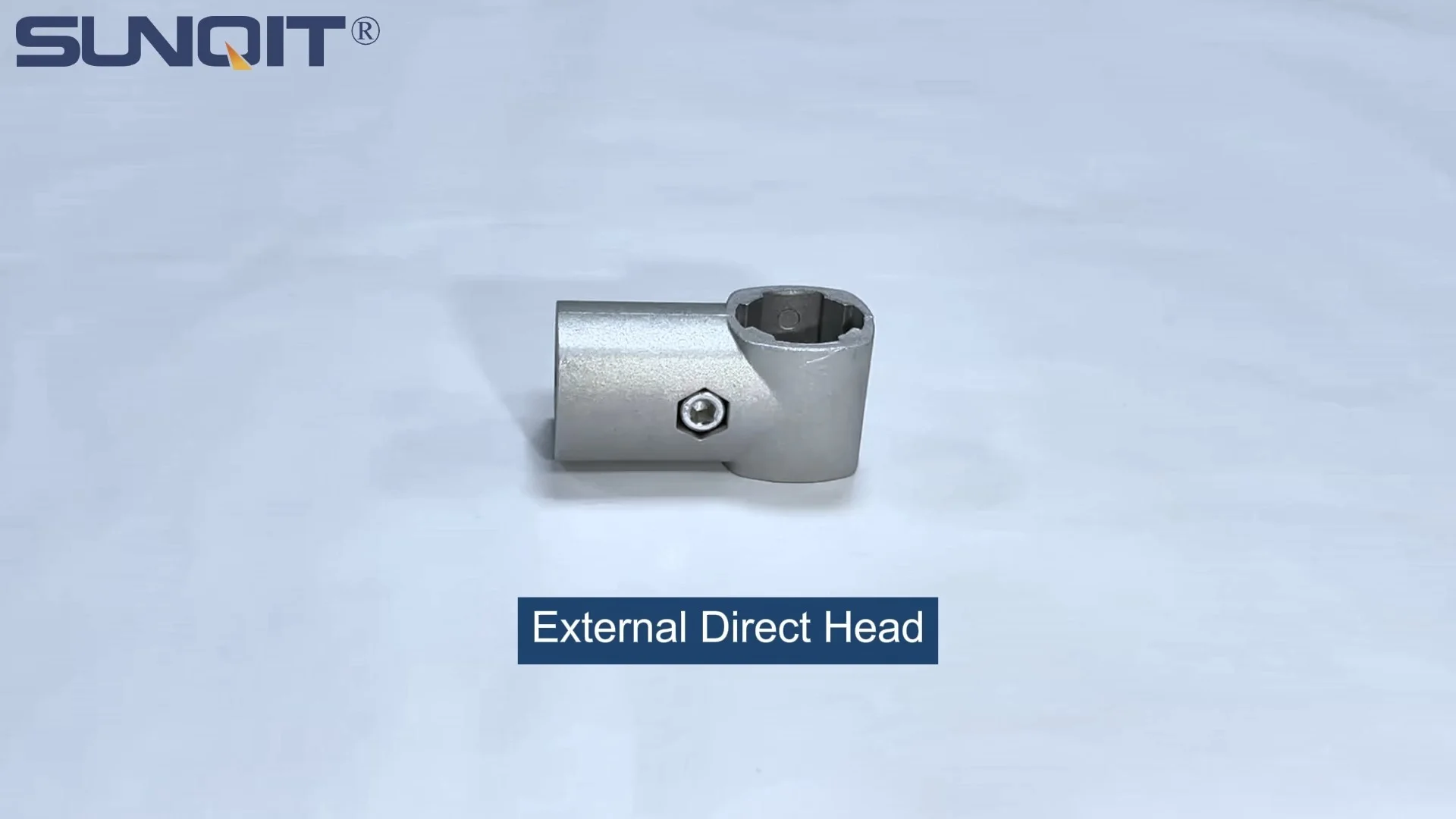
Two Way Aluminum Pipe Joint
In the fast-paced world of manufacturing and production, efficiency isn't just a buzzword—it's the backbone of profitability. Every minute spent waiting for equipment adjustments, every dollar wasted on frequent replacements, and every square foot of floor space underutilized chips away at your bottom line. For years, production managers and facility owners have searched for solutions that balance durability, flexibility, and cost-effectiveness. Enter two way aluminum pipe joints: a seemingly small component that's quietly revolutionizing how factories, warehouses, and assembly lines operate. These unassuming connectors are more than just hardware; they're a gateway to leaner operations, adaptable workspaces, and sustained long-term efficiency. Let's dive into why investing in two way aluminum pipe joints might be the smartest decision you make for your production floor.

What Are Two Way Aluminum Pipe Joints, Anyway?

Before we jump into their benefits, let's clarify what two way aluminum pipe joints are. Simply put, they're specialized connectors designed to join aluminum pipes or profiles at a 90-degree angle, creating stable, modular structures. Think of them as the "building blocks" of industrial furniture and material handling systems—workbenches, flow racks, assembly stations, and even mobile carts all rely on these joints to hold their shape and function. Made from high-grade aluminum, these joints are engineered for strength and precision. Unlike clunky steel welds or flimsy plastic connectors, two way aluminum pipe joints feature a sleek, lightweight design that doesn't compromise on sturdiness. They typically include internal threads or clamping mechanisms that secure pipes tightly, allowing for quick assembly and disassembly without specialized tools. This modularity is key: instead of building a fixed workstation that becomes obsolete when your needs change, you can reconfigure, expand, or repurpose structures with minimal effort. But what sets them apart from other joints? Their "two way" designation means they connect two pipes at a right angle, making them ideal for basic frameworks. Pair them with three-way or four-way joints, and you unlock endless possibilities for customization. Whether you're building a simple workbench or a complex flow rack system, these joints form the foundation of a setup that grows with your business.

Why Aluminum? The Material Advantage

Aluminum isn't chosen by accident here. When it comes to industrial applications, the material matters—and aluminum brings a unique set of benefits that steel, plastic, and other metals can't match:
  • Lightweight yet strong: Aluminum has an impressive strength-to-weight ratio, meaning structures built with aluminum joints are easy to move (when needed) but tough enough to handle daily wear and tear. A workbench assembled with aluminum joints might weigh half as much as a steel-welded one, making reconfiguration a one-person job instead of a team effort.
  • Corrosion resistance: Unlike steel, aluminum naturally forms a protective oxide layer that resists rust and corrosion. This is a game-changer in environments with moisture, chemicals, or high humidity—think food processing plants, automotive workshops, or even outdoor storage areas. Your joints won't degrade over time, saving you from costly replacements.
  • Low maintenance: Aluminum doesn't require painting, coating, or frequent cleaning to stay in top shape. A quick wipe with a damp cloth is usually all it takes to keep joints looking and functioning like new. This frees up your maintenance team to focus on more critical tasks.
  • Sustainable: Aluminum is 100% recyclable, and its production process is becoming increasingly eco-friendly. For companies prioritizing sustainability, choosing aluminum joints aligns with green initiatives without sacrificing performance.
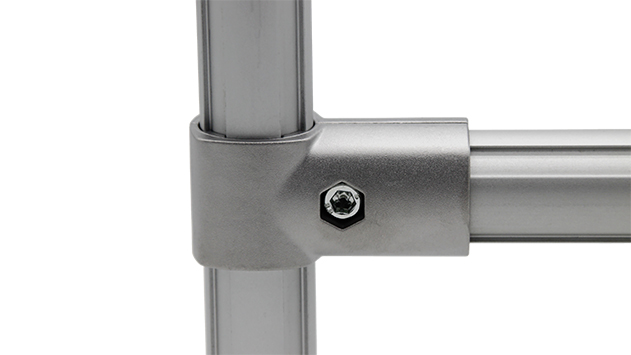
When you combine these material benefits with the precision engineering of two way joints, you get a component that's built to last—even in the harshest industrial environments.

The Case for Long-Term Efficiency: How Two Way Aluminum Pipe Joints Deliver

So, why are these joints a "smart investment" for long-term efficiency? Let's break it down into tangible, real-world advantages that directly impact your operations.

1. Flexibility to Adapt to Changing Needs

The only constant in manufacturing is change. New product lines, updated processes, seasonal demand spikes—your workspace needs to keep up. Traditional fixed structures (think welded steel workbenches or bolted-down shelving) trap you in a rigid layout. If you need to expand a flow rack to accommodate larger parts or shrink a workstation to free up floor space, you're looking at days of downtime, welding crews, or expensive new equipment. Two way aluminum pipe joints eliminate this problem. Thanks to their modular design, reconfiguring a structure takes hours, not days. Let's say your assembly line switches from producing small electronics to larger appliances. With aluminum joints, you can:
  • Loosen the joints with a hex key (no welding torch required).
  • Adjust the height or width of the workbench by adding/removing aluminum pipes.
  • Reattach the joints to secure the new configuration.
The result? Minimal downtime, no specialized labor costs, and a workspace that adapts to your needs in real time. This flexibility is especially valuable for small to medium-sized businesses (SMBs) that can't afford to invest in custom equipment for every new project. With aluminum joints, your initial setup becomes a long-term asset, not a one-time expense.

2. Durability That Reduces Replacement Costs

Let's talk numbers. Plastic lean pipe joints might cost less upfront, but how long do they last? In a busy production environment, plastic cracks under heavy loads, warps in high temperatures, and degrades when exposed to oils or chemicals. You might replace plastic joints every 6–12 months, adding up to hidden costs over time. Steel joints, while strong, rust and corrode if not regularly maintained—another ongoing expense. Two way aluminum pipe joints, on the other hand, are built for the long haul. Their corrosion resistance and robust construction mean they can withstand years of heavy use without degradation. We've spoken to facility managers who report using the same aluminum joints for over a decade, even in high-traffic areas like assembly lines and loading docks. When you factor in the cost of replacing plastic or steel joints every year, aluminum pays for itself in 2–3 years. It's not just an upfront investment; it's a cost-saver over the lifecycle of your equipment.

3. Seamless Integration with Lean Systems

Lean manufacturing isn't just about cutting costs—it's about creating value by eliminating waste. Two way aluminum pipe joints align perfectly with lean principles, making them a cornerstone of efficient, waste-free operations:
  • Waste reduction: Modular structures mean you only use the materials you need. No overbuilding, no excess inventory of custom parts, and no scrapping entire systems when needs change.
  • 5S compatibility: 5S (Sort, Set in Order, Shine, Standardize, Sustain) relies on organized, clutter-free workspaces. Aluminum joint systems let you design workbenches and flow racks that keep tools and materials exactly where they're needed, reducing search time and improving workflow.
  • Continuous improvement: Lean thrives on iteration. With aluminum joints, testing a new workstation layout or material flow path is low-risk and low-cost. If it works, you keep it; if not, you reconfigure—no wasted resources.
For example, a automotive parts manufacturer we worked with recently used two way aluminum pipe joints to build a custom flow rack system for their assembly line. By adjusting the joint positions, they optimized the rack to hold parts in the exact order they're needed, cutting down on operator movement by 20%. That's 20% less time wasted walking, 20% more time spent assembling—and 20% higher output, all thanks to a system that could evolve with their process.

Real-World Applications: Where Two Way Aluminum Pipe Joints Shine

Two way aluminum pipe joints aren't limited to one type of structure—their versatility makes them indispensable across a range of applications. Here are just a few areas where they're making a difference:

Workbenches: The Heart of the Assembly Line

Workbenches are where the magic happens, and their design directly impacts operator productivity. A wobbly, cluttered, or poorly sized workbench leads to fatigue, errors, and slowdowns. Two way aluminum pipe joints let you build workbenches tailored to your team's needs: height-adjustable for ergonomics, with built-in tool holders, shelving, or even integrated ESD (electrostatic discharge) protection for electronics manufacturing. What's more, when your team switches to a new product, you don't need a new workbench. Just adjust the joints to add a shelf, widen the surface, or attach a new accessory. One electronics manufacturer we know used aluminum joints to create a modular workbench that could be reconfigured in under an hour for each new circuit board model—saving them the cost of 10+ custom workbenches annually.

Flow Racks: Streamlining Material Handling

Flow racks are critical for keeping materials moving smoothly from storage to production. A well-designed flow rack reduces picking time, minimizes errors, and ensures FIFO (First In, First Out) inventory management. Two way aluminum pipe joints excel here because they allow you to adjust shelf angles, heights, and lengths to match your materials—whether you're storing small components, heavy machinery parts, or delicate electronics. For instance, a warehouse distributing medical supplies used aluminum joints to build flow racks with adjustable roller tracks. When they started handling larger packages, they simply repositioned the joints to increase shelf spacing, avoiding the need to buy new racks. The result? A 30% reduction in material handling time and zero new equipment costs.

Mobile Carts and Trolleys: Flexibility on Wheels

In dynamic environments, mobility is key. Mobile carts transport materials, tools, and finished products across the floor, but they need to be sturdy enough to handle loads without tipping or breaking. Two way aluminum pipe joints, paired with durable casters, create lightweight yet robust carts that are easy to maneuver. When your needs change—say, you need a cart with more shelves or a larger surface area—simply add or reposition the joints. No need to buy a whole new cart; just upgrade the one you have.

How Do They Stack Up? A Comparison of Joint Types

To truly understand the value of two way aluminum pipe joints, it helps to see how they compare to other common joint types. Let's break it down:
Joint Type Material Installation Time Reusability Load Capacity Corrosion Resistance Estimated Lifespan Best For
Two Way Aluminum Pipe Joint Aluminum 10–15 minutes (basic setup) High (unlimited reconfigurations) Medium to high (up to 500 lbs per joint) Excellent (resists rust, chemicals) 10+ years Lean systems, workbenches, flow racks, mobile carts
Plastic Lean Pipe Joint Plastic (PVC, nylon) 5–10 minutes Medium (can crack after 2–3 reconfigurations) Low to medium (up to 200 lbs per joint) Poor (degrades in heat/chemicals) 1–3 years Temporary setups, light loads
Steel Welded Joint Steel 1–2 hours (requires welding equipment) None (permanently fixed) Very high (1000+ lbs per joint) Poor (rusts without coating) 5–7 years (with maintenance) Heavy, fixed structures (e.g., industrial shelving)
Three Way Aluminum Joint Aluminum 15–20 minutes High Medium to high Excellent 10+ years Complex structures (e.g., multi-level racks)
As the table shows, two way aluminum pipe joints strike the perfect balance between flexibility, durability, and cost. They outperform plastic in longevity and load capacity, and they're far more adaptable than steel welds. For most production environments, they're the clear choice for long-term efficiency.

The Long-Term Impact: Beyond the Bottom Line

Investing in two way aluminum pipe joints isn't just about saving money—it's about building a more resilient, efficient, and employee-friendly workplace. Here's how they impact your operations beyond the balance sheet:
  • Reduced downtime: Quick reconfigurations mean less time waiting for equipment changes, keeping your production line running smoothly.
  • Happier employees: Ergonomic, customizable workspaces reduce fatigue and frustration, boosting morale and reducing turnover.
  • Scalability: As your business grows, your aluminum joint systems grow with you. No need to overhaul your workspace every time you expand.
  • Competitive edge: Lean, adaptable operations let you respond faster to market changes, outpacing competitors stuck with rigid setups.
Consider this: A small electronics manufacturer with 50 employees switched to aluminum joint systems and reported a 15% increase in productivity within the first year. They attributed this to reduced downtime, faster changeovers, and happier operators. That 15% boost translated to an extra $200,000 in annual revenue—all from an initial investment of $15,000 in aluminum pipes and joints. The ROI speaks for itself.

Choosing the Right Supplier: What to Look For

Not all two way aluminum pipe joints are created equal. To maximize your investment, you need a supplier that delivers quality, reliability, and support. Here are key factors to consider:
  • Material quality: Ensure the aluminum is high-grade (e.g., 6061-T6) for optimal strength and corrosion resistance.
  • Precision manufacturing: Joints should fit snugly with pipes/profiles to avoid wobbling or loosening over time.
  • Range of accessories: Look for suppliers that offer a full line of compatible pipes, casters, roller tracks, and other accessories to avoid compatibility issues.
  • Technical support: A good supplier will help you design your system, answer questions, and troubleshoot issues—saving you time and headaches.
Don't settle for the cheapest option; prioritize quality and service. Remember, these joints are the foundation of your workspace—cutting corners here will cost you more in the long run.

Conclusion: Invest in Efficiency, Invest in Aluminum

In the end, two way aluminum pipe joints are more than just connectors—they're a strategic investment in your production floor's future. They offer the rare combination of durability, flexibility, and cost-effectiveness that modern manufacturing demands. Whether you're building workbenches, flow racks, mobile carts, or entire lean systems, these joints empower you to create a workspace that adapts, grows, and thrives in an ever-changing environment. So, if you're tired of rigid, short-lived equipment that holds your efficiency hostage, it's time to make the switch. Invest in two way aluminum pipe joints, and watch as your production line becomes leaner, more adaptable, and more profitable—today, tomorrow, and for years to come. After all, in manufacturing, the smartest investments are the ones that keep paying off.


Get In Touch with us

Hey there! Your message matters! It'll go straight into our CRM system. Expect a one-on-one reply from our CS within 7×24 hours. We value your feedback. Fill in the box and share your thoughts!