- Company Articles
- Products and Technology
- Technology Sharing
- Two Way Aluminum Pipe Joints and IoT: Integrating Smart Manufacturing Systems

Two Way Aluminum Pipe Joints and IoT: Integrating Smart Manufacturing Systems
Related Product
Two Way Aluminum Pipe Joint
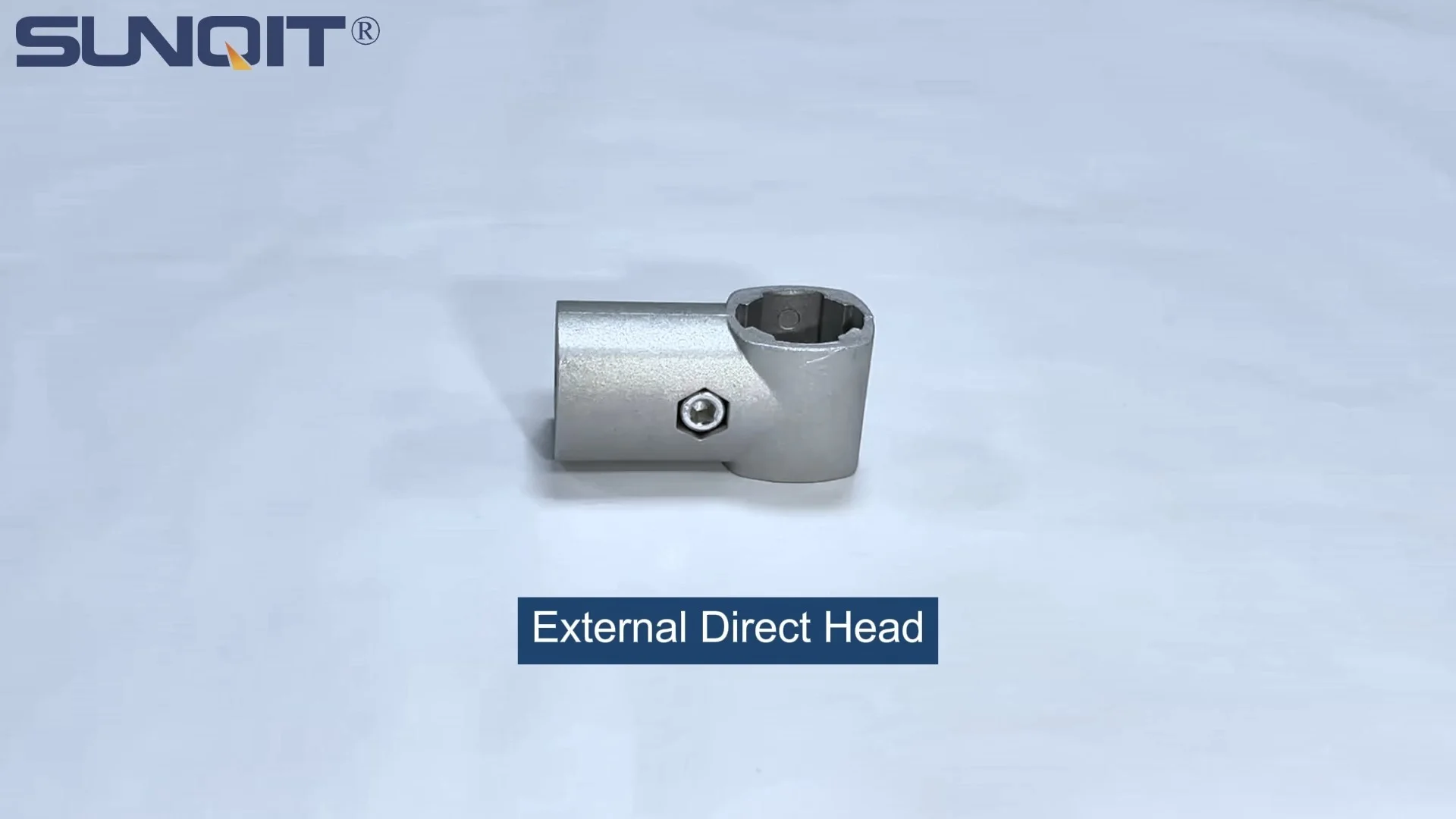
Aluminum 2 way pipe joint for 28mm aluminum pipe connection in 2 direction.
Introduction: The New Era of Manufacturing
Walk into any modern factory today, and you'll notice a quiet revolution unfolding. The clunky, rigid assembly lines of the past are giving way to dynamic, adaptable workspaces where machines "talk" to each other, and data flows as freely as the materials moving along conveyor belts. This is the promise of Industry 4.0—smart manufacturing systems that blend physical infrastructure with digital intelligence to boost efficiency, reduce waste, and respond faster to changing demands. But behind every smart factory, there's a backbone: the physical structures that hold it all together. And increasingly, that backbone is built on something surprisingly simple yet remarkably versatile: aluminum pipe joints.
At first glance, a two way aluminum pipe joint might seem like just another piece of hardware. It's a small, unassuming component that connects two aluminum pipes at a fixed angle, allowing for the creation of frames, workbenches, material racks, and more. But in the context of smart manufacturing, these joints are far more than just connectors. They're the building blocks of flexible, modular systems that can evolve with a factory's needs—systems that, when paired with the Internet of Things (IoT), become powerful tools for driving productivity. In this article, we'll explore how two way aluminum pipe joints are transforming the physical landscape of manufacturing, and how integrating them with IoT technology is unlocking a new level of smart, data-driven efficiency.
The Role of Aluminum Pipe Joints in Modern Factories
Before diving into the "smart" side of things, let's take a step back and appreciate why aluminum has become the material of choice for modern factory setups. Traditional manufacturing relied heavily on fixed, welded steel structures—sturdy, but inflexible. If a factory needed to reconfigure a production line to accommodate a new product, it meant cutting, welding, and rebuilding from scratch. This was time-consuming, costly, and often led to downtime that no business could afford.
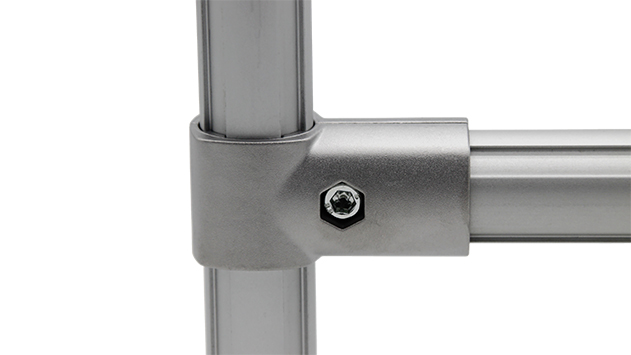
Aluminum changed that. Lightweight yet strong, resistant to corrosion, and easy to work with, aluminum pipes and profiles quickly became the go-to for building modular systems. And at the heart of these systems are the joints—components that allow pipes to be connected, disconnected, and reconnected without specialized tools or permanent modifications. Among the most widely used are two way aluminum pipe joints, which, as the name suggests, connect two pipes at a 90-degree angle (though some designs allow for adjustable angles). These joints are typically made from die-cast aluminum or high-strength plastic, with internal threads or locking mechanisms that secure the pipes in place. The result? A system that can be assembled in hours, reconfigured in minutes, and adapted to almost any task.
Consider a simple example: a workbench. Using aluminum pipes and two way joints, a factory can build a workbench tailored to a specific assembly task—say, assembling small electronic components. The height can be adjusted, shelves can be added, and accessories like tool holders or LED lights can be attached with minimal effort. If the task changes next month—maybe the factory shifts to larger parts—the workbench can be disassembled, the pipes cut to new lengths, and the joints reused to build a taller, sturdier bench. This flexibility is the cornerstone of lean system principles, which focus on minimizing waste and maximizing value. Aluminum pipe joints make lean manufacturing not just a philosophy, but a practical, everyday reality.
Two Way Aluminum Pipe Joints: Design and Functionality
To understand why two way aluminum pipe joints are so valuable, let's take a closer look at their design. Unlike traditional steel fittings, which often require welding or complex fasteners, these joints are engineered for simplicity. Most feature a clamp-style design: the joint has two hollow ends, each with a set of screws or levers. When you insert an aluminum pipe into each end, tightening the screws compresses a rubber or metal sleeve inside the joint, creating a secure, vibration-resistant connection. This "tool-less" assembly is a game-changer for factory workers, who can build or modify structures without waiting for a maintenance team with welding equipment.
But it's not just about ease of use—two way joints are also designed for durability. Aluminum's natural resistance to rust and corrosion means these joints hold up well in harsh factory environments, where exposure to oils, coolants, or humidity is common. Many joints also feature reinforced stress points, ensuring they can support heavy loads without bending or breaking. For example, a two way joint used in a material rack b (to borrow a term from our keyword list) might need to support hundreds of pounds of inventory; a well-designed joint will distribute that weight evenly across the connected pipes, preventing failure.
Another key advantage is compatibility. Two way aluminum pipe joints are typically standardized to fit common pipe diameters, such as 28mm or 40mm, which are widely available from suppliers. This means factories don't have to worry about mismatched parts—they can mix and match joints from different manufacturers, or even combine two way joints with other types (like three-way or adjustable-angle joints) to create complex structures. Whether building a simple hand trolley or a multi-level roller track system, the modularity of these joints ensures that the possibilities are nearly endless.

IoT Integration: Making Physical Systems Smart
Now, let's bring IoT into the picture. The Internet of Things refers to the network of physical devices—sensors, actuators, cameras, and more—that are embedded with electronics, software, and connectivity, allowing them to collect and exchange data. In manufacturing, IoT transforms "dumb" machines into "smart" ones by giving them the ability to monitor their own performance, track materials, and communicate with other systems. But for IoT to work effectively, it needs a physical platform to attach to—and that's where aluminum pipe joints come in.
Imagine a workbench built with aluminum pipes and two way joints. On its own, it's a flexible, functional workspace. But add a few IoT sensors, and it becomes a hub of data collection. For example, a small vibration sensor attached to the workbench frame can detect when a machine mounted on it is operating outside its normal parameters—signaling potential wear or a need for maintenance. A weight sensor under the workbench surface can track how much material is being processed, alerting managers when stock is low. A proximity sensor near the roller track (another keyword!) at the edge of the workbench can log how long parts spend waiting to be assembled, highlighting bottlenecks in the production process.
The beauty of using aluminum pipe joints here is that they make it easy to mount these sensors. The joints themselves often have threaded holes or slots designed for accessories, so sensors can be attached without drilling into the pipes. And because the workbench is modular, adding or moving sensors is as simple as repositioning a joint or adding a new pipe segment. This adaptability is crucial in IoT, where sensor placement often needs to evolve as a factory learns more about its processes.
But data collection is just the first step. The real power of IoT lies in what happens next: analyzing the data to drive action. For example, if the vibration sensor on the workbench detects unusual activity, it can send an alert to a maintenance team's dashboard, allowing them to address the issue before it causes a breakdown. If the weight sensor shows that a particular part is being used faster than expected, the system can automatically trigger a reorder from the supplier. Over time, this data can even be used to optimize the workbench's design—maybe moving the roller track to a different position to reduce wait times, or adjusting the height to reduce worker fatigue. In short, the combination of two way joints (which provide physical flexibility) and IoT (which provides data-driven insights) creates a system that doesn't just react to problems, but prevents them.

Case Study: Building a Smart Workbench with Two Way Joints and IoT
To make this more concrete, let's walk through a hypothetical (but realistic) case study of a small electronics manufacturer that upgraded its production line using two way aluminum pipe joints and IoT. Let's call the company "TechFlow." Before the upgrade, TechFlow's assembly line relied on fixed wooden workbenches and manual processes. Workers had to walk back and forth to fetch parts from a distant material rack, and managers had no way to track how long each assembly step took. Production delays were common, and reconfiguring the line for new products took days.
TechFlow's solution? A modular workbench system built with aluminum pipes, two way joints, and integrated IoT sensors. Here's how it worked:
Step 1: Building the Physical Structure
First, TechFlow's team designed a custom workbench using 40mm aluminum pipes and two way joints. They chose aluminum for its lightweight strength and the joints for their ease of assembly. The workbench featured a flat surface for assembly, a lower shelf for tools, and a roller track along the back edge to feed parts directly to the workers. The roller track was mounted using specialized brackets attached to the two way joints, allowing it to be adjusted for height or angle as needed. Since the joints required no welding, the team assembled the entire workbench in under four hours—no contractors needed.
Step 2: Adding IoT Sensors
Next, they integrated IoT sensors into the workbench: a weight sensor under the roller track to measure incoming parts, a motion sensor to detect when a worker was at the bench, and a small camera (with privacy safeguards) to track assembly steps. These sensors were powered by a battery pack mounted under the workbench, and they connected to TechFlow's network via Wi-Fi. The data was sent to a cloud-based dashboard that managers could access from their computers or phones.
Step 3: Analyzing and Acting on Data
Within the first week, the data revealed a pattern: workers were spending 20% of their time waiting for parts to arrive on the roller track. The team realized the track was positioned too high, causing parts to move slowly. Using the two way joints, they lowered the roller track by 15cm—adjustment took 10 minutes—and wait times dropped by half. A month later, when TechFlow introduced a new, larger product, they simply disassembled part of the workbench, added longer pipes, and reconnected the joints to create a wider surface. The IoT sensors were easily moved to the new configuration, and the system was back up and running in an hour.
The results? Production output increased by 30%, downtime due to reconfigurations dropped by 90%, and worker satisfaction improved as the ergonomic design reduced fatigue. "The two way joints made the workbench feel like a Lego set—we can build anything we need, whenever we need it," said one production manager. "And the IoT data? It's like having a crystal ball that tells us exactly where our bottlenecks are."
The Benefits of Integrating Two Way Joints and IoT
TechFlow's story highlights just a few of the benefits of combining two way aluminum pipe joints with IoT. Let's break down the key advantages more broadly:
| Benefit | How Two Way Joints Contribute | How IoT Contributes |
|---|---|---|
| Flexibility | Modular design allows quick reconfiguration of workbenches, racks, and tracks without welding or specialized tools. | Sensors can be moved or added as the physical setup changes, ensuring data collection adapts to new configurations. |
| Efficiency | Customizable structures (e.g., roller tracks at optimal heights) reduce unnecessary movement and wait times. | Real-time data on machine performance and material flow identifies bottlenecks before they cause delays. |
| Cost Savings | Reusable joints and pipes lower the cost of reconfiguring or expanding systems compared to fixed steel structures. | Predictive maintenance alerts reduce unexpected downtime and repair costs. |
| Scalability | Systems can grow incrementally—adding new workbenches or racks by simply connecting more pipes and joints. | IoT networks can scale with the physical system, adding more sensors as needed without overhauls. |
Challenges and Solutions
Of course, integrating two way aluminum pipe joints with IoT isn't without challenges. Let's address a few common concerns and how to overcome them:
Challenge 1: Initial Cost
Aluminum pipe joints and IoT sensors can have a higher upfront cost than traditional steel or wooden structures. However, this is often offset by long-term savings. For example, a modular aluminum workbench might cost twice as much as a wooden one, but it can be reused for multiple configurations over five years, while the wooden bench would need to be replaced entirely each time. IoT sensors, too, pay for themselves through reduced downtime and improved efficiency.
Challenge 2: Technical Expertise
Some factories worry about the technical skills needed to set up IoT systems. The good news is that modern IoT platforms are designed to be user-friendly, with plug-and-play sensors and intuitive dashboards. Many suppliers also offer setup support, and there are plenty of online resources for learning the basics. As for the aluminum joints, most workers can learn to assemble them in minutes with a quick tutorial.
Challenge 3: Data Security
With IoT comes the risk of data breaches. To mitigate this, factories should use encrypted Wi-Fi networks, secure cloud platforms, and limit sensor data to only what's necessary (e.g., avoiding sensitive information like worker IDs). Regular software updates and strong passwords also go a long way in keeping data safe.
Future Trends: Where Two Way Joints and IoT Go Next
Looking ahead, the integration of two way aluminum pipe joints and IoT is only going to deepen. Here are a few trends to watch:
1. AI-Powered Predictive Maintenance
As IoT sensors collect more data, artificial intelligence (AI) algorithms will become better at predicting when a joint or pipe might fail—for example, detecting tiny vibrations that signal a loose connection. This will allow factories to perform maintenance proactively, before a breakdown occurs.
2. Augmented Reality (AR) Setup Guides
Imagine using AR glasses to see step-by-step instructions for assembling a workbench with two way joints—virtual arrows pointing to where each pipe should go, and real-time feedback if a joint is tightened too much or too little. AR could make modular assembly even faster and more error-proof.
3. Sustainability Focus
Aluminum is already a sustainable material (it's 100% recyclable), but future joints may be designed with even more eco-friendly materials, like recycled aluminum or biodegradable plastics for non-structural parts. IoT sensors could also track energy usage in modular systems, helping factories reduce their carbon footprint.
Conclusion: The Power of Combining Physical and Digital
In the end, the story of two way aluminum pipe joints and IoT is a story about synergy. The joints provide the physical flexibility that modern factories need to stay agile, while IoT provides the digital intelligence to make that flexibility count. Together, they turn static workspaces into dynamic, responsive systems that can adapt to change, learn from data, and continuously improve.
For factory managers, this means less time dealing with downtime and more time innovating. For workers, it means more comfortable, efficient tools that make their jobs easier. And for the manufacturing industry as a whole, it means a step closer to the promise of Industry 4.0—a future where factories are not just places of production, but hubs of intelligence and creativity.
So the next time you see a simple aluminum joint connecting two pipes, remember: it's not just a piece of hardware. It's a bridge between the physical and digital worlds—a small but mighty player in the smart manufacturing revolution.