- Company Articles
- Products and Technology
- Product knowledge
- Two Way Aluminum Pipe Joints: Enabling Just-In-Time Production with Flexible Setups

Two Way Aluminum Pipe Joints: Enabling Just-In-Time Production with Flexible Setups
Related Product
Two Way Aluminum Pipe Joint
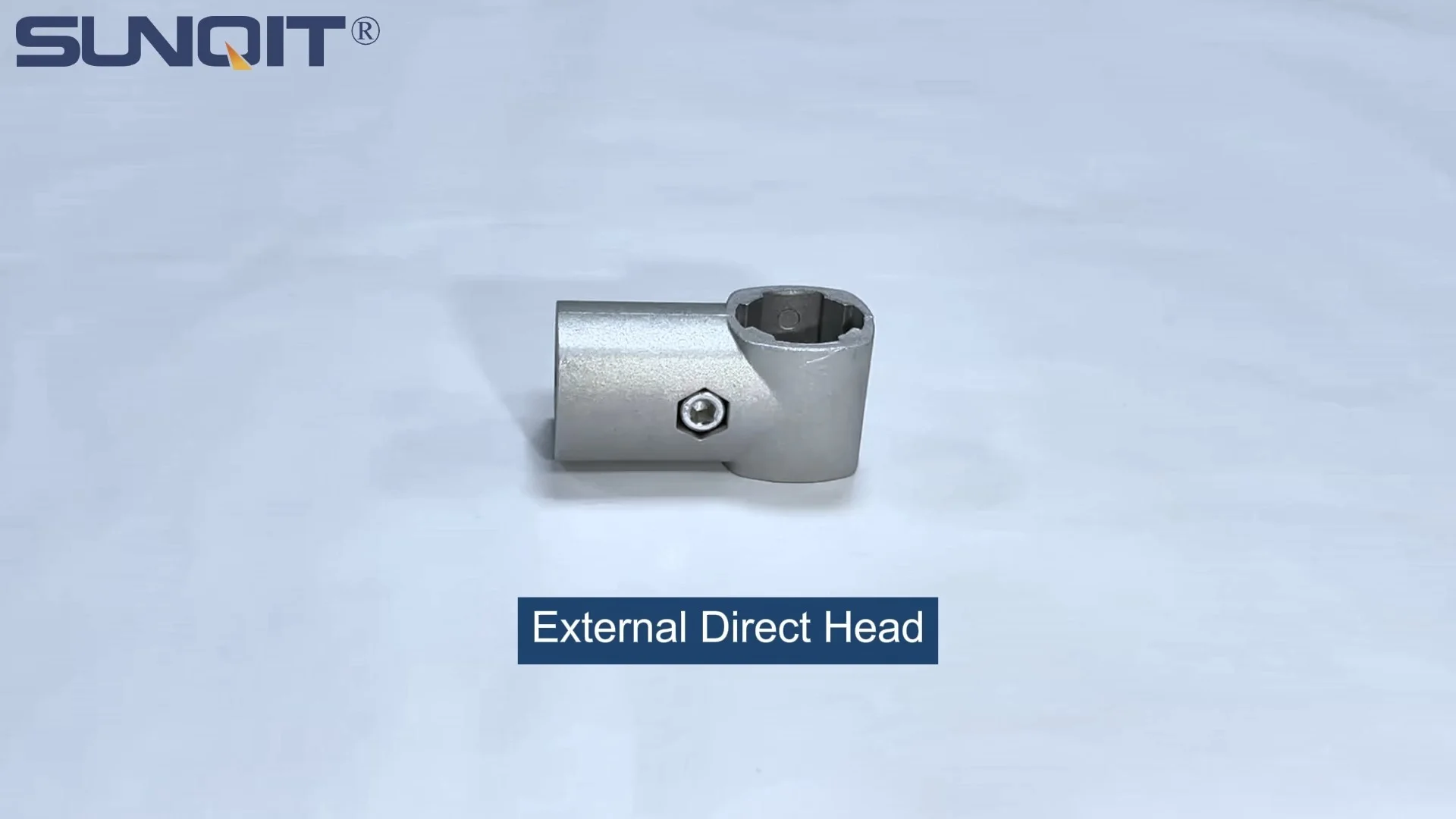
Aluminum 2 way pipe joint for 28mm aluminum pipe connection in 2 direction.
In today's fast-paced manufacturing world, staying ahead means more than just producing quality products—it means adapting quickly. Whether you're a small electronics assembler or a large automotive parts manufacturer, the pressure to meet shifting customer demands, reduce waste, and keep production lines running smoothly is constant. Just-In-Time (JIT) production, with its focus on minimizing inventory and responding to real-time needs, has become the gold standard. But here's the catch: traditional production setups—think heavy steel racks, bolted-down workbenches, and rigid conveyor systems—weren't built for agility. Reconfiguring them takes hours (or days), eating into valuable time and slowing down your ability to pivot. That's where two way aluminum pipe joints come in. These unassuming connectors are quietly revolutionizing how factories design, build, and adapt their workspaces, turning rigid lines into flexible, lean systems that thrive in the age of JIT.
What Are Two Way Aluminum Pipe Joints, Anyway?
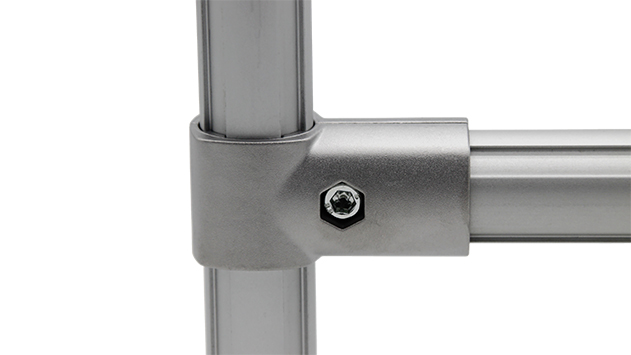
Let's start with the basics. Two way aluminum pipe joints are modular connectors designed to link aluminum pipes (or aluminum profile ) together quickly and securely. Unlike traditional steel joints that require welding or heavy bolts, these aluminum joints are engineered for simplicity: most snap or twist into place, using friction or internal locking mechanisms to create sturdy connections. They're lightweight, corrosion-resistant, and built to handle the daily wear and tear of a busy factory floor.
What makes them "two way"? Simply put, they allow two pipes to connect at a fixed angle (often 90 degrees, but some designs offer adjustability) without the need for complex tools. Picture this: you're building a workbench. With a two way joint, you can attach a vertical support pipe to a horizontal surface frame in seconds—no welding, no drilling, just a quick twist. And if tomorrow you need that workbench to be taller? Loosen the joint, adjust the pipe, retighten, and you're done. It's that easy.
These joints are typically made from high-grade aluminum alloy, which gives them a winning combination of strength and lightness. A single joint might weigh less than a pound but can support tens of pounds of weight, depending on the design. This lightweight nature is a game-changer for factory workers who need to move or reconfigure equipment without heavy machinery.
Why Aluminum Profile Is the Perfect Partner for These Joints
Two way aluminum pipe joints don't work in isolation—they're part of a larger ecosystem, and their most important collaborator is aluminum profile . Aluminum profiles (sometimes called aluminum extrusion profiles) are long, hollow tubes with standardized grooves (called T-slots) along their length. These grooves make it easy to attach accessories, brackets, or, you guessed it, two way joints. Together, the joints and profiles form a modular building system that's limited only by your imagination.
Aluminum profile brings three key benefits to the table: durability, versatility, and consistency. Unlike wood or plastic, aluminum resists dents, rust, and warping, even in harsh factory environments. Its T-slot design means you can add or remove components—like shelves, tool holders, or conveyor rails—anywhere along the profile, not just at fixed intervals. And because profiles are mass-produced to strict standards, you can mix and match parts from different batches (or even different suppliers) and trust they'll fit together perfectly.
Let's take a practical example. Suppose you need a material rack for storing small parts. Using 4040 aluminum profiles (a common size, 40mm by 40mm) and two way joints, you can build a frame in minutes. Add some crossbars with roller tracks (another key accessory) and suddenly you've got a flow rack that lets parts glide smoothly to the assembly line—exactly what JIT production needs to keep materials moving without delays. If next month you start producing larger parts, just swap out the shorter profiles for longer ones, adjust the two way joints to widen the rack, and you're ready to go. No need to buy a whole new rack; just reconfigure the one you have.
How Two Way Joints Power Lean System Principles
If you're familiar with lean system manufacturing, you know its core goal is to eliminate waste—whether that's wasted time, materials, or space. Traditional production setups are full of waste: time wasted waiting for a welder to reconfigure a steel workbench, space wasted on oversized racks that can't be adjusted, and money wasted on replacing rigid equipment that no longer fits your needs. Two way aluminum pipe joints attack these wastes head-on, making them a cornerstone of lean manufacturing.
Let's break down how they support key lean principles:
- Eliminating Downtime: In a lean system, every minute of downtime is a waste. With traditional steel setups, changing a workbench's height or reconfiguring a flow rack might take a team of workers and half a day. With two way joints and aluminum profiles, that same task can be done by one person in under an hour. No more halting production to rearrange equipment—adjust on the fly during breaks or between shifts.
- Adapting to Small Batches: JIT thrives on producing small batches to meet immediate demand, reducing inventory costs. But small batches mean frequent product changes. For example, a toy manufacturer might switch from making action figures to dolls in the same week. With rigid workbenches, this could mean retooling the entire line. With aluminum profile workbenches and two way joints, workers can swap out tool holders, adjust conveyor heights, or add new shelves in minutes, keeping production flowing.
- Reducing Excess Inventory: Lean systems hate excess—including excess equipment. Why buy three different workbenches for three different products when you can build one adjustable bench? Two way joints let you repurpose existing profiles and joints for new tasks, cutting down on the need to purchase new equipment.
One manufacturer we worked with, a small electronics company producing circuit boards, shared a telling story. Before switching to aluminum profiles and two way joints, their assembly line used steel workbenches bolted to the floor. When a new client ordered a larger circuit board, they had to shut down production for two days to cut and weld new steel frames. After switching, they reconfigured their workbench in 45 minutes during a lunch break. The result? No lost production, happy clients, and a team that felt empowered to adapt quickly.

From Workbench to Flow Rack: Real-World Applications That Shine
Two way aluminum pipe joints aren't just theoretical—they're transforming real factory floors, one workbench and flow rack at a time. Let's dive into two common applications where they make the biggest difference.
1. Workbenches: The Heart of the Assembly Line
Workbenches are where the magic happens—where workers assemble, test, and package products. A poorly designed workbench can slow down tasks, cause ergonomic issues, or limit flexibility. With two way joints and aluminum profiles, workbenches become customizable powerhouses.
Take the "Workbench E (Single Deck-Without Caster)" from many suppliers—a basic design that can be tricked out with all sorts of add-ons. Using two way joints, you can attach side shelves for tools, overhead light brackets, or even small conveyor tracks to feed parts directly to the bench. Need the bench to be 36 inches high for tall workers one day and 30 inches for shorter tasks the next? Adjust the legs by loosening the two way joints, sliding the profiles up or down, and retightening. No more one-size-fits-all workbenches; now it's one-bench-fits-all-tasks.
Ergonomics matter too. Repetitive strain injuries cost factories billions each year, but with adjustable workbenches, workers can set heights to match their posture, reducing strain. A study by the Manufacturing Ergonomics Institute found that factories using adjustable aluminum profile workbenches saw a 23% reduction in reported wrist and back pain—proof that flexibility isn't just about production speed, but people too.
2. Flow Racks: Keeping Materials Moving in JIT
In JIT production, materials should arrive at the assembly line exactly when they're needed—not a minute early (wasting space) or late (causing delays). Flow racks (sometimes called gravity racks) are designed to do just that: they use rollers or wheels to let materials slide from the back to the front, ensuring first-in, first-out (FIFO) inventory and easy access for workers.
Traditional flow racks are often made of steel, with fixed shelves and rollers that are hard to reposition. But with two way aluminum pipe joints and aluminum profiles, flow racks become adaptable. Let's say you're using a "Material Rack B (3 Row and 3 Floor)" to store plastic components. If your next order requires larger components, you can use two way joints to widen the rows by adding longer profiles between the vertical supports. Or, if you need to angle the shelves more steeply to help heavier parts slide, adjust the joint angles—no welding, no new rack, just a few minutes of work.
Roller tracks (another key accessory) pair perfectly with these setups. Plastic roller track guide rails (yellow or grey, depending on your preference) can be clipped into the T-slots of aluminum profiles, and two way joints secure the rails to the rack frame. If a roller gets damaged, swap it out in seconds—no need to replace the entire track.

Traditional vs. Aluminum Pipe Setups: A Side-by-Side Comparison
Still on the fence about switching to two way aluminum pipe joints and aluminum profiles? Let's put them head-to-head with traditional steel setups in a table that breaks down the key differences:
| Feature | Traditional Steel Setups | Aluminum Profile + Two Way Joints |
|---|---|---|
| Weight | Heavy (often requires machinery to move) | Lightweight (easily moved by 1-2 workers) |
| Reconfigurability | Low (requires welding, drilling, or bolt-cutting; 4-8 hours per change) | High (adjustable in minutes with basic tools) |
| Durability | High (resistant to dents, but prone to rust if not painted) | High (rust-resistant aluminum; scratch-resistant anodized finish) |
| Cost Over Time | Higher (need to replace entire setups for changes; maintenance costs for rust/welding) | Lower (reuse components; minimal maintenance; fewer replacements) |
| Ergonomics | Fixed heights/angles (may cause strain) | Adjustable heights/angles (customizable for worker comfort) |
The data speaks for itself: aluminum setups are lighter, faster to adjust, and more cost-effective over time—exactly what JIT and lean systems need to thrive.
Getting Started: Installation Tips for Two Way Aluminum Pipe Joints
Ready to make the switch? Installing two way aluminum pipe joints and aluminum profiles is easier than you might think, even if you're not a seasoned DIYer. Here's a step-by-step guide to get you started:
Tools You'll Need (Most Factories Already Have These)
- Hex key (most joints use standard sizes like 5mm or 6mm)
- Measuring tape and pencil
- Level (to ensure frames are straight)
-
Step 1: Plan Your Design
Sketch out what you want to build—a workbench, flow rack, or material trolley. Note the dimensions (height, width, depth) and where joints will connect profiles. Many suppliers offer free design templates online, or you can use simple CAD software to visualize the setup.
Step 2: Gather Materials
Order aluminum profiles (choose a size like 2020, 3030, or 4040 based on weight needs), two way joints, and any accessories (rollers, shelves, casters). Pro tip: Buy a few extra joints and short profile pieces—you'll thank yourself when you want to tweak the design later.
Step 3: Assemble the Frame
Start with the base. insert the ends of two horizontal profiles into a two way joint (aligning the T-slots if you need to attach accessories later). Tighten the joint with a hex key until it's snug but not over-tightened (you can always adjust later). Repeat to build the vertical supports, then connect them to the base frame. Use a level to ensure everything is square—wobbly frames are a common rookie mistake!
Step 4: Add Accessories
Once the frame is up, attach shelves, roller tracks, or tool holders using T-slot nuts and bolts (common aluminum profile accessories). For example, to add a roller track to a flow rack, slide T-slot nuts into the profile's groove, align the track over the nuts, and secure with bolts. It's that simple.
Step 5: Test and Adjust
Give the structure a gentle shake to check for stability. If it wobbles, tighten the two way joints or add diagonal bracing (using additional profiles and joints). Load it with the materials it will hold in daily use—if the joints slip, give them another quarter-turn with the hex key.
The Future of Manufacturing: Why Flexibility Will Only Grow More Important
If the past decade has taught us anything, it's that manufacturing can't afford to be static. From supply chain disruptions to sudden shifts in consumer demand (hello, pandemic-era product pivots), factories need to be ready to adapt at a moment's notice. Two way aluminum pipe joints and aluminum profiles aren't just a trend—they're a glimpse into the future of manufacturing: one where flexibility, sustainability, and worker empowerment take center stage.
Sustainability is another key driver. Aluminum is 100% recyclable, and modular systems mean fewer materials end up in landfills when setups change. Unlike steel, which often requires energy-intensive welding or painting, aluminum profiles and joints are ready to use out of the box, reducing your factory's carbon footprint.
And let's not forget about the human element. When workers can quickly reconfigure their own workspaces to fit their needs, morale and productivity soar. A study by the Lean Enterprise Institute found that factories with modular setups reported 18% higher worker satisfaction scores—because employees feel in control of their environment, not constrained by it.
Final Thoughts: Your Factory Deserves to Be as Flexible as Your Ambitions
Two way aluminum pipe joints may seem like small components, but they're the building blocks of a more agile, efficient, and resilient manufacturing operation. Whether you're chasing JIT production, aiming to reduce waste, or simply want to stop wasting time on rigid setups, these joints—paired with aluminum profiles—offer a path forward.
So, what's next? Start small. Pick one area of your factory—a workbench that's always causing bottlenecks, a flow rack that never seems to fit the latest parts—and rebuild it with two way joints and aluminum profiles. See how quickly you can adjust it, how much easier it is to move, and how much time you save. We think you'll be hooked.
In the end, manufacturing isn't just about making things—it's about making things better. And with two way aluminum pipe joints, better starts with flexibility.