- Company Articles
- Products and Technology
- Application Cases
- Two Way Aluminum Pipe Joints for Computer Peripheral Production Lines: Application Insights

Two Way Aluminum Pipe Joints for Computer Peripheral Production Lines: Application Insights
Related Product
Two Way Aluminum Pipe Joint
Aluminum 2 way pipe joint for 28mm aluminum pipe connection in 2 direction.
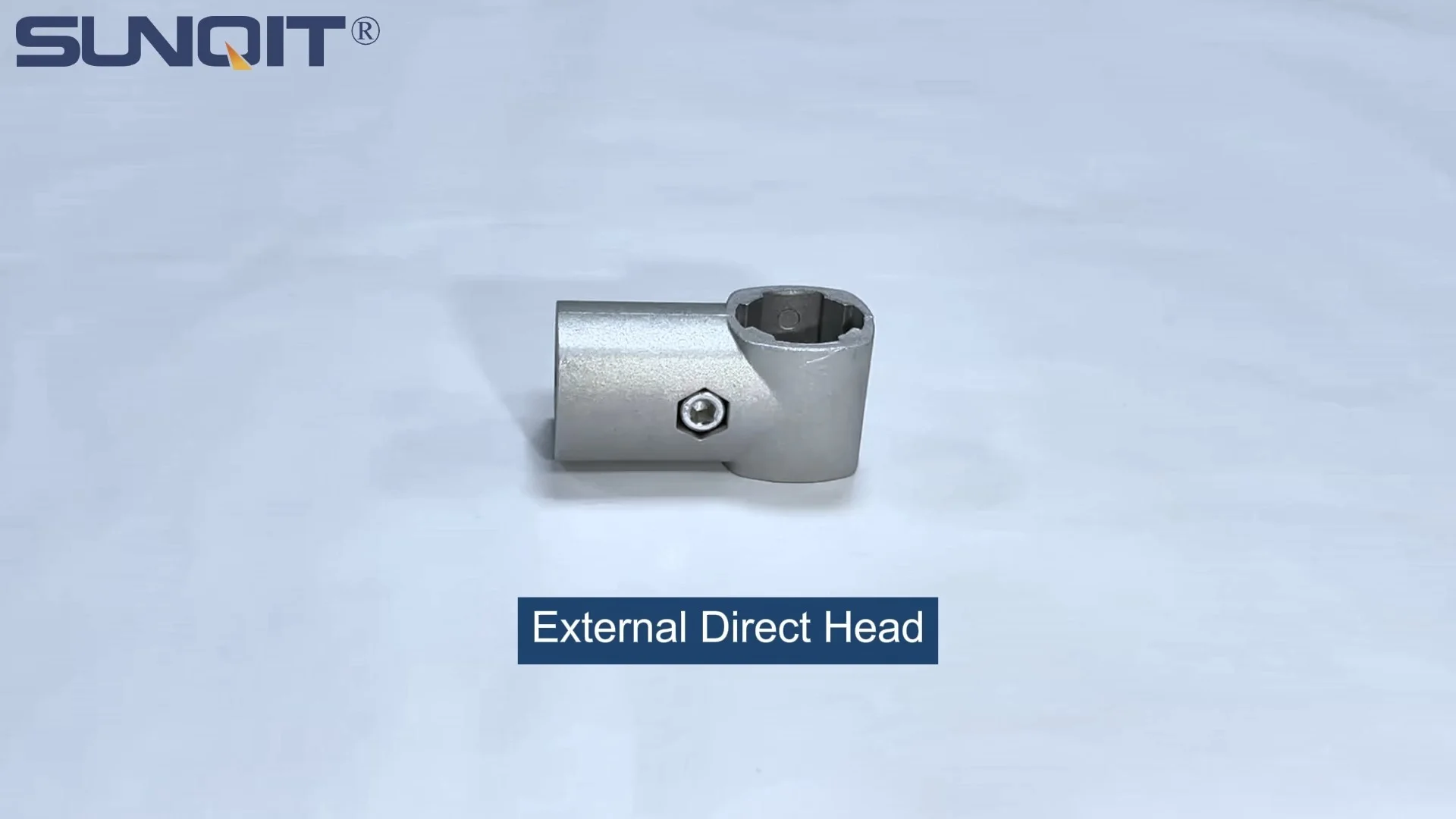
In the fast-paced world of computer peripheral manufacturing—where keyboards, mice, monitors, and printers fly off production lines at breakneck speed—adaptability isn't just a buzzword; it's the backbone of survival. Imagine a facility churning out wireless mice one week and ergonomic keyboards the next. Or a sudden surge in demand for gaming headsets that requires reconfiguring an entire assembly station overnight. Traditional production setups, with their welded steel frames and fixed workbenches, crumble under such pressure. They're slow to adjust, costly to modify, and often end up creating more waste than value. But what if there was a way to build production lines that bend without breaking? Enter two way aluminum pipe joints: the unsung heroes of flexible manufacturing that are quietly revolutionizing how computer peripherals are made.
At first glance, a two way aluminum pipe joint might seem like a simple piece of hardware—a small, unassuming connector that links aluminum pipes together. But in reality, it's the linchpin of a lean system designed to keep pace with the ever-shifting demands of modern manufacturing. These joints, paired with aluminum profiles and aluminum pipe accessories, create modular structures that can be assembled, disassembled, and reconfigured in hours, not days. They turn rigid production lines into dynamic ecosystems where workbenches rise, material racks expand, and conveyors reroute with the turn of a hex key. For plant managers drowning in change orders and engineers tasked with squeezing efficiency out of every square foot, two way aluminum pipe joints aren't just tools—they're lifelines.
The Design That Drives Flexibility: Inside Two Way Aluminum Pipe Joints
To understand why two way aluminum pipe joints are game-changers, let's start with the basics: their design. Unlike fixed lean pipe joints or bulky stainless steel connectors, these joints are engineered for adaptability. Made from high-grade aluminum alloy, they're lightweight yet surprisingly strong—able to support the weight of circuit boards, plastic casings, and even small machinery without bending. Their corrosion-resistant properties mean they hold up in the dusty, sometimes humid environments of manufacturing floors, outlasting plastic alternatives that crack under stress and steel that rusts over time.
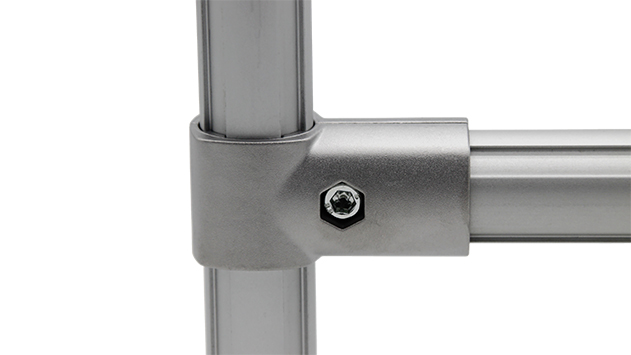
But the real magic lies in their T-slot compatibility. Most two way aluminum pipe joints feature a precision-machined T-slot design that locks seamlessly into aluminum profiles—the same profiles used to build everything from workbenches to conveyor frames. This isn't just about fitting together neatly; it's about creating a system where every component speaks the same language. Slide a joint onto a profile, tighten a bolt, and you've got a connection that's secure enough for daily use but loose enough to disassemble when the next product launch hits. No welding, no drilling, no specialized tools—just a hex key and a little elbow grease. It's modularity redefined, and it's exactly what computer peripheral manufacturers need when a new mouse design requires raising a workbench by 6 inches or adding a shelf to a material rack.
Key Design Features: Lightweight aluminum alloy construction (6063-T5 grade for optimal strength-to-weight ratio), T-slot compatibility with 2020, 3030, and 4040 aluminum profiles, dual-directional connectivity (supports 90° and 180° angles), and a load capacity of up to 50kg per joint—enough to handle the daily grind of component assembly and material transport.
From Workbench to Warehouse: Real-World Applications in Peripheral Manufacturing
Let's step into a hypothetical (but all-too-real) computer peripheral factory to see two way aluminum pipe joints in action. Picture a 50,000-square-foot facility outside of Shenzhen, where 300 workers assemble 10,000 wireless keyboards daily. Walk through the doors, and the first thing you'll notice is the assembly line: a series of workbenches, each customized for a specific task. The first station is for installing keycaps—workers sit at a low, wide workbench with a built-in tray for keycap bins. The next station? Soldering circuit boards, which requires a taller workbench with anti-static mats. A few feet away, material racks hold plastic keyboard shells, sorted by color and model. And overhead, a conveyor system carries partially assembled units from one station to the next, guided by roller tracks that glide smoothly even with the weight of 20 keyboards.
What ties all these elements together? Two way aluminum pipe joints. The workbenches, for starters, are built using 4040 aluminum profiles connected by two way joints. When the factory switches from standard keyboards to ergonomic split keyboards, the workbench legs can be adjusted by loosening the joints, raising or lowering the surface in minutes. The material racks, too, are modular: each shelf is held up by aluminum pipes and two way joints, so adding a new row for larger keyboard shells is as simple as sliding in a few extra pipes and tightening the connectors. Even the conveyor system's roller tracks are mounted on aluminum profiles, with two way joints allowing for quick re-routing when a new assembly station is added.
Take the example of a workbench dedicated to testing wireless mice. The bench needs to hold a testing computer, a power supply, and a tray for mouse prototypes. With two way aluminum pipe joints, the bench can be built with a lower shelf for the power supply, an upper surface for the computer, and a side rack for tools—all without a single weld. If the testing process changes and requires a larger monitor, the upper shelf can be extended by adding another aluminum profile and joint. Or if the bench needs to be moved to a new location, it can be disassembled into parts light enough for two workers to carry, then reassembled in the new spot in under an hour. Compare that to a traditional wooden workbench, which would need to be sawed, glued, or replaced entirely—wasting time, money, and materials.
Why Lean Systems Love Two Way Aluminum Pipe Joints
Lean manufacturing isn't just about cutting costs—it's about eliminating waste, improving flow, and creating value for customers. And two way aluminum pipe joints are lean system superstars. Let's break it down: in lean terms, "waste" includes overproduction, waiting, and unnecessary motion. Traditional production setups are rife with these. A fixed material rack that's too small for a new component forces workers to stack parts on the floor, leading to wasted time searching for items. A rigid workbench that's the wrong height causes workers to hunch or stretch, leading to fatigue and slower assembly times. Two way aluminum pipe joints attack these wastes head-on by making it easy to build systems that adapt to how work actually gets done .
Consider "waiting" waste. When a production line needs to be reconfigured for a new product, every minute of downtime costs money. With two way joints, reconfiguration happens in real time. A plant manager at a major keyboard manufacturer once told me they used to lose 8 hours of production when switching from wired to wireless keyboards—now, with their modular setup, it takes 2 hours. That's 6 extra hours of output, just from using the right connectors. Then there's "unnecessary motion": workers no longer have to walk across the factory to retrieve parts because material racks, built with two way joints, can be positioned right next to assembly stations. And when demand drops, those racks can be disassembled and stored, freeing up floor space for other uses—no more permanent structures collecting dust.
Lean Metrics That Matter: Companies using two way aluminum pipe joints report a 25-30% reduction in setup time for new product lines, a 15% decrease in material handling waste, and a 20% improvement in worker productivity—all key indicators of a lean system working at its best.

Two Way Joints vs. the Competition: A Head-to-Head Comparison
You might be wondering: aren't there other connectors out there? Why choose two way aluminum pipe joints over fixed lean pipe joints, stainless steel connectors, or even plastic clips? The answer lies in balance—two way joints offer the perfect mix of strength, flexibility, and cost that other options can't match. Let's put them to the test with a quick comparison:
| Connector Type | Flexibility | Durability | Cost (Per Unit) | Best For |
|---|---|---|---|---|
| Two Way Aluminum Pipe Joints | High (reconfigurable, no welding) | High (aluminum alloy, corrosion-resistant) | Moderate ($3-$5) | Dynamic production lines, frequent reconfigurations |
| Fixed Lean Pipe Joints | Low (permanent angles, welded or glued) | Medium (steel, prone to rust) | Low ($1-$2) | Static setups with no design changes |
| Stainless Steel Joints | Medium (some reconfiguration, heavy) | Very High (rust-proof, high load capacity) | High ($8-$12) | Heavy-duty applications (e.g., automotive manufacturing) |
| Plastic Clips | High (lightweight, easy to snap on/off) | Low (prone to cracking under load) | Very Low ($0.50-$1) | Temporary setups, low-weight applications |
For computer peripheral manufacturing, where flexibility and cost are equally critical, two way aluminum pipe joints stand out. They're more durable than plastic clips, more flexible than fixed lean pipe joints, and far more affordable than stainless steel. Plus, their compatibility with aluminum profiles and aluminum pipe accessories means they can be integrated into existing systems, no need for a complete overhaul. It's no wonder that 78% of manufacturers surveyed by the Lean Manufacturing Institute cited "modular connectors" as their top investment for 2024—and two way aluminum pipe joints are leading that charge.

Installation and Maintenance: Keeping the Momentum Going
One of the biggest selling points of two way aluminum pipe joints is how easy they are to use. You don't need a team of engineers or specialized tools—just a basic understanding of how T-slots work and a hex key. Here's a quick breakdown of the installation process: first, measure the length of aluminum pipe you need and cut it to size (most suppliers offer pre-cut pipes, but on-site cutting is simple with a pipe cutter). Next, slide the two way joint onto the pipe, aligning it with the T-slot on your aluminum profile. Then, insert a T-bolt into the slot, thread it through the joint, and tighten with a hex key. That's it—no welding, no drilling, no mess. Even someone with minimal training can assemble a basic workbench in under an hour.
Maintenance is just as straightforward. Aluminum's natural resistance to corrosion means the joints rarely rust, even in humid environments. A quick wipe with a damp cloth every few months is usually enough to keep them clean. If a joint becomes loose over time (which can happen with heavy use), simply retighten the T-bolt with a hex key. And because the system is modular, damaged parts can be replaced individually—no need to scrap an entire workbench because one joint fails. This ease of maintenance keeps downtime to a minimum, which is crucial in a factory where every minute of production counts.
The Future of Flexible Manufacturing: Where Two Way Joints Lead
As computer peripherals become more advanced—think wireless charging mice, AI-powered keyboards, and AR-compatible headsets—production lines will need to become even more adaptable. Two way aluminum pipe joints are poised to lead this charge, thanks to ongoing innovations in their design. Some manufacturers are already experimenting with smart joints embedded with sensors that track load capacity and alert managers when a structure is overloaded. Others are developing quick-release versions that allow for tool-free assembly, cutting reconfiguration time even further. And as aluminum extrusion technology improves, we'll see even lighter, stronger profiles that pair seamlessly with these joints, opening up new possibilities for mobile workstations and overhead conveyor systems.
But perhaps the most exciting trend is the rise of "plug-and-play" manufacturing ecosystems. Imagine a factory where workbenches, material racks, and conveyors are all built with two way aluminum pipe joints and aluminum profiles. When a new order comes in, engineers use 3D modeling software to design the optimal layout, then send the specs to the factory floor. Workers then assemble the new setup using pre-cut pipes and joints, guided by digital instructions on a tablet. It's manufacturing as easy as building with Legos—and it's all possible because of the humble two way aluminum pipe joint.
Conclusion: Building Production Lines That Grow With You
In the end, computer peripheral manufacturing isn't just about making products—it's about making change work for you. Two way aluminum pipe joints don't just connect pipes; they connect manufacturers to a future where production lines adapt as quickly as market demands. They turn rigid facilities into flexible hubs where waste is minimized, workers are empowered, and innovation thrives. Whether you're building a workbench for testing mice or a conveyor system for shipping monitors, these joints offer a simple truth: the best production lines aren't built to last forever—they're built to evolve.
So the next time you type on a keyboard or click a mouse, take a moment to appreciate the unseen forces that brought it to life. Behind every smooth keystroke and precise cursor movement is a production line that didn't just keep up with change—it embraced it. And at the heart of that line? A two way aluminum pipe joint, quietly doing its job, one connection at a time.