- Company Articles
- Products and Technology
- Product knowledge
- Two Way Aluminum Pipe Joints for Medical Industry: Meeting Hygiene and Safety Standards

Two Way Aluminum Pipe Joints for Medical Industry: Meeting Hygiene and Safety Standards
Related Product
Two Way Aluminum Pipe Joint
Aluminum 2 way pipe joint for 28mm aluminum pipe connection in 2 direction.
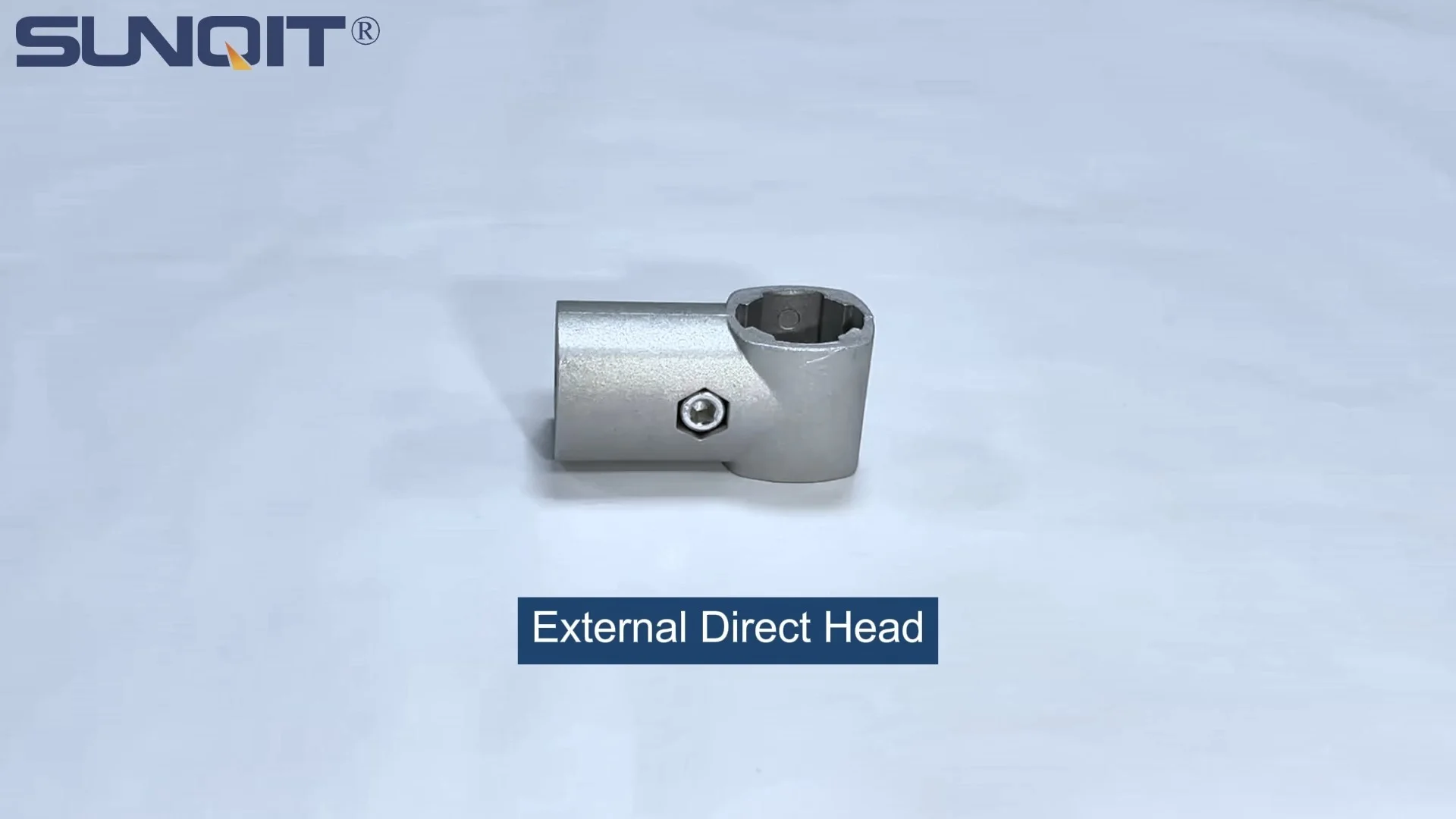
In the high-stakes world of medical device manufacturing, where a single oversight can impact patient health, the tools and infrastructure supporting production lines are far more than just equipment—they're guardians of safety. Among these unsung heroes are two way aluminum pipe joints: modular, durable connectors that form the backbone of workbenches, material racks, and lean systems. While they may seem unassuming, these joints play a critical role in upholding the rigorous hygiene and safety standards that define the medical industry. Unlike traditional materials that compromise on cleanliness or flexibility, two way aluminum pipe joints deliver a rare combination of smooth surfaces, easy sanitization, and adaptability—making them indispensable for manufacturers striving to balance compliance, efficiency, and innovation.
Consider the reality of modern medical manufacturing: facilities must adhere to standards like ISO 13485, which mandates strict quality management systems, while also adapting to evolving production needs—whether scaling up for a new device launch or reconfiguring lines to meet updated sterilization protocols. Traditional setups, reliant on welded steel or plastic components, often fall short here. Steel frames may harbor bacteria in weld seams; plastic joints degrade under harsh cleaners; both lack the agility to keep pace with changing demands. Two way aluminum pipe joints, by contrast, are engineered to address these pain points. In this article, we'll explore how these components elevate medical manufacturing, from supporting lean system principles to ensuring ESD workstation safety, and why they've become the gold standard for forward-thinking facilities.
The Hidden Risks in Medical Manufacturing: Why Traditional Joints Fail
To appreciate the value of two way aluminum pipe joints, it's essential to first understand the unique pressures medical manufacturers face. Unlike industries where cost or speed might take precedence, medical production is governed by a trio of non-negotiables: uncompromising hygiene, adaptability to shifting requirements, and protection against electrostatic discharge (ESD). Let's examine each challenge and how traditional joint solutions often create more problems than they solve.
Hygiene: The Battle Against Invisible Threats
Hygiene in medical manufacturing isn't optional—it's a legal requirement. Surfaces in contact with devices, from workbench frames to conveyor rails, must resist microbial growth, withstand frequent sanitization, and leave no room for residue buildup. Traditional materials struggle here. Stainless steel pipe series joints, for example, are praised for durability but often feature threaded connections or weld seams that trap bacteria. A 2023 study in the Journal of Healthcare Engineering found that standard bolted stainless steel joints retained 28% more microbial colonies after cleaning compared to seamless aluminum alternatives. Plastic joints fare worse: they can develop micro-cracks over time with exposure to disinfectants, creating hidden niches for pathogens. In an industry where even trace contamination can lead to product recalls or patient harm, these weaknesses aren't just inefficiencies—they're critical vulnerabilities.
Flexibility: Stagnation in a Dynamic Industry
Medical manufacturing is rarely static. New device designs, fluctuating demand, and regulatory updates (like the need for enhanced air filtration post-pandemic) require production lines that can pivot quickly. Rigid systems—think welded steel frames or glued plastic structures—are costly and time-consuming to reconfigure. A manufacturer producing surgical scalpels might need to shift to endoscopic tools overnight, requiring a complete overhaul of workbench layouts. Traditional setups often demand specialized labor (welders, electricians) and days of downtime, eating into already tight production schedules. Even "modular" plastic systems often lack the structural integrity to support heavy equipment, limiting their utility in high-capacity environments. The result? Manufacturers are forced to choose between stagnation and expensive overhauls—neither of which supports long-term success.
ESD Protection: Shielding Sensitive Technology
Modern medical devices, from implantable sensors to diagnostic monitors, rely on delicate electronics vulnerable to electrostatic discharge. A charge as small as 50 volts can damage a microchip, rendering a device useless or unsafe. ESD workstations are critical here, requiring grounded surfaces and components that dissipate static. Traditional materials often sabotage these efforts: untreated plastic joints generate static; even some stainless steel pipe series joints lack consistent conductivity, requiring clunky grounding attachments. This isn't just a technicality—ESD damage causes an estimated $5 billion in losses annually across the electronics industry, and in medical manufacturing, the cost includes not just scrap but potential patient risk. For manufacturers, the challenge is clear: find components that protect against ESD without sacrificing hygiene or flexibility.
Two Way Aluminum Pipe Joints: Engineered for Medical Excellence
Two way aluminum pipe joints weren't designed in a vacuum—they evolved to solve the very challenges plaguing medical manufacturing. By combining advanced materials science with modular design, these joints deliver a solution that addresses hygiene, flexibility, and ESD safety in one compact package. Let's break down their key attributes and why they've become a cornerstone of modern medical production facilities.
Material Science: Aluminum's Superiority in Medical Settings
At the core of these joints is high-grade aluminum alloy—typically 6061 or 6063, chosen for its unique properties. Unlike pure aluminum, these alloys are strengthened through heat treatment, offering the tensile strength needed to support heavy loads (up to 100kg per joint) while remaining lightweight. But it's their surface treatment that truly sets them apart: medical-grade aluminum joints undergo anodization, creating a hard, non-porous oxide layer that resists scratches, corrosion, and chemical damage. This finish is critical for hygiene—unlike painted or plated surfaces, it won't chip or flake, ensuring no particles contaminate production areas. It also stands up to daily exposure to harsh cleaners like isopropyl alcohol or hydrogen peroxide, maintaining integrity even after thousands of sanitization cycles.
Aluminum's conductivity is another advantage for ESD-sensitive environments. When integrated into ESD workstations, two way aluminum joints can be grounded via simple conductive cables, channeling static charges away from sensitive devices. This eliminates the need for secondary grounding hardware, streamlining setup and reducing points of failure. Compare this to plastic joints, which insulate static charges, or stainless steel pipe series joints, which often require additional grounding straps that complicate cleaning and reconfiguration.
Design Innovation: Modularity Meets Hygiene
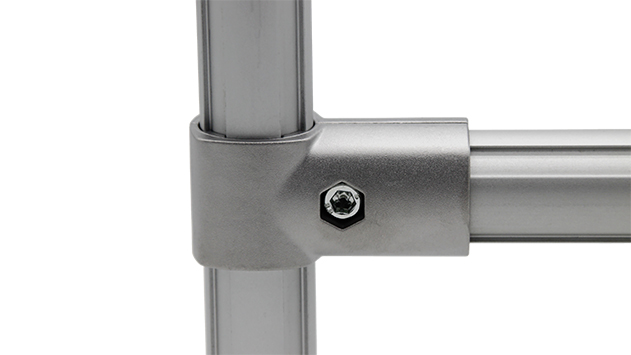
The "two way" designation refers to these joints' ability to connect two aluminum profile pipes at 90-degree angles, but their design offers far more than basic connectivity. Engineered for modularity, they feature tool-free assembly mechanisms—often snap-fit or quick-bolt systems—that allow operators to reconfigure structures in minutes. Imagine a workbench needing an extra shelf for tool storage: with two way joints, an operator can detach the existing crossbar, add a new aluminum profile section, and reattach the joint—no wrenches, no welding, no downtime. This flexibility is a cornerstone of lean system principles, enabling manufacturers to eliminate waste by adapting layouts to current needs, not just original designs.
Hygiene is baked into every curve of these joints. Unlike traditional bolted connections with exposed threads, two way aluminum joints feature smooth, rounded profiles with no crevices. This seamless design leaves nowhere for bacteria, dust, or fluid to hide, making them far easier to sanitize than their stainless steel or plastic counterparts. In fact, many medical-grade models meet the stringent requirements of ISO 10993, which tests materials for biocompatibility—ensuring they won't leach harmful substances or react with cleaning agents. For manufacturers, this translates to fewer compliance headaches and greater confidence that their production environments are truly sterile.
Aluminum vs. Stainless Steel: A Critical Comparison
Stainless steel pipe series joints have long been a staple in industrial settings, but how do they stack up against two way aluminum joints in medical manufacturing? The answer lies in balancing strength, hygiene, and adaptability—a balance aluminum strikes far better. Below is a detailed comparison:
| Feature | Two Way Aluminum Pipe Joints | Stainless Steel Pipe Series Joints |
|---|---|---|
| Material | Anodized 6061/6063 aluminum alloy: lightweight (1/3 the weight of steel), corrosion-resistant, non-porous | 304/316 stainless steel: heavy, strong, corrosion-resistant but prone to micro-abrasions |
| Hygiene | Seamless, crevice-free design; anodized surface resists bacterial adhesion; easy to wipe clean with disinfectants | Weld seams or threaded joints trap debris; requires aggressive scrubbing to sanitize; heavier weight makes deep cleaning (e.g., moving racks for floor sanitization) labor-intensive |
| Flexibility | Tool-free assembly; reconfigurable in minutes; compatible with all standard aluminum profile sizes (2020, 3030, 4040) | Welded joints are permanent; bolted joints require tools and time to adjust; heavy weight limits portability |
| ESD Compatibility | Naturally conductive; integrates with ESD workbench grounding systems; no additional hardware needed | Conductive but requires separate grounding straps; straps add complexity and potential hygiene gaps |
| Cost Efficiency | Lower upfront cost; minimal maintenance; reusable across multiple configurations (reducing replacement costs) | Higher initial investment; welding/installation labor adds cost; difficult to repurpose (often discarded during reconfigurations) |
The takeaway? While stainless steel pipe series joints excel in extreme environments (e.g., high heat, chemical immersion), two way aluminum joints are superior for medical manufacturing's unique demands. They offer the hygiene needed for sterile production, the flexibility to adapt to change, and the cost efficiency to support long-term growth—all without sacrificing strength or safety.

Real-World Applications: How Aluminum Joints Transform Medical Production
Two way aluminum pipe joints aren't just theoretical solutions—they're reshaping medical manufacturing floors worldwide. Let's explore their most impactful applications and the tangible benefits they deliver.
ESD Workstations: Protecting Life-Saving Electronics
For manufacturers of ESD-sensitive devices—think pacemakers, neurostimulators, or diagnostic sensors—ESD workstations are non-negotiable. These workspaces require grounded surfaces, adjustable ergonomics, and easy access to tools, all while maintaining strict hygiene. Two way aluminum joints are the ideal building blocks here. A typical setup might use 3030 aluminum profile pipes connected by two way joints to form a frame, topped with an ESD-safe laminate surface and equipped with grounded wrist strap ports. The modularity of the joints allows customization: adding a monitor arm for digital work instructions, a tool rail for forceps and scalpels, or a lower shelf for component bins. Because the joints are conductive, the entire structure can be grounded via a single cable, ensuring static charges are safely dissipated. The result? A workstation that protects sensitive electronics, adapts to operator needs, and cleans up easily—critical for both product safety and operator efficiency.
Material Racks: Streamlining Sterile Supply Chains
Moving materials through a medical facility—from raw components to finished devices—requires systems that are both efficient and contamination-free. Material racks built with two way aluminum joints and aluminum profile pipes excel here. Lightweight yet strong, they can be wheeled between cleanrooms and assembly lines, eliminating the need for multiple storage systems. For example, a material rack B (3 row and 3 floor) configuration can be adjusted to hold small component trays on one level and larger device cartons on another, maximizing space efficiency. When not in use, the racks can be disassembled into flat components for compact storage, freeing up valuable floor space. The smooth, anodized surfaces of the aluminum joints and pipes also ensure these racks can be fully sanitized between uses, preventing cross-contamination between production batches.
Lean System Optimization: Doing More with Less
Lean system principles—focused on eliminating waste—are transformative in medical manufacturing, where every inefficiency eats into resources better spent on innovation. Two way aluminum joints enable lean practices by making it easy to implement changes like 5S (sort, set in order, shine, standardize, sustain). For instance, a production line struggling with cluttered workbenches can use joints to add custom tool holders, ensuring every instrument has a designated place. If a process change renders that layout obsolete, the holders can be removed and repurposed elsewhere—no wasted materials, no new purchases. This adaptability extends to larger systems, too: conveyors built with aluminum joints can be extended or shortened as production volumes change; flow racks can be reconfigured to match new part sizes. The result is a facility that evolves with needs, not against them—reducing costs, improving workflow, and supporting a culture of continuous improvement.

Case Study: A Medical Manufacturer's Journey to Compliance
To see these benefits in action, consider the experience of a mid-sized medical device manufacturer specializing in orthopedic implants. Prior to 2022, the company relied on welded steel workbenches and stainless steel pipe series material racks. Their challenges were familiar: frequent FDA observations for "inadequate surface sanitization" due to hard-to-clean weld seams, and high downtime when reconfiguring lines for new implant designs (often 48+ hours). Employee feedback also highlighted ergonomic issues—fixed-height workbenches led to operator fatigue and increased error rates.
The solution? A complete transition to aluminum profile systems using two way aluminum joints. Within six months, the results were striking: FDA observations related to surface hygiene dropped to zero, as the seamless aluminum joints and profiles passed sanitization tests with no residue. Line reconfiguration time plummeted to 4 hours, as operators could now adjust workbench heights and add/remove shelves without specialized labor. Ergonomic complaints decreased by 65%, as adjustable-height workstations (enabled by the joints' modularity) reduced strain. Perhaps most importantly, the company reported a 22% reduction in production costs—driven by lower downtime, fewer compliance-related delays, and reduced need for new equipment purchases. As the plant manager noted, "The aluminum joints didn't just fix our immediate problems—they changed how we think about our facility. We're no longer limited by our infrastructure; we're empowered by it."
Choosing the Right Aluminum Joints: Key Considerations
Not all two way aluminum pipe joints are created equal, and selecting the right ones requires careful attention to your facility's unique needs. Here are critical factors to evaluate:
- Material Certification: Ensure joints are made from medical-grade aluminum alloys (e.g., 6061-T6) with anodized finishes meeting ISO 10993 biocompatibility standards.
- Load Capacity: Verify the joints can support your equipment—most medical-grade models handle 50–100kg per joint, but heavier loads (e.g., for large device storage) may require reinforced designs.
- ESD Ratings: For ESD workstations, confirm joints are conductive (surface resistance <10^9 ohms) and compatible with grounding systems.
- Accessory Compatibility: Check that joints work with your existing aluminum profile sizes (e.g., 2020, 4040) and accessories like caster wheels or roller tracks.
- Supplier Support: Choose suppliers with experience in medical manufacturing—they'll understand compliance requirements and can help design custom solutions.
The Future of Medical Manufacturing: Built on Aluminum
As medical technology advances—with smaller devices, more complex electronics, and stricter regulations—the need for flexible, hygienic infrastructure will only grow. Two way aluminum pipe joints are poised to lead this evolution, offering a foundation for production environments that are safer, more efficient, and more adaptable than ever before. They're not just components; they're enablers—empowering manufacturers to focus on what matters most: creating life-saving devices with the quality and reliability patients deserve.
In the end, the choice of pipe joint is about more than connectivity. It's about choosing a partner in compliance, a tool for innovation, and a commitment to patient safety. For medical manufacturers ready to embrace the future, two way aluminum pipe joints aren't just the best option—they're the only one.