- Company Articles
- Products and Technology
- Application Cases
- Two Way Aluminum Pipe Joints in 5S Implementation: Organizing Workspaces Efficiently

Two Way Aluminum Pipe Joints in 5S Implementation: Organizing Workspaces Efficiently
Related Product
Two Way Aluminum Pipe Joint
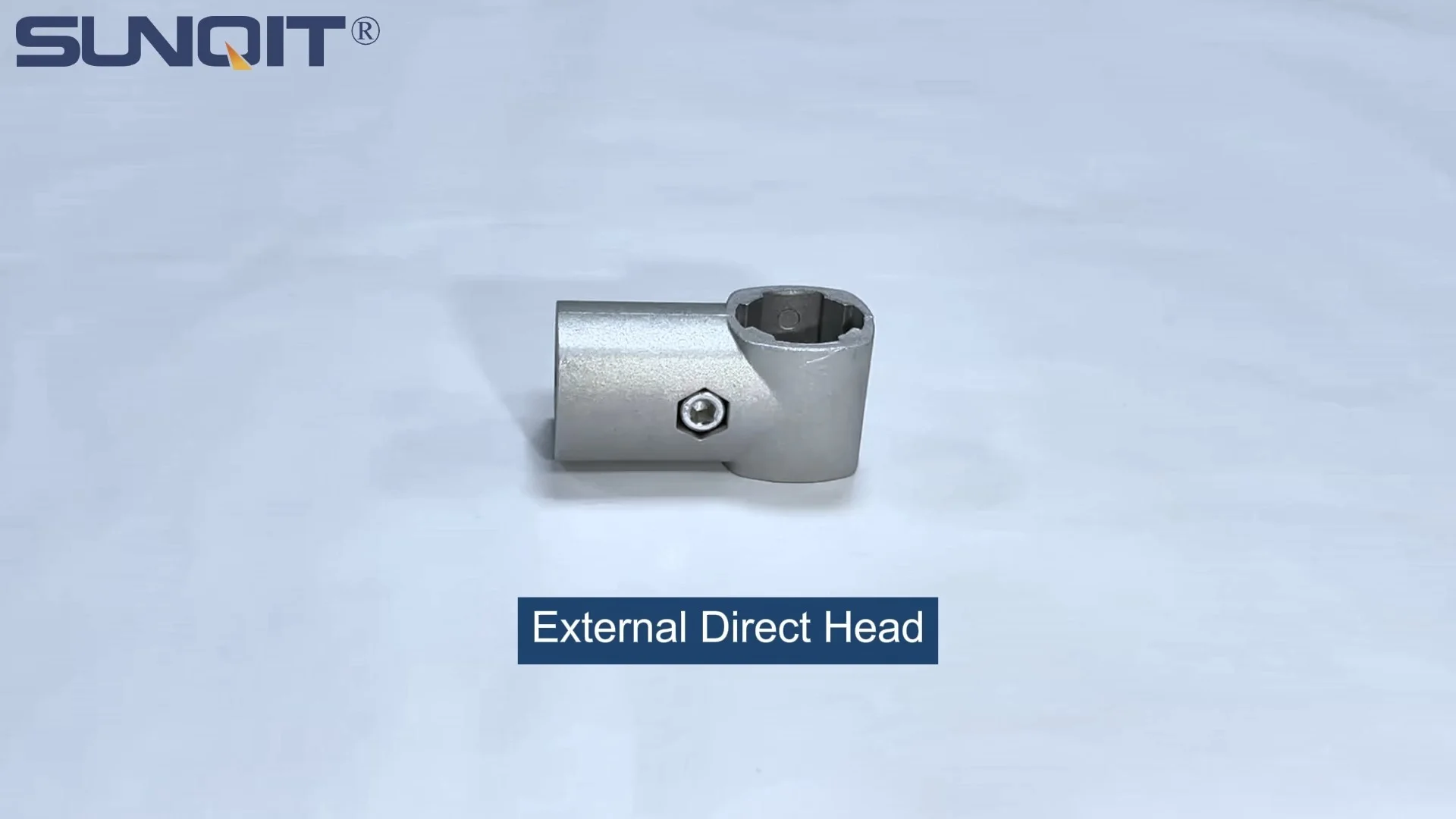
Aluminum 2 way pipe joint for 28mm aluminum pipe connection in 2 direction.
Walk into any busy manufacturing floor, warehouse, or even a small workshop, and you'll quickly notice a common challenge: chaos. Tools scattered across tables, materials stacked haphazardly, employees spending precious minutes hunting for the right part—these scenes aren't just frustrating; they're productivity killers. That's where 5S implementation comes in, a tried-and-true methodology designed to bring order, efficiency, and calm to the busiest workspaces. But here's the thing: 5S isn't just about sweeping floors or labeling bins. To truly make it stick, you need tools that grow with your needs, adapt to changes, and empower your team to maintain that hard-won order. Enter the unsung hero of modern workspace organization: the two way aluminum pipe joint. In this article, we'll dive into how these unassuming components are transforming 5S initiatives, turning cluttered chaos into streamlined success—one joint, one aluminum profile, and one well-organized workbench at a time.
Understanding 5S: More Than Just "Cleaning Up"
Before we get into the nuts and bolts of aluminum pipe joints, let's take a step back and remember what 5S is really about. Born from the Japanese manufacturing industry, 5S—Sort, Set in Order, Shine, Standardize, Sustain—is a philosophy that goes beyond surface-level tidiness. It's about creating a workspace where waste is eliminated, safety is prioritized, and every tool, material, and process has a clear purpose. Let's break it down simply:
- Sort (Seiri): Separate what's needed from what's not. If you haven't used a tool in 30 days, it's probably time to remove it.
- Set in Order (Seiton): Arrange what's left so everything has a "home." Think: tools hung at eye level, materials stored where they're used.
- Shine (Seiso): Keep the workspace clean—not just for appearances, but to spot issues early (like a leaky pipe or a worn-out tool).
- Standardize (Seiketsu): Make these practices routine. Create checklists, labels, and visual cues so everyone knows the "right way."
- Sustain (Shitsuke): Turn habits into culture. Ensure 5S isn't a one-time project but a daily part of how your team works.
The problem? Many workplaces start strong with 5S—they sort, set in order, and shine—but struggle to sustain it. Why? Because their tools and infrastructure are rigid. A fixed wooden workbench can't be reconfigured when production needs change. A bulky metal shelf can't be adjusted to fit new, larger materials. Over time, the "Set in Order" phase falls apart, and chaos creeps back in. That's where two way aluminum pipe joints and aluminum profiles come into play: they're the flexible backbone that makes 5S sustainable.
The Challenge of Rigid Workspaces: Why Traditional Solutions Fail
Let's paint a picture. Imagine a small electronics assembly line (okay, I know I said avoid "Imagine…", so let's recall a real scenario). The team invested in 5S six months ago: they labeled bins, installed fixed steel workbenches, and even painted lines on the floor to mark material zones. But then, a new product line launched—parts are smaller, require more tools, and the workflow shifted. Suddenly, the fixed workbenches are too deep; tools that used to be within arm's reach now require stretching. The steel shelves, once perfectly sized for old components, are now either overflowing or half-empty. What happens next? Employees start "making do": tools pile up on the edge of the bench, materials get stored "temporarily" on the floor, and before you know it, the 5S labels are buried under clutter. Sound familiar?
Traditional workspace solutions—think welded steel racks, heavy wooden tables, or one-size-fits-all plastic bins—are built for a static world. But modern workplaces aren't static. Production demands change, team sizes fluctuate, and new technologies require new setups. Rigid infrastructure fights against 5S's "Sustain" phase because it can't adapt. And when your tools can't adapt, your team won't either. That's where two way aluminum pipe joints and aluminum profile systems step in: they're designed for change.
Two Way Aluminum Pipe Joints: The Flexibility 5S Needs
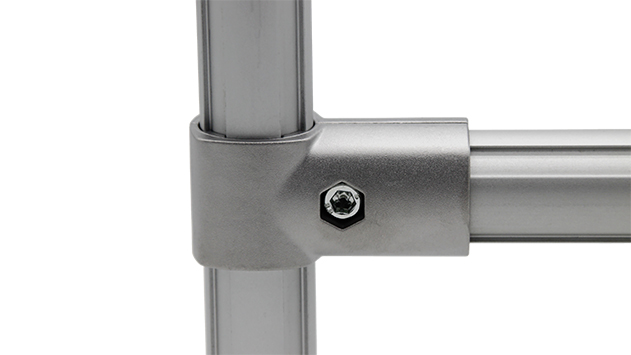
At first glance, a two way aluminum pipe joint might seem like just another piece of hardware. It's small, lightweight, and unassuming—usually a sleek, silver connector with slots or holes that lock into aluminum pipes. But don't let its simplicity fool you. These joints are the Swiss Army knife of workspace design. Here's why:
What Are Two Way Aluminum Pipe Joints, Anyway?
Two way aluminum pipe joints are modular connectors that allow you to join aluminum profile pipes at (you guessed it) two angles—typically 90 degrees, but many designs offer flexibility for other angles too. They're part of a larger system that includes aluminum pipes (hollow, lightweight, and strong), accessories like clamps and brackets, and even specialized components for workbenches or flow racks. Unlike welded steel joints or glued plastic connectors, these aluminum joints are reusable and adjustable . Tighten a few screws, and you can reposition a pipe; loosen them, and you can disassemble the entire structure to build something new. It's like building with adult Legos, but for industrial workspaces.
Why Aluminum? The Material That Makes It All Work
Aluminum profile isn't just chosen for its sleek look (though it does clean up nice). It's lightweight enough for one person to handle, yet strong enough to support heavy tools or stacks of materials. Unlike steel, it won't rust, which is a game-changer for "Shine" phase cleaning—no more scrubbing away corrosion. And because it's hollow, it's easy to route cables or hoses through, keeping workbenches clutter-free (hello, "Set in Order"). Pair that with two way joints, and you've got a system that's as durable as it is adaptable.

How Two Way Aluminum Pipe Joints Support Each Phase of 5S
Now, let's get practical. How exactly do these joints and aluminum profiles make 5S easier? Let's walk through each phase of 5S and see how the two way aluminum pipe joint becomes your secret weapon.
1. Sort (Seiri): Cutting the Clutter, Not the Budget
Sorting starts with asking: "What do we actually need here?" But when your workspace is filled with fixed furniture, it's hard to answer that question. A heavy wooden workbench takes up space whether you use it or not; a welded steel shelf can't be downsized if you need less storage. With aluminum profile systems, you can start small and add only what you need. For example, if your team only uses three tools daily, build a compact workbench with a two way joint frame and a single shelf—no wasted space, no extra "junk" collecting in unused corners. And if later you need more storage? Just add another aluminum pipe and joint. No need to buy a whole new bench; just expand what you have. This flexibility means you're less likely to hold onto unnecessary items "just in case"—because adjusting your workspace to fit new needs is easy, not expensive.
2. Set in Order (Seiton): "A Place for Everything, and Everything in Its Place"
This is where two way aluminum pipe joints truly shine. "Set in Order" isn't just about labeling—it's about designing workflows so materials and tools are exactly where they're needed, when they're needed. Let's take a common example: a production workbench. With traditional setups, you might have a generic table with a drawer full of tools and a pile of parts next to it. With aluminum profile and two way joints, you can build a custom workbench tailored to your team's exact tasks.
Imagine a workbench for assembling small electronics. Using two way joints, you could: - Mount a tool rail along the back edge, with hooks for screwdrivers and pliers (within arm's reach, no more digging through drawers). - Add a flow rack above the bench using aluminum guide rails and roller tracks, so components slide down to the operator as needed (no bending or stretching). - Attach a side shelf at a 45-degree angle (thanks to adjustable two way joints) for a keyboard or monitor, keeping the main surface clear for assembly. Every tool, every part, every piece of equipment has a dedicated spot—because you built the bench to fit your workflow, not the other way around.
| Feature | Traditional Workbench (Wood/Steel) | Aluminum Profile Workbench (with Two Way Joints) |
|---|---|---|
| Flexibility | Fixed design; can't reconfigure shelves or rails without tools/modifications. | Adjustable in minutes: add/remove shelves, reposition rails, or change height with simple screws. |
| Clutter Reduction | Limited built-in organization; tools/parts often pile up on surfaces. | Customizable with hooks, rails, and flow rack attachments to keep items off surfaces. |
| Adaptability to New Tasks | Requires buying a new bench if workflow changes. | Disassemble and rebuild into a new shape/size with the same aluminum pipes and joints. |
| 5S "Set in Order" Compliance | Relies on labels and discipline alone; hard to enforce without built-in structure. | Built-in structure enforces order (e.g., tools only fit in designated hooks/rails). |
3. Shine (Seiso): Cleaning That's Actually Doable
Let's be honest: no one likes cleaning, especially after a long shift. But "Shine" phase isn't just about aesthetics—it's about spotting problems early. A clean workspace makes it easy to notice a loose wire, a cracked tool, or a spill that could become a hazard. Traditional workspaces with welded joints, rough wooden surfaces, or rust-prone steel make cleaning a chore. Grime gets stuck in crevices, oil stains soak into wood, and rust spots spread if not scrubbed daily.
Aluminum profile changes the game. Its smooth, non-porous surface wipes clean with a damp cloth—no harsh chemicals needed. Two way joints, with their sleek, rounded edges, don't have hidden corners for dust to collect. Even accessories like roller tracks (used in flow racks) are designed with easy cleaning in mind: plastic or aluminum rollers that can be wiped down or even removed for deep cleaning. When cleaning is this simple, your team is more likely to do it consistently. And when the workspace stays clean, small issues don't get overlooked—keeping everyone safer and more productive.
4. Standardize (Seiketsu): Consistency Across the Board
5S isn't just for one team or one workstation—it needs to be consistent across your entire operation. Imagine walking into a factory where one workbench is immaculate, the next is a mess, and the third has tools arranged in a completely different way. Confusion, wasted time, and frustration follow. Standardization fixes this by creating a uniform approach to organization.
Two way aluminum pipe joints make standardization easy. Since aluminum profiles and joints are modular, you can replicate the same workspace setup across multiple stations. Need ten identical assembly benches? Build one prototype, then use the same aluminum pipes, joints, and accessories to recreate it nine more times. Even better, because the system is so intuitive, new employees can learn the layout in minutes—no guessing where tools go or how materials should flow. Labels and color-coding help, but the physical structure of the aluminum profile setup reinforces the standard. When every workbench looks and functions the same, maintaining 5S becomes second nature.
5. Sustain (Shitsuke): Keeping 5S Alive Long After Implementation
The biggest challenge in 5S isn't starting—it's sustaining. We've all seen it: the initial excitement fades, the labels peel off, and the workspace slowly slips back into chaos. Why? Because the infrastructure doesn't support long-term change. When employees can't easily adjust their workspace to fit new tasks, they revert to "quick fixes" (like piling materials on the floor) to get the job done.
Aluminum profile systems with two way joints solve this by making adaptation empowering . Let's say your team starts assembling a new product with larger components. Instead of struggling with a too-small workbench, they can loosen a few joints, add a longer aluminum pipe, and widen the surface—all in 15 minutes, without waiting for maintenance or buying new equipment. When your team has the power to adjust their workspace to fit their needs, they take ownership of keeping it organized. They're not just following rules; they're designing a system that works for them. And that's how 5S becomes a culture, not a checklist.

Real-World Impact: From Cluttered to Consistent
Let's ground this in a real example. A mid-sized automotive parts manufacturer I worked with a few years back was struggling with 5S. Their assembly line workbenches were a mix of old wooden tables and welded steel racks—no two looked alike. Tools were stored in random drawers, materials piled up on the floor, and employees were spending 20+ minutes a day just searching for parts. Turnover was high, and quality control issues were popping up due to disorganization.
They decided to invest in aluminum profile workbenches and flow racks, using two way aluminum pipe joints to customize each station. Here's what happened in the first three months:
- Productivity up 15%: Employees spent less time searching and more time assembling, thanks to tools and materials being within arm's reach.
- Cleaning time cut in half: Smooth aluminum surfaces and easy-to-wipe roller tracks made "Shine" phase quick and painless.
- Training time reduced by 30%: Standardized workbench setups meant new hires could learn the layout in hours, not days.
- Quality issues down 25%: A cleaner, more organized workspace meant fewer mistakes and less damage to parts.
The best part? A year later, when I followed up, the workspaces still looked as good as the day they were built. The team had even added their own improvements—like custom tool holders made from spare aluminum pipes and joints. They'd taken ownership, and 5S had stuck.
Beyond 5S: The Hidden Benefits of Aluminum Pipe Joints
While 5S is where two way aluminum pipe joints really shine, their benefits don't stop there. They're also cost-effective: instead of buying new furniture every time your needs change, you can reuse the same pipes and joints. They're eco-friendly too—aluminum is highly recyclable, and modular systems reduce waste from disposable or single-use furniture. Plus, their lightweight design makes them easy to move, which is a boon for businesses that need to rearrange workflows or expand into new spaces.
Conclusion: Small Joints, Big Impact
5S implementation isn't about perfection—it's about progress. And progress requires tools that grow with you. Two way aluminum pipe joints, paired with aluminum profiles, workbenches, and flow racks, aren't just pieces of hardware. They're enablers. They turn the abstract goals of 5S—order, efficiency, sustainability—into tangible, daily realities. They empower your team to take control of their workspace, adapt to change, and maintain that hard-won order long after the initial 5S push.
So, the next time you walk into a cluttered workspace, don't just see chaos—see potential. With a few aluminum pipes, some two way joints, and a little creativity, you can transform that chaos into a streamlined, efficient, and sustainable environment. After all, 5S is about people first, and when you give people the tools to succeed, success follows.