- Company Articles
- Products and Technology
- Product knowledge
- Two Way Aluminum Pipe Joints in Aerospace Manufacturing: Meeting Strict Tolerance Requirements

Two Way Aluminum Pipe Joints in Aerospace Manufacturing: Meeting Strict Tolerance Requirements
Related Product
Two Way Aluminum Pipe Joint
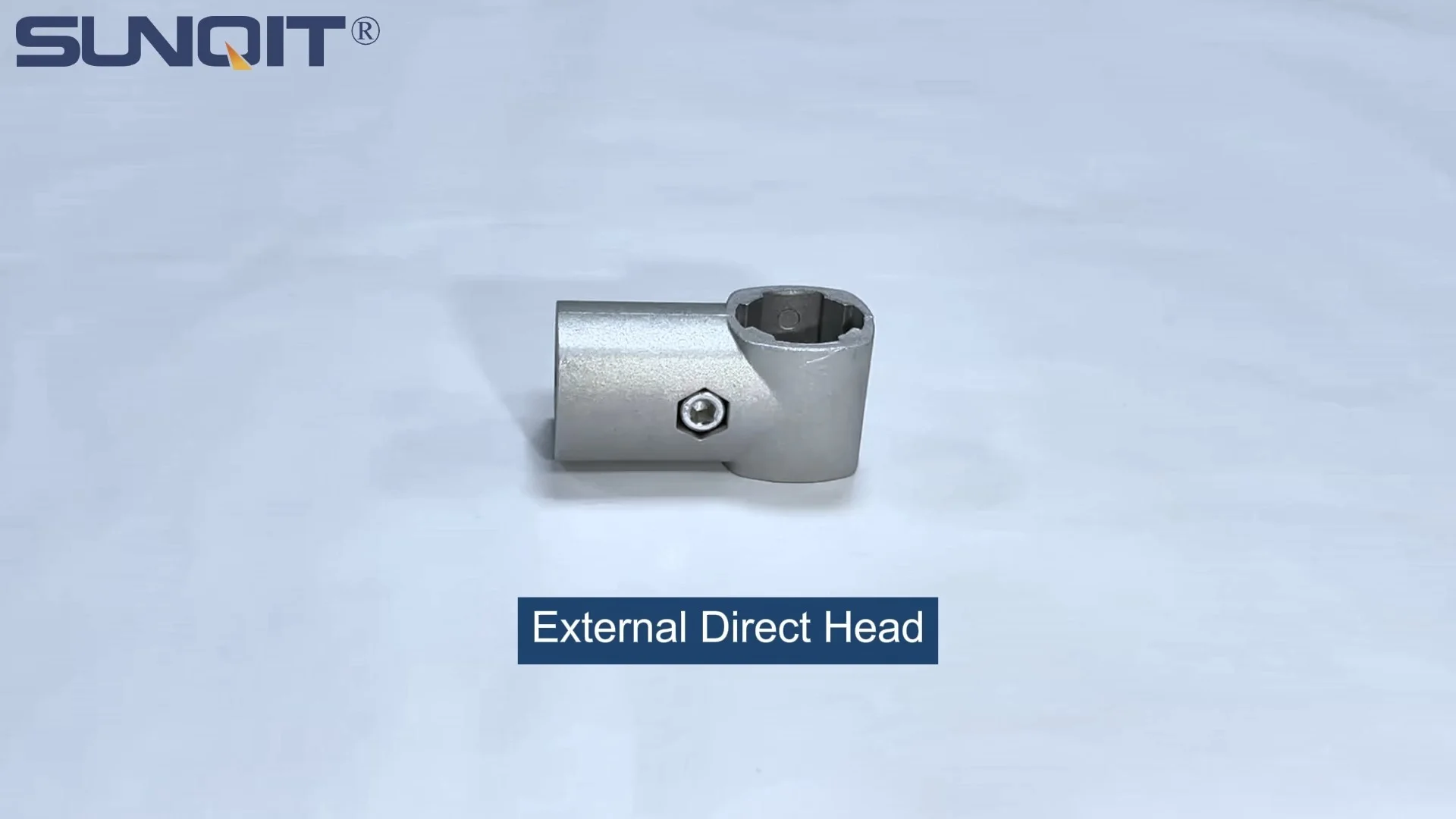
Aluminum 2 way pipe joint for 28mm aluminum pipe connection in 2 direction.
Aerospace manufacturing is a realm where precision isn't just a goal—it's a non-negotiable necessity. Every component, from the tiniest fastener to the largest structural beam, must perform flawlessly under extreme conditions: extreme temperatures, high vibrations, and the unforgiving physics of flight. At the heart of this precision lies the concept of "tolerance"—the allowable variation in a component's dimensions, geometry, or properties. In aerospace, tolerances are often measured in thousandths of an inch, and even the smallest deviation can compromise safety, fuel efficiency, or mission success. For structural frameworks, workbenches, and assembly line systems that support aircraft and spacecraft production, the components holding these structures together become critical players in maintaining these tight tolerances. Among these components, two way aluminum pipe joints have emerged as unsung heroes, quietly ensuring that modular systems meet the rigorous demands of aerospace manufacturing.
The Backbone of Modern Aerospace Assembly: Structural Frameworks
Aerospace manufacturing facilities are dynamic environments. Assembly lines shift between producing components for fighter jets, commercial airliners, and satellites; workbenches must adapt to different part sizes and weights; and material handling systems need to move sensitive equipment with zero margin for error. Traditional structural materials like steel, while strong, often fall short in this context. Steel is heavy, prone to corrosion, and rigid—making it difficult to reconfigure. Enter aluminum, a material that has revolutionized aerospace design not just for aircraft bodies but also for the manufacturing infrastructure that builds them.
Aluminum's rise in aerospace manufacturing frameworks stems from its unique blend of properties: high strength-to-weight ratio, excellent corrosion resistance, and malleability. When shaped into aluminum extrusion profiles—long, uniform pieces formed by forcing molten aluminum through a die—these materials become the building blocks of modular systems. Unlike steel, aluminum extrusion profiles are lightweight, easy to cut, and can be customized with precision-engineered slots, grooves, and channels. But even the best profiles are only as effective as the joints that connect them. This is where two way aluminum pipe joints come into play: they are the linchpins that turn individual aluminum extrusion profiles into cohesive, precise, and adaptable structures.
What Are Two Way Aluminum Pipe Joints?
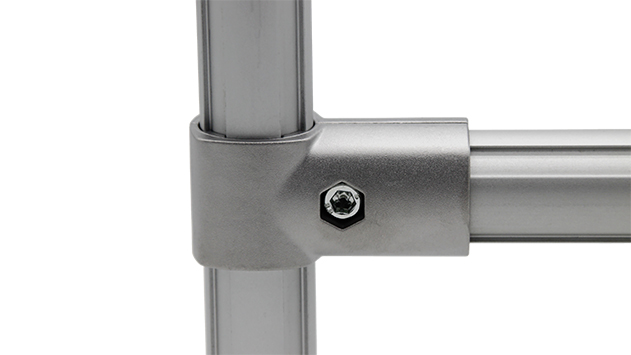
At their core, two way aluminum pipe joints are specialized connectors designed to link two aluminum pipes or profiles at a fixed angle—typically 90 degrees, though custom angles are available. Unlike generic pipe fittings, these joints are engineered with aerospace tolerances in mind. They feature precision-machined threads, alignment pins, and locking mechanisms that ensure a snug, repeatable fit every time. Think of them as the "glue" that holds modular systems together, but with the added benefits of adjustability and reusability.
The design of two way aluminum pipe joints is deceptively simple, yet meticulously crafted. Most consist of a central body with two threaded or press-fit ports, each sized to match standard aluminum pipe diameters (common sizes in aerospace include 20mm, 30mm, and 40mm). The body itself is often made from high-grade aluminum alloy—typically 6061-T6 or 6063-T5—chosen for its strength, machinability, and resistance to stress corrosion. Some joints include additional features, such as T-slots for attaching accessories or integrated gaskets for vibration dampening, but their primary function remains the same: to create a rigid, dimensionally stable connection between two aluminum extrusion profiles.
Why Tolerance Matters in Aerospace: The Stakes Are High
In aerospace manufacturing, tolerance isn't just about "being precise"—it's about ensuring safety, reliability, and efficiency. Consider a workbench used to assemble avionics components for a satellite. If the workbench's framework is misaligned by even 0.1mm, the fixtures holding the components might shift during assembly, leading to miswired circuits or poorly seated sensors. In flight, that misalignment could cause electrical failures or data inaccuracies with catastrophic consequences. Similarly, a material handling rack with loose joints might vibrate during operation, damaging delicate parts like turbine blades or optical sensors.
Aerospace tolerances are often specified to be as tight as ±0.001 inches (0.0254mm) for critical components. For structural frameworks, the bar is slightly less stringent but still demanding: typically ±0.01mm for dimensional accuracy and ±0.5 degrees for angular alignment. Two way aluminum pipe joints are engineered to meet these standards, ensuring that every connection in the framework contributes to the system's overall precision rather than detracting from it.

Tolerance Engineering: How Two Way Aluminum Pipe Joints Meet the Mark
Achieving tight tolerances in two way aluminum pipe joints requires a combination of advanced design, precision manufacturing, and rigorous testing. Let's break down the key engineering principles that make these joints aerospace-ready.
1. Precision Machining of Threads and Ports
The threaded ports of a two way aluminum pipe joint are where the connection begins—and where tolerance is first established. Manufacturers use CNC (Computer Numerical Control) machining centers to cut threads with microscopic precision. For example, a 30mm diameter joint might feature M30×1.5 threads, with each thread's pitch (distance between peaks) held to ±0.01mm. This ensures that when an aluminum pipe is screwed into the joint, it seats uniformly, with no gaps or cross-threading that could introduce play or misalignment.
In press-fit designs—common for high-vibration applications—the inner diameter of the joint's port is machined to within ±0.005mm of the pipe's outer diameter. This creates an interference fit, where the pipe is slightly larger than the port, requiring controlled force to assemble. The result is a bond that's both rigid and resistant to loosening under vibration, a critical feature for aerospace environments.
2. Alignment Features: Pins, Keys, and Tapers
Even with perfect threads, angular misalignment can occur if the joint's mating surfaces aren't properly aligned. To prevent this, two way aluminum pipe joints often include alignment pins or keys. These small, precision-machined protrusions fit into corresponding holes or slots in the aluminum extrusion profile, ensuring that the joint and pipe are oriented correctly before fastening. Some joints use tapered surfaces, where the port's inner diameter gradually narrows, guiding the pipe into perfect alignment as it's inserted.
Consider a scenario where a joint connects two perpendicular aluminum pipes in a workbench frame. Without alignment features, the joint might twist during assembly, resulting in a frame that's "out of square" by 1 degree—well beyond aerospace's ±0.5-degree tolerance. With alignment pins, the joint and pipes lock into place at exactly 90 degrees, ensuring the frame remains square and stable.
3. Material Consistency and Heat Treatment
Tolerance isn't just about geometry—it's also about material behavior. Aluminum alloys used in two way joints are carefully selected and heat-treated to ensure uniform strength and dimensional stability. For example, 6061-T6 aluminum undergoes solution heat treatment followed by artificial aging, which precipitates fine particles within the metal matrix, increasing hardness and strength. This process also reduces residual stresses, minimizing warping or shrinkage after machining—both of which could compromise tolerance.
Suppliers often test material batches for consistency, using techniques like ultrasonic inspection to detect internal defects and tensile testing to verify mechanical properties. This ensures that every joint performs the same way, regardless of when or where it was manufactured—a must for aerospace's strict quality control standards.

Aluminum Extrusion Profiles: The Perfect Partner for Two Way Joints
Two way aluminum pipe joints are only as effective as the aluminum extrusion profiles they connect. The extrusion process itself is a masterclass in precision manufacturing, making it ideal for aerospace applications. Here's why:
Aluminum extrusion involves forcing heated aluminum billets through a die—a custom-shaped tool that defines the profile's cross-section. Because the die is machined to exact specifications (often with tolerances of ±0.01mm), every meter of extruded profile has nearly identical dimensions. This uniformity is critical for modular systems: if one section of aluminum extrusion profile is slightly thicker than another, the joints connecting them would experience uneven stress, leading to misalignment or failure.
Aerospace-grade aluminum extrusion profiles also feature specialized designs, such as T-slots, which run the length of the profile. These slots are precision-machined to accept aluminum profile accessories like T-nuts, brackets, and fixtures, allowing for secure, adjustable connections without drilling or welding. When paired with two way aluminum pipe joints, these profiles create a system where every component—from the joint to the accessory—works in harmony to maintain tolerance.
Take, for example, a material rack used to store aircraft engine components. The rack's vertical supports are aluminum extrusion profiles connected by two way joints, while the horizontal shelves are held in place by T-slot nuts fitting into the profiles' T-slots. The tight tolerance of the T-slots (±0.02mm in width) ensures that the shelves are level and aligned, preventing components from sliding or tipping. The two way joints, meanwhile, keep the vertical supports plumb, ensuring the rack can bear heavy loads without bowing or twisting.
Aluminum vs. Traditional Materials: A Tolerance Showdown
To appreciate the impact of two way aluminum pipe joints, it helps to compare them with traditional structural connectors, such as steel pipe fittings or plastic joints. The table below highlights key differences in tolerance, performance, and suitability for aerospace manufacturing:
| Feature | Two Way Aluminum Pipe Joints | Steel Pipe Fittings | Plastic Joints |
|---|---|---|---|
| Tolerance Range (Diameter) | ±0.01mm | ±0.1mm | ±0.2mm |
| Tolerance Range (Angularity) | ±0.2 degrees | ±1.0 degree | ±1.5 degrees |
| Weight per Unit Length (g/cm) | 2.7 | 7.8 | 1.1 |
| Corrosion Resistance | Excellent (with anodization) | Poor (requires coating) | Good (but prone to UV degradation) |
| Installation Time per Joint | 2–3 minutes | 5–7 minutes (welding required) | 1–2 minutes (but less secure) |
| Reusability | High (can be disassembled/reassembled) | Low (welded joints are permanent) | Medium (prone to wear after multiple uses) |
| Suitable for Aerospace Tolerances? | Yes | No (tolerances too loose) | No (low strength, poor heat resistance) |
The data speaks for itself: two way aluminum pipe joints outperform traditional options in nearly every category that matters for aerospace manufacturing. Their tight tolerances ensure precision, while their lightweight design reduces strain on support structures. Unlike steel, they resist corrosion without heavy coatings, and unlike plastic, they maintain their shape and strength under the high temperatures and vibrations common in aerospace facilities.
Case Study: Reconfigurable Assembly Lines at XYZ Aerospace
To put these concepts into practice, consider XYZ Aerospace, a manufacturer of small satellite components. In 2023, the company faced a challenge: its assembly lines were rigid, built with welded steel frameworks that took weeks to reconfigure when switching between satellite models. This inefficiency was costing the company valuable time and limiting its ability to take on new contracts.
XYZ turned to modular aluminum systems built with two way aluminum pipe joints and aluminum extrusion profiles. The results were transformative. The new assembly lines could be reconfigured in hours instead of weeks, thanks to the joints' quick-connect design and the profiles' T-slot compatibility. But the biggest win was in precision: the tight tolerances of the aluminum joints and profiles reduced assembly errors by 65%. For example, a fixture used to align satellite solar panels, which previously required 20 minutes of calibration per setup, now required just 5 minutes—because the modular framework held its alignment so precisely.
One particularly demanding application was a cleanroom workbench for assembling optical sensors. The workbench needed to maintain a flatness tolerance of ±0.05mm across its 2-meter surface to ensure accurate sensor alignment. Using two way aluminum pipe joints and aluminum honeycomb panels (another lightweight, rigid aluminum accessory), the team achieved flatness of ±0.03mm—surpassing the requirement. The joints' angular tolerance (±0.2 degrees) ensured that the workbench legs remained perfectly vertical, preventing warping under the weight of equipment.
Aluminum Profile Accessories: Enhancing Tolerance at Every Connection
Two way aluminum pipe joints are powerful on their own, but their performance is amplified when paired with the right aluminum profile accessories. These accessories—ranging from end caps to gusset plates—are designed to complement the joints, ensuring that the entire system maintains tolerance even under stress. Here are a few key examples:
T-Slot Nuts and Bolts
T-slot nuts are precision-machined to fit into the T-slots of aluminum extrusion profiles. They feature threads that align with standard bolts, allowing accessories like shelves, fixtures, or tools to be attached anywhere along the profile. The nut's width is held to ±0.02mm, ensuring a snug fit in the slot that prevents lateral movement—critical for maintaining alignment in dynamic environments.
Gusset Plates
Gusset plates are triangular or rectangular brackets that reinforce joints, adding rigidity and preventing twisting. Made from the same high-grade aluminum as the joints, they are drilled with precision holes that align perfectly with the joint's mounting points. When bolted to two connected aluminum extrusion profiles, they distribute stress evenly, reducing the risk of joint deformation that could compromise tolerance.
End Caps
End caps seal the ends of aluminum extrusion profiles, preventing dust, debris, or moisture from entering—important for maintaining tolerance in cleanroom environments. They also protect workers from sharp edges and provide a finished look. Most end caps are press-fit or snap-fit, with outer diameters machined to match the profile's inner diameter within ±0.01mm, ensuring a secure, rattle-free fit.
Meeting Aerospace Standards: Quality Control in Joint Manufacturing
Aerospace manufacturing leaves no room for error, and suppliers of two way aluminum pipe joints adhere to some of the strictest quality control standards in the industry. Most are certified to AS9100, the international quality management standard for aerospace, which requires rigorous process controls, traceability, and continuous improvement.
At the factory level, this means every batch of aluminum billets is tested for chemical composition and mechanical properties before extrusion. CNC machining centers are calibrated daily using laser interferometers to ensure cutting tools maintain ±0.001mm accuracy. After machining, each joint undergoes 100% inspection using CMMs, which measure dimensions, angles, and surface finish with sub-micron precision. Any joint that falls outside the specified tolerance range is rejected—no exceptions.
Suppliers also use statistical process control (SPC) to monitor manufacturing variables, such as cutting tool wear, temperature, and pressure. By tracking these variables over time, they can identify trends and adjust processes before tolerances drift. For example, if SPC data shows that thread depth is decreasing slightly over 500 joints, the manufacturer can replace the cutting tool early, preventing out-of-spec parts.
The Future of Two Way Aluminum Pipe Joints: Tighter Tolerances, Smarter Design
As aerospace manufacturing pushes toward lighter, more efficient, and more complex systems, the demand for even tighter tolerances will grow. Two way aluminum pipe joints are evolving to meet this challenge, with several exciting trends on the horizon:
Additive Manufacturing for Custom Joints
3D printing, or additive manufacturing, is enabling the production of aluminum joints with complex internal geometries that were impossible with traditional machining. These designs can include lattice structures for weight reduction, integrated gaskets for vibration damping, or conformal cooling channels for heat management—all while maintaining tolerances as tight as ±0.005mm. For low-volume, high-precision applications (like satellite manufacturing), 3D-printed joints offer unprecedented customization.
Smart Joints with Embedded Sensors
Imagine a two way aluminum pipe joint that can "feel" when it's under stress or misaligned. Researchers are developing joints with embedded strain gauges, accelerometers, and temperature sensors that transmit real-time data to manufacturing execution systems (MES). This allows engineers to monitor joint health, predict failures, and adjust processes before tolerances are compromised. In one test case, a smart joint detected a 0.02mm shift in alignment due to thermal expansion, triggering an automatic adjustment in the assembly line's fixture—preventing a costly defect.
Advanced Alloys for Extreme Environments
New aluminum-lithium alloys, which offer 10% higher strength and 5% lower density than traditional 6061-T6, are being tested for joint manufacturing. These alloys could enable even lighter, more rigid joints, ideal for space applications where weight is at a premium. Early tests show that joints made from aluminum-lithium maintain tolerances at temperatures as low as -270°C (near absolute zero), making them suitable for cryogenic fuel systems in rockets.
Conclusion: The Unsung Heroes of Aerospace Precision
In the high-stakes world of aerospace manufacturing, where precision can mean the difference between success and failure, two way aluminum pipe joints play a critical role. These unassuming connectors, paired with aluminum extrusion profiles and aluminum profile accessories, form the backbone of modular systems that are lightweight, adaptable, and—most importantly—tolerant. From satellite cleanrooms to aircraft assembly lines, they ensure that every structural component works in harmony, maintaining the microscopic tolerances that aerospace demands.
As aerospace technology advances, so too will the capabilities of two way aluminum pipe joints. With innovations in materials, manufacturing, and smart design, these joints will continue to push the boundaries of precision, enabling the next generation of aircraft, spacecraft, and aerospace systems. For engineers and manufacturers, they are more than just parts—they are partners in building a safer, more efficient future of flight.