- Company Articles
- Products and Technology
- Application Cases
- Two Way Aluminum Pipe Joints in Consumer Electronics Manufacturing: Use Cases

Two Way Aluminum Pipe Joints in Consumer Electronics Manufacturing: Use Cases
Related Product
Two Way Aluminum Pipe Joint
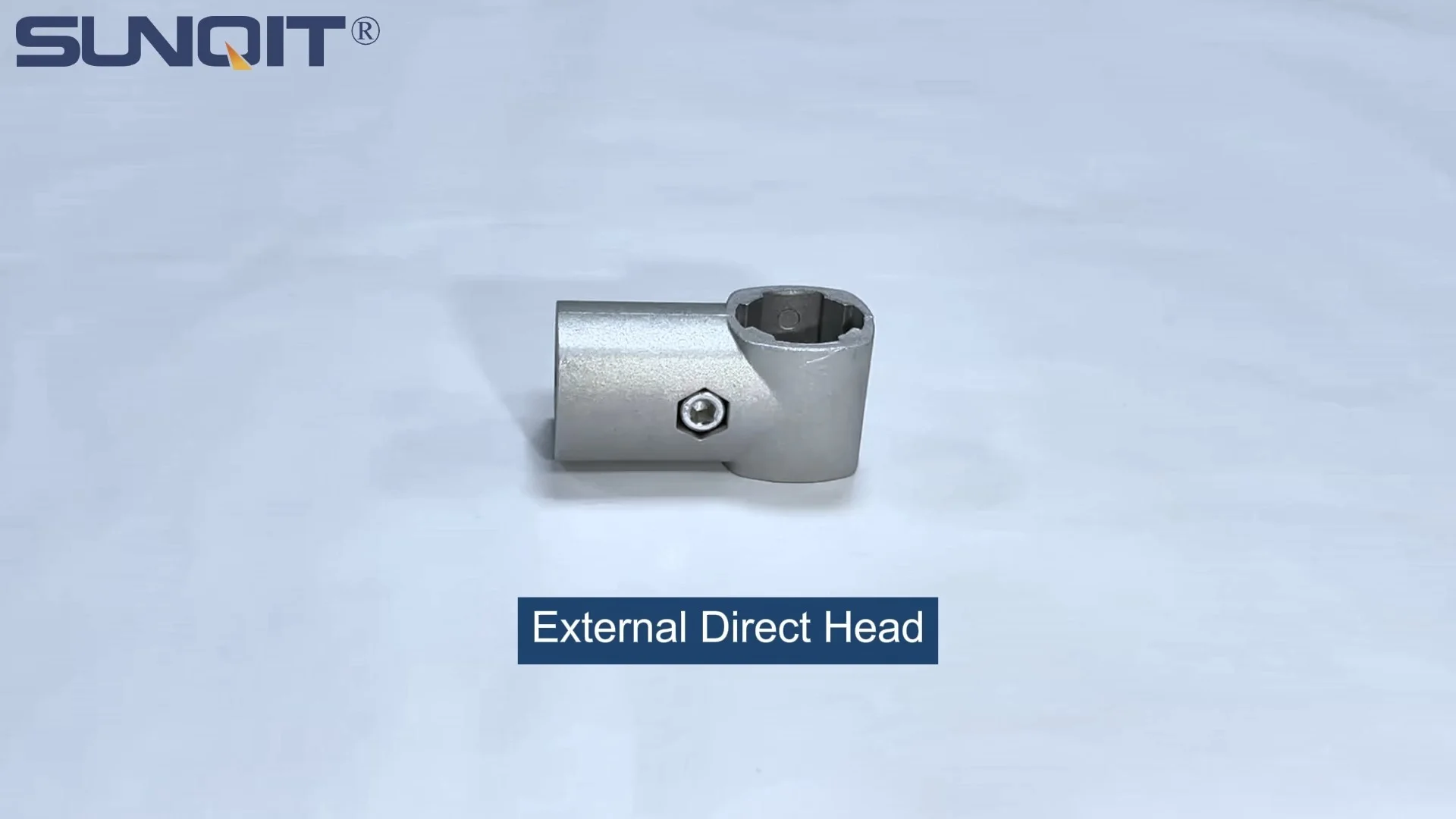
Aluminum 2 way pipe joint for 28mm aluminum pipe connection in 2 direction.
In the world of consumer electronics, where innovation moves at the speed of a smartphone update, manufacturing lines can't afford to be static. Every new model, every design tweak, and every shift in consumer demand demands a production floor that can adapt—quickly, efficiently, and without breaking the bank. This is where lean manufacturing principles take center stage, and at the heart of many lean systems lies an unsung hero: the two way aluminum pipe joint. These unassuming connectors are the backbone of modular, flexible workspaces, quietly enabling the agility that modern electronics manufacturing relies on. Let's dive into how these joints are transforming factories, one assembly line at a time.
What Are Two Way Aluminum Pipe Joints, Anyway?
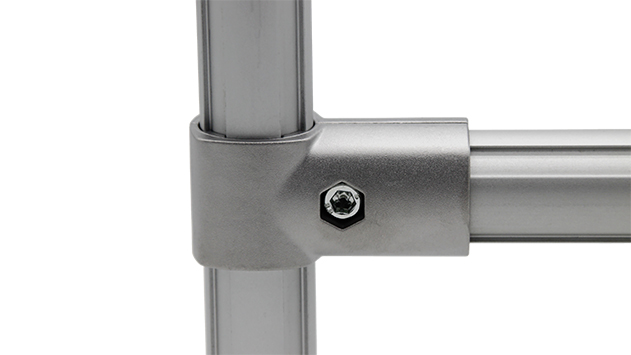
Before we jump into use cases, let's get clear on what we're talking about. Two way aluminum pipe joints are precisely engineered connectors designed to link aluminum pipes (often part of an aluminum profile system) at specific angles—most commonly 90 degrees, though some designs offer adjustability. Made from lightweight, corrosion-resistant aluminum, they're built to hold together structures like workbenches, material racks, and roller tracks without the need for welding, drilling, or heavy tools. Think of them as the "Lego blocks" of manufacturing: simple to snap together, infinitely reconfigurable, and strong enough to support the day-to-day chaos of a production floor.
What sets them apart from traditional steel joints or plastic connectors? For starters, aluminum's natural resistance to rust means they hold up in environments where moisture or chemicals (like cleaning agents) are present—critical in electronics manufacturing, where precision and cleanliness go hand in hand. They're also significantly lighter than steel, making it easier for teams to rearrange workstations without heavy machinery. And because they're modular, they eliminate the need for custom fabrication; if a line needs to shrink, expand, or reorient, the joints can be disassembled and reused elsewhere. No waste, no delays, no expensive retooling.
Use Case 1: Building Custom Workbenches That Grow With Your Needs
Walk into any electronics factory, and you'll notice one thing immediately: workbenches are everywhere. They're where technicians assemble circuit boards, test components, and package finished products. But not all workbenches are created equal. A bench used for soldering tiny smartphone components needs to be lower, with anti-static surfaces, while one handling larger laptop chassis might require extra shelf space for tools. Traditional workbenches—often made of fixed steel or wood—force teams into a one-size-fits-all approach. If a new product requires a taller surface or a different layout, you're stuck either jury-rigging a solution or buying an entirely new bench. Enter two way aluminum pipe joints.
Take, for example, a mid-sized electronics manufacturer that recently shifted from producing basic feature phones to smartwatches. The old workbenches, designed for larger devices, were too high for technicians to comfortably handle the tiny watch components. Instead of replacing all 50 benches, the team used two way aluminum pipe joints to adjust the height of each station. By swapping out shorter aluminum pipes for longer ones (connected via the same joints), they lowered the work surfaces by 12 inches in under a day. Even better, when the next product—a fitness tracker with a bulkier battery—came along, they reversed the process, raising the benches back up. The joints didn't just save the company thousands in new equipment costs; they kept production on track during a critical product transition.
But it's not just height adjustments. These joints also let teams add accessories on the fly. Need a shelf for tools? Attach a short aluminum pipe to the bench frame with a two way joint. Want to mount an ESD (electrostatic discharge) mat holder? Screw it into the joint's pre-drilled holes. This level of customization ensures that every workbench is tailored to the task at hand, reducing technician fatigue and boosting efficiency. In fact, a 2023 study by the Manufacturing Excellence Association found that factories using modular workbenches with aluminum joints reported a 15% increase in assembly speed compared to those with fixed setups—all because workers weren't wasting time reaching for tools or adjusting to awkward surfaces.
Use Case 2: Streamlining Material Flow with Roller Tracks
In electronics manufacturing, time is money—and nowhere is that truer than in material handling. Components need to move from storage to assembly stations, and finished products need to move to packaging, without bottlenecks or delays. Roller tracks are a staple here, using gravity or gentle inclines to slide items along a path. But traditional roller tracks, often built with steel rails and welded joints, are rigid. If a production line is reconfigured, the tracks become obsolete. Two way aluminum pipe joints change that by turning roller tracks into flexible, reconfigurable systems.
Consider a factory producing wireless earbuds. The assembly process involves multiple steps: circuit board installation, battery insertion, speaker testing, and final casing. Each step is handled at a different station, and components need to flow seamlessly between them. With aluminum joints, the factory built a roller track system that snakes through the line, with branches leading to each station. When a new model with a larger battery required a longer testing phase, the team simply added an extension to the roller track using extra aluminum pipes and two way joints. No welding, no downtime—just a few hours of adjustments, and the line was back up and running.
Another advantage? Compatibility with other components. Two way aluminum pipe joints play well with roller track accessories like plastic guide rails (yellow or grey, depending on the factory's color-coding system) and swivel roller balls, which help redirect items at corners. This means the same joint that holds the track together can also support add-ons that prevent jams or misalignment—critical when dealing with small, delicate parts like microchips or charging ports. And because aluminum is lightweight, the tracks themselves are easier to reposition; a team of two can rearrange a 20-foot track in under an hour, compared to half a day with steel tracks.

Use Case 3: Supporting Lean Systems with Modular Assembly Lines
Lean manufacturing is all about eliminating waste—whether that's wasted time, wasted space, or wasted resources. Two way aluminum pipe joints are a lean system's best friend because they embody the "just-in-time" philosophy: build only what you need, when you need it, and reconfigure as demands change. This is especially valuable in consumer electronics, where product lifecycles are shorter than ever. A phone model might be in production for 18 months, a tablet for 24—factories can't afford to invest in permanent infrastructure that becomes obsolete when the next big thing hits the market.
Take a large electronics manufacturer that produces both smart home devices and wearable tech. During the holiday season, demand for smart speakers spikes, so they need to scale up that line while scaling down wearables. With traditional fixed assembly lines, this would mean shutting down one line, dismantling it, and rebuilding the other—losing days of production. But with aluminum joints, the process is painless. The wearable line's workbenches, material racks, and roller tracks are disassembled, and the components are repurposed to expand the smart speaker line. Two way joints make it possible to reuse 80% of the equipment, cutting reconfiguration time from weeks to days. When the holiday rush ends, the line is easily switched back.
This flexibility also supports "cellular manufacturing," a lean approach where small teams work on self-contained production cells instead of linear assembly lines. Each cell is customized for a specific task, and with aluminum joints, cells can be rearranged to optimize workflow. For example, if a cell assembling camera modules is falling behind, a supervisor can quickly add an extra workbench (using joints and spare aluminum pipes) to split the workload—no need to wait for a maintenance crew or external contractors.

Use Case 4: Creating Ergonomic Workstations to Protect Your Team
In electronics manufacturing, where technicians often spend 8+ hours a day performing repetitive tasks—screwing in components, attaching wires, or testing buttons—ergonomics isn't just a nice-to-have; it's a necessity. Poorly designed workstations lead to fatigue, injuries, and high turnover, all of which hurt productivity. Two way aluminum pipe joints enable factories to build workstations that adapt to people , not the other way around.
Consider a technician named Maria, who assembles laptop keyboards. At 5'2", she struggled with the standard workbench height of 36 inches, leading to shoulder strain and frequent mistakes. Her supervisor, using two way aluminum pipe joints, adjusted the bench legs by swapping out 12-inch pipes for 9-inch ones, lowering the surface to 33 inches. Problem solved. A few months later, when Maria moved to a new station assembling larger laptop screens, the same bench was raised back up using the original pipes—no new equipment needed. This level of personalization isn't possible with fixed workbenches, but with aluminum joints, it's as simple as loosening a few bolts and swapping parts.
Ergonomics also extends to accessories. Two way joints make it easy to add footrests, monitor arms, or tool holders at the exact height and angle each technician needs. For example, a team assembling VR headsets might need their tools within arm's reach to avoid constant bending; a small shelf mounted on the side of the workbench (using joints and a short aluminum pipe) keeps screwdrivers and tweezers handy. Over time, these small adjustments add up: factories using ergonomic, joint-built workstations report 30% fewer work-related injuries and 20% higher employee retention, according to the National Institute for Occupational Safety and Health (NIOSH).
How Do Two Way Aluminum Pipe Joints Stack Up Against Traditional Options?
Still not convinced these joints are worth the switch? Let's put them head-to-head with traditional alternatives like steel joints and plastic connectors. The table below breaks down the key differences:
| Feature | Traditional Steel Joints | Plastic Connectors | Two Way Aluminum Pipe Joints |
|---|---|---|---|
| Weight | Heavy (hard to reposition without machinery) | Light, but less durable | Lightweight (easy for teams to handle) |
| Corrosion Resistance | Prone to rust in humid environments | Resistant, but can crack in extreme temperatures | Highly resistant (ideal for cleanrooms/chemical exposure) |
| Assembly Time | Slow (requires welding/drilling) | Fast, but weak under heavy loads | Fast (tool-free or basic tools; no specialized skills) |
| Flexibility | Fixed (cannot be reconfigured without cutting/welding) | Reconfigurable, but limited to light use | Highly reconfigurable (reusable across projects) |
| Long-Term Cost | High (expensive to replace; wasteful when lines change) | Low upfront, but frequent replacement needed | Moderate upfront, but reusable (low long-term cost) |
| Compatibility with Aluminum Profile | Limited (often requires adapters) | Some compatibility, but weak structural support | Seamless (designed to work with aluminum pipes/profiles) |
Beyond the Factory Floor: Sustainability and Future-Proofing
In today's manufacturing landscape, sustainability isn't just a buzzword—it's a business imperative. Consumer electronics brands are under pressure to reduce their carbon footprints, and that includes their supply chains. Two way aluminum pipe joints align with these goals in a big way. Aluminum is 100% recyclable, and because the joints are reusable, they cut down on waste from discarded fixed equipment. A single joint can last for years, moving from workbench to roller track to material rack as the factory evolves. Compare that to steel joints, which often end up in landfills when lines are reconfigured, or plastic connectors that degrade over time and need frequent replacement.
Future-proofing is another key benefit. As electronics get smaller, more complex, or more modular, manufacturing lines will need to adapt. Two way aluminum pipe joints don't lock factories into a single layout or product type. They're ready for whatever comes next—whether that's a shift to AI-driven assembly robots (which might require taller workbenches) or a focus on repair and recycling (which might need specialized disassembly stations). In short, they're an investment in agility, not just today's production needs.
Best Practices for Getting the Most Out of Two Way Aluminum Pipe Joints
Ready to integrate two way aluminum pipe joints into your manufacturing line? Here are a few tips to ensure success:
Start small, then scale: Begin with a single workbench or roller track to test the system before overhauling the entire line. This lets your team get comfortable with assembly and disassembly.
Standardize on components: Stick to a single brand or size of aluminum pipe (e.g., 20mm or 30mm diameter) and joints to ensure compatibility. Mixing and matching can lead to weak connections or misaligned structures.
Train your team: While two way joints are easy to use, proper assembly (tightening bolts to the right torque, aligning pipes correctly) is key to safety and durability. A quick 30-minute training session can prevent mistakes.
Label and store spare parts: Keep extra pipes, joints, and accessories (like guide rails or swivel balls) organized and labeled. This speeds up reconfigurations and reduces downtime when parts go missing.
Conclusion: The Joints That Keep Innovation Flowing
In the fast-paced world of consumer electronics manufacturing, adaptability isn't just a competitive advantage—it's survival. Two way aluminum pipe joints may not grab headlines like the latest smartphone or AI-powered robot, but they're the quiet enablers of the agility that defines modern factories. From custom workbenches that adjust to each technician's needs to roller tracks that reconfigure in hours, these joints turn rigid production lines into flexible, lean systems that can keep up with innovation.
So the next time you unbox a new laptop, smartwatch, or wireless earbud, take a moment to appreciate the manufacturing magic that made it possible. Chances are, somewhere on the factory floor, a two way aluminum pipe joint played a role in bringing that device to life—one flexible, adaptable connection at a time.