- Company Articles
- Products and Technology
- Product knowledge
- Two Way Aluminum Pipe Joints: Key to Achieving Kaizen in Your Production Process

Two Way Aluminum Pipe Joints: Key to Achieving Kaizen in Your Production Process
Related Product
Two Way Aluminum Pipe Joint
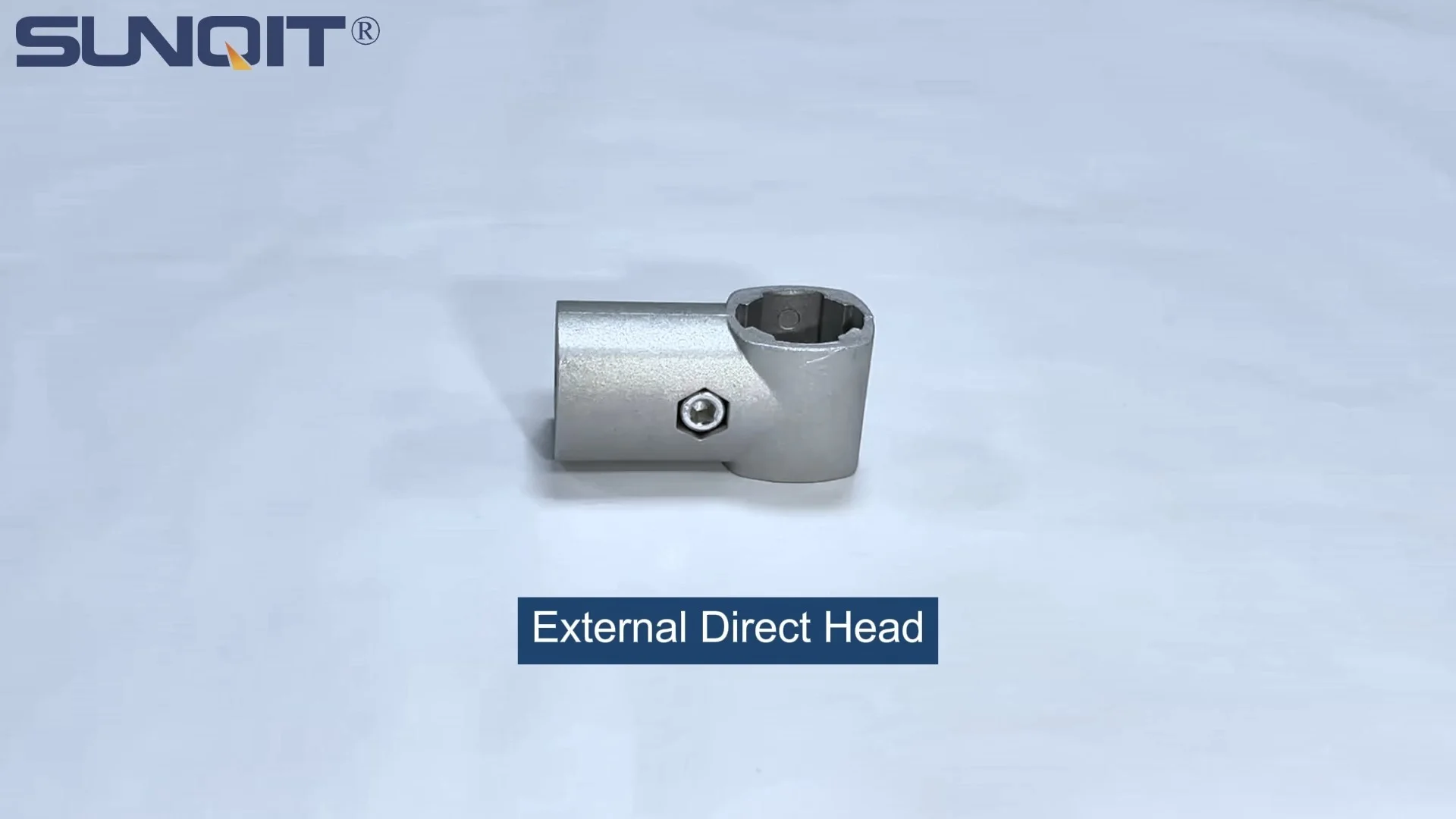
Aluminum 2 way pipe joint for 28mm aluminum pipe connection in 2 direction.
Walk into any manufacturing facility, and you'll likely hear the hum of machinery, the clink of tools, and the steady rhythm of assembly lines. But beneath that surface, there's a quieter, more critical pulse: the constant push to do better. That's Kaizen—the Japanese philosophy of continuous improvement—and it's the lifeblood of successful production teams. Yet, for all its focus on progress, Kaizen often hits a wall when faced with rigid, inflexible equipment. Welded steel workbenches that can't be adjusted. Flow racks bolted to the floor that resist reconfiguration. These static setups don't just slow down change—they actively discourage the small, daily improvements that make Kaizen thrive. But what if there was a tool that turned "we can't" into "we can, and we can do it today"? Enter two way aluminum pipe joints: the unsung heroes of adaptable production systems.
What Are Two Way Aluminum Pipe Joints, Anyway?
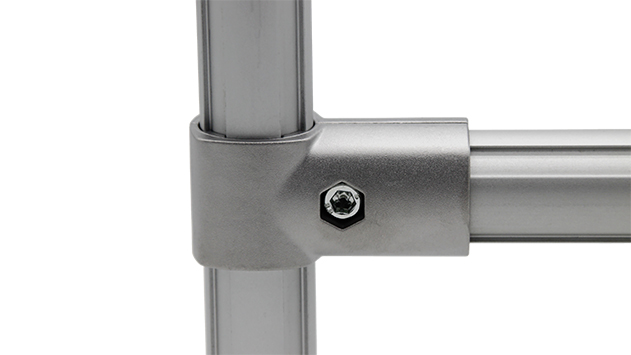
Let's start with the basics. Two way aluminum pipe joints are exactly what they sound like: simple, durable connectors designed to link aluminum lean pipes at (you guessed it) two points, creating stable, modular structures. Made from lightweight, corrosion-resistant aluminum, these joints are engineered for one primary goal: flexibility. Unlike traditional welded steel joints or clunky plastic fasteners, they snap into place with minimal effort, hold firm under pressure, and—most importantly—can be disassembled and reused in seconds. Think of them as the building blocks of a production line that bends, not breaks, when your team has a better idea.
At first glance, they might seem unassuming. A typical two way joint has two cylindrical openings, each sized to fit standard aluminum lean pipes (often 28mm or 30mm in diameter), and a locking mechanism—usually a setscrew or a spring-loaded pin—that secures the pipes in place. No welding torches, no power tools, no waiting for adhesives to dry. Just align the pipe, twist or tighten, and you're done. But their simplicity is deceptive. These joints are the linchpin of a modular system that includes aluminum profile accessories, workbenches, flow racks, and more—all designed to work together seamlessly.
The Kaizen Connection: Why Flexibility Isn't Just Nice—It's Necessary
Kaizen isn't about grand overhauls or expensive upgrades. It's about the machinist who notices a workbench is 6 inches too low and suggests raising it. It's about the team lead who realizes a flow rack's layout is causing bottlenecks and wants to rearrange it. These small, incremental changes add up to big results—but only if your equipment lets you act on them. Traditional setups? They don't play ball. A welded steel workbench might take days to modify, requiring a maintenance crew and shutting down production. A bolted flow rack could mean hours of unscrewing, hauling, and rebolting, with no guarantee the new layout will even work. By the time you're done, that initial spark of improvement might have fizzled out. "It's not worth the hassle," your team members start thinking. And just like that, Kaizen stalls.
Two way aluminum pipe joints flip that script. They turn "hassle" into "quick win." Need to raise that workbench? Loosen the joints, adjust the pipes, retighten. Done in 10 minutes, not 10 days. Want to reconfigure a flow rack to test a new material flow? Disassemble the old setup, snap the joints into a new pattern, and you're ready to trial the change by lunch. This isn't just convenience—it's empowerment. When your team sees that their ideas can be implemented immediately, they stop holding back. They start suggesting more improvements, big and small. That's when Kaizen truly takes root.
How Two Way Aluminum Pipe Joints Drive Continuous Improvement (Yes, Really)
1. Adaptability: The Workbench That Grows With Your Team
Let's zoom in on a common scenario: the workbench. It's the heart of any assembly station, but one size rarely fits all. A tall worker might need a higher surface to avoid hunching; a shorter worker, a lower one. A team assembling small electronics might need shelves for tools; a team packing boxes might need more tabletop space. With traditional workbenches, you're stuck choosing one configuration and hoping for the best. But with two way aluminum pipe joints and aluminum lean pipes, workbenches become chameleons.
Take "Workbench E (Single Deck—Without Caster)," a popular model among manufacturers. Out of the box, it's a simple, sturdy table. But with two way joints, it transforms. Add a second deck by attaching aluminum pipes vertically? Done. Install side shelves using horizontal joints? Easy. Need to raise the height by 4 inches? Just swap out the leg pipes for longer ones. Even better, if a new project requires a completely different setup—say, a U-shaped workbench instead of a straight one—you can disassemble the old bench and rebuild it in under an hour. No waste, no extra cost, just a workbench that adapts to your needs, not the other way around.
This adaptability isn't just about comfort. It's about efficiency. When a workbench fits the task, errors drop. When tools are within arm's reach (thanks to a quick shelf addition), cycle times shorten. And when workers feel like their workspace is designed for them , morale gets a boost. All of this from a few joints and pipes? It sounds small, but small is exactly what Kaizen is about.
2. Streamlining Flow Racks: From Bottlenecks to Smooth Sailing
Flow racks are another area where two way aluminum pipe joints shine. These racks—used to move materials from one workstation to the next—are critical for maintaining a steady production flow. But if the rack's angle is off, or the roller spacing is wrong, materials get stuck, workers waste time unjamming, and deadlines slip. With traditional flow racks, fixing these issues means calling in maintenance to adjust the angle (which might involve cutting and rewelding steel) or replacing the entire rack. With modular racks built using two way joints? You can tweak the angle on the fly.
Imagine this: The morning shift notices that plastic bins are sliding too slowly down a flow rack's roller track. Instead of waiting for the afternoon maintenance window, the team lead grabs a wrench, loosens the two way joints holding the rack's legs, adjusts the height by an inch, and retightens. The bins now glide smoothly. Problem solved in 15 minutes, and production stays on track. Later, when a new bin size is introduced, the team can add aluminum guide rails (like "Aluminum Guide Rail A" or "Plastic Roller Track Guide Rail Yellow") using the same joints, ensuring the new bins fit without a hitch. This kind of responsiveness turns flow racks from passive storage tools into active contributors to process improvement.
3. Building a Lean System That Actually Lives Up to the Name
Lean manufacturing is all about eliminating waste—whether it's time, materials, or space. But too often, "lean systems" end up being just as wasteful as the setups they replace, because they're designed for a single, static process. A lean system built with two way aluminum pipe joints, though, is lean by nature. Since the joints and pipes are reusable, you're not throwing away old equipment when your process changes. Need to shrink a workbench to free up floor space? Dismantle it and use the pipes and joints to build a smaller one. Want to repurpose a flow rack as a turnover trolley? Swap out the roller track for casters (using, you guessed it, compatible aluminum profile accessories) and you're good to go.
This reusability cuts down on waste in two ways: first, by reducing the need to buy new equipment, and second, by minimizing storage clutter. No more old workbenches gathering dust in the corner "just in case." No more boxes of mismatched parts that don't fit the new system. Everything has a purpose, and everything can be repurposed. That's lean living, not just lean labeling.
4. Empowering Your Team: The Hidden Benefit of Easy Setup
Here's a truth about Kaizen: it thrives when everyone feels ownership of the process. But if only the maintenance team or engineers can modify equipment, your frontline workers—who know the process best—will hesitate to speak up. Why bother suggesting a better workbench layout if you'll need to fill out a request form, wait a week, and then hope the maintenance crew gets it right? Two way aluminum pipe joints change that dynamic by putting the power to improve directly in the hands of the people using the equipment.
Consider a scenario: Maria, an assembler with 10 years of experience, notices that the tools she uses most often are stored on a shelf that's too high. With a traditional workbench, she might mention it to her supervisor, who passes it to maintenance, who schedules it for next month. With a modular workbench built with two way joints? Maria can grab a wrench, lower the shelf herself during her break, and be back to work—with her tools at eye level—in 5 minutes. That small act of autonomy doesn't just make Maria's day easier; it sends a message: "Your ideas matter, and we trust you to act on them." When that message spreads, your team stops seeing themselves as cogs in a machine and starts seeing themselves as co-creators of a better process. And that's when Kaizen becomes more than a philosophy—it becomes a culture.

A Closer Look: What Makes Two Way Aluminum Pipe Joints Stand Out?
By now, you're probably thinking, "Okay, they sound useful, but are they really that different from other modular joints?" Let's break it down. Traditional options like plastic snap-fit joints are cheap but flimsy—they wear out quickly under heavy loads, and their grip weakens over time. Steel welded joints are strong but permanent; once they're set, they're set for good. Two way aluminum pipe joints, though, strike a sweet spot between strength, flexibility, and durability. Here's why they're in a league of their own:
- Lightweight but tough: Aluminum is 1/3 the weight of steel, making assemblies easier to move and reconfigure. But don't let the lightness fool you—these joints can handle loads up to 200kg (depending on the model), so they're more than strong enough for most production tasks.
- Corrosion-resistant: Unlike steel, aluminum doesn't rust, even in humid or dusty factory environments. That means your joints (and the structures they build) will last longer, reducing replacement costs.
- Compatible with a universe of accessories: Two way joints play well with other aluminum profile accessories—casters, roller tracks, shelves, you name it. This interoperability means you can build almost anything: a mobile workbench with casters, a flow rack with roller tracks, even a custom material cart. The only limit is your team's creativity.
- No special tools required: Most two way joints tighten with a standard hex key or a Phillips screwdriver—tools you already have in your toolbox. No need for welding certification or expensive equipment.
| Feature | Two Way Aluminum Pipe Joints | Traditional Steel Welded Joints | Plastic Snap-Fit Joints |
|---|---|---|---|
| Weight | Light (aluminum) | Heavy (steel) | Very light (plastic) |
| Assembly Time | Minutes (no tools needed for basic setup) | Hours (requires welding) | Minutes (but weak grip) |
| Reusability | Unlimited (disassemble and rebuild) | None (permanent welds) | Limited (snaps wear out) |
| Compatibility with Aluminum Lean Pipe | Designed for it | Requires adapters | Sometimes (sizing varies) |
| Cost Over Time | Low (reusable, durable) | High (replace entire structure when outdated) | Medium (replace frequently due to wear) |

Real-World Impact: How Teams Are Using Two Way Joints to Transform Production
Let's step out of the abstract and into the factory. Take Acme Electronics, a mid-sized manufacturer of circuit boards. A year ago, their assembly line was a patchwork of welded steel workbenches and fixed flow racks. Kaizen meetings were frustrating affairs—team members had plenty of ideas, but "we can't change that" was the constant refrain. Then, they switched to a modular system built with two way aluminum pipe joints, aluminum lean pipes, and aluminum profile accessories. The results? In six months, they:
- Reduced workbench reconfiguration time from 8 hours to 45 minutes.
- Cut material handling errors by 30% by reconfiguring flow racks to match new bin sizes.
- Increased team suggestion submissions by 150% (because workers finally saw their ideas turn into action).
Or consider Beta Manufacturing, a furniture maker. They struggled with seasonal demand—their summer line required wider workbenches, while winter products needed more vertical storage. With traditional setups, they'd spend weeks rearranging the factory floor, often hiring temporary workers to help. Now, using two way joints, they reconfigure their workbenches and flow racks in a weekend. "We used to dread seasonal changes," says their production manager. "Now? We look forward to them. It's like giving the factory a fresh start, and the team gets excited about optimizing the new layout."
Getting Started: Your First Steps Toward an Adaptable Production Line
Ready to bring two way aluminum pipe joints into your facility? You don't need to overhaul everything at once—Kaizen, remember? Start small. Here's how:
1. Identify Your "Pain Points"
Walk the floor with your team and ask: Where do we waste the most time? Which workbenches or racks feel "stuck"? Which processes could use a tweak but can't because the equipment won't let us? Jot these down—they're your starting points. Maybe it's a workbench that's too narrow, or a flow rack that causes bottlenecks. These are the low-hanging fruit where modular joints will have the biggest immediate impact.
2. Start with a Pilot Project
Pick one pain point and build a modular solution. For example, if your team complains about a cramped workbench, order a kit with aluminum lean pipes, two way joints, and a workbench top. Assemble it together—let the team help design the layout. This does two things: it solves the immediate problem, and it shows everyone how easy the system is to use. Once they see it in action, they'll start brainstorming other ways to use the joints.
3. Train the Team (But Keep It Simple)
You don't need a formal training program. Hold a 15-minute demo: show how to insert a pipe into a joint, tighten the setscrew, and disassemble it. Let everyone take a turn—muscle memory goes a long way. Encourage workers to experiment: "If you think of a better way to arrange the shelf, go for it. We can always change it back." This builds confidence and ownership.
4. Measure, Learn, and Repeat
After your pilot project, check in with the team. Did the new setup help? What could be better? Use their feedback to tweak the design, then move on to the next pain point. Remember, Kaizen is about small steps—you don't need to "fix" the entire factory in a month. Just keep asking, "How can we make this a little better today?" and let the joints handle the rest.
The Future of Production: Why Adaptability Will Define Success
Manufacturing isn't getting slower or simpler. Customer demands change overnight, new technologies emerge, and competition never sleeps. In this environment, rigid systems are liabilities. The factories that thrive will be the ones that can pivot quickly—reconfiguring a workbench here, adjusting a flow rack there—without missing a beat. Two way aluminum pipe joints aren't just tools for today's improvements; they're investments in tomorrow's agility.
Think about it: When your production line can adapt in minutes, you can test new ideas faster, respond to customer needs quicker, and keep up with industry trends without breaking the bank. You're not just building products—you're building a culture of continuous improvement. And that culture? It's your most valuable competitive advantage.
Final Thoughts: Your Journey to Kaizen Starts with a Single Joint
Kaizen isn't about perfection. It's about progress. And progress requires tools that keep up with your team's ambition. Two way aluminum pipe joints are more than just connectors—they're enablers. They turn "someday" into "today." They turn frustration into empowerment. They turn a static factory floor into a canvas for your team's best ideas.
So the next time someone on your team says, "What if we tried…?" don't let rigid equipment be the answer. Hand them a two way aluminum pipe joint, an aluminum lean pipe, and a wrench. Then step back and watch Kaizen in action. Because the path to continuous improvement doesn't start with a grand plan. It starts with the courage to change—and the right tools to make that change possible.