- Company Articles
- Products and Technology
- Product knowledge
- Two Way Aluminum Pipe Joints: Reducing Downtime in Assembly Line Reconfigurations

Two Way Aluminum Pipe Joints: Reducing Downtime in Assembly Line Reconfigurations
Related Product
Two Way Aluminum Pipe Joint
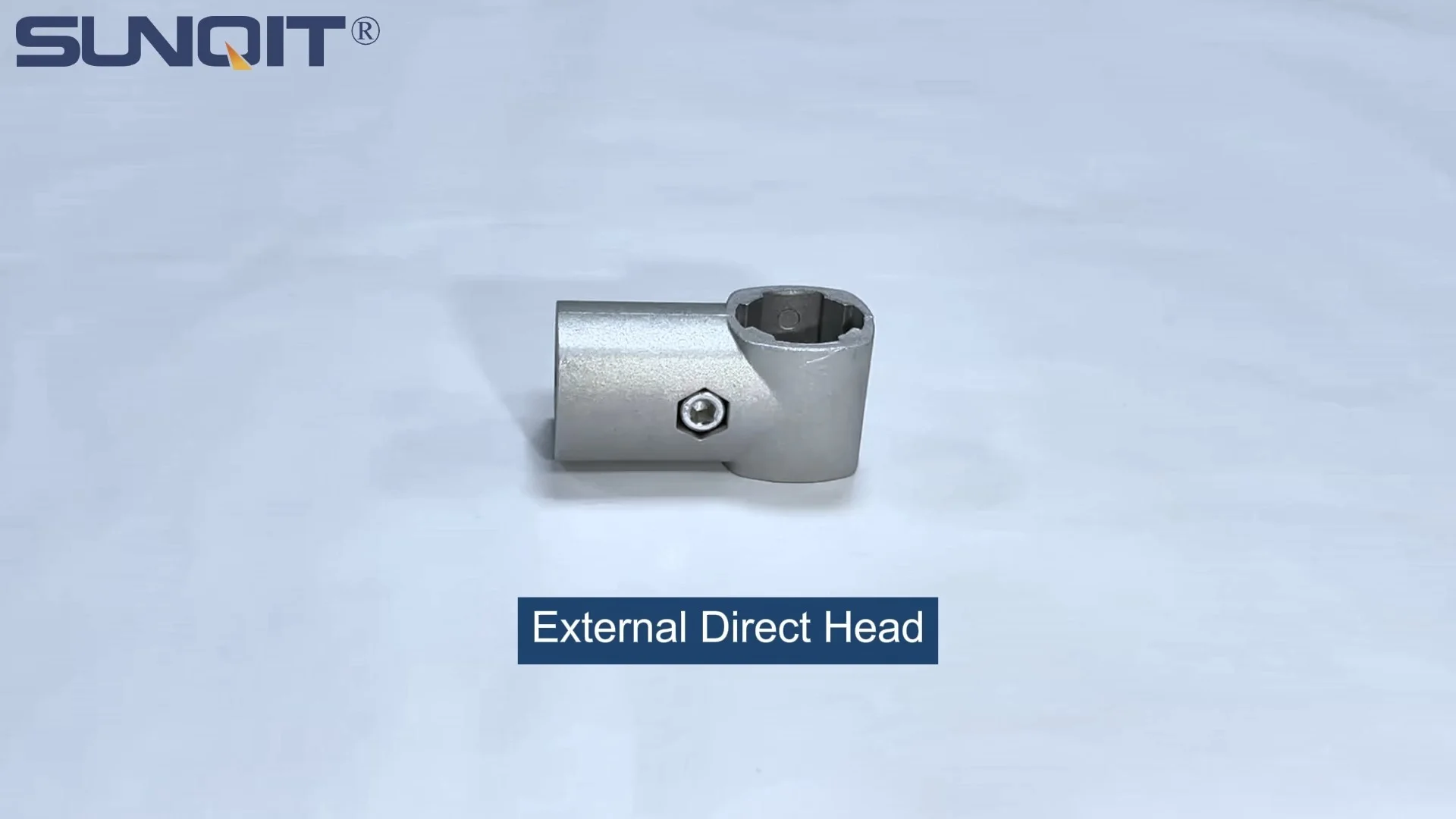
Aluminum 2 way pipe joint for 28mm aluminum pipe connection in 2 direction.
The Hidden Cost of Assembly Line Downtime
In the world of manufacturing, time isn't just money—it's the difference between meeting a quarterly deadline and scrambling to catch up. For plant managers and floor supervisors, few things sting more than watching an assembly line sit idle during a reconfiguration. Whether it's switching to a new product model, scaling up production, or adapting to a sudden shift in demand, the hours (or even days) lost to dismantling old structures, welding new ones, and troubleshooting misaligned components can eat into profits and morale alike.
Traditional assembly line setups often rely on rigid, permanent structures: steel pipes welded into fixed frames, heavy bolts that require power tools to adjust, and joints that corrode or seize up after just a few uses. When a reconfiguration is needed, the process becomes a logistical nightmare. Workers spend hours cutting through old welds, hauling away scrap metal, and struggling to align new parts—all while the line sits silent. It's a scenario that feels almost unavoidable, but it doesn't have to be.
Enter the two way aluminum pipe joint: a deceptively simple component that's quietly revolutionizing how manufacturers approach flexibility. Lightweight, durable, and designed for quick, tool-free adjustments, these joints are part of a larger ecosystem of aluminum profile and aluminum pipe accessories that turn assembly lines from static monoliths into adaptable, agile systems. In this article, we'll dive into how two way aluminum pipe joints work, why they're becoming a staple in lean system implementations, and how they can slash reconfiguration downtime by 70% or more.
What Are Two Way Aluminum Pipe Joints, Anyway?
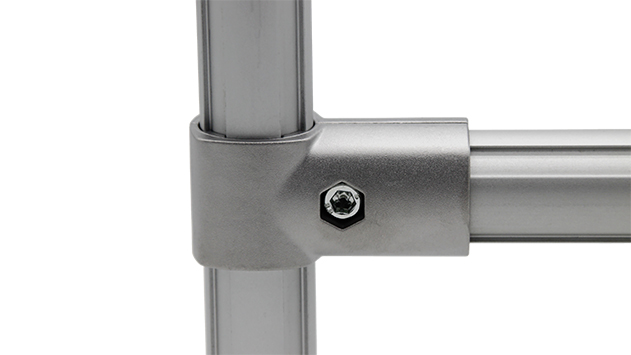
At first glance, a two way aluminum pipe joint might not look like much—just a sleek, metallic connector with a few knobs and internal threads. But beneath that unassuming exterior lies a design philosophy centered on adaptability . Unlike traditional steel joints that lock pipes into fixed angles, two way aluminum joints are engineered to connect two aluminum pipes at adjustable angles (usually 0° to 180°, with some models offering 360° rotation) using nothing more than hand pressure. No welding, no power tools, no specialized training required.
Made from high-grade aluminum alloy (often 6063-T5, known for its strength-to-weight ratio), these joints are lightweight enough for a single worker to handle but tough enough to withstand the daily wear and tear of industrial environments. Their smooth, anodized finish resists corrosion, making them suitable for everything from dry electronics assembly lines to humid food processing facilities. And because they're part of a modular system, they play well with other aluminum pipe accessories—think end caps, clamps, and brackets—that let you build everything from workbenches to flow racks without starting from scratch.
The "two way" in their name refers to their ability to connect two pipes, but don't let that limit your imagination. When paired with three-way or four-way joints (also part of the aluminum profile ecosystem), they become building blocks for complex structures. Need a U-shaped workbench? Use two way joints to connect the legs. Want a flow rack with adjustable shelving? Add a few two way joints to the vertical supports, and you're done. The key is that every connection is temporary yet secure—strong enough to hold heavy loads, but easy enough to disassemble when change is needed.
5 Features That Slash Reconfiguration Time
Two way aluminum pipe joints aren't just "better than welding"—they're designed from the ground up to eliminate the pain points of traditional reconfigurations. Let's break down the features that make them a game-changer for reducing downtime.
1. Tool-Free Assembly (and Disassembly)
Gone are the days of hunting for a wrench or waiting for the welding team. Most two way aluminum joints feature ergonomic, hand-tightened knobs or levers that lock pipes in place with a simple twist. To adjust or disassemble, just reverse the motion. A study by the Manufacturing Technology Insights found that tool-free joints reduce assembly time by an average of 65% compared to bolted steel connections. For a mid-sized assembly line reconfiguration involving 20 joints, that's the difference between a full day of work and wrapping up before lunch.
2. Precision Alignment, Every Time
Anyone who's ever tried to align a welded steel frame knows the frustration: a millimeter off here, a bent pipe there, and suddenly the entire structure wobbles. Two way aluminum joints solve this with built-in alignment guides—grooves, notches, or color-coded markers that ensure pipes fit together perfectly on the first try. Some models even include spring-loaded pins that click into place when the angle is correct, giving workers instant feedback that the joint is secure. This eliminates the trial-and-error of traditional setups, where misalignments often lead to costly rework.
3. Reusability That Reduces Waste (and Costs)
Steel joints welded into place are one-and-done. Once you cut them apart, they're scrap metal. Two way aluminum joints, by contrast, are designed to be reused dozens (or even hundreds) of times. Their aluminum construction resists fatigue, and their internal components (like washers and locking mechanisms) are replaceable if they wear out. Over time, this reusability translates to lower material costs—no more buying new steel pipes and joints for every reconfiguration—and less waste, aligning with lean system principles of minimizing resource consumption.
4. Compatibility with Aluminum Profile Ecosystems
Two way aluminum joints don't exist in a vacuum—they're part of a larger family of aluminum profile and accessories that turn assembly line design into a modular puzzle. Need to add a shelf to a workbench? Slide an aluminum profile into a two way joint, lock it in place, and attach a panel. Want to build a mobile trolley? Pair the joints with casters and aluminum pipes, and you've got a structure that's both sturdy and movable. This compatibility means reconfigurations aren't just faster—they're more creative. Workers can mix and match components to solve unique problems, instead of being limited by one-size-fits-all steel frames.
5. Lightweight Design, Heavy-Duty Performance
Aluminum is about 30% lighter than steel, which might not sound like a big deal—until you're moving a 10-foot section of pipe by hand. Two way aluminum joints make on-the-fly adjustments possible without heavy lifting equipment. A single worker can carry multiple joints and pipes to the reconfiguration site, reducing the need for team lifts or forklifts. And despite their light weight, these joints are surprisingly strong: most can support loads of 200-300 pounds per connection, enough for everything from small electronic components to heavy automotive parts.

Traditional vs. Two Way Aluminum Joints: A Head-to-Head Comparison
| Feature | Traditional Steel Joints | Two Way Aluminum Pipe Joints |
|---|---|---|
| Installation Time per Joint | 15-20 minutes (including welding/cutting) | 1-2 minutes (tool-free hand tightening) |
| Reconfiguration Time for 10-Joint Setup | 8-10 hours (welding, cutting, aligning) | 1-2 hours (disassembly, adjustment, reassembly) |
| Tools Required | Welder, angle grinder, wrench, measuring tape | None (hand-tightened) |
| Reusability | Single-use (welded joints cannot be disassembled) | 50+ reuses (replaceable components) |
| Weight (per 4-inch joint) | 1.2 lbs (steel) | 0.4 lbs (aluminum) |
| Corrosion Resistance | Poor (rusts without frequent maintenance) | Excellent (anodized aluminum resists rust and chemicals) |
| Cost Over 5 Reconfigurations | High (new materials + labor for welding) | Low (reused joints + minimal labor) |
Case Study: How a Electronics Manufacturer Cut Reconfiguration Time by 75%
The Challenge: A leading electronics manufacturer in the Midwest was struggling to keep up with demand for its new line of smart home devices. The company's assembly line, built with traditional steel frames and welded joints, required 12 hours of downtime every time they switched from producing thermostats to security cameras—a process that happened 3-4 times per month. This downtime was costing them an estimated $40,000 per month in lost production.
The Solution: After consulting with a lean system supplier, the manufacturer replaced their steel frames with an aluminum profile system centered on two way aluminum pipe joints. They also invested in compatible accessories: aluminum workbenches, flow racks, and mobile trolleys, all built with the same modular components.
The Results: The first reconfiguration with the new system took just 3 hours—down from 12. By the third reconfiguration, the team had refined the process to 2.5 hours. Over six months, the manufacturer saved over $200,000 in downtime costs. Workers reported higher satisfaction, too: "We used to dread reconfig days," said one floor supervisor. "Now, we can knock it out before lunch and spend the afternoon fine-tuning the line instead of fighting with tools."

Beyond Joints: Building a Leaner, More Adaptable Assembly Line
Two way aluminum pipe joints are powerful on their own, but their true potential shines when they're part of a holistic lean system. Here's how manufacturers can build on this foundation to create assembly lines that adapt as quickly as their business needs:
Start with a Modular Mindset
Instead of designing assembly lines as single, fixed structures, think of them as collections of interchangeable modules. A workbench here, a flow rack there, a mobile trolley that can be moved where it's needed—all connected with two way joints and aluminum pipes. When a reconfiguration is needed, you're not rebuilding the entire line; you're rearranging the modules like pieces of a puzzle.
Train Teams to Think Creatively
The best modular systems are only as good as the people using them. Train floor workers and supervisors on how to mix and match aluminum profile, two way joints, and accessories to solve problems. Host "innovation workshops" where teams brainstorm new configurations, and encourage feedback on what's working (or not) during reconfigurations. Over time, this builds a culture of continuous improvement—another core tenet of lean manufacturing.
Invest in Quality Accessories
Two way joints are the backbone, but accessories like locking casters, ESD-safe workbench surfaces, and adjustable shelving turn a basic structure into a high-performance tool. For example, adding swivel roller balls to a flow rack (paired with two way joints for adjustability) creates a material handling system that moves products smoothly, reducing bottlenecks. Don't skimp on quality here—cheap accessories can undermine the joints' reliability and safety.
Track and Measure Downtime
To truly understand the impact of two way aluminum joints, track reconfiguration downtime before and after implementation. Use a simple log to record how long each reconfiguration takes, how many workers are involved, and any issues that arise. Over time, this data will show not just the time saved, but also areas for further improvement—like which accessories or training might make the process even faster.
The Future of Assembly Line Flexibility
As manufacturing continues to evolve—with shorter product lifecycles, higher demand for customization, and the rise of smart factories—flexibility will only become more critical. Two way aluminum pipe joints are more than a trend; they're a glimpse into the future of assembly line design: one where downtime is minimized, workers are empowered, and lines adapt as quickly as the market does.
For plant managers ready to make the switch, the path is clear: start small (maybe a single workbench or flow rack), train your team, and measure the results. Chances are, you'll wonder how you ever lived with welded steel joints. And for those still on the fence? Remember: every hour your line sits idle is an hour your competitors are moving forward. With two way aluminum pipe joints, you're not just saving time—you're gaining the agility to win.