- Company Articles
- Products and Technology
- Product knowledge
- Two Way Aluminum Pipe Joints: Supporting Circular Economy in Manufacturing

Two Way Aluminum Pipe Joints: Supporting Circular Economy in Manufacturing
Related Product
Two Way Aluminum Pipe Joint
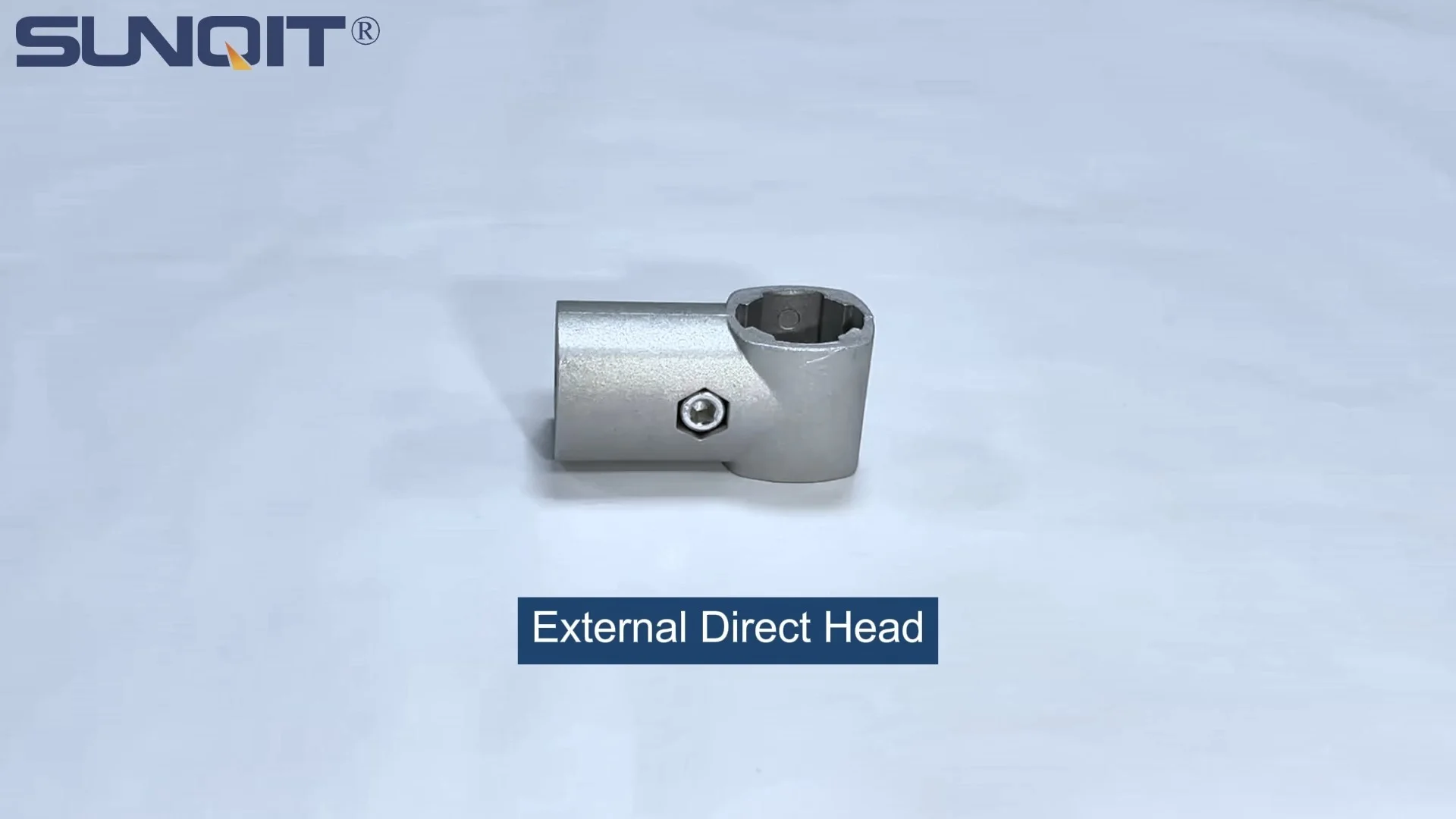
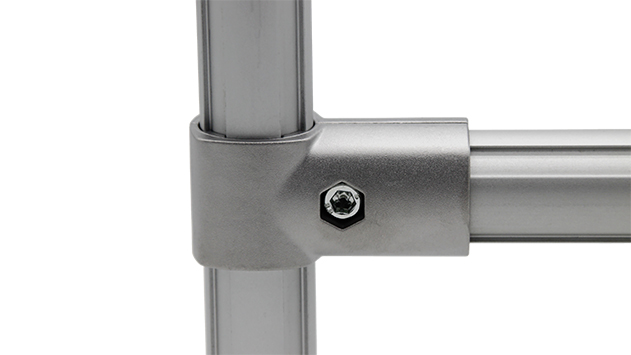
Aluminum 2 way pipe joint for 28mm aluminum pipe connection in 2 direction.
In the bustling heart of a modern manufacturing plant, where the hum of machinery blends with the rhythm of assembly lines, there's a quiet revolution underway. It's not about flashy new robots or cutting-edge AI algorithms—though those have their place. This revolution is about something more foundational: how we build the very structures that keep production moving. From the workbenches where technicians assemble delicate electronics to the flow racks that shuttle components across the factory floor, the materials and designs we choose here are quietly reshaping the industry's impact on our planet. At the center of this shift? Two way aluminum pipe joints—a small but mighty innovation that's proving to be a cornerstone of the circular economy in manufacturing.
The circular economy, a model that prioritizes reusing, recycling, and reducing waste over the traditional "take-make-dispose" linear approach, isn't just a buzzword for sustainability reports. For manufacturers, it's a practical path to resilience: lowering costs, reducing reliance on scarce resources, and meeting the growing demand from consumers and regulators for eco-conscious practices. But to truly embrace circularity, we need tools that align with its core principles. That's where two way aluminum pipe joints come in. These unassuming connectors, paired with aluminum lean pipe and compatible accessories, are redefining what it means to build flexible, durable, and sustainable manufacturing systems.
The Hidden Cost of "Business As Usual" in Manufacturing
To appreciate the impact of two way aluminum pipe joints, let's first look at the status quo. For decades, manufacturing facilities relied heavily on rigid, one-size-fits-all structures: fixed steel workbenches bolted to the floor, wooden pallets that splinter after a few uses, and plastic flow racks that crack under heavy loads. When production needs changed—say, a new product line required a wider assembly area or a different workflow—these structures often became obsolete. What happened next? They were disassembled, hauled to landfills, and replaced with brand-new ones. The result? Mountains of waste, skyrocketing replacement costs, and a carbon footprint that grew with every new purchase.
Consider the numbers: According to the Environmental Protection Agency, the manufacturing sector generates over 11 million tons of waste annually in the United States alone, much of it from discarded equipment and production tools. Traditional steel systems, while strong, are notoriously hard to repurpose. Their welded joints and heavy frames make modification nearly impossible; once a steel workbench is built, it's either used as-is or scrapped. Plastic components fare even worse—exposure to heat, chemicals, and daily wear causes them to degrade quickly, leaving little option but to throw them away. And let's not forget the energy and resources that go into producing these one-and-done structures: mining iron ore for steel, refining petroleum for plastic, and transporting heavy materials across the globe. It's a linear process that's both environmentally and economically unsustainable.
Real-World Pain Point: A mid-sized electronics manufacturer in Ohio recently faced this exact dilemma. Their production line for smart home devices was booming, but demand suddenly shifted to a larger model. Their existing steel workbenches were too narrow, and the plastic flow racks couldn't support the heavier components. The solution? Tear out the old systems, buy new ones, and send the discarded materials to the landfill. The total cost? Over $75,000 in new equipment, plus $12,000 in disposal fees—and that doesn't include the 6 tons of CO2 emissions from manufacturing and transporting the new structures. "We felt stuck," said the plant manager. "We needed to adapt, but the waste and cost felt like a step backward."
Two Way Aluminum Pipe Joints: A Modular Marvel
Enter two way aluminum pipe joints—small, lightweight connectors designed to transform the way manufacturers build and adapt their production systems. At first glance, they might seem simple: two cylindrical ports that allow aluminum lean pipe to be joined at various angles, secured with set screws or bolts. But their simplicity is their strength. Unlike welded steel joints or glued plastic connectors, these aluminum joints are modular, reusable, and infinitely adaptable. Pair them with aluminum lean pipe—hollow, lightweight tubes made from high-grade aluminum—and you get a system that can be assembled, disassembled, and reconfigured in hours, not days.
So, what makes these joints so special? Let's break it down:
Durability Without the Weight
Aluminum is renowned for its strength-to-weight ratio. Aluminum lean pipe is strong enough to support heavy loads—think stacks of circuit boards, toolboxes, or even small machinery—yet light enough for a single worker to maneuver. The two way joints, made from die-cast aluminum, are equally tough. They resist corrosion, stand up to daily wear and tear, and won't degrade under exposure to oils, coolants, or cleaning chemicals common in manufacturing environments. This durability means the system lasts for years, reducing the need for frequent replacements.
Modularity That Adapts to Change
The magic of two way aluminum pipe joints lies in their modularity. Need a taller workbench? Simply add another section of aluminum lean pipe. Want to reconfigure a flow rack to accommodate a new product size? Loosen the joints, adjust the angles, and tighten them back up. There's no welding, no cutting, no special tools required. This flexibility is a game-changer for manufacturers operating in fast-paced markets where product lines evolve rapidly. Instead of scrapping an entire system, you can repurpose the same pipes and joints to build something new. It's like Legos for adults—but for factories.
Sustainability Built In
Aluminum is one of the most recyclable materials on the planet. According to the Aluminum Association, nearly 75% of all aluminum ever produced is still in use today. When a two way aluminum pipe joint or aluminum lean pipe finally reaches the end of its long life (which could be decades), it can be melted down and recycled with minimal energy loss—aluminum recycling uses just 5% of the energy required to produce new aluminum from bauxite ore. Compare that to plastic, which degrades when recycled and often ends up in landfills, or steel, which requires intensive energy to recycle. Aluminum's recyclability makes it a cornerstone of circular manufacturing.
How Two Way Aluminum Pipe Joints Support the Circular Economy
The circular economy isn't just about recycling—it's about designing systems that eliminate waste from the start. Two way aluminum pipe joints excel here, addressing three key pillars of circularity: reducing resource consumption, maximizing product lifespan, and enabling reuse and recycling. Let's dive deeper into how they make this possible.
1. Material Efficiency: Doing More with Less
Traditional manufacturing systems often use more material than necessary. Steel workbenches, for example, are overbuilt to compensate for their lack of flexibility—thick frames, heavy legs, and redundant supports add weight and cost without adding value. Aluminum lean pipe systems, by contrast, are engineered for efficiency. The hollow aluminum pipes use less material while maintaining strength, and the two way joints distribute weight evenly, eliminating the need for over-engineering. This material efficiency reduces the demand for raw resources, lowering the environmental impact of production.
But it's not just about using less material—it's about using the right material. Aluminum is abundant and highly recyclable, as mentioned, but it's also lightweight, which cuts down on transportation emissions. A truckload of aluminum lean pipe and two way joints can carry 3x more material than a truckload of steel, reducing fuel consumption and emissions during shipping. For manufacturers sourcing globally, this translates to a smaller carbon footprint from factory to facility.
2. Modularity = Less Waste, More Reuse
The biggest enemy of the circular economy is obsolescence. When a product or system can't adapt to new needs, it's discarded, creating waste. Two way aluminum pipe joints eliminate obsolescence by design. Let's say a manufacturer needs to reconfigure their assembly line from a linear layout to a U-shape to improve workflow. With traditional steel workbenches, this would require cutting, welding, or replacing the entire structure. With aluminum lean pipe and two way joints? Simply loosen the joints, disassemble the pipes, and rebuild the system in the new layout. The same components—pipes, joints, even accessories like caster wheels or roller tracks—can be reused indefinitely.
This modularity also extends to scaling. As production grows, manufacturers can add more sections to their workbenches or flow racks by simply adding more aluminum pipe and two way joints. When demand dips, they can disassemble unused sections and store the components for later use. There's no need to buy new systems or discard old ones—everything is reusable. Over time, this dramatically reduces waste. A study by the Lean Manufacturing Institute found that facilities using modular aluminum systems reduced waste from equipment disposal by 68% compared to those using traditional fixed systems.
3. Longevity and Low Maintenance: Extending Product Lifespan
A product's lifespan directly impacts its circularity. The longer a system lasts, the fewer resources are needed to replace it. Aluminum lean pipe systems are built to last. Aluminum resists rust and corrosion, even in humid or chemical-heavy environments, and the two way joints are designed for repeated assembly and disassembly without losing strength. Unlike plastic, which can crack or warp over time, or steel, which may rust if not regularly painted, aluminum requires minimal maintenance—just an occasional wipe-down to keep it clean. This longevity means fewer replacements, less waste, and more time between resource-intensive production cycles.
Success Story: A automotive parts supplier in Michigan put this to the test. They replaced their wooden and steel material racks with aluminum lean pipe racks using two way joints in 2018. Five years later, those same racks are still in use—though they've been reconfigured four times to accommodate new part sizes. "We've saved over $100,000 in replacement costs alone," said the operations director. "And we've kept at least 12 tons of old steel and wood out of landfills. It's been a win-win for our budget and our sustainability goals."
4. Compatibility with Lean Systems: Reducing Waste at the Source
The circular economy and lean manufacturing go hand in hand. Lean principles focus on eliminating waste (muda) in all forms—overproduction, waiting, transportation, defects, and more. Two way aluminum pipe joints support lean systems by enabling efficient workflows, reducing unnecessary movement, and minimizing inventory waste. For example, a well-designed aluminum workbench with integrated flow racks (using roller tracks and two way joints) can bring components directly to the assembly line, eliminating time wasted walking to storage areas. This not only boosts productivity but also reduces the need for excess inventory, as materials are delivered just-in-time.
What's more, aluminum lean pipe systems are easy to customize with accessories like tool holders, bins, and label holders, which help organize the workspace and reduce defects caused by misplaced tools or parts. By integrating seamlessly with lean practices, two way aluminum pipe joints help manufacturers reduce waste at the source, aligning operational efficiency with environmental sustainability.

Comparing Traditional vs. Aluminum Lean Pipe Systems: The Numbers Speak
To truly understand the impact of two way aluminum pipe joints, let's compare them side-by-side with traditional manufacturing systems. The table below breaks down key metrics for a typical 50-workbench facility, over a 10-year lifespan:
| Metric | Traditional Steel/Plastic Systems | Aluminum Lean Pipe Systems (w/ Two Way Joints) | Circular Economy Benefit |
|---|---|---|---|
| Initial Cost | $150,000 (steel workbenches + plastic flow racks) | $180,000 (aluminum pipe, two way joints, accessories) | Higher upfront cost, but offset by longevity |
| Replacement Frequency | Every 3-4 years (due to wear, obsolescence) | 10+ years (modular, reusable components) | 70% reduction in replacement needs |
| Total Cost Over 10 Years | $450,000 (3 replacements + disposal fees) | $200,000 (initial + minor accessory upgrades) | $250,000 in cost savings |
| Waste Generated | 45 tons (steel, plastic, wood waste) | 3 tons (minimal waste from worn accessories) | 93% reduction in waste |
| CO2 Emissions (Production & Transport) | 120 tons CO2 | 45 tons CO2 | 62.5% reduction in emissions |
| Recyclability at End of Life | 30% (steel recyclable, plastic mostly not) | 95% (aluminum pipe/joints fully recyclable) | 65% increase in material recovery |
The numbers are clear: while aluminum lean pipe systems have a higher upfront cost, their longevity, reusability, and recyclability make them far more economical and sustainable over time. For manufacturers committed to the circular economy, this isn't just a "green" choice—it's a smart business decision.

Beyond the Factory Floor: Real-World Applications
Two way aluminum pipe joints aren't limited to workbenches and flow racks—their versatility makes them suitable for a wide range of manufacturing applications. Let's explore a few key use cases:
Aluminum Workbenches: Customizable, Comfortable, and Circular
Workbenches are the backbone of any manufacturing facility, and aluminum lean pipe workbenches (assembled with two way joints) are changing the game. Unlike fixed steel benches, these can be adjusted for height (to reduce worker fatigue), fitted with accessories like LED task lights or power strips, and reconfigured as tasks change. For example, a bench used for small electronics assembly can be widened with a few extra aluminum pipes and two way joints to accommodate larger components, eliminating the need for a new bench. When the bench is no longer needed, the pipes and joints can be disassembled and reused to build a material rack or a turnover trolley.
Flow Racks & Roller Tracks: Streamlining Material Handling
Flow racks—used to store and transport materials from receiving to production—are another area where two way aluminum pipe joints shine. By combining aluminum lean pipe with roller tracks (fitted with plastic or steel wheels), manufacturers can create gravity-fed flow racks that move components smoothly and efficiently. The two way joints allow for easy adjustment of rack height and angle, ensuring optimal flow for different-sized items. When production lines change, the racks can be disassembled and rebuilt in a new layout, or repurposed as storage for finished goods. This adaptability reduces the need for new racking systems and keeps old materials out of landfills.
Turnover Trolleys: Lightweight and Long-Lasting
Turnover trolleys are essential for moving materials around the factory, but traditional steel trolleys are heavy, prone to rust, and hard to repair. Aluminum lean pipe trolleys, built with two way joints and caster wheels, are lightweight (easy to push, even when loaded), rust-resistant, and simple to repair—if a wheel breaks, just swap it out with a new caster, no welding required. When the trolley is retired, the aluminum components are recycled, closing the loop on the circular economy.
The Future of Circular Manufacturing: Where Two Way Joints Lead
As manufacturers continue to embrace sustainability, the demand for modular, circular systems will only grow. Two way aluminum pipe joints are poised to play a central role in this future, thanks to ongoing innovations in design and materials. For example, some manufacturers are now adding smart features to aluminum lean pipe systems—like RFID tags in joints to track component usage, or sensors that monitor weight distribution to prevent overloading. These advancements not only improve efficiency but also extend the lifespan of the systems, further supporting circularity.
Another trend is the integration of aluminum lean pipe systems with other sustainable technologies, such as solar-powered workbenches (using aluminum frames to support solar panels) or zero-waste assembly lines (where leftover materials are stored in aluminum bins for recycling). By acting as a flexible, sustainable foundation, two way aluminum pipe joints enable these innovations to scale.
Perhaps most importantly, two way aluminum pipe joints are democratizing sustainability. Small and medium-sized manufacturers, which often lack the budget for large-scale green initiatives, can adopt these systems incrementally—starting with a few workbenches or flow racks and expanding over time. This accessibility is key to driving widespread change in the industry.
Conclusion: Building a Circular Future, One Joint at a Time
The circular economy isn't a distant goal—it's a practical, achievable vision for manufacturing, and it starts with the tools we use every day. Two way aluminum pipe joints may seem small, but their impact is profound. By enabling modularity, reusability, and material efficiency, they're helping manufacturers reduce waste, cut costs, and shrink their environmental footprint. From the factory floor in Ohio to the assembly lines in Vietnam, these unassuming connectors are proving that sustainability and profitability can go hand in hand.
As we look to the future, one thing is clear: the manufacturing facilities of tomorrow will be defined not by how much they produce, but by how efficiently they use resources and how little waste they generate. Two way aluminum pipe joints are more than just a component of these facilities—they're a symbol of progress, a reminder that even the smallest innovations can drive meaningful change. So, the next time you walk through a manufacturing plant, take a closer look at the workbenches, the flow racks, and the trolleys. If they're built with aluminum lean pipe and two way joints, you're looking at the future of circular manufacturing—one joint, one pipe, one sustainable step at a time.