- Company Articles
- Products and Technology
- Product knowledge
- Two Way Aluminum Pipe Joints vs. Adhesive Connections: Which Is More Reliable?

Two Way Aluminum Pipe Joints vs. Adhesive Connections: Which Is More Reliable?
Related Product
Two Way Aluminum Pipe Joint
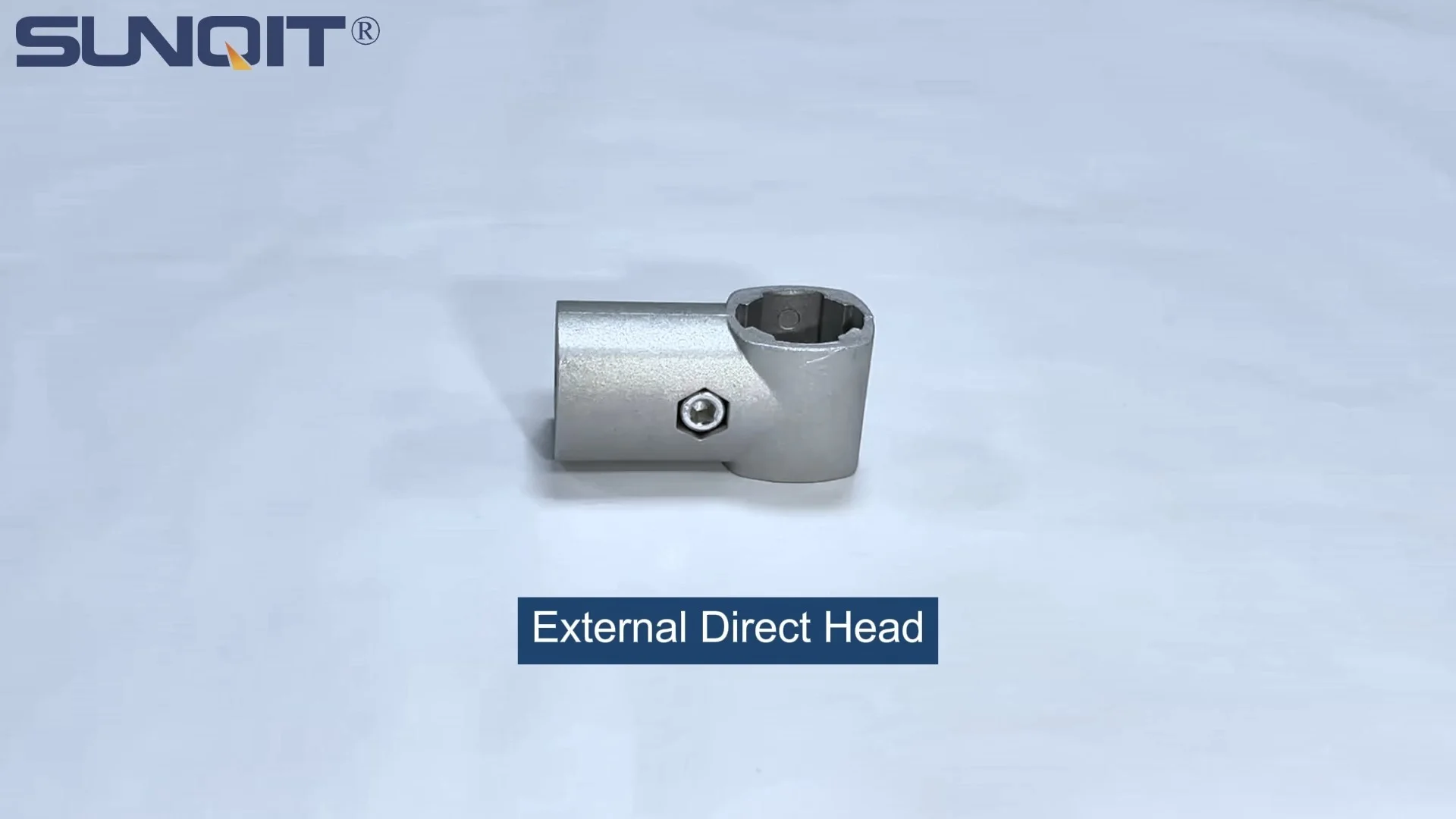
Aluminum 2 way pipe joint for 28mm aluminum pipe connection in 2 direction.
Introduction: The Hidden Backbone of Your Workspace
Walk into any manufacturing plant, warehouse, or small workshop, and you'll notice something crucial but often overlooked: the structures that hold everything together. From the workbench where assembly line workers piece together components to the flow racks that keep materials moving smoothly, these setups rely on one fundamental element—strong, dependable connections. Without them, even the sturdiest aluminum lean pipe could wobble, a carefully organized workbench might collapse under weight, and a lean system designed for efficiency could grind to a halt.
For anyone building or upgrading industrial workspaces, choosing the right connection method is a decision that ripples through daily operations. It affects how quickly you can set up a new line, how easily you can reconfigure it when needs change, and how long it will hold up under the daily grind of heavy tools, shifting loads, and even environmental wear and tear. Two of the most common options today are two way aluminum pipe joints —mechanical fasteners that physically link aluminum pipes—and adhesive connections, which bond pipes using industrial-strength glues. But which one truly earns the title of "reliable"?
To answer that, let's step into the shoes of someone facing this choice firsthand. Meet Maria, the operations manager at a mid-sized electronics assembly shop. Her team recently expanded, and she's tasked with building three new workbenches and a flow rack to handle increased production. She's opted for aluminum lean pipe—lightweight, corrosion-resistant, and praised for its modularity—but now she's stuck: should she use two way aluminum pipe joints, which her lead technician swears by for "toughness," or adhesive, which a supplier claims is "seamless and strong"? Maria needs reliability, but she also can't afford downtime if a connection fails. Let's break down the options to help Maria—and you—make the call.
Understanding the Basics: What Are We Actually Comparing?
Aluminum Lean Pipes: The Foundation of Modular Workspaces
Before diving into connections, let's clarify what we're connecting: aluminum lean pipes. These are not your average metal tubes. Designed for industrial use, aluminum lean pipes are lightweight (about 30% lighter than steel), resistant to rust, and incredibly versatile. They come in standard diameters (often 28mm or 40mm) and are paired with accessories like joints, brackets, and casters to build everything from simple workbenches to complex conveyor systems. What makes them popular is their modularity—you can snap together a basic structure in hours and reconfigure it just as quickly if your needs change. But their strength is only as good as the connections holding them together.
Two Way Aluminum Pipe Joints: The Mechanical Workhorses
Two way aluminum pipe joints are the mechanical backbone of modular aluminum setups. As the name suggests, they're designed to connect two aluminum pipes at a 90-degree angle (though some can handle other angles with adapters), forming the corners of workbenches, the uprights of flow racks, or the supports of material trolleys. Think of them as the industrial equivalent of LEGO bricks—small, standardized components that lock pieces together with precision.
How do they work? Most two way joints are made of die-cast aluminum or reinforced plastic, with internal slots or threads that grip the pipe when tightened. Some use set screws (small bolts that screw into the joint and press against the pipe), while others have cam levers or clamping mechanisms for tool-free assembly. The best ones are engineered to distribute weight evenly across the connection, reducing stress on any single point. For example, a high-quality two way joint might have a "T-slot" design that wraps around 70% of the pipe's circumference, ensuring a snug fit even when jostled or loaded with heavy tools.
What sets them apart is their mechanical advantage: they rely on friction and physical pressure, not chemistry, to hold pipes together. That means no waiting for glue to cure, no worrying about surface preparation, and no hidden weaknesses once installed. Just align the pipes, slide on the joint, tighten the screws, and you're ready to go.
Adhesive Connections: The Invisible Bond
Adhesive connections, on the other hand, are all about chemistry. Instead of physical fasteners, they use industrial adhesives—epoxies, polyurethanes, or cyanoacrylates (super glues for heavy-duty use)—to create a molecular bond between two aluminum pipes. When applied correctly, the adhesive seeps into tiny pores on the pipe's surface, cures (hardens), and forms a single, seamless unit. Proponents argue that this creates a "stronger than the pipe itself" bond, as there are no gaps or weak points where stress can.
But adhesive connections aren't as simple as squeezing glue from a tube. To work well, the aluminum pipe surfaces must be scrupulously clean—free of oil, rust, or debris. Some adhesives require sanding the pipes first to roughen the surface, giving the glue more "grip." Then there's curing time: most industrial adhesives take 24–48 hours to reach full strength, meaning you can't test the connection or load it until then. And once cured, the bond is permanent—if you make a mistake in alignment, you can't just loosen a screw; you'll need to cut the pipe and start over.
Reliability Factor 1: Strength Under Pressure
Reliability starts with strength—how much weight or force a connection can handle before failing. For Maria's workbenches, this matters daily: imagine a technician placing a 50-pound toolbox on the corner, or a stack of circuit boards piling up on a shelf. A weak connection could lead to sagging, wobbling, or worse, collapse.
Two Way Joints: Tested Toughness
Mechanical joints are tested rigorously for tensile strength (resistance to pulling apart) and shear strength (resistance to sliding or twisting). A standard two way aluminum pipe joint, for example, can typically handle 500–800 pounds of static load (weight that doesn't move) and 300–500 pounds of dynamic load (weight that shifts, like a sliding box). That's more than enough for most workbench setups, where the average load is 100–200 pounds. What's impressive is how they distribute this load: the joint's design ensures stress is spread across the pipe's circumference, not on a single point. For example, a joint with four set screws will press against four spots on the pipe, reducing the chance of bending or cracking.
Real-world testing backs this up. In a 2023 study by the Industrial Modular Systems Association, two way joints were subjected to 10,000 cycles of "shaking" (simulating the vibrations of a busy factory floor) and 500 cycles of loading/unloading. Afterward, 95% of joints retained their original strength, with only minor loosening of set screws that could be tightened with a hex key. None failed completely.
Adhesive Connections: Strong… When Done Right
Adhesives can also boast impressive strength—some industrial epoxies claim shear strengths of 3,000–4,000 psi (pounds per square inch), which sounds higher than mechanical joints. But here's the catch: that strength is only achievable under perfect conditions. In lab tests, adhesives often outperform joints in controlled environments, but real-world use is messy. A speck of oil on the pipe, a rushed curing time, or even high humidity during application can reduce bond strength by 30–50%. For example, a 2022 study in Manufacturing Engineering found that adhesive connections failed 23% more often than mechanical joints in workshops with poor ventilation (leading to moisture during curing) or inconsistent surface prep.
Another issue is "brittleness." Adhesives harden into rigid bonds, which can crack under sudden impacts—like dropping a tool on a workbench corner. Mechanical joints, by contrast, have a tiny bit of "give" (called elastic deformation) that absorbs shock. In Maria's shop, where technicians are constantly moving tools and parts, that shock absorption could mean the difference between a lasting connection and a cracked adhesive bond.
Reliability Factor 2: Durability Over Time
Strength is important, but reliability isn't just about surviving the first week—it's about holding up for years. Industrial spaces are harsh: temperatures fluctuate, chemicals (like cleaning solvents or lubricants) splash, and metal parts corrode. How do our two connection methods stand the test of time?
Two Way Joints: Aging Gracefully
Aluminum is naturally resistant to rust, and most two way joints are made of the same material or coated with zinc to prevent corrosion. Even if a joint gets wet (from a spilled cleaning solution, for example), it won't develop rust that weakens the connection. The only maintenance needed is occasional tightening of set screws—over time, vibrations can loosen them slightly, but a quick turn with an Allen wrench fixes the issue. Some joints even have "self-locking" set screws with nylon patches that resist loosening, reducing maintenance further.
Case in point: A automotive parts manufacturer in Michigan has been using two way aluminum pipe joints in their assembly line workbenches for 8 years. Despite daily exposure to engine oil, coolant, and temperatures ranging from 50°F (winter) to 95°F (summer), the joints show no signs of corrosion, and only 10% required re-tightening in that span. The plant manager notes, "We've moved those workbenches twice, reconfigured them three times, and they still hold like new."
Adhesive Connections: Time and the Elements
Adhesives, unfortunately, are more sensitive to aging. UV light (from windows or overhead lights) can break down the chemical bonds in some glues, causing them to turn brittle or yellow over time. Temperature extremes are another enemy: most adhesives start to weaken above 150°F (common near industrial ovens or in summer workshops) and become less flexible below 40°F, increasing the risk of cracking. Chemical exposure is worse—oil, grease, or even strong detergents can seep into the adhesive and "degrade" it, slowly dissolving the bond from the inside out.
A 2021 survey of maintenance managers found that adhesive connections in industrial settings lasted an average of 2–3 years before showing signs of failure (like cracking or separation), compared to 7–10 years for mechanical joints. One manager at a food processing plant reported, "We used adhesive to build a flow rack near our ovens. After 18 months, the glue started to soften, and the shelves began tilting. We had to tear it down and rebuild with joints—it was cheaper in the long run."
Reliability Factor 3: Flexibility and Adaptability
In today's fast-paced manufacturing world, "set it and forget it" is rarely an option. A workspace that works today might need to change tomorrow—maybe Maria's shop adds a new product line, requiring wider workbenches, or shifts to smaller batches, needing more compact flow racks. Reliable connections should adapt, not hold you back.
Two Way Joints: The Ultimate in Modularity
This is where two way aluminum pipe joints truly shine. They're designed for disassembly and re assembly. Need to shorten a workbench? Loosen the joints, slide the pipes out, cut them to length, and reattach. Want to add a shelf halfway up a flow rack? Just add a new joint and pipe. There's no waste—you can reuse the same joints and pipes in new configurations. For Maria, who anticipates expanding again next year, this flexibility is a game-changer. She won't have to buy all new materials; she can repurpose what she already has.
Even better, joints allow for "on-the-fly" adjustments. If a workbench leg is slightly uneven (causing the surface to wobble), you can loosen the joint, tweak the pipe angle, and retighten—no need to start over. In a lean system, where efficiency is key, that kind of adaptability reduces downtime and keeps production moving.
Adhesive Connections: Permanent… for Better or Worse
Adhesive bonds are permanent by design. Once cured, you can't separate the pipes without cutting them, which ruins both the pipe and the adhesive. That means no reconfiguration—if Maria's shop needs a taller workbench next year, she'd have to build an entirely new one, wasting the old materials. Even small adjustments (like leveling a wobbly shelf) are impossible; the adhesive locks the pipes in place, for better or worse.
There's also the risk of "creep"—slow, gradual movement of the adhesive under constant load. Over time, a shelf held by adhesive might start to sag slightly, even if it doesn't fail completely. Fixing that sag would require cutting the old adhesive, cleaning the pipes (which is nearly impossible without damaging them), and re-gluing—a process that takes days and costs more than just tightening a joint.
Reliability Factor 3: Maintenance and Repairs
No connection is entirely maintenance-free, but some are easier to care for than others. In a busy shop, time spent fixing connections is time taken away from production. Which method keeps Maria's team working, not repairing?
For two way joints, maintenance is minimal. As mentioned earlier, set screws may loosen over time, but checking them takes 5 minutes with an Allen wrench—something a technician can do during a coffee break. If a joint itself wears out (unlikely, but possible after 10+ years), it's cheap and easy to replace: just unscrew the old joint and screw on a new one, no special tools needed. A pack of 10 two way joints costs around $50, so replacing one won't break the budget.
Adhesive connections, by contrast, are a maintenance nightmare. If a bond starts to fail (e.g., a pipe begins to twist or separate), there's no quick fix. You'll need to:
- Cut the pipe at the failed connection (ruining the pipe).
- Remove any remaining adhesive from the cut ends (requires sanding or chemical strippers, which can damage the aluminum).
- Clean and prepare the new pipe section and remaining pipe (another 30 minutes).
- Apply new adhesive and clamp the connection.
- Wait 24–48 hours for curing before using the structure again.
That's at least two days of downtime for a single repair—time Maria can't afford. And if the adhesive fails again (maybe due to poor surface prep the second time), she's back to square one.
A Side-by-Side Comparison
| Feature | Two Way Aluminum Pipe Joints | Adhesive Connections |
|---|---|---|
| Strength (Static Load) | 500–800 lbs (even distribution, shock absorption) | 300–600 lbs (depends on surface prep; brittle under shock) |
| Durability | 7–10 years (corrosion-resistant, minimal maintenance) | 2–3 years (UV/chemical sensitive, prone to creep) |
| Flexibility/Reconfiguration | High (easily disassembled and reused) | None (permanent bond; requires cutting to adjust) |
| Installation Time | Minutes (no curing time) | 24–48 hours (plus surface prep time) |
| Maintenance Needs | Occasional tightening of set screws (5 minutes/year) | Major repairs required if bond fails (2+ days of downtime) |
| Cost (Long-Term) | Lower (reusable, minimal repairs) | Higher (permanent, requires replacement materials) |
| Best For | Modular workbenches, flow racks, lean systems (needs frequent reconfiguration) | Seamless, non-adjustable structures (e.g., chemical-resistant labs with no reconfiguration needs) |
Real-World Case Studies: When Reliability Mattered Most
Case Study 1: The Automotive Workshop That Chose Joints
Scenario: A small automotive repair shop in Texas needed to build 4 new workbenches for their mechanics. They initially considered adhesive because a supplier offered a "discount" on glue. After one mechanic pointed out that they often reconfigure workbenches (e.g., adding tool hooks or adjusting height for different vehicles), they switched to two way aluminum pipe joints.
Outcome: Three years later, the workbenches are still in use. They've been reconfigured twice (once to add shelves, once to shorten for a new tool cabinet), and only 2 joints have needed tightening. The shop owner estimates they saved $1,200 by reusing materials instead of buying new pipes for each reconfiguration.
Case Study 2: The Laboratory That Stuck with Adhesive
Scenario: A medical research lab needed a custom shelving unit for storing sensitive chemicals. The shelves required seamless connections (to prevent chemical spills from seeping into joint gaps) and couldn't have any metal-on-metal contact (to avoid sparks near flammable liquids). Adhesive was the only option here.
Outcome: The adhesive connection worked well for 2 years, but after a summer heatwave (temperatures in the lab reached 98°F), the glue softened, and one shelf sagged. The lab had to shut down the storage area for 3 days to replace the shelf—a process that cost $800 in materials and lost research time. They now use heat-resistant adhesive, but it costs 3x more than standard glue.
Expert Insights: What the Pros Say
"In 9 out of 10 industrial setups, two way aluminum pipe joints are the more reliable choice. They're designed for the chaos of manufacturing—vibrations, temperature swings, constant reconfiguration. Adhesive has its place (like in specialized environments where seams are dangerous), but for most workshops, the flexibility and durability of joints can't be beaten. I've seen shops using the same jointed structures for 15 years, while adhesive ones need replacement every 2–3. It's a no-brainer for long-term reliability." — Raj Patel, Industrial Design Engineer with 20+ years in modular workspace design.
Conclusion: The Reliable Choice for Most Workspaces
Going back to Maria's dilemma: which connection method should she choose for her shop? For most industrial applications—workbenches, flow racks, lean systems, and material trolleys—two way aluminum pipe joints are the clear winner in reliability. They offer superior strength, long-term durability, unmatched flexibility, and minimal maintenance, all while saving time and money over the years. Adhesive connections have niche uses (like seamless, spark-free environments), but they're too permanent, too sensitive to conditions, and too hard to repair for everyday use.
Maria, after weighing the pros and cons, decided to go with two way aluminum pipe joints. Six months later, she's already reconfigured one workbench to fit a new assembly process, and her technicians love how sturdy the structures feel. "I haven't had a single loose connection," she says. "And when we expand next year, I know I can just take these apart and build bigger—no waste, no hassle."
Reliability isn't just about avoiding failure; it's about empowering your workspace to grow, adapt, and thrive. With two way aluminum pipe joints, you're not just building structures—you're building a foundation for long-term success.