
Walk into any modern manufacturing facility these days, and you'll notice something different about the way workstations, material racks, and assembly lines are put together. Gone are the days of bulky, permanent metal structures welded into place—structures that take weeks to build, cost a fortune to modify, and leave little room for adaptability. Instead, more and more plants are turning to modular systems built with components like two-way aluminum pipe joints and aluminum lean pipes. But why the shift? It all comes down to two critical factors for any business: time and money. In this article, we'll dive into how two-way aluminum pipe joints stack up against traditional welded connections, and why making the switch could be one of the smartest moves for your lean system.
Understanding the Players: Two-Way Aluminum Pipe Joints vs. Welded Connections
What Are Two-Way Aluminum Pipe Joints?
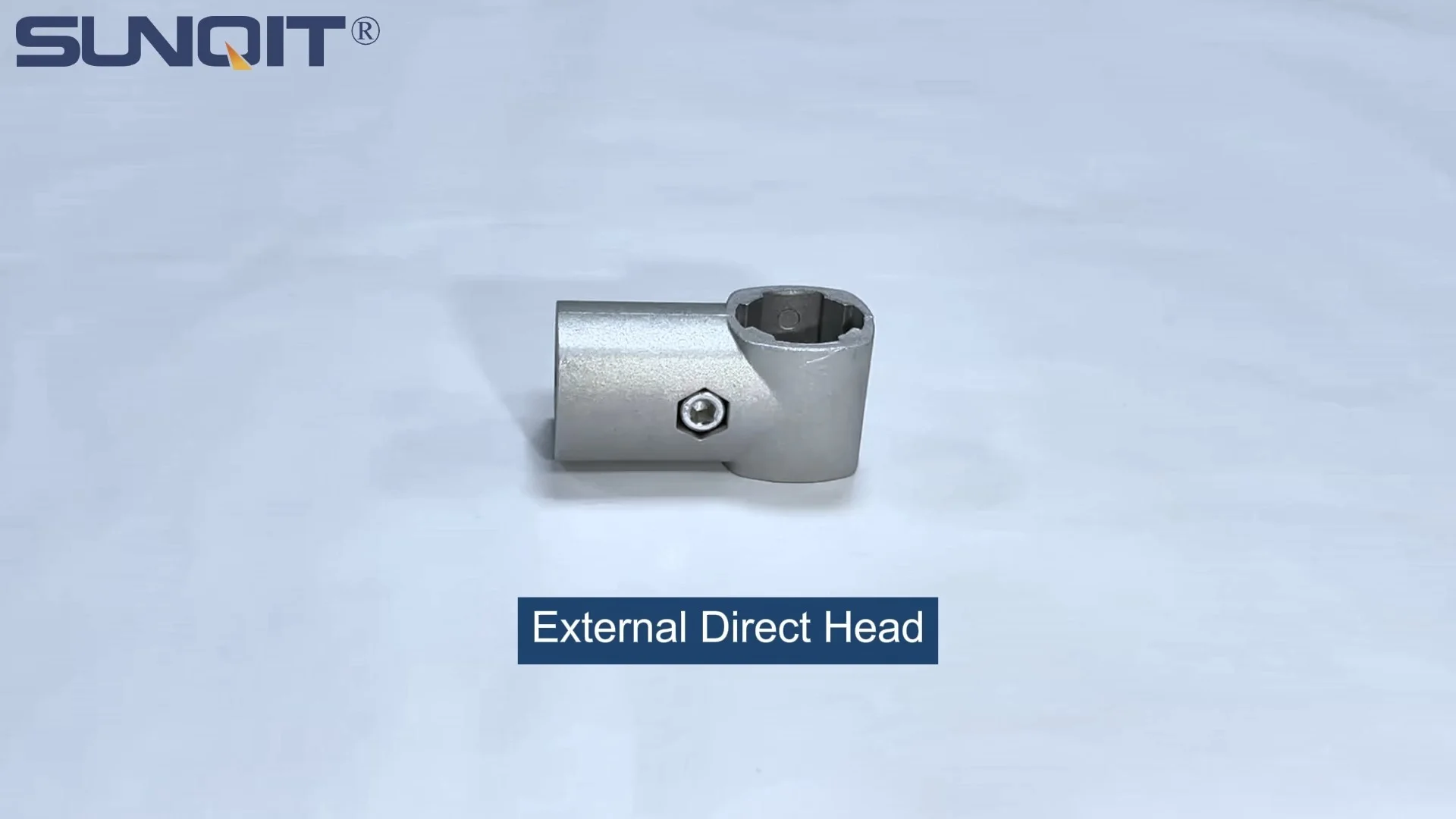
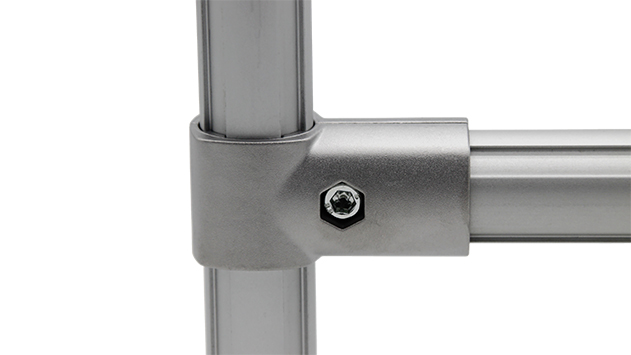
Let's start with the basics. Two-way aluminum pipe joints are exactly what they sound like: small, durable connectors designed to link aluminum lean pipes together at (you guessed it) two angles—typically 90 degrees, though some designs offer flexibility for other angles. Made from lightweight but strong aluminum alloys, these joints are engineered for quick assembly: no welding, no soldering, no specialized tools. Most just require a hex key or a simple wrench to tighten bolts, securing the pipes in place. They're part of a larger modular ecosystem that includes accessories like caster wheels, roller tracks, and workbench surfaces, all designed to snap together like a high-stakes Lego set for grown-ups.
The magic here is in their simplicity and versatility. Aluminum lean pipes—hollow tubes often anodized to resist corrosion—slide into these joints, creating sturdy frames for everything from workbenches to material racks to assembly line stations. Need to adjust the height of a shelf? Loosen the joint, move the pipe, retighten. Want to add a roller track to a workstation for smoother material flow? Just attach a new section of pipe with a few joints. It's a system built for change, which is why it's become a cornerstone of lean manufacturing principles.
What Are Welded Connections?
On the other side of the ring, we have welded connections—the tried-and-true method of joining metal structures for decades. Welding uses high heat to melt the edges of two metal pieces, fusing them together as the metal cools. It's a permanent bond, often seen as the gold standard for strength in industrial settings. But permanence comes with a price. Welded structures require skilled labor: certified welders who can operate torches, handle molten metal, and ensure the joints are strong enough to hold heavy loads. The process also generates fumes, sparks, and heat, meaning it's not something you can do just anywhere on the factory floor without safety precautions.
Once welded, a structure is, for all intents and purposes, fixed. If your production line needs to expand six months down the road, or if a workstation isn't ergonomic for your new team member, you can't just "unweld" it. You'd need to cut the old structure apart, haul it away, and start from scratch with new materials and more welding. It's a system built for stability, not adaptability—and in today's fast-paced manufacturing world, stability alone often isn't enough.
The Time Factor: Why Minutes Matter More Than You Think
In manufacturing, time is quite literally money. Every minute a production line is down, every hour spent waiting for a workstation to be built, every day lost to reconfiguring a material flow system eats into your bottom line. Let's break down how two-way aluminum pipe joints and welded connections compare when it comes to time—from setup to modifications to long-term use.
Installation Time: From Weeks to Days (or Even Hours)
Imagine you need to build a new workbench for your assembly line. With welded connections, here's what the process might look like: First, you'd need to order steel pipes (heavier and bulkier than aluminum lean pipes) and schedule a welder—someone who might be booked out for days or even weeks. Once they arrive, they'd measure and cut the pipes, set up their welding equipment, and spend hours fusing each joint. After welding, the metal needs time to cool, and the joints might require grinding to smooth rough edges. Then, you'd need to paint or coat the steel to prevent rust, adding another day or two. Total time? Easily a week, and that's if everything goes perfectly.
Now, contrast that with two-way aluminum pipe joints. You order pre-cut aluminum lean pipes and a handful of joints (no need to wait for a welder—your regular maintenance team can handle this). The pipes are lightweight, so two people can carry them to the shop floor without heavy equipment. Using a hex key, they slide the pipes into the joints, tighten the bolts, and—boom—your workbench is taking shape. Add a wooden or metal top, maybe some caster wheels for mobility, and you're done. Total time? For a basic workbench, maybe 2–3 hours. Even a larger structure, like a 10-foot roller track for material transport, might take a day at most. That's not just faster—it's transformative.
Modification Time: Adapting on the Fly
In manufacturing, change is constant. A new product comes in, requiring a taller workstation. A customer order spikes, so you need to add a second shelf to your material rack. With welded connections, these changes are a headache. To raise the workstation, you'd have to cut the welded legs, weld on new extensions, and repaint—hours of work, and the structure might never be as strong as it was originally. Adding a shelf? You'd need to weld brackets onto the existing frame, which could warp the metal if not done carefully. Each modification means shutting down that part of the line, losing production time.
With two-way aluminum pipe joints, modifications are almost fun. Need a taller workstation? Loosen the joints at the base, slide the pipes up to the new height, retighten. Done. Adding a shelf? Grab a few extra pipes and joints, measure, and bolt them into place. No cutting, no welding, no downtime. Your team could reconfigure a workstation during a lunch break and be back to production by 1 PM. That's the power of modularity—your system adapts as quickly as your needs do.
Downtime: Keeping the Line Moving
Downtime is the enemy of lean manufacturing. Every minute a line is idle costs money, frustrates workers, and delays orders. Welded systems are notorious for causing downtime, not just during initial setup but also during repairs. If a welded joint cracks (a common issue with heavy use), you can't just swap out a part—you need to call in a welder again, shut down the area, and wait. For critical systems like roller tracks that keep materials flowing, even a few hours of downtime can back up production for days.
Two-way aluminum pipe joints drastically reduce downtime. Since the system is modular, individual parts can be replaced in minutes. A cracked joint? Unscrew it, pop in a new one, and you're back up. A bent pipe? Swap it out with a spare (you should always keep a few on hand). Even major overhauls, like reconfiguring an entire assembly line, can be done in stages—work on one section during the night shift, so production continues during the day. For businesses that run 24/7, this flexibility is game-changing.
The Cost Breakdown: Where the Savings Really Add Up
Time is money, but let's talk directly about dollars and cents. From material costs to labor to long-term maintenance, two-way aluminum pipe joints offer savings that go far beyond the initial purchase price. Let's crunch the numbers.
Material Costs: Lightweight = Lower Costs
Aluminum lean pipes are lighter than steel, which means lower shipping costs (less weight to transport). They're also corrosion-resistant, so you don't need to spend money on painting or coating (unlike steel, which rusts if not protected). Two-way aluminum pipe joints themselves are affordable—since they're mass-produced, you can buy them in bulk for a fraction of the cost of custom welding materials (like welding rods, gas, and protective gear).
Welded steel systems, on the other hand, require heavier, thicker pipes to support the same load (since welding can weaken metal at the joints). Heavier pipes cost more to buy and ship. Add in the cost of paint, primers, and anti-rust treatments, and the material bill starts to climb.
Labor Costs: No More Paying for Skilled Welders
Skilled welders are expensive—often earning $60–$80 per hour, depending on location. And they're in high demand, so you might pay overtime or a premium to get them on short notice. With two-way aluminum pipe joints, you eliminate this cost entirely. Your regular maintenance team or even floor workers can assemble and modify these systems with minimal training. At $25–$30 per hour, that's a savings of $30–$50 per hour for every project. Over a year, that adds up to tens of thousands of dollars.
Long-Term Maintenance: Durability Without the Hassle
Welded steel structures require ongoing maintenance. Rust forms, even with paint, so you'll need to sand and repaint every few years. Welded joints can crack under stress, leading to costly repairs. Aluminum lean pipes and two-way joints, by contrast, are low-maintenance. Aluminum resists corrosion naturally, so no painting is needed. The joints are designed to withstand repeated tightening and loosening without losing strength. Even if a joint wears out after years of use, replacing it costs a few dollars and takes five minutes—no welder required.
Scalability: Growing Without Overspending
As your business grows, your needs grow too. With welded connections, scaling up often means building entirely new structures (since modifying old ones is too costly). With two-way aluminum pipe joints, you can expand incrementally. Need a longer roller track? Buy a few extra pipes and joints, and extend the existing one. Adding a new workstation? Reuse parts from an old, unused structure (since the joints and pipes are interchangeable). This scalability means you never pay for more than you need right now, and you can repurpose components as your needs change.
| Aspect | Two-Way Aluminum Pipe Joints | Welded Connections |
|---|---|---|
| Installation Time (Basic Workbench) | 2–3 hours | 5–7 days |
| Modification Time (Add a Shelf) | 30 minutes | 4–6 hours |
| Labor Cost (Per Hour) | $25–$30 (general labor) | $60–$80 (skilled welder) |
| Material Waste | 5% (minimal cutting) | 20% (welding scrap, over-ordering steel) |
| Annual Maintenance Cost | $100–$200 (replacement joints/pipes) | $1,000–$2,000 (painting, welding repairs) |
| Scalability Rating (1–5) | 5 (easily expandable/reconfigurable) | 1 (permanent, hard to modify) |

Real-World Impact: A Case Study
Let's put this all into perspective with a real example (names changed for privacy). A mid-sized automotive parts manufacturer in Michigan was struggling with outdated welded workstations and material racks. Their production line often had to shut down for a week every quarter to reconfigure systems for new parts, and their maintenance budget was ballooning from welding repairs and repainting. They decided to test a modular system using aluminum lean pipes and two-way joints, starting with a single assembly line.
The results were staggering. The first new workstation, which would have taken 5 days to weld, was built in 4 hours by two maintenance technicians. Six months later, when they needed to add a second shelf to hold larger components, the team did it in 20 minutes during a break. Over the next year, they rolled out the system to three more lines, eliminating $45,000 in welding labor costs alone. Downtime for modifications dropped from 40 hours per quarter to just 2 hours. And because they could reuse parts from old lines, they saved an additional $15,000 on new materials. Today, their lean system is fully modular, and they estimate the switch has boosted overall productivity by 18%.

Why It Matters: Beyond Time and Money
At the end of the day, choosing two-way aluminum pipe joints isn't just about saving time and money (though those are huge wins). It's about empowering your team. When workers can adjust their own workstations to be more ergonomic, they're happier and more productive. When maintenance teams can solve problems in minutes instead of waiting for outside help, they feel more valued. And when your business can adapt quickly to market changes, you gain a competitive edge. Welded connections have their place in heavy-duty, permanent structures, but for the dynamic, fast-paced world of modern manufacturing, modular systems built with two-way aluminum pipe joints and aluminum lean pipes are the future.
Conclusion: Making the Switch
If you're still using welded connections for your workstations, material racks, or assembly lines, it might be time to ask: What's the true cost of sticking with the status quo? The hours of downtime, the high labor bills, the frustration of not being able to adapt quickly—these aren't just inconveniences; they're holding your business back. Two-way aluminum pipe joints offer a simpler, faster, more affordable alternative that aligns with the principles of a lean system: eliminate waste, empower your team, and stay agile. So why wait? Grab a few aluminum lean pipes and joints, gather your team, and build something better—you'll be amazed at how much time (and money) you'll save.